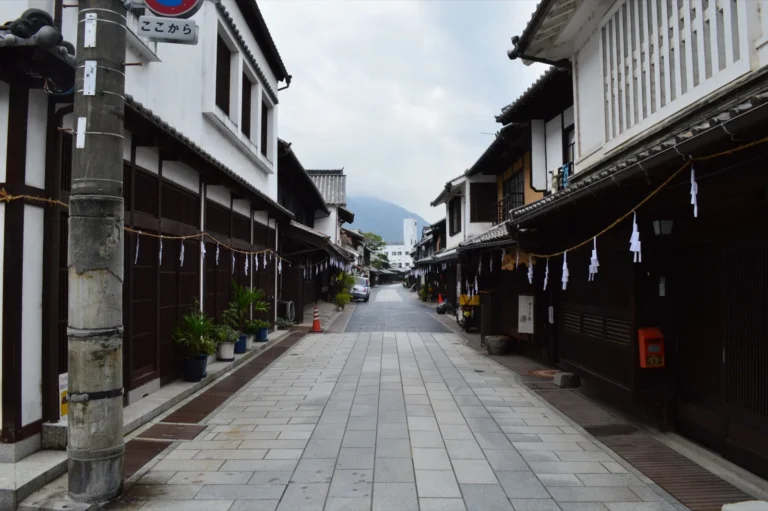
Makeine (Too Many Losing Heroines!) Pilgrimage Guide to Toyohashi, Aichi, Japan
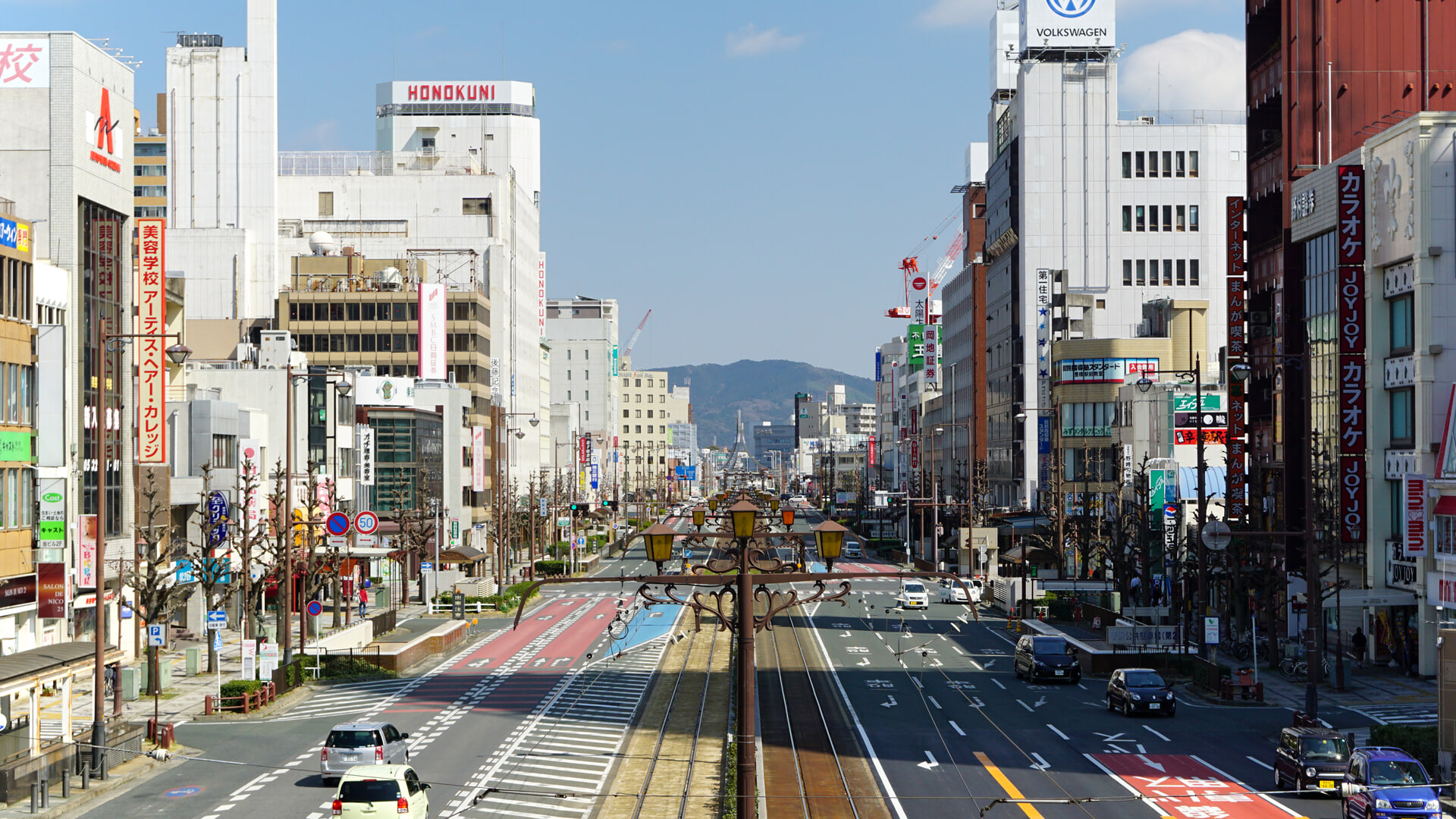
Header photo: Ekimae-Odori, the boulevard outside Toyohashi Station, with the streetcar tracks running down the middle. Photographed in March 2016. Photo: 663highland, CC BY 2.5 (cropped and resized). Source.
Almost all of it happens in Toyohashi, a working city of about 370,000 people on the coast of Aichi, between Nagoya and Hamamatsu. Not a landmark city: a bookshop two minutes from the station, a streetcar running down the main road, a library you can sit in all afternoon, a shopping terrace built over a covered watercourse, a zoo with a fairground attached. The anime’s own pilgrimage map lists twenty-three places here, the city made the series a tourism ambassador in December 2025, and the appeal of the trip is exactly the appeal of the show: ordinary afternoons, in a town that turns out to be worth an afternoon. The centre and Futagawa are the two halves to choose between, and if the planetarium matters to you, check this month’s programme and the Monday closing day on Nonhoi Park’s own page before you pick the day.
Quick Trip Guide
- Destination: Toyohashi, Aichi Prefecture — the eastern end of Aichi, in the region called Higashi-Mikawa
- Best Gateway: Chubu Centrair International Airport, then Meitetsu to Nagoya and a train east to Toyohashi
- From Gateway: Centrair to Nagoya by Meitetsu, then Nagoya to Toyohashi by JR or Meitetsu. From Tokyo or Kyoto, the Tokaido Shinkansen stops at Toyohashi (Hikari and Kodama services)
- Main Base: Around Toyohashi Station. Everything in the station cluster is walkable from there
- Getting Around: On foot, plus the streetcar at a flat 200 yen and one JR stop east to Futagawa
- Car Needed: No for the station area, Futagawa and Nonhoi Park. Useful for the coast and the Oku-Mikawa hills
- Recommended Stay: 1 night, 2 days
- Day Trip: Yes, from Nagoya, for the station-area walk
- Best For: readers of the series, anyone who likes bookshops and tram towns, and families heading for the zoo
Why This Place Matters in Too Many Losing Heroines!
Too Many Losing Heroines! is a story about what happens after the confession fails. Kazuhiko Nukumizu, a light-novel reader with no friends and no particular complaint about that, watches a popular classmate get turned down by her childhood friend — and then keeps running into girls in the same position. The series calls them make-heroine, losing heroines, and the joke of the title is that the story belongs to them rather than to whoever won.
The boy who was never in the running
The official character page introduces Kazuhiko Nukumizu as a first-year who reads light novels and never misses a new release, has no friends, and is entirely untroubled by that — his listed hobby is enjoying the differences between tap water. He is the narrator, and the point of him is that he was never a contender in anybody’s romance. That is why the losing heroines end up talking to him.
Anna Yanami is the bright, well-liked classmate with a bottomless appetite and a years-long one-sided love for a childhood friend. Lemon Yakishio is the track team’s ace, outdoors and enthusiastic, carrying quiet feelings for a clever childhood friend of her own. Chika Komari is a first-year in the literature club who is shy to the point of difficulty and, like Nukumizu, has no friends — though she has opened up to the club’s third-years. Around them are the literature club’s president and vice-president, Nukumizu’s doting younger sister Kaju, and the classmates whose relationships are the ones that worked out.
Why that makes Toyohashi worth a day
Because nothing in this series is a set piece. The first episode turns on Nukumizu happening to witness a classmate being turned down; the eighth sends three club members into the town centre to research an exhibition; the sixth is a group outing to a planetarium that goes wrong in a small, human way. The locations are a bookshop, a library, a station building, a takoyaki counter, a park with animals in it. Standing in them is less like matching a frame and more like having one of the afternoons the characters have.
The official map divides its twenty-three entries into a Toyohashi Station area and a wider area, and the station cluster is all within about fifteen minutes on foot of each other. That is the trip: a bookshop, a long sit in a library, a streetcar ride, something to eat, and — if you have a second day — one stop east to the zoo.
Which Makeine
The original is a light novel series by Takibi Amamori with illustrations by Imigimuru, published by Shogakukan under the Gagaga Bunko imprint, which won the Gagaga Prize at the 15th Shogakukan Light Novel Award. The TV anime followed, and a second season was announced in April 2025. In English the series is Too Many Losing Heroines!, published by Seven Seas Entertainment; fans shorten the Japanese title to Makeine. Scene references in this guide are to the first TV season, taken from the official episode synopses, and nothing here spoils how any of the three storylines ends.
What is on the official map, and what is not
- Every place in the Anime Pilgrimage Spots section below is on the work’s official pilgrimage map, and the guide gives its number. The later Beyond the Anime section is ordinary Toyohashi sightseeing that is not on that map; it is there to widen the trip, and it is labelled as such.
- Episode references come from the official synopses. Where the map lists a shop but no synopsis describes a scene in it, the guide says it is on the map and leaves it there.
- Entry 6 on the map, USA Toyohashi Ekimae, is marked closed on the map itself. It is not somewhere to go.
- Several entries are small businesses. Go in as a customer, order something, and ask before photographing anything indoors.
- Opening hours and prices change. The figures here were checked on 11 October 2026 against each facility’s own site; confirm before you travel.
Anime Pilgrimage Spots
Grouped the way a trip actually works: the station cluster you can walk, the food on the same walk, the one stop east to Futagawa, and the wider entries that need a different day.
Please respect local rules and manners at every location, and follow signs and staff guidance.
Where these places are
The map shows the places below and how far apart they are. It is drawn with OpenStreetMap: opening it loads map images from openstreetmap.org. The list works without it.
The map could not be loaded. The places are listed below, with their names and a link to each on Google Maps.
- Anime-related places
- Station or transport
- Nearby sight
The 6 places on this map
- 1Toyohashi Station豊橋駅Toyohashi centreIn this guideOpen in Google Maps
- 2Toyohashi Park and Yoshida Castle豊橋公園Toyohashi centreIn this guideOpen in Google Maps
- 3Futagawa Station二川駅FutagawaIn this guideOpen in Google Maps
- 4Futagawa-juku honjin二川宿FutagawaIn this guideOpen in Google Maps
- 5Nonhoi Park (zoo and botanical garden)豊橋総合動植物公園FutagawaIn this guideOpen in Google Maps
- 6Imo Marsh葦毛湿原East of the cityIn this guideOpen in Google Maps
Map data © OpenStreetMap contributors, ODbL. Positions were checked on 15 October 2026 against the source recorded for each place; a few are the published position for a large site rather than an entrance.
Toyohashi Station and the walk out of it
Seibunkan Toyohashi main store (map 1)
Entry 1 on the map, and the right first stop for a story narrated by someone who reads light novels and never misses a new release. The bookshop is about two minutes from the station’s east side and the company describes it as one of the largest sales floors in the Tokai region — a serious provincial bookshop of exactly the kind the series assumes its narrator lives near. Go to the light novel shelves and see what the shop is doing with local titles; it was a pickup point for the 2024 JR Central campaign, which has since ended. Books and stationery 10:00 to 20:00, open all year, at Hirokoji 1-6.
The streetcar and the Ekimae stop (map 2)
Entry 2 is the Ekimae stop of the Toyohashi Railroad city line, the streetcar that runs straight out of the station down the middle of the main road. It is the most ordinary thing in the city and the most characteristic, and at a flat 200 yen for adults and 100 yen for children anywhere on the line it is also the cheapest way to make the walk shorter when your legs give out.
Ekimae is stop 01, and the line runs east through Ekimae-Odori, Fudagi, City Hall and Toyohashi Park towards Akaiwaguchi and Undokoen. Pay as you get off. A one-day pass exists if you plan to hop on and off, though for a single afternoon in the centre two flat fares usually beat it.
Kalmia and Toyokawado (map 10 and 12)
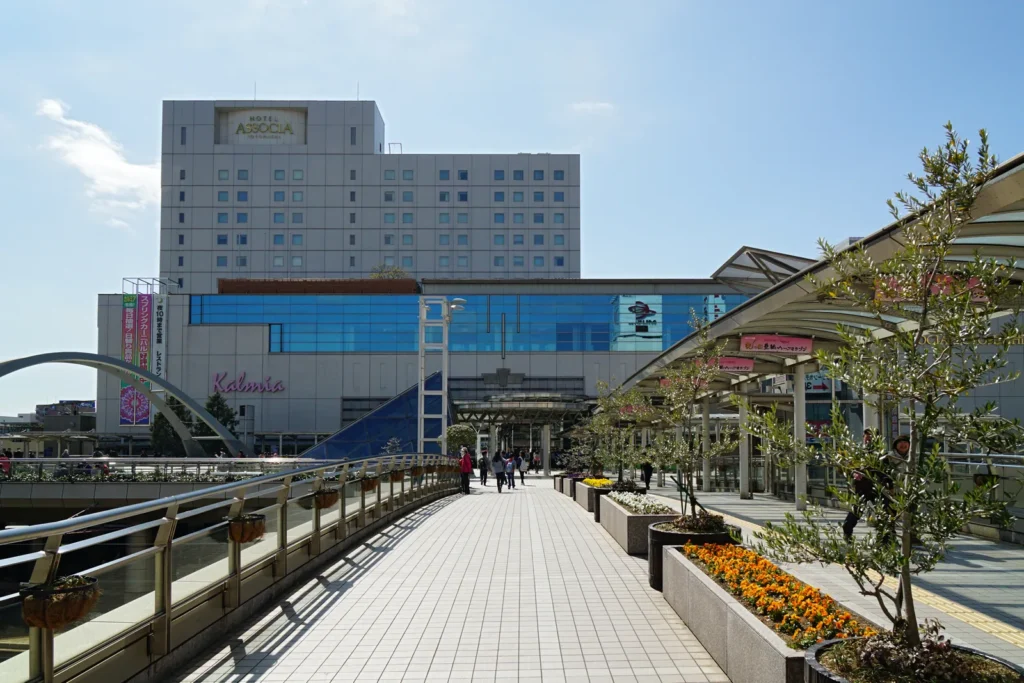
Entry 10 is Kalmia, the station building itself — shops, food and the concourse you walk through on arrival. Entry 12 is Toyokawado’s Kalmia branch, a second bookshop inside it, which makes the station a two-bookshop stop before you have even left the building. Both keep station-building hours; check on the day.
Toyohashi City Machinaka Library (map 9)
Entry 9, and the best free hour in the city: a modern public library on the second and third floors of the emCAMPUS EAST building, with reading seats, a cafe area and a view over the main road. In episode 9 the official synopsis has Nukumizu and Komari calling at a library to return reference material while preparing their exhibition, and this is the library the map points visitors to.
It is open until 21:00, which makes it the natural last stop of a centre walk once the shops have shut. Closed the fourth Friday of each month — the day before if that Friday is a public holiday — plus the new year period and stocktaking. About five minutes on foot from Toyohashi Station, five from Shin-Toyohashi, or two from the Ekimae-Odori streetcar stop.
It is a working public library. Keep your voice down, do not photograph other users, and ask at the desk before taking pictures inside.
The Mizujo Building (map 19)
Entry 19 is a thin, three-block-long terrace of small shops built along a covered watercourse, running south-west from near the station. Nothing about it is polished, which is why it is interesting: old storefronts, a few new coffee roasters and galleries, and a straight line you can walk end to end in fifteen minutes.
Walk the whole run rather than stopping at the first block, and look up at the building backs — the first block is the tidiest and the least characteristic. About ten minutes on foot south-west of Toyohashi Station.
Eating on the same walk
The map’s station-area entries include several places to eat, and episode 8 sends Nukumizu, Yanami and Komari into the town centre to research a theme for the literature club exhibition — which, by episode 9, has become “eating and reading”. Treat these as one or two stops in a day, not a list to complete. All are working businesses: queue, order, and keep bags out of the aisle.
- UNO-UNO (map 7), a cafe in the station building — the easiest stop to make before or after a train.
- Bon Chiga (map 8), a confectioner near the station, and one of the five points on the 2024 JR Central voice rally.
- Murata no Takoyaki (map 11), a takoyaki counter — a few hundred yen, eaten standing up, the most in-character snack on the list.
- Yamasa Chikuwa, Nishi-eki branch (map 13), the Toyohashi fish-cake maker; a stop for something to eat now and something to carry home.
- Coffee and Canele (map 20), a small coffee shop at the Mizujo Building end of the walk.
- Miyako Udon (map 23) is also on the map, out in the wider area rather than on the station walk.
One stop east: Futagawa
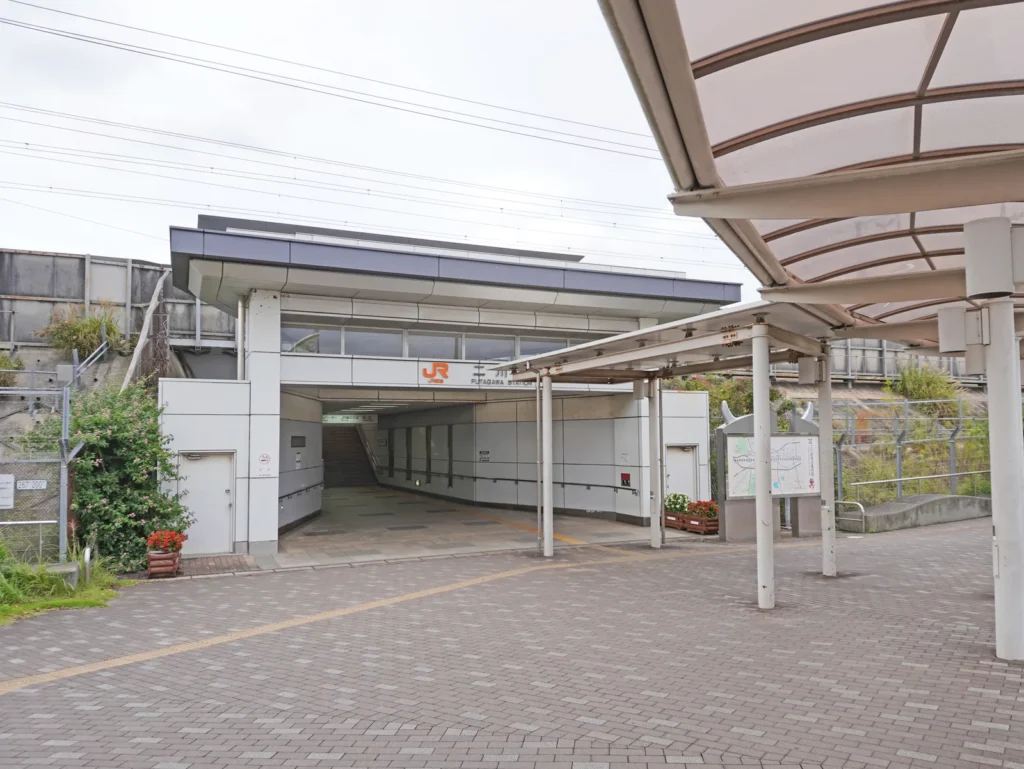
Futagawa is a single JR stop east of Toyohashi, and it is the only part of the wider map that fits comfortably into a public-transport trip. Two of the map’s entries are here, on opposite sides of the station.
Nonhoi Park (map 22)
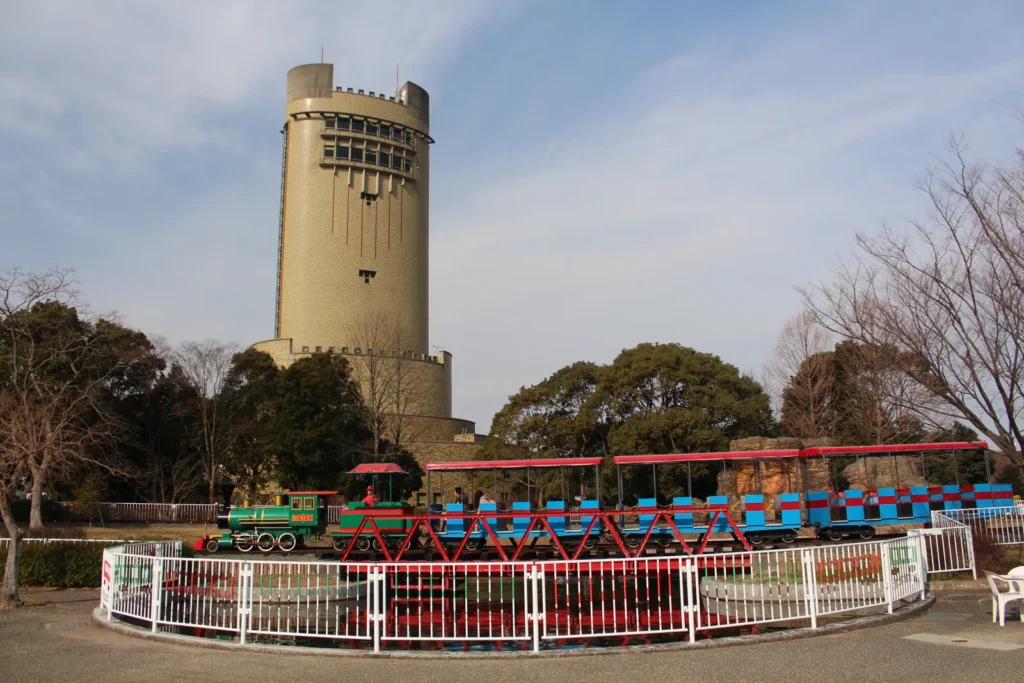
Entry 22, and the one location the official synopses put at the centre of two episodes. In episode 11 Yanami’s idea for curing Komari’s terror of speaking in public is to start with animals rather than people, so the three of them go to Nonhoi Park for her to practise; in the final episode they come back to stage fake-date photographs, starting — at Komari’s suggestion — with the amusement area. What is there is a combined zoo, botanical garden, natural history museum and small amusement park, big enough to fill most of a day.
Decide before you buy whether you are riding anything, because the tickets stack up and the rules are fiddly. The figures below are all gate prices from the park’s own information.
- Opening hours: 9:00 to 16:30, last entry 16:00. Closed Mondays; when a Monday is a public holiday the following weekday closes instead.
- Admission: 600 yen for adults, 100 yen for primary and junior high school pupils, preschool children free. An advance ticket bought at a park gate or at the city hall east building costs 480 and 80, and is valid from the day after purchase. This is the gate price only.
- The rides are charged separately: 100 to 300 yen each for adults and 100 to 150 for children, with the sports kart at 1,000 yen. A one-day ride pass is 1,000 yen for adults and 500 for children and covers ten of them — the Ferris wheel, merry-go-round, go-karts, cycle monorail, kids’ coaster, kids’ train, flower cup, the two shooting rides and the boats. It does not cover the battery cars, the small vehicles or the sports kart, and the boats themselves run only on Sundays and holidays outside winter. Each ride has its own age and height rules.
- The in-park shuttle bus: a different thing again, and it runs Saturdays, Sundays and public holidays only. 200 yen a ride for adults and 100 for children. There is a day pass at 500 and 250, but it is sold only in the quiet months — January, February, July, August and December, and not over the new year or Obon — so for most of the year a single fare each way is what is available.
- Getting there: JR Futagawa Station, south exit, about 6 minutes on foot.
Toyohashi Science Centre: the planetarium (map 14)
Entry 14 covers two adjoining municipal facilities, the Toyohashi Underground Resources Museum and the Audio-Visual Education Centre, which run together as Toyohashi Planetarium. Episode 6 takes the group to a planetarium: Yakishio tries to engineer some time alone for two of the others and it turns into an argument instead — a small, awkward, very Makeine outing.
The show times are what decide whether this works on your day. The operator publishes the schedule a month at a time and no further. At the time of checking, weekends and public holidays ran four shows, at 10:30, 13:00, 14:30 and 15:30, which is confirmed by the operator’s own public calendar; weekdays ran a single show late in the afternoon. Check the current month on the planetarium’s own page before you fix your day, because a weekday visit has one chance at it.
- Admission: the exhibits are free. The planetarium is 450 yen for adults and 150 yen for junior high school age and under, with reductions including free entry for holders of a disability certificate and one carer, and 150 yen for Toyohashi residents turning 70 or over that year.
- Hours: 9:00 to 16:30. Closed Mondays — the following weekday when that Monday is a public holiday — and 29 December to 3 January.
- Getting there: JR Futagawa Station, north exit, about 12 minutes on foot. That is the opposite side of the station from Nonhoi Park, which is the thing people get wrong. 60 free parking spaces.
- In the room: it opens ten minutes before a show and you cannot enter or leave once it has begun. On weekends and public holidays you collect a timed ticket beside the ticket machine, one per person. The projection room is one floor up with no lift; the wheelchair stair lift takes about fifteen minutes per person, so arrive early and tell the office.
- No bins on site — take your rubbish with you. Free wheelchair and pushchair loan, nappy-change tables in both buildings and a nursing room in the Audio-Visual Education Centre.
The wider map: a separate day, and mostly a car
The rest of the twenty-three are spread across the coast and the hills, in Toyohashi’s outskirts and in neighbouring municipalities. They do not belong in a station-area day, and some of them do not belong in a public-transport day at all. Check each one’s own opening information before committing.
- Shiraya Beach (map 4) and the Ebima Outdoor Activity Centre (map 5), on the coast south of the city.
- Michi-no-Eki Mokkuru Shinshiro (map 15), Narasawa river crossing (map 16), Suwa Shrine (map 17) and Hon-Nagashino Station (map 18) — these are in Shinshiro, up the Iida Line into the Oku-Mikawa hills, not in Toyohashi.
- Michi-no-Eki Toyohashi (map 21) and Gusto Toyohashi Hashira (map 3), both on the road rather than the rail network.
- USA Toyohashi Ekimae (map 6) is marked closed on the official map. It is listed here only so you do not go looking for it.
How to Get to Toyohashi
Toyohashi is a Tokaido Shinkansen stop, which makes it much easier to reach than its size suggests. It is also a junction: JR, Meitetsu and the two Toyohashi Railroad lines all meet at or beside the same building, and knowing which is which saves confusion on arrival.
From Chubu Centrair International Airport
Centrair is the nearest international gateway. The Meitetsu line runs directly from the airport terminal to Nagoya; from Nagoya you continue east to Toyohashi, either on JR’s Tokaido Line or on the Meitetsu Nagoya Main Line, both of which end up at the same station. Buy the onward ticket at Nagoya rather than trying to through-ticket from the airport, because the airport leg and the eastern leg can be different companies.
We are not giving a door-to-door total from the airport. Immigration, baggage and the wait for a connection are the variable parts, and a single headline figure would be a guess. Check your own flight against a route planner on the day, and note that the fastest Nagoya–Toyohashi services are limited expresses rather than locals.
From Tokyo, Kyoto and Osaka
- By Shinkansen. Toyohashi is served by Hikari and Kodama trains on the Tokaido Shinkansen; the fastest Nozomi services do not stop here. Check which service your ticket is valid for before you board.
- From Nagoya. JR Tokaido Line rapid services and Meitetsu limited expresses both run to Toyohashi. They use different tracks and different tickets.
- From Hamamatsu and the east. Toyohashi is the end of several JR local and rapid services from Shizuoka Prefecture.
Which station is which
- Toyohashi Station — Tokaido Shinkansen, JR Tokaido Line, JR Iida Line and the Meitetsu Nagoya Main Line. The station building is called Kalmia.
- Shin-Toyohashi Station — the Toyohashi Railroad Atsumi Line to Mikawa-Tahara, on the Atsumi Peninsula. It is beside Toyohashi Station, a short walk from the JR concourse, and it is a different company and a different ticket.
- Ekimae stop — the Toyohashi Railroad city line, the streetcar. On the road outside the station, not inside it.
Tickets, and what they do not cover
- A JR ticket or rail pass does not cover Meitetsu, the Atsumi Line or the streetcar. They are separate companies.
- The manaca IC card works on the streetcar, the Atsumi Line and Toyotetsu buses; IC cards from other regions are generally interchangeable, but carry some cash for small operators.
- If you are spending the day on the streetcar, the one-day streetcar pass pays for itself in three rides. There is also a combined Ikomai Toyohashi pass covering the streetcar, part of the Atsumi Line and Toyotetsu buses within the city.
- Futagawa is JR, so a JR ticket or pass does cover it.
Best Way to Get Around
Verdict for Toyohashi: the station cluster is a walk, Futagawa is one JR stop, and the streetcar is both transport and a thing worth doing. A car only earns its place if you are going to the coast or into the hills.
On foot
The station-area entries on the map sit inside a rough triangle you can cross in fifteen minutes: the bookshop two minutes out, the library five, the Mizujo Building about ten in the other direction. Give the walk a slow afternoon rather than a schedule.
The streetcar
Flat fare, 200 yen for adults and 100 for children, anywhere on the line; you board at the back and pay as you get off. From Ekimae it runs east through Ekimae-Odori, Fudagi, City Hall and Toyohashi Park before splitting for Akaiwaguchi and Undokoen. Riding one end to the other and walking back is a perfectly good way to spend an hour.
JR to Futagawa
One stop east on the JR Tokaido Line. Nonhoi Park is about six minutes from the south exit; the planetarium and science centre about twelve from the north exit. Doing both in one day means crossing the station between them, which is fine — just do not assume they are next door to each other.
The Atsumi Line, and buses
The Toyohashi Railroad Atsumi Line runs south from Shin-Toyohashi to Mikawa-Tahara, on the peninsula, with sixteen stations; it is the way to the coast without a car, though the beach entries on the map still need a bus or taxi at the far end. Toyotetsu buses cover the city and the wider region; check the route and the operating days for your date, because some services thin out at weekends.
Car
Worth it only for the wider map — the coast, the roadside stations, and the Shinshiro entries up in the hills. Rental desks are around the station. Check that your driving documents are valid in Japan before you book.
What to Eat in Toyohashi
Food matters more in this series than in most pilgrimages — Yanami eats constantly, and by episode 9 the literature club’s exhibition theme has become eating and reading. Toyohashi obliges. Here is what the city is actually known for, separately from the map entries listed above.
Toyohashi curry udon
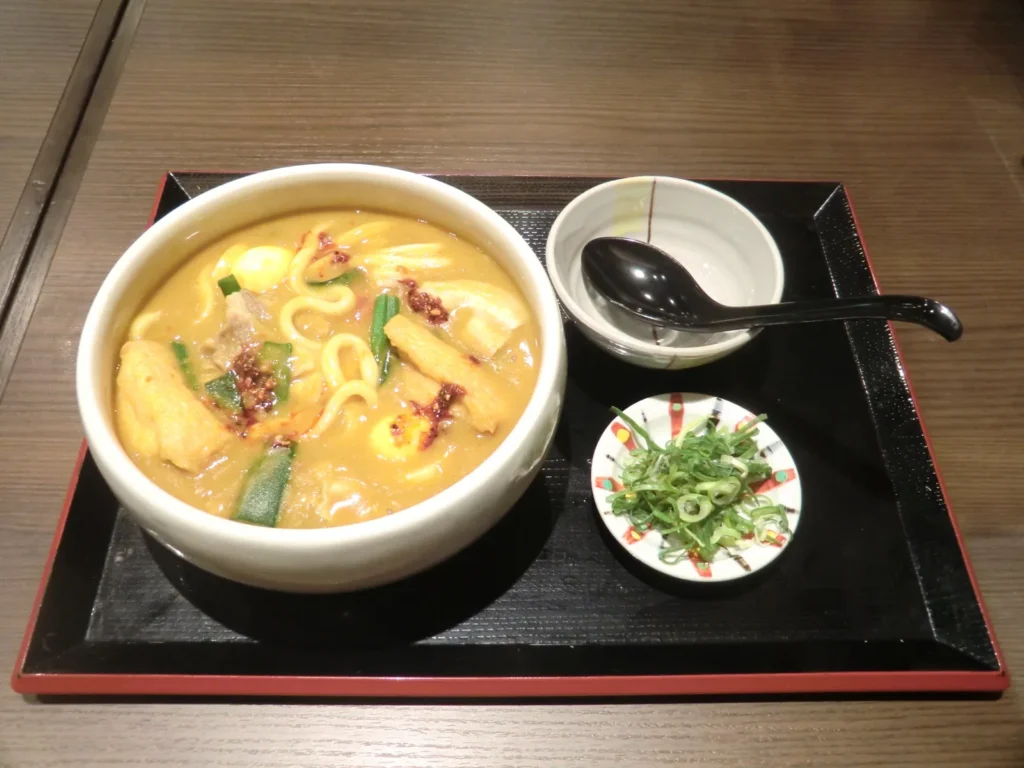
The city’s signature dish, the one thing to plan a meal around, and much stranger than its name suggests. The tourism association publishes five conditions a bowl has to meet: the noodles are made in-house; the bowl is built in layers from the bottom up — rice first, then grated yam, then the curry udon on top; the quail eggs are Toyohashi-grown; pickles and red pickled ginger come on the side; and — the fifth condition, and they mean it — it is made with affection. Only shops with premises in Toyohashi that belong to the Toyohashi Noodle Association and to the serving-shops group Team Karei are allowed to sell it, so the association’s own shop list is how you find one.
How to eat it, which is the whole point. Do not stir it. The association is explicit about this: push your chopsticks to the bottom to mix it and you halve the fun. Eat the curry udon first, as an ordinary bowl of curry udon. Then, as the noodles go down, the second half of the dish surfaces — rice under a layer of grated yam, sitting in what is left of the curry. Mix that, and you get a second, completely different meal out of the same bowl. Two courses, one bowl, about the price of a bowl of noodles. It is a very good thing to eat in a town you are walking around all day, and it is the sort of local invention you cannot really order anywhere else.
Toyohashi eel
Eel is a Toyohashi brand product, farmed locally and sold as Toyohashi unagi. The tourism association points visitors at a producer that runs facility tours and a directly operated shop, where the local take includes eel rice balls and grilled eel skewers rather than only the full rice-bowl treatment. It is the one expensive thing on this page; the skewers are the cheap way in.
Chikuwa
Tube-shaped grilled fish cake, made in Toyohashi for a very long time and sold everywhere from the station building to the roadside. The map’s entry 13 is a branch of one of the city’s makers; a stick eaten on the spot costs a few hundred yen, and the same shops sell boxed versions to take home.
Takoyaki, coffee and the rest of the walk
The station-area map entries cover a takoyaki counter, two cafes and a confectioner — listed in the pilgrimage section above. Spread them across the trip. One snack mid-walk and one proper sit-down meal is a realistic day; four food stops in an afternoon is how you end up not eating any of them properly.
Beyond the Anime: More to See
None of the places in this section is on the official pilgrimage map. They are here because Toyohashi was a Tokaido post-town and a castle town before it was anything else, and because the two best of them sit exactly where the pilgrimage already takes you — on the streetcar line, and at Futagawa. Treat them as the trip widening out, not as locations from the series.
Toyohashi Park and Yoshida Castle
The castle grounds are a public park on the streetcar line, and the reconstructed kurogane turret can be entered free of charge. The city and the tourism association both give the same normal opening: Tuesday to Sunday, 10:00 to 15:00, free, closed Mondays and over the new year, and open on a Monday that is a public holiday. Neither publishes a rule moving that closure to the next day, so do not assume one. Access is about ten minutes on the streetcar to City Hall-mae, then five minutes on foot. The grounds and the stonework are open whatever the turret is doing.
Futagawa-juku, on the same trip as Nonhoi Park
Futagawa was the thirty-third post station on the old Tokaido, and the preserved honjin — the official lodging for travelling nobility — is now a museum a kilometre east of the station’s north exit, about fifteen minutes on foot. One ticket covers the honjin and the neighbouring hatago, Seimeiya, which is the inn ordinary travellers used: the grand version and the cheap version of the same night on the road, side by side. Opening hours are 9:00 to 17:00 with last entry at 16:30, closed Mondays (the next weekday when that Monday is a holiday) and 29 December to 1 January. Parking is free, with a hundred spaces. The restored merchant house Komaya nearby is free to enter.
Admission, as revised on 1 April 2026: 500 yen for adults and university students, 100 yen for primary, junior high and high school pupils, preschool children free. An advance ticket, or a group of thirty or more, pays 400 yen and 80 yen instead; advance tickets are valid from the day after you buy them. Toyohashi residents aged 70 and over pay 100 yen on production of ID. The 400 yen figure you may still find quoted as the standard adult price is the pre-April-2026 rate, not a current alternative.
This is the reason to give Futagawa a whole day rather than an afternoon: the park on the south side, the planetarium and the post town on the north side.
Imo Marsh
A spring-fed wetland of about 3.2 hectares at the foot of the hills east of the city, designated a national natural monument in October 2021, and free to visit at any time. It has no peat layer: water from the mountains seeps through thin soil over chert bedrock and keeps the ground wet, which is why plants that are otherwise confined to the Tokai region grow here. From bus stop 3 outside Toyohashi Station’s east exit take the Toyotetsu bus on the Iimura–Iwasaki route, get off at Iwasaki·Imo-shitsugen and walk about eight minutes; there is a free car park with around eighty spaces. Boardwalks only — stay on them.
Festivals, and one warning about them
- Toyohashi Fire Festival — the city’s tezutsu hand-held fireworks, where men hold burning tubes that throw sparks metres into the air. The 31st edition is announced for Saturday 7 November 2026, gates 15:00, starting 17:30 and finishing 19:00. Tickets must be bought in advance; general sale opened on 18 September 2026. There is no walk-up admission.
- Oni Matsuri — the demon festival at Akumi Kanbe Shinmeisha shrine, held on 10 and 11 February every year.
- A 2026 anime-related stage event. A talk stage tied to the series was advertised for 31 October 2026 as part of a city festival, but applications for it closed on 9 October 2026. Do not travel expecting to walk in.
Souvenirs and Where to Buy Them
Two useful facts: the station building has a souvenir floor, so you can leave this to the last hour; and the tourism association publishes an official souvenir list with an “available at the station” filter, which is the fastest way to check whether something is gettable on your way out.
The things actually from here
- Tezutsu chikuwa — fish cake named after the festival’s hand-held firework tubes. The most Toyohashi object on the list.
- Pirene — the signature sweet of a long-established local confectioner, and the item the tourism site leads with.
- Jiro persimmon jelly — made from the persimmon variety grown around here.
- Hama-natto — a dark, salty, dried fermented soybean, nothing like the sticky breakfast kind. An acquired taste and a good gift for someone who likes those.
- Streetcar goods — the official list includes a model of the city’s chin-chin densha. If you want one object that says “I walked around Toyohashi”, this is it.
- Writing brushes — hand-made brushes from a workshop in the city’s eastern hills, on the official craft list. Fitting for a guide about a literature club.
For the series itself
We found no permanent official Makeine shop in Toyohashi. Campaign goods have appeared through time-limited tie-ups — including a 2024 JR Central campaign whose pickup points included the bookshop at map entry 1, which has since ended. Buy the novels or the volumes you want at the bookshop as the souvenir, and treat anything else as a bonus if a campaign happens to be running.
Where to Stay
Toyohashi is a Shinkansen stop with a working business district attached, which means the practical choice is a business hotel within a few minutes of the station — the east side of Toyohashi Station and the streets behind Kalmia are where most of them are. That is also the right place to be for this particular trip, because the station cluster is the pilgrimage.
- Stay at Toyohashi Station if you are doing the one-day or two-day version. Everything in itinerary A is on foot from here, Futagawa is one stop, and you can drop bags before you start.
- Stay in Nagoya if Toyohashi is one stop on a longer Japan trip and you want the choice of a big city in the evening. Trains run frequently and the journey is short, but you lose the early start that Nonhoi Park rewards.
- Stay in Hamamatsu if you are coming from the east and want to split the Tokaido differently. Same trade-off in the other direction.
Book early for the festival dates named in the previous section, and for weekends with a large event on at the station-side venues. We have not checked live availability for any particular date, so treat that as a reason to book in good time rather than as a claim that the city sells out.
Suggested Itinerary
This is a series about detours — bookshops, cheap lunches, a planetarium, a zoo — so the pilgrimage is a town walk rather than a list of landmarks. Almost everything in the centre is within fifteen minutes of Toyohashi Station on foot, Futagawa is one stop east on the JR line, and the rest of the map is a separate day with a car.
| Which trip | Toyohashi centre | One stop east: Futagawa | The wider map |
|---|---|---|---|
| Time | Half a day on foot | Half a day, or a full one with the zoo | A day, with a car |
| Transport | Walking, plus a flat-fare streetcar | JR, then a walk from either side of the station | Car in practice |
| Priority if rushed | Bookshop, library, Mizujo, lunch | Nonhoi Park, or the planetarium — not both easily | Skip it on a first visit |
| Watch out for | Shops shutting at 20:00 | The planetarium’s single weekday show, late in the afternoon | Opening days out of town |
Three versions. A on its own is a complete trip — it is the one most people should do, and it needs no car and no second night. B adds the day that Futagawa deserves. C is for the wider map, and is optional.
A — One day, on foot and by streetcar
- Morning. Arrive at Toyohashi Station. Bags into a locker or the hotel. Seibunkan (map 1) first, two minutes out — the light novel shelves, and whatever the shop has for local titles. Then Toyokawado inside Kalmia (map 12) if you want the second bookshop.
- Late morning. Walk five minutes to the Machinaka Library (map 9) and actually sit down in it. Thirty to sixty minutes, free, and the closest thing the trip has to being in the literature club. Closed the fourth Friday of the month.
- Lunch. Toyohashi curry udon at a Team Karei shop, or the takoyaki counter at map 11 if you want to eat standing up and keep walking.
- Early afternoon. Ride the streetcar from Ekimae (map 2). Flat 200 yen. Take it out to City Hall-mae for Toyohashi Park and the free castle turret — open 10:00 to 15:00 per the city, Mondays closed — then ride back.
- Mid afternoon. The Mizujo Building (map 19), ten minutes south-west of the station. Walk the full three blocks of it, ending at the coffee shop at map 20.
- Before your train. Souvenirs in Kalmia (map 10), and chikuwa at map 13 if you want something to carry home.
That is a full day with sitting-down time built in, which is the point. There are twenty-three entries on the official map and this itinerary visits eight of them; completing the map is not the goal and was never going to make a better day.
B — Two days, adding Futagawa
Day one is itinerary A. Day two goes one JR stop east. There are three things out there — the park, the planetarium and the post town — and they do not all fit comfortably into one day. Pick a pairing before you travel rather than improvising on the platform.
The planetarium decides the shape of the day. It publishes its programme a month at a time, and in the month this guide was written that meant a single show on Tuesday to Friday, at 15:00, against four on Saturdays, Sundays and public holidays — 10:30, 13:00, 14:30 and 15:30. You cannot enter once a show has begun. So a weekday visit has one fixed point at 15:00 and everything else has to be built around it, while a weekend gives you a choice of four. Look up the current month on the planetarium’s page, pick your show, and then choose the version below that fits.
B1 — the park and the planetarium (the default)
The two Makeine locations at Futagawa, and nothing else. This is the version to do.
- 09:00. JR to Futagawa, south exit, six minutes on foot to Nonhoi Park (map 22) — the location at the centre of episode 11 and the final episode. It opens at 09:00. Four hours is a good visit.
- Lunch inside the park. There is food in there and you will not want to walk back out for it. If you are riding anything, buy the ride pass or single tickets separately from admission.
- 13:30, and not much later. Leave, walk back to the station, cross to the north side and walk twelve minutes to the Toyohashi Planetarium (map 14), the episode 6 location. Allow half an hour door to door.
- Before the show. The ground-floor exhibits are free and fill the wait. On a weekend or holiday collect your timed ticket as soon as you arrive.
- The show. 15:00 on a weekday; on a weekend take 14:30 or 15:30. 450 yen. The building closes at 16:30.
- Evening. Back to Toyohashi for dinner. Eel, if you are going to.
What has to be true for this to work: you leave the park by about 13:30, and the day’s schedule actually has a show at 15:00 or later. If the month you are travelling in has moved the weekday show earlier, shorten the park visit by the same amount — or do B2 instead.
B2 — the post town and the planetarium (no zoo)
If the Tokaido interests you more than the animals do, this is the better day, and a far gentler one: both places are on the north side of the station, fifteen minutes’ walk apart, and nothing has to be rushed.
- Morning. Futagawa north exit, a kilometre east to the honjin museum and the hatago next to it. Two hours is generous; the old road itself is worth the walk.
- Lunch around the post town or back at the station.
- Afternoon. Walk back west to the planetarium for the 15:00 show, or an earlier weekend slot, with the free exhibits before it.
- Spare time? The park is still there and still open until 16:30, last entry 16:00 — but treat it as a bonus, not as part of the plan.
B3 — all three, and only at a weekend
Possible, but only because weekends have a 10:30 show. It needs the early start and it costs you depth at the park.
- 10:30 show first (timed ticket on arrival), then the honjin museum, both on the north side.
- Cross to the park by about 14:00 — last entry is 16:00 and it closes at 16:30, so you are getting roughly two and a half hours and should treat the amusement area as optional.
- Do not attempt this on a weekday, when the only show is at 15:00 and the park would have to be cut to nothing.
Do not plan day two on a Monday
- Nonhoi Park, the planetarium and science centre, and the Futagawa-juku honjin museum: all closed Mondays. Each one publishes the same rule for a Monday that is a public holiday — it opens, and the following weekday closes instead. That moves the problem rather than removing it, so check the day after a holiday too.
- The castle turret in itinerary A is different: closed Mondays and over the new year, but open when a Monday is a public holiday, and neither the city nor the tourism association publishes a next-day closure for it. Do not apply the Futagawa rule to it.
- The honjin museum also closes 29 December to 1 January, and the science centre 29 December to 3 January.
C — Optional third day: the coast, or the hills
Only if you have the time and want the rest of the map. Pick one, not both.
- The coast. The Toyohashi Railroad Atsumi Line from Shin-Toyohashi runs down the Atsumi Peninsula to Mikawa-Tahara. Shiraya Beach (map 4) and the Ebima outdoor centre (map 5) are out this way, and the last leg to either still needs a bus, a taxi or a car. A beach day, essentially.
- Oku-Mikawa. The JR Iida Line north to Shinshiro reaches Hon-Nagashino Station (map 18), the Narasawa river crossing (map 16), Suwa Shrine (map 17) and the Mokkuru Shinshiro roadside station (map 15). These are in Shinshiro, not Toyohashi. Services are infrequent and the places are spread out; this is the one part of the map where a car is the honest answer.
Travel Tips and Etiquette
The one that matters most here
Nearly every station-area entry on this map is a working business or a public facility that local people use on an ordinary Tuesday. The library is a library. The bookshop is somebody’s livelihood. The takoyaki counter has a queue of people on their lunch break. Buy something, keep your voice down, keep your bag out of the aisle, and ask before you photograph anything indoors — and accept no as an answer.
Places not to go looking for
The school and the homes in this series are not on the official pilgrimage map, and this guide does not identify them. Do not go to schools, do not photograph residential buildings, and do not post route details that would let somebody else do either. The official map is the list; treat anything that is not on it as not part of the trip.
Practical
- Mondays. See the warning above. Mondays close most of the paid attractions in this guide.
- Money. IC cards work on the streetcar, the Atsumi Line and Toyotetsu buses. Small shops and the takoyaki counter may be cash only; carry some.
- Tickets. A JR pass covers JR, including Futagawa. It does not cover Meitetsu, the Atsumi Line or the streetcar. Those are separate companies with separate fares.
- Luggage. Lockers at Toyohashi Station, and the station building is where itinerary A begins and ends.
- Weather. This is a coastal plain. Summer is hot and humid and the walk between Futagawa’s two sides is exposed; late September is typhoon season.
- Language. Expect little English once you are away from the station. Have your destinations written down in Japanese, and the map’s entry numbers are the easiest way to show a taxi driver where you mean.
If you are asking about the series in a shop
Many of these businesses are pleased to be on the map and some have made their own displays of it. Some have not, and a shop that has not asked for pilgrimage visitors does not owe you a conversation about an anime. Order first, ask second, and do not ask staff to pose.
Plan Your Trip
The guides below are suggested as route pairings — journeys that combine well with Toyohashi’s position on the Tokaido and its Shinkansen stop — rather than as guides that visit the same places:
- Your Name in Hida, Gifu — reached from Nagoya, the same gateway city as Toyohashi, on a limited express up into the mountains.
- Yuru Camp in Yamanashi and Shizuoka and Love Live! Sunshine!! in Numazu, Shizuoka — the next prefecture east along the same line, for Mount Fuji and the coast.
- mono in Kofu and Yamanashi — another guide built around a provincial city you can walk out of the station.
- Bocchi the Rock! in Shimokitazawa, Slam Dunk in Kamakura and Enoshima, Girls und Panzer in Oarai and Initial D in Gunma — if you are coming from or going back to Tokyo.
- Detective Conan in Hokuei, Tottori, ONE PIECE in Kumamoto and Attack on Titan in Hita, Oita — for a longer trip west, changing at Nagoya.
How this guide was put together
This guide was researched and planned from published sources rather than written up from a visit. Checked on 12 October 2026: the official Makeine Toyohashi map for the numbered entries and for which episode each belongs to; Toyohashi Planetarium’s own site for the free exhibits, the 450 and 150 yen planetarium charge, the Monday closures, the no-entry-once-started rule and the stair lift, and its public schedule calendar for the weekend and holiday show times of 10:30, 13:00, 14:30 and 15:30; Nonhoi Park for admission, the ten rides the day pass covers and the in-park shuttle bus; and the Toyohashi City Machinaka Library and the Toyohashi Railroad for their own hours and fares.
What could not be confirmed. The planetarium publishes its schedule only up to the current month, so no times beyond that are given here and none are guessed. The weekday single show is described as the pattern at the time of checking rather than as a fixed timetable.
Written and edited by Nick, who runs Anime Routes Japan from Japan. More about Nick, and about how these guides are made, is on the About page.
The practical details here — opening hours, fares, access and the operators’ own requests — were checked against official sources on 11 October 2026: the work’s official site and its own pilgrimage map, the English publisher for the English title, Shogakukan’s Gagaga Bunko site for the original novels, and then each place’s own operator — Nonhoi Park, the municipal science centre, the city library, the bookshop, Toyohashi Railroad, the city of Toyohashi and the Toyohashi tourism association. Opening hours, fares and admission prices change, and small shops change faster than anything else. Confirm the ones your day depends on before you travel, and give the library an hour.
This guide currently contains no affiliate links.