ONE PIECE Pilgrimage Guide to Kumamoto, Japan
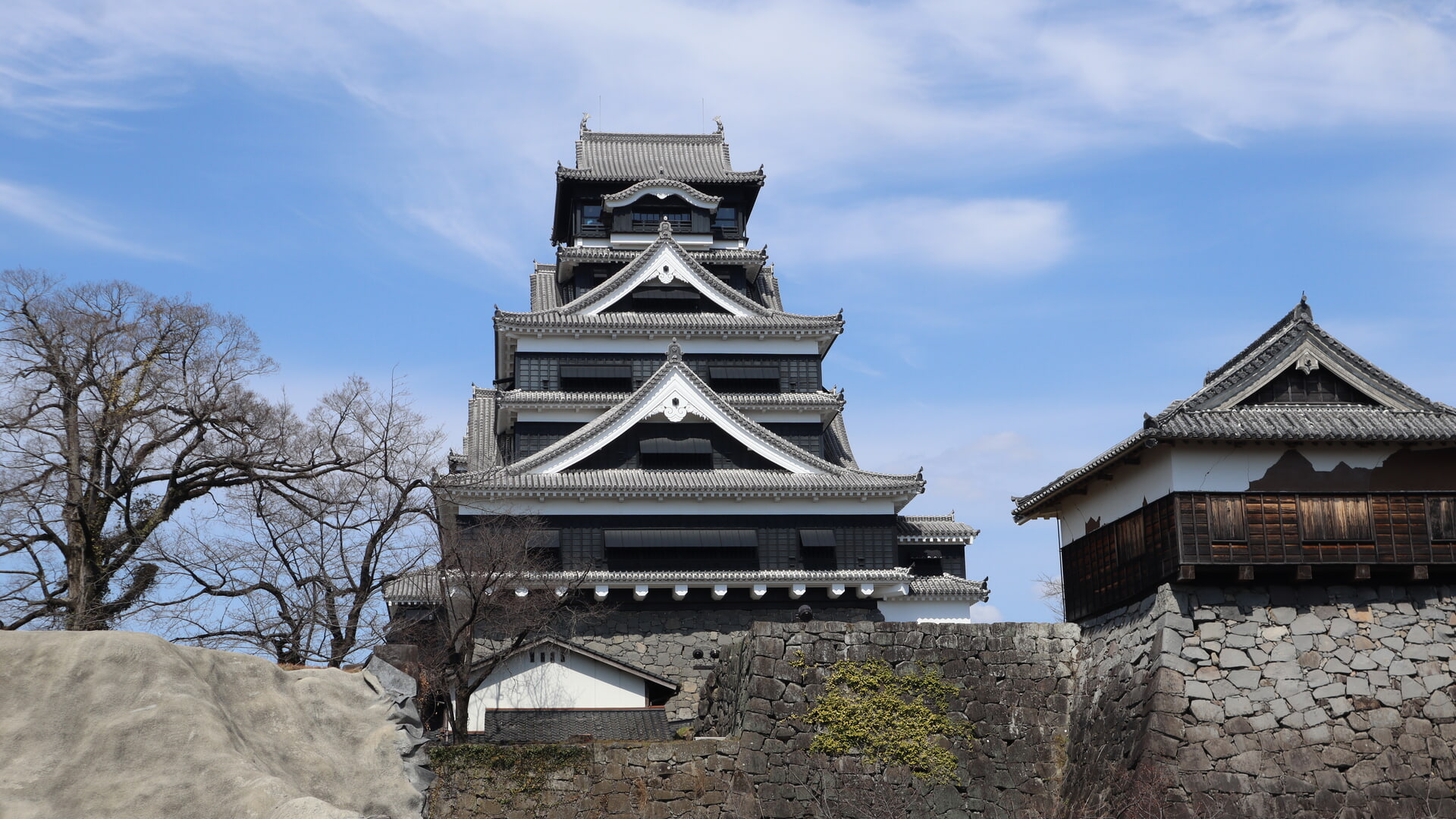
Header photo: the reconstructed main keep of Kumamoto Castle, photographed in 2024. Photo: ノボホショコロトソ, CC BY-SA 4.0 (cropped and resized). Source.
Kumamoto is where the author, Eiichiro Oda, comes from, and after the earthquakes of April 2016 he sent the prefecture a message: 「必ず助けに行く」, “I will definitely come to help.” The prefecture’s answer was to send the crew. Luffy stands outside the prefectural government building, and each of the other nine stands in a town hit by the earthquakes, assigned to the problem that fits their skill — the cook where the school-lunch kitchen was destroyed, the doctor at the zoo whose animals had to be evacuated, the shipwright at the station of a railway cut in two. Ten statues across nine municipalities, outdoors, free, and deliberately scattered. Decide which of them you want to stand in front of before you plan anything else: two are a tram ride inside the city, two are at station doors on the Aso lines, and the rest each need a bus leg of their own. The official project site lists all ten statues by municipality, each linking to that town’s own page.
Quick Trip Guide
- Destination: Kumamoto Prefecture, Kyushu
- Best Gateway: Fukuoka, then the Kyushu Shinkansen to Kumamoto; Aso Kumamoto Airport if you are flying domestically
- From Gateway: Hakata to Kumamoto takes roughly half an hour on the fastest shinkansen; the airport limousine bus reaches Kumamoto Station in about 60 minutes
- Main Base: Central Kumamoto City
- Getting Around: Trams and walking in the city, trains to Aso, and a rental car for the statues outside both
- Car Needed: No for the city statues and Aso; yes if you want all ten without rearranging your week
- Recommended Stay: 2 nights, 3 days
- Day Trip: Possible from Fukuoka, but only for the two statues inside Kumamoto City
- Best For: ONE PIECE readers who also want a castle, a volcanic caldera, hot springs and strong regional food
Why This Place Matters in ONE PIECE
ONE PIECE is the story of a boy, Monkey D. Luffy, who goes to sea to become King of the Pirates and gathers a crew one member at a time — a sniper, a swordsman, a navigator, a cook, a doctor, an archaeologist, a shipwright, a musician, a helmsman — each of whom joins because Luffy needs exactly what they can do and they, it turns out, need him. The series is about that crew more than about treasure.
A story about a crew
The official site sums up the premise in a sentence: a boy, Monkey D. Luffy, sets out across the sea aiming to become King of the Pirates, in search of the great treasure called One Piece, and gathers companions as he goes. Serialised in Weekly Shonen Jump since July 1997, it has sold more than 510 million copies worldwide by the publisher’s count. What readers come back for is the Straw Hat crew — the way each member has a role nobody else can fill, and the way the crew turns up for each other.
Why the statues are where they are
The ONE PIECE Kumamoto Revival Project is run by Kumamoto Prefecture’s tourism division with the author’s cooperation. After the April 2016 earthquakes Oda sent a message on 17 April promising to help; in 2018, when he received the Prefectural Honour Award, a statue of Luffy was placed on the promenade in front of the prefectural government building as a symbol of recovery. From 2019 the project placed the rest of the crew, one by one over four years, in nine municipalities, under the title The Straw Hat Crew in the Land of Hi — Recovery Arc. The project frames it as a story: Luffy, learning how badly the land was hurt, sends each crew member to help where their skill is needed, and they vow to meet again at his side.
That is the reason to read each statue’s story on the project site before you go. Usopp, the sniper, is at Aso, where the grassland the town is proud of was badly damaged. Zoro, the swordsman, is at Ozu, a kendo town whose children lost their practice hall. Franky, the shipwright, stands at Takamori, the terminus of a railway that was cut in two — like his master Tom, who built the Sea Train in the story. Nothing in ONE PIECE is set in Kumamoto. What you are visiting is the author’s home prefecture and the way it chose to tell its own recovery.
Photographing the statues
- The statues are licensed character sculptures commissioned by Kumamoto Prefecture, not public domain artwork. Photograph them for yourself by all means.
- Permission to take a photograph does not extend to commercial reuse. If you want to publish or sell an image of one, check with the prefecture and the rights holder first.
- Several stand in working places: a station forecourt, a zoo entrance, a town park, a seafront park. Keep the path clear, and take your turn.
Anime Pilgrimage Spots
Ten statues in nine municipalities, spread over much of the prefecture. Group them by area, not by the order the crew joins in the story. Every statue is outdoors, free and always accessible; the facilities beside some of them have their own hours. The project site lists each one with the role the character plays in the recovery story, and the municipality pages give the exact site.
Please respect local rules and manners at every location, and follow signs and staff guidance.
Where these places are
The map shows the places below and how far apart they are. It is drawn with OpenStreetMap: opening it loads map images from openstreetmap.org. The list works without it. Three of the ten statues are listed with the project’s published address only: no position for them is published, so they have a Google Maps link but no pin.
The map could not be loaded. The places are listed below, with their names and a link to each on Google Maps.
- Anime-related places
- Station or transport
- Nearby sight
The 13 places in this guide, 10 of them on the map
- 1Luffy, prefectural government熊本県庁Kumamoto cityIn this guideOpen in Google Maps
- 2Chopper, city zoo熊本市動植物園Kumamoto cityIn this guideOpen in Google Maps
- 3Usopp, JR Aso Station阿蘇駅Aso and TakamoriIn this guideOpen in Google Maps
- 4Franky, Takamori Station高森駅Aso and TakamoriIn this guideOpen in Google Maps
- 5Robin, Earthquake Museum KIOKU熊本地震震災ミュージアムKIOKUAso and TakamoriIn this guideOpen in Google Maps
- 6Kumamoto Castle熊本城Kumamoto cityIn this guideOpen in Google Maps
- 7Suizenji Jojuen水前寺成趣園Kumamoto cityIn this guideOpen in Google Maps
- 8Kumamoto Station熊本駅Kumamoto cityIn this guideOpen in Google Maps
- 9Zoro, Ozu Central Park大津中央公園Other statue townsIn this guideOpen in Google Maps
- 10Jinbe, Sumiyoshi Coastal Park住吉海岸公園Other statue townsIn this guideOpen in Google Maps
- 11Sanji, Mina Terrace, Mashikiミナテラス(益城町)Address only, no published positionIn this guideOpen in Google Maps
- 12Brook, Fureai Hiroba, Mifuneふれあい広場(御船町)Address only, no published positionIn this guideOpen in Google Maps
- 13Nami, Moe no Sato, Nishihara俵山交流館 萌の里(西原村)Address only, no published positionIn this guideOpen in Google Maps
Map data © OpenStreetMap contributors, ODbL. Positions were checked on 15 October 2026 against the source recorded for each place; a few are the published position for a large site rather than an entrance.
The ten statues, grouped by where they are
- Kumamoto City: Luffy at the prefectural government promenade; Chopper at the Kumamoto City Zoological and Botanical Gardens.
- Aso caldera: Usopp in front of JR Aso Station; Franky at Takamori Station on the Minami Aso Railway; Robin beside the Kumamoto Earthquake Museum KIOKU in Minami Aso; Nami at the Moe no Sato produce market in Nishihara.
- Around the city: Zoro at Ozu Central Park; Sanji at Minaterrace, Mashiki’s community information centre; Brook at the Mifune Fureai square; Jinbe at Sumiyoshi Kaigan Park on the coast at Uto.
Luffy, the prefectural government promenade
Luffy came first, unveiled on 30 November 2018 to mark Oda’s Prefectural Honour Award, and in the project’s story he is the captain the rest of the crew promise to come back to — which is why he stands in front of the prefectural office rather than at a tourist site. A life-size bronze on the ginkgo-lined promenade, outdoors and free, and the obvious first stop if you are starting in the city.
A short bus ride, or a walk from the Suizenji area; the tram does not reach the door. People work here, so keep the promenade walkable and stay clear of the vehicle entrance.
Chopper, Kumamoto City Zoological and Botanical Gardens
The zoo’s animal houses were damaged in the earthquakes and animals had to be evacuated to zoos outside the prefecture; Chopper, the ship’s doctor, is the one who looks after them in the project’s story. The bronze went up in November 2020 and stands at the entrance, outside the paid area — so you can see it without buying a ticket, though the zoo is worth the ticket if you have children with you.
Tram east from the centre, then a short walk. The zoo keeps its own opening days and admission. It is a family entrance: do not block the gate, and do not photograph other people’s children.
Usopp, JR Aso Station
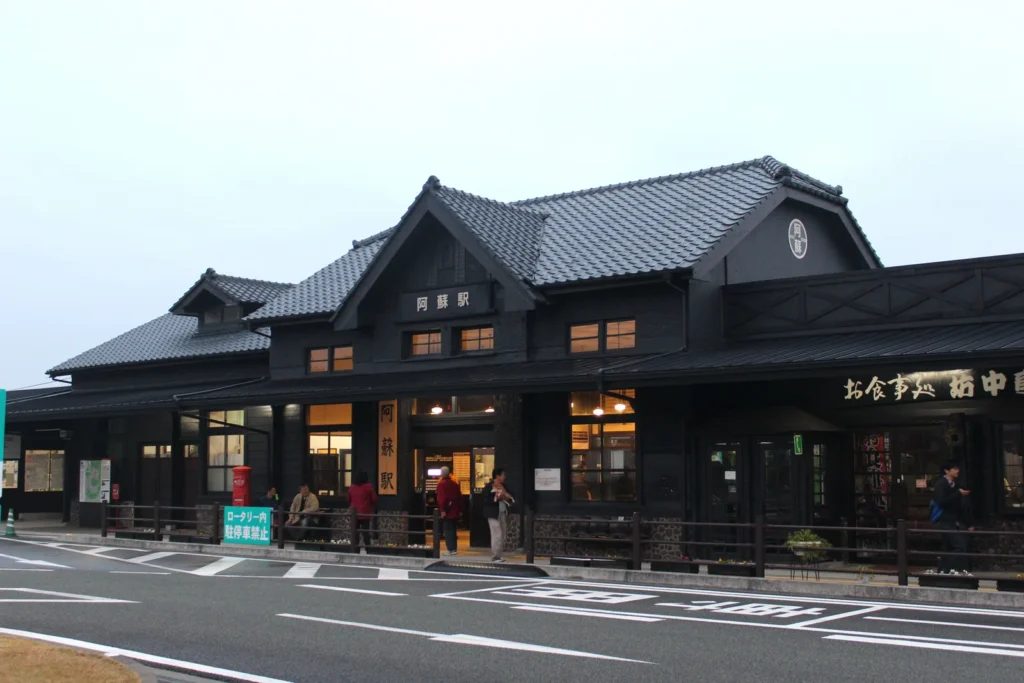
Aso’s grassland, the thing the town is proudest of, was badly hurt, and Usopp — the sniper — uses a tool that works the power of green growing things to help it regenerate. The bronze arrived in December 2019 and stands on the station forecourt with the caldera wall rising behind the town, which is the clearest single view of why this project chose the places it did.
This is the easiest Aso statue to reach by train: the JR Hohi Line from Kumamoto drops you at the door, and the Michi-no-Eki Aso roadside station next door solves lunch and souvenirs in one stop.
Franky, Takamori Station
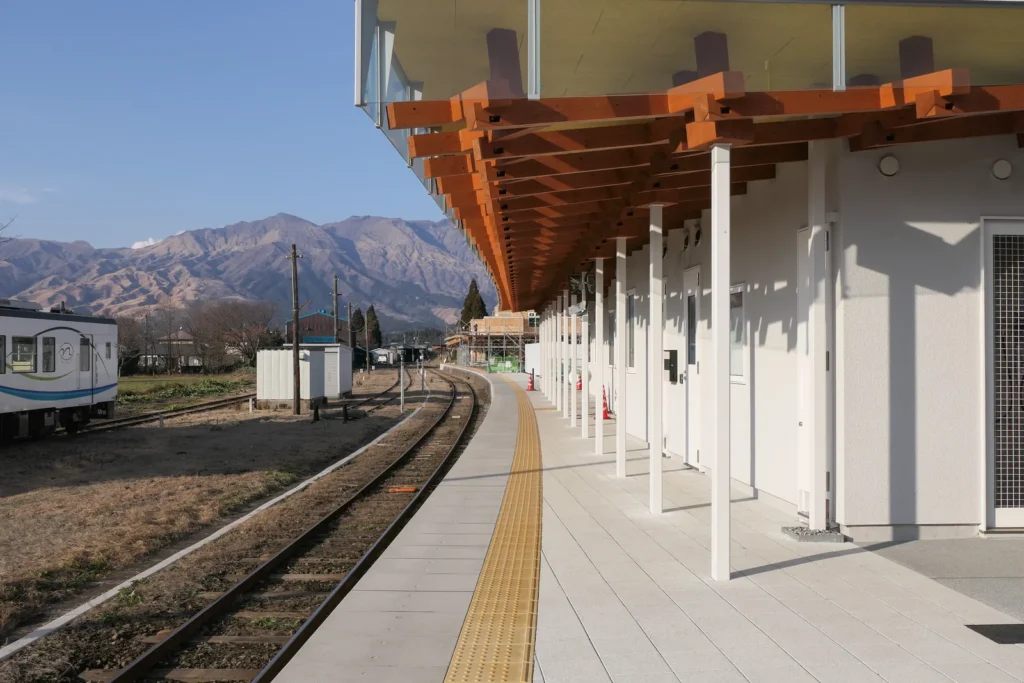
Takamori is the terminus of the Minami Aso Railway, the line that carried people to school and to hospital and was cut by the earthquakes; it ran end to end again from 15 July 2023. Franky, the shipwright, stands at the terminus ringing his hammer for the full reopening, like his master Tom who built the Sea Train. Of the ten, this is the one where the statue and the thing it is about are the same object.
- The Sunny train, themed on the crew’s ship with characters hidden in the scenery outside the windows, runs on this line. On 12 October 2026 the project site showed it suspended for vehicle inspection; on 18 October that notice was gone and the page showed the running calendar for September to November 2026: mainly Fridays, weekends and public holidays, with one unreserved round trip in the morning and, on some of those days, a second, all-reserved round trip in the afternoon that has to be booked ahead. Check the calendar for your date before planning a day around it.
- Fares: the ordinary fare between Takamori and Tateno rose to 550 yen for adults on 1 October 2026, from 490. IC cards are not accepted; take the numbered ticket on board and pay cash.
- Getting there: JR Hohi Line to Tateno, then the Minami Aso Railway to Takamori. Services are infrequent on both, so check the return before you leave. The project also lists the Sanko bus from Kumamoto Sakuramachi to Takamori Chuo, about ten minutes on foot from the station, which avoids the change at Tateno.
Robin, beside the Kumamoto Earthquake Museum KIOKU
This is the statue with the most weight to it. It stands on the former Tokai University Aso campus, now the core site of the prefecture’s earthquake museum, and Robin — the archaeologist — is there as the one who keeps the memory and the lessons of a disaster. Unveiled October 2021. If you visit only one of the Aso statues with the museum attached, make it this one, and allow time for the museum rather than treating it as a backdrop.
The museum opens 9:00 to 17:00, last admission 16:30, closed Mondays and the following day when a Monday is a public holiday. The statue is outside and free. It sits on the caldera floor in Minami Aso and is awkward to reach without a car. It is a memorial as much as a museum; behave accordingly, inside and out.
Nami, Moe no Sato, Nishihara
Nishihara was hit settlement by settlement and is rebuilding its communities one at a time. Nami, the navigator, keeps sending a fair wind to the village’s symbol, its windmills; the project ties it to her own home village of Cocoyashi. Unveiled July 2021. The bronze stands at the Tawarayama Moe no Sato community and produce centre, with the long view down towards the plain — buy something local while you are there, because that is rather the point of where it was put.
The project gives the address as 2115-3 Komori, Nishihara. The bus that serves it is the Takamori-go, alighting at Moe no Sato · Tawarayama-tozanguchi, which is a thin service rather than no service: check it in both directions before you commit to it, or drive.
Zoro, Sanji, Brook and Jinbe
- Zoro, Ozu Central Park. The town’s martial-arts hall was damaged; the swordsman trains with local children in the park in a town where kendo is popular (January 2022). Ozu is on the JR Hohi Line between Kumamoto and Aso, which makes him the easiest of these four by train.
- Sanji, Minaterrace, Mashiki. Mashiki took two shocks of the highest intensity on the Japanese scale and its school-lunch centre was damaged. The cook makes warm school lunches from local produce for the town’s children (December 2019). The address is 236 Kiyama, Mashiki; buses from Kumamoto reach the Kiyama Sanko stop, ten minutes away on foot.
- Brook, Mifune Fureai square. A town where a music college and many homes were damaged; the musician plays a song for recovery with the students and backs it with his jokes (November 2020). The town runs a Brook music festival. The address is 100 Hetami, Mifune; buses reach the Mifunebashi stop, eleven minutes away on foot.
- Jinbe, Sumiyoshi Kaigan Park, Uto. The helmsman watches over the city with the sea behind him while its new city hall is built (July 2022). Nearest station is JR Sumiyoshi on the Misumi Line — take a Misumi-bound train from Kumamoto. Uto city warns not to confuse Sumiyoshi Kaigan Park with the nearby Sumiyoshi Shizen Park. The Nagabeta sea road, a line of utility poles walking out into the tidal flats, is beside it.
- Choosing between them without a car: Zoro is the only one of the four on a line you are likely to be using anyway, so he is the default. Jinbe is the one worth a dedicated half-day, because the Misumi Line ride and the Nagabeta sea road beside the park make the journey the attraction. Sanji and Brook are for people who want those characters specifically. With a car, all four plus the city is one long day.
How to Get to Kumamoto
Kumamoto is one of the easier prefectures in Kyushu to reach, because the shinkansen stops in the middle of it and the airport is twenty-odd kilometres from the city.
Best Gateway
For international visitors, Fukuoka is the practical gateway. It has by far the widest choice of flights into Kyushu, and from Hakata Station the Kyushu Shinkansen reaches Kumamoto in roughly half an hour on the fastest services. If you are already in Japan and flying domestically, Aso Kumamoto Airport puts you closer: it sits east of the city on the way towards the caldera, which is useful if your first day is Aso rather than the castle.
From the Airport
The airport limousine bus runs into the city and takes about 60 minutes to Kumamoto Station and about 50 minutes to Sakuramachi Bus Terminal, which is the downtown hub. Under the fares revised on 1 August 2026 the one-way adult fare to either is 1,400 yen (Kyushu Sanko’s fare revision notice (PDF)). No reservation is taken, and none is needed: you board and pay. Check the current timetable before you travel, because departures are timed around flights rather than running to a clock-face pattern.
By Train
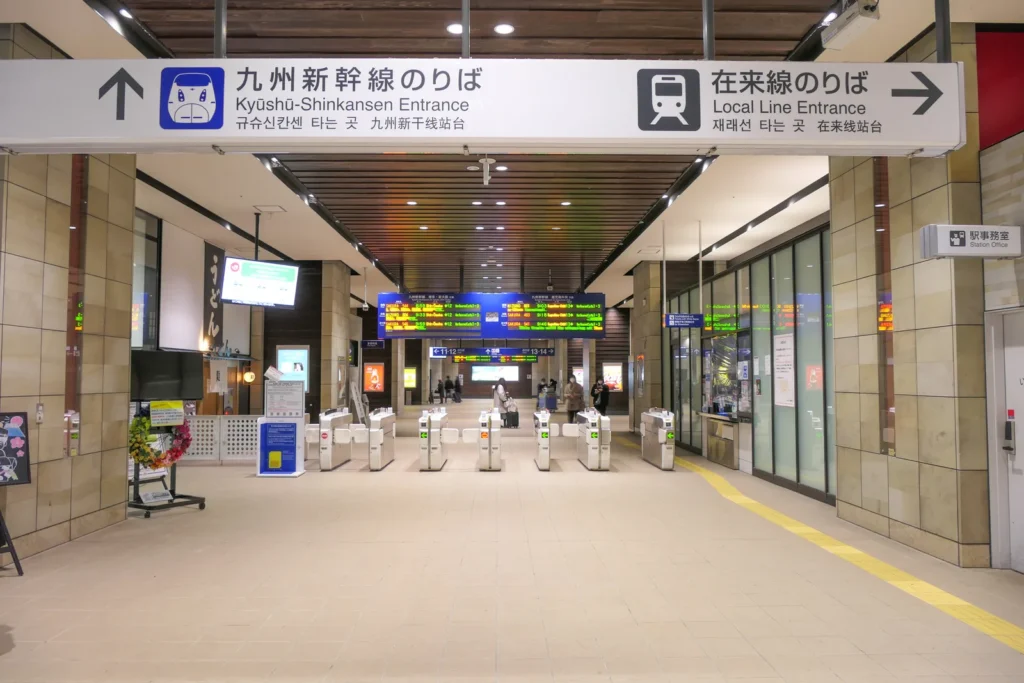
The Kyushu Shinkansen is the fast way in and the one most visitors will use. Kumamoto Station is on the western edge of the city rather than in the middle of it, so allow for one more leg at the end: the tram runs from outside the station into the Kamitori and Shimotori shopping arcades, which is where most of the hotels and restaurants are.
For the statues outside the city, two conventional lines do most of the work. The JR Hohi Line runs east from Kumamoto through Ozu and into the Aso caldera, which covers Zoro and Usopp. For Jinbe at Uto, take a Misumi-bound train from Kumamoto (it runs on the Kagoshima Main Line and then the Misumi Line) to Sumiyoshi. If you are travelling on a rail pass, check how far it covers before you rely on it, and note that the Minami Aso Railway is a separate company.
By Bus
Highway buses connect Fukuoka with Kumamoto and are usually cheaper than the shinkansen, at the cost of roughly twice the journey time. They arrive at Sakuramachi Bus Terminal, which is more central than Kumamoto Station, so for a city-only trip the time difference is smaller than it looks on paper.
By Car
A car is what turns ten statues in nine municipalities into a sensible plan. Rental desks cluster around Kumamoto Station and the airport. Three things to plan around: the roads into and across the Aso caldera climb and wind, and take longer than a map suggests; some mountain routes close or need winter equipment in the cold months; and parking at the castle and in the central arcades is paid and fills up at weekends. Driving-document requirements depend on the country that issued your licence, so check Japan’s official guidance and confirm with the rental company before booking.
Best Way to Get Around
Verdict for Kumamoto: car-free works for the city and Aso. A rental car is what unlocks all ten statues. Two statues are in Kumamoto City and reachable on foot and by tram. Two more sit at railway stations in the caldera. The remaining six are in towns where the bus timetable, not the distance, is the obstacle.
Tram
The Kumamoto City tram is the backbone of the city. Since 1 June 2025 it has run on a flat fare of 200 yen for adults and 100 yen for children (Kumamoto City Transportation Bureau’s fare page). A one-day pass costs 700 yen paper, or 500 yen on your phone, and 350 or 250 for a child (its one-day pass page). The paper pass pays for itself on the fourth ride, the mobile one on the third. Two things to keep straight: the 24-hour pass is a different product, not the same pass counted differently, and this is a tram pass — it is not valid on the city buses. Two lines cover the castle, the central arcades, Kumamoto Station and the Suizenji area, which between them account for most of a city day.
Train
The JR Hohi Line is the car-free route to Aso, and it reopened across the caldera after the earthquakes. At Tateno it connects with the Minami Aso Railway, the small line to Takamori that returned to full operation on 15 July 2023; the Minami Aso Railway’s timetable and fares is a separate company’s, so a JR pass does not cover it. Services on both are infrequent compared with the city, so look up the day you are travelling and note the last departure back when you arrive rather than when you want to leave.
Bus
Buses fill the gaps the railway leaves, particularly towards Nishihara, Mashiki and Mifune, and they are how you reach Kurokawa Onsen. They are ordinary regional services: not frequent, sometimes seasonal. Confirm the timetable for your own date and direction, and carry some cash in case a service does not take IC cards.
Rental Car
If your goal is all ten statues, rent a car for at least one day. The outer four are in four different directions and the Aso four are spread across a caldera roughly twenty-five kilometres across. A car also makes Kurokawa Onsen and the quieter corners of Aso realistic in a way the timetable does not. Drive these roads the way you would drive any mountain road at home: within the limit, and parked only where parking is provided.
Walking
Central Kumamoto is flat and compact. The castle, the arcades and Sakuramachi are within about fifteen minutes of each other on foot, and the castle grounds themselves involve a fair amount of walking on slopes and steps. Everything else in this guide is a short walk from a station, a bus stop or a car park.
What to Eat in Kumamoto
Kumamoto eats like a place with a lot of water and good grazing land, and it is unusually confident about dishes that other prefectures would hide. Three are worth planning around.
Basashi
- What it is: Raw horse meat, sliced thin and served cold with grated ginger, garlic and a sweet soy sauce. The texture is closer to lean beef than to anything fishy, and the fattier cuts come marbled white.
- Why it is local: Kumamoto is the centre of horse meat production and consumption in Japan, and basashi here is an everyday restaurant dish rather than a curiosity. It appears on izakaya menus, at the market and in set meals.
- Where travellers commonly find it: Izakaya and local restaurants across the city, and in the arcades around Kamitori and Shimotori. If the idea does not appeal, say so and order something else; nobody will be surprised.
Taipien
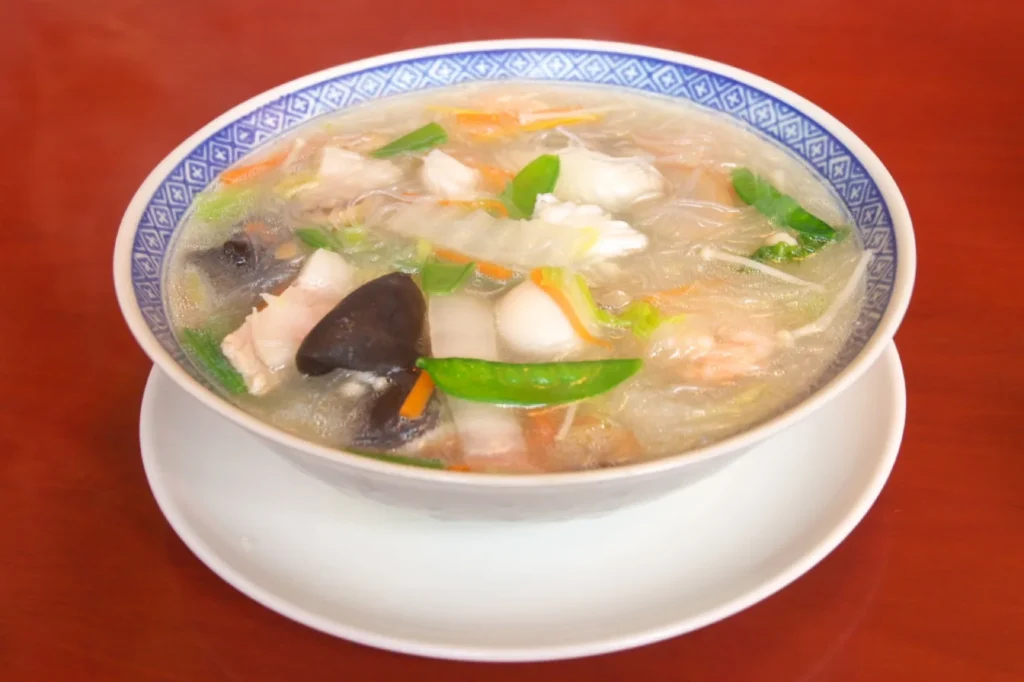
- What it is: A clear soup with glass noodles made from mung bean starch, vegetables, seafood, pork and usually a fried egg on top. Light, savoury and completely unlike the heavy noodle dishes Kyushu is better known for.
- Why it is local: It arrived with Chinese immigrants and became a Kumamoto staple to the point that it is served in school lunches. You will not find it done this way elsewhere in Japan.
- Where travellers commonly find it: Chinese restaurants and ordinary diners across the city. It makes a good lunch on a castle day, because it is quick and does not sit heavily.
Kumamoto ramen
- What it is: A pork bone broth in the Kyushu style, but milder than Hakata’s and finished with fried garlic chips and black garlic oil, over slightly thicker, straight noodles.
- Why it is local: It grew out of the Kurume style as it travelled south and then went its own way. The garlic is the signature and the thing people either come back for or regret before an evening out.
- Where travellers commonly find it: Ramen shops throughout the city, including several near the station and in the arcades.
A note on restaurants
This guide does not name individual restaurants. Opening hours and closing days change constantly, and sending every reader to the same counter helps neither the city nor the reader. The tourist information centres at Kumamoto Station and Sakuramachi keep the current lists.
Things to Do Beyond the Anime
Ten statues is a day and a half of travelling. This is the half that decides whether the trip to Kyushu was worth making, and in Kumamoto it is a strong half.
Kumamoto Castle
The single best thing in the city, and inseparable from the story the statues are telling. The 2016 earthquakes brought down turrets, walls and stone, and the main keep was closed for years; it reopened to visitors in 2021 and is now the centrepiece of a reconstruction that will run for decades. Parts of the grounds remain closed and the work is visible from the paths, which is the point rather than a disappointment.
The castle opens 9:00 to 17:00 from September to June, with last admission at 16:00 and last entry to the keep at 16:30. In July and August it opens 9:00 to 19:00, with last admission at 18:00 and last entry to the keep at 18:30. It closes on 29 December, and in bad weather. Admission is 800 yen for high school age and above, 300 yen for elementary and junior high school pupils, and free for preschool children. All of that is on the castle’s own visitor page, which is where to confirm the season and the closing days for your own date. Allow two hours, and more if you read the displays.
Suizenji Jojuen
A Momoyama-style stroll garden laid out in the seventeenth century around a spring-fed pond, with a miniature landscape said to represent stages of the old Tokaido road. It is small, it is beside a tram stop, and it is the most restful hour in the city. The garden opens 8:30 to 17:00 with last admission at 16:30, is open year round, and costs 500 yen for adults and 200 yen for children, per the garden’s own guide page.
The Aso caldera
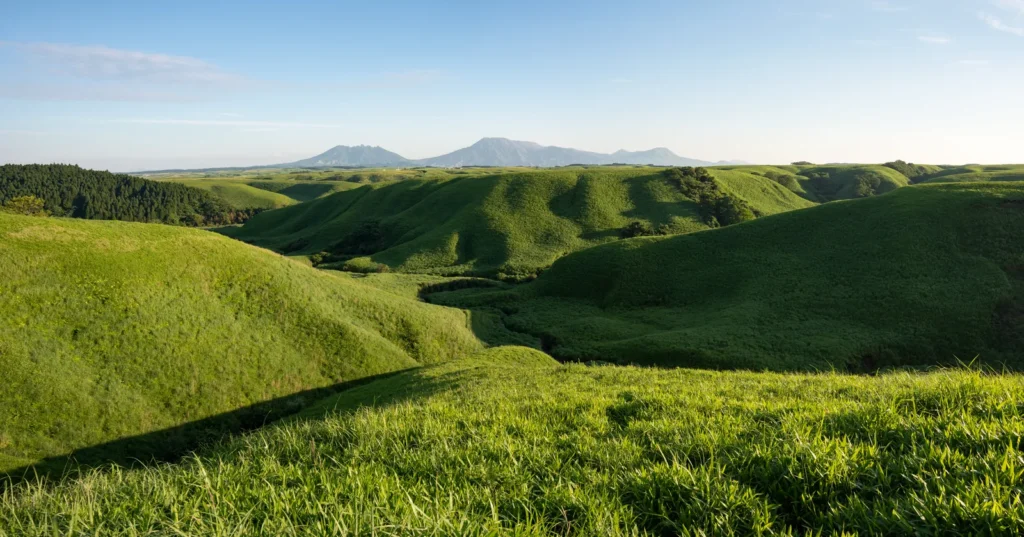
One of the largest volcanic calderas in the world, roughly twenty-five kilometres across, with towns, rice fields, railways and roads on the floor of it and a ring of mountains around the rim. You do not have to climb anything to understand it: the view from the rim road as you come over from the city does the whole job in one go. The grassland, the grazing and the sheer scale are the reason to come.
Mount Aso: check the crater restriction before you plan around it
- Nakadake, the active crater at the centre of the caldera, is subject to eruption warnings that change at short notice.
- At the time of writing the eruption warning level stands at 2 and crater viewing is closed, with entry prohibited within roughly 1 km of the crater. The shuttle up to the crater is suspended, and the former ropeway no longer operates.
- The caldera floor, the rim roads, Aso Station, Takamori and the towns are unaffected. The caldera is open and worth the trip; the crater itself may not be.
- Check the official Aso volcano restriction information for your dates rather than an article, including this one.
Kurokawa Onsen
In the hills in the north-east of the prefecture, a hot spring village built along a narrow river gorge, with wooden inns packed close together and a deliberately low-key main street. Day visitors can buy a pass that allows bathing at a set number of the inns’ outdoor baths, which is the usual way to see it without staying. In winter the river is lit with round lanterns in the evening, which is the image everyone comes home with.
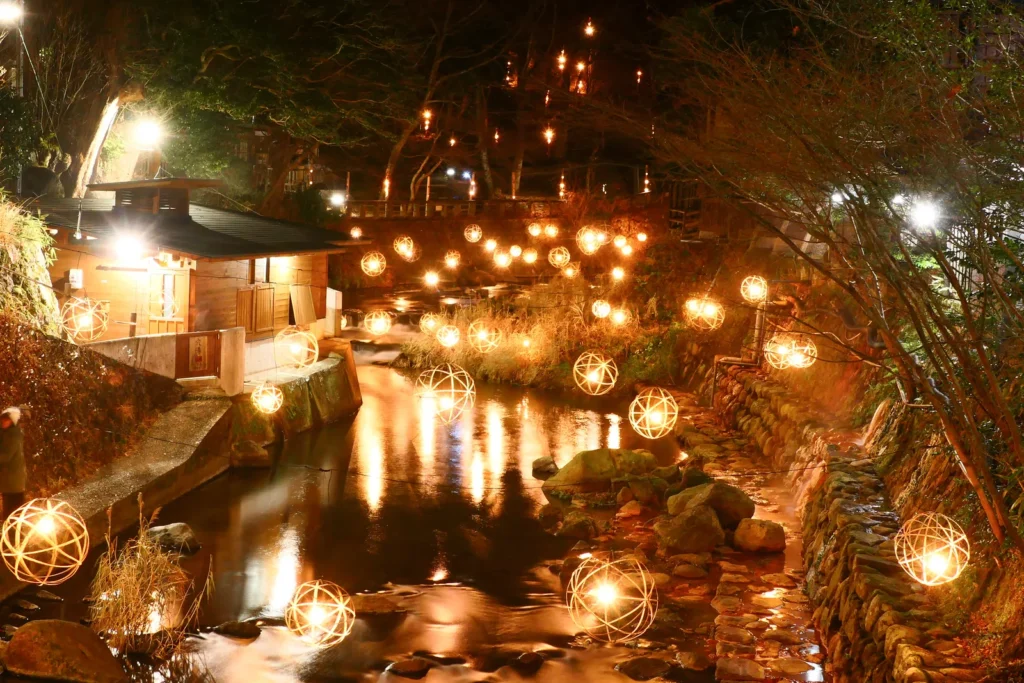
Seasonal experiences
The caldera changes completely through the year. Spring brings the controlled grass burning that keeps the grassland open, and the fresh green that follows. Summer is hot on the plain and noticeably cooler in Aso. Autumn is the best walking weather and the busiest. Winter brings snow to the rim roads, the Kurokawa lanterns, and the clearest views of the year from the city.
What to Bring Home
Kumamoto is a good souvenir prefecture, partly because its crafts are still working trades and partly because the mascot has made the whole place unusually good at packaging.
Regional food
Karashi renkon, lotus root stuffed with mustard miso and fried in a turmeric batter, is the one to take if you can eat it soon. Boxed confectionery travels better: ikinari dango, sweet potato and bean paste in a steamed wrapper, is the local favourite. Before taking food or alcohol home, check your destination’s customs rules and your airline’s baggage and liquid restrictions.
Crafts
Higo zogan is the prefecture’s inlay work, gold and silver set into blackened iron, originally for sword fittings and now made as brooches, pendants and small boxes. It is light, it survives a suitcase, and it is unmistakably from here. Yamaga toro, the gilded paper lanterns made without glue or metal in the town of Yamaga, are the other signature craft.
Local products
Kumamoto grows tomatoes, watermelons and citrus at a scale that surprises visitors, and the roadside stations across the prefecture sell the processed versions: juices, jams, dried fruit, preserves. Fresh produce is usually best bought to eat on the trip rather than carried home.
Official ONE PIECE merchandise
The project has produced licensed goods tied to the statues and to Kumamoto, usually sold through the prefecture’s own channels, the tourist information centres and licensed retailers, and sometimes tied to a campaign with a limited run. Buy through those channels so that you know the goods are licensed and the money reaches the rights holders, and check what is currently available rather than expecting an old campaign to still be running.
Where to Stay in Kumamoto
Pick the area before the building. Kumamoto is big enough that where you sleep decides how much of the prefecture you can actually reach.
Best area: central Kumamoto City
The Kamitori and Shimotori arcades, and the streets around Sakuramachi Bus Terminal, are the practical base for almost everyone. You are within walking distance of the castle, on the tram line, at the hub for highway and regional buses, and surrounded by the restaurants. Business hotels dominate, which is exactly what you want if you are out all day.
Around Kumamoto Station
Quieter, cheaper, and right on the shinkansen and the Hohi Line. It makes sense if you are arriving late, leaving early or starting with Aso, at the cost of a tram ride into town for dinner.
Aso and the caldera
Staying inside the caldera turns the Aso statues from a day trip into a morning. There is hot spring accommodation around Uchinomaki near Aso Station and scattered through Minami Aso, and waking up on the caldera floor is worth a night on its own. Public transport out there thins in the evening, so confirm how you are getting to the door.
Kurokawa Onsen
The most atmospheric option in the prefecture and the least convenient. The inns are small, they book out well ahead in autumn and over holidays, and nothing else in this guide is close to it. Treat it as the reason for a third night rather than a base.
If you have tattoos, check the individual inn’s policy before booking. Rules vary widely, and the smaller the place, the more it comes down to the owner.
Day trip or overnight?
A day trip from Fukuoka works, but only for the two statues inside Kumamoto City, and it will cost you the castle. Two nights is the honest minimum for the city plus Aso. Three lets you add either the outer four statues by car or a night at Kurokawa, and that is the version of this trip people come back pleased with.
Suggested Itinerary
Ten statues across nine municipalities is not a day out, it is a map. They were put up as part of Kumamoto’s earthquake recovery, each character placed where their role in the story matches what that town needed, so which ones you visit says more than how many. Three honest shapes for the trip:
| Which trip | Kumamoto City | City plus Aso | All ten |
|---|---|---|---|
| Statues | Luffy and Chopper | Add Usopp and Franky at the station doors; Nami and Robin need one more bus leg each | Plus Zoro, Sanji, Brook, Jinbe |
| Time | Half a day | Two days | Three days, or two hard ones |
| Transport | Tram and a short bus | JR Hohi Line and the Minami Aso Railway for the two station statues, both infrequent; Sanko buses for Nami and Robin | Sanko Bus publishes a route to every statue, so each is reachable on its own; a car is what makes several in one day realistic, because the last four lie in four directions |
| Also gets you | The castle and the city centre | The caldera, the reopened railway, the earthquake museum | The Misumi Line coast and the Nagabeta sea road |
Both routes assume you are based in central Kumamoto City and have checked the opening days for the castle, the zoo and KIOKU for your dates. Times are deliberately loose, because the Hohi Line and the Minami Aso Railway will decide your actual day.
One day: the city only
Arrive by shinkansen in the morning. Kumamoto Castle first, which deserves two hours and will take longer. Taipien or ramen in the arcades for lunch. The Luffy statue on the prefectural promenade in the afternoon, then the tram east for Chopper at the zoo entrance and Suizenji Jojuen on the way back. Basashi and an evening in the arcades, and the last shinkansen north if you are not staying.
What that day costs, as far as it can be calculated. Admissions: the castle 800 yen and Suizenji Jojuen 500 yen, so 1,300 yen. Tram: this route is four rides — station to the castle, castle to the promenade, east to the zoo, back to Suizenji — so the 700 yen paper day pass or the 500 yen mobile one beats four singles at 200 yen. That is 1,800 to 2,000 yen for the day before anything else. Not included: the zoo, which sets its own admission and opening days and is not quoted here; the airport bus at 1,400 yen each way if that is how you arrived; food; and anything in Aso, which is a different day on a different operator’s line.
Two days, one night: the recommended trip
Day 1: Kumamoto City
- Kumamoto Castle
- Luffy at the prefectural promenade
- Chopper at the zoo entrance
- Suizenji Jojuen
- Taipien, then basashi in the arcades
Day 2: the Aso caldera
- Hohi Line east to Aso
- Usopp at Aso Station
- The caldera rim and the grassland
- Minami Aso Railway to Takamori for Franky (check the Sunny train’s running days for your date; ordinary trains run, cash only)
- Back into the city, or a night in Aso
Where the outer statues fit
Zoro at Ozu is on the Hohi Line and costs you nothing but a stop on the way to Aso, so add him to Day 2 if the timetable allows. Robin at KIOKU and Nami at Nishihara fit a Day 2 done by car rather than by train. Sanji at Mashiki, Brook at Mifune and Jinbe at Uto are a third day with a car, in that order, and they are worth it only if the ten matter to you more than the prefecture does. Nobody should feel bad about seeing six.
Travel Tips & Etiquette
Kumamoto is an easy prefecture to travel in. The points below are the ones that actually change how a trip here goes.
- Check the Aso crater restriction first. It is the one thing in this guide that can change between you reading it and you arriving. The caldera, the towns and the two statues out there are unaffected, but the crater itself is often closed. Check the official restriction information for your dates.
- The statues are a tour of a prefecture, not of a street. Ten municipalities is a lot of ground. Decide in advance how many you actually want, and build the trip around that number rather than around the number ten.
- Note the return train before you go out to Aso. Hohi Line and Minami Aso Railway services are infrequent, and the gaps are long enough to eat an afternoon. Photograph the timetable at the stop when you arrive.
- Carry cash. The city, the castle and the hotels are fine with cards, but regional buses, small shops and some restaurants are not. Draw what you need in the city rather than in the caldera.
- The castle involves walking. Slopes, steps and gravel, with ongoing reconstruction work routing you around parts of the grounds. Wear something you can walk uphill in.
- This is a recovery project, not a theme park. Several of the towns you will pass through lost houses and people in 2016, and the statues were placed there for that reason. It is fine to enjoy the trip; it is also worth knowing what you are looking at.
- Residential areas and private property. Nishihara, Mashiki and Mifune are ordinary towns. Keep off private land and driveways, park where parking is provided, and keep the noise down early and late.
- Photography. Follow the signage and the staff inside the castle, the zoo and KIOKU. Do not photograph other visitors without asking. Permission to photograph a statue does not extend to commercial reuse.
- Weather. Kumamoto is hot and humid in summer and the caldera runs several degrees cooler than the city all year. Take a layer for Aso even in August, and check the forecast for the mountain rather than the plain.
- Language. The castle, the main museums and the larger hotels have English. Away from those, expect much less, and have a translation app and offline maps ready before you lose signal in the caldera.
Plan Your Trip
Four things to settle first: how many statues you actually want, where you are sleeping, whether you need a car, and what the Aso crater is doing on your dates.
- Accommodation: Central Kumamoto City for the castle, the trams and the food. The station for early starts. Inside the caldera if Aso is your priority. Kurokawa Onsen if you have a third night, booked early for autumn weekends.
- Transport: Kyushu Shinkansen from Hakata, then the tram in the city and the Hohi Line to Aso. If you hold a rail pass, check how much of that chain it covers, and note that the Minami Aso Railway is separate.
- Rental cars: Not needed for Kumamoto City or for Aso by train. Needed for the outer four statues, for KIOKU and for Kurokawa Onsen. Driving-document requirements depend on the country that issued your licence, so check Japan’s official guidance before booking and confirm winter equipment for cold-season trips.
- eSIM and mobile data: You will want data for timetables more than anything else. Check the coverage map for the operator you plan to use, and save maps and train times offline before you head into the caldera.
- Tours and activities: Nothing here needs a guided tour, but onsen inn dinners, Kurokawa day-bathing passes in peak season and anything at the castle outside normal hours should be checked or reserved ahead.
The guides below are route pairings: journeys that combine well with this one. They are not guides to the same places.
- Attack on Titan in Hita, Oita — the other Kyushu guide here, and the other town that commissioned its own landmarks: three bronzes under a dam wall in a mountain district of Oita.
How this guide was put together
This guide was researched and planned from published sources rather than written up from a visit. Checked on 12 October 2026: the ONE PIECE Kumamoto recovery project’s own site for each statue, its unveiling date and the role the project gives that character in the recovery story, and for the current status of the Sunny train; the municipalities’ own pages for the exact sites; the Minami Aso Railway for the fare change of 1 October 2026 and for the cash-only rule; and the Kumamoto Earthquake Museum KIOKU for its hours and closing days. Rechecked on 18 October 2026: the Sunny train’s status and running calendar on the project site.
What is a judgement rather than a fact. The grouping of the ten statues into three trips, the suggestion of which to drop, and the visit lengths are editorial decisions built from published journey times. Where bus services are described as sparse, that is the published pattern rather than a count made on the ground.
Written and edited by Nick, who runs Anime Routes Japan from Japan. More about Nick, and about how these guides are made, is on the About page.
This guide currently contains no affiliate links.