Bocchi the Rock! Pilgrimage Guide to Shimokitazawa, Tokyo, Japan
This guide contains one affiliate link, in the Where to Stay section. If you book through it we may earn a commission. See our Affiliate Disclosure for what that means.
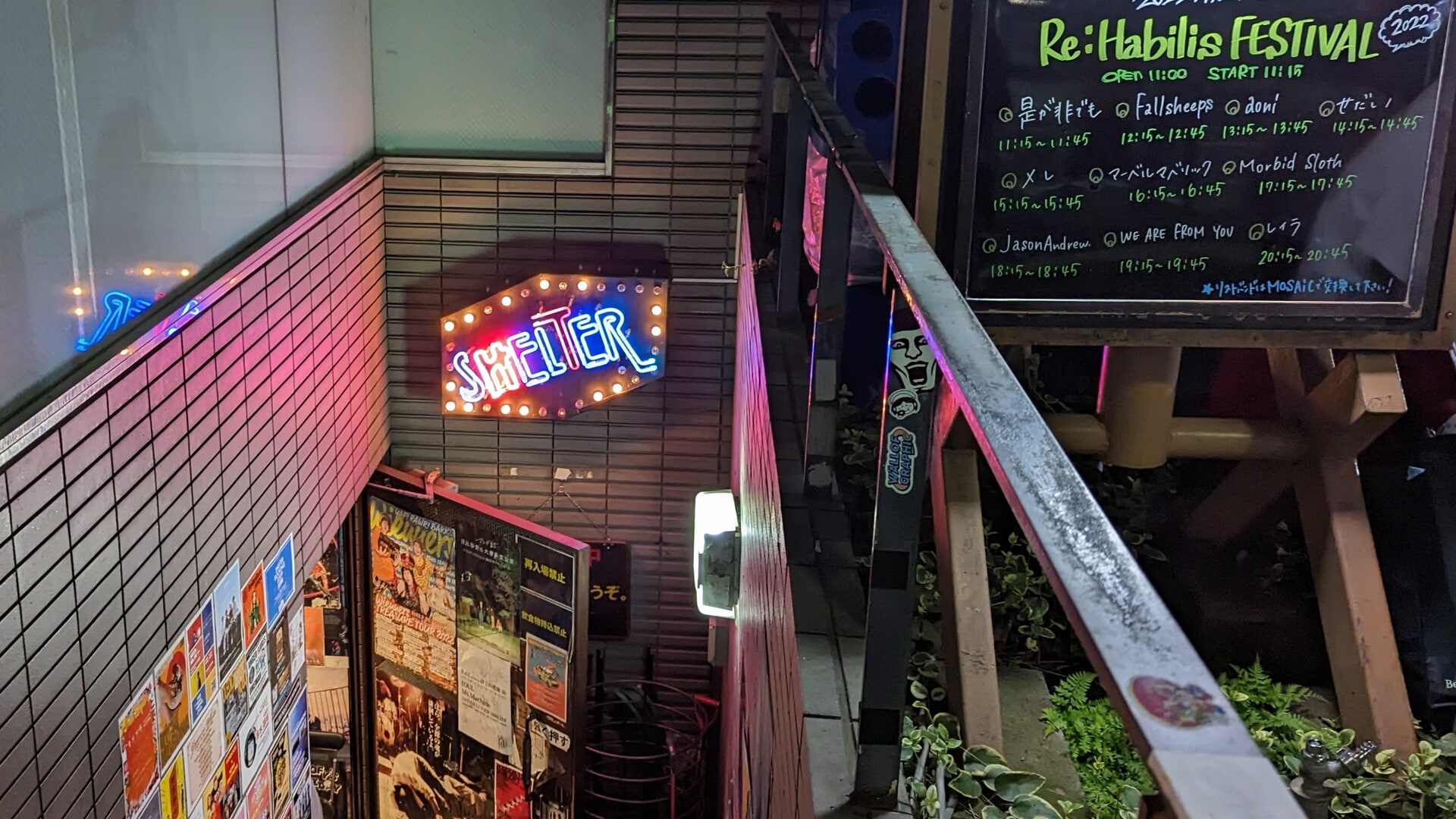
Header photo: the neon sign above the stairs down to Shimokitazawa SHELTER, photographed in September 2022. Photo: Syced, CC0 1.0 (cropped and resized). Source.
Shimokitazawa is seven minutes from Shinjuku on the Odakyu line, the ride time Tokyo’s official tourism site gives, and it is a district of vintage clothing shops, second-hand bookshops, record shops, small cafés and basement live houses. You can take it as an afternoon on foot — curry, second-hand racks, coffee. Or you can book a show, go down a basement stairway in the evening and watch a band play, which is the thing Bocchi the Rock! is actually about. Tickets for those shows go on sale at different times and sell out at different speeds, so that half of the trip starts with the venue’s schedule. Those are the two trips to choose between: an afternoon on foot, which needs nothing booked, and a night at a show, which needs that show’s ticket. Tokyo’s official guide to the district is in English.
Which real places, in short. The production only ever bills the band “From Shimokitazawa”, so this is a district rather than a list of landmarks. The one named venue is Shimokitazawa SHELTER, which STARRY was drawn from, and you get inside it only with a ticket for a show: there is no tour, no open day and no daytime access. Everything else is the neighbourhood itself, which costs nothing to walk, plus Enoshima for episode 9 on a separate day.
Quick Trip Guide
- Destination: Shimokitazawa, Setagaya, Tokyo
- Best Gateway: Shinjuku on the Odakyu line, or Shibuya on the Keio Inokashira line
- From Gateway: Seven minutes from Shinjuku; a few minutes more from Shibuya
- Main Base: Anywhere in central Tokyo. Shimokitazawa itself if you want the evenings
- Getting Around: On foot. The whole district is about fifteen minutes end to end
- Car Needed: No. Most of the streets are too narrow for one and partly pedestrianised
- Recommended Stay: An afternoon and an evening, or one night if you want a show
- Day Trip: Yes, from anywhere in Tokyo
- Best For: Bocchi the Rock! readers, live music, vintage clothing and curry
Why This Place Matters
STARRY, the basement live house where Hitori Gotoh spends most of Bocchi the Rock! hiding behind an amplifier, is not a real place. The venue it is widely identified with is. Shimokitazawa SHELTER has been running shows in a basement off the station since 1991, it turned thirty-five in 2026, and when Kessoku Band played a one-man show for that anniversary it was announced on the anime’s own official site. The band’s official billing, again from the production, is “From Shimokitazawa”. That is as close to a confirmed address as a fictional band gets.
The anime set itself in the neighbourhood rather than in a set of individual landmarks, and this guide follows that: one venue with a documented link, and a district worth a day on foot whether or not you have seen the show. Street corners that fans have matched to frames are not listed here as locations.
Bocchi the Rock! began as a four-panel comic by Aki Hamaji in Houbunsha’s Manga Time Kirara MAX, about a girl so shy that she practised guitar alone for six hours a day through junior high school, as the official introduction puts it, and reached high school without a single friend — let alone a band. CloverWorks animated it, and the television series started on 8 October 2022. A theatrical compilation followed, with the Blu-ray and DVD released on 12 February 2025, and a second season is in production with Yusuke Yamamoto directing in place of Keiichiro Saito.
The story runs on one live house. Hitori joins Kessoku Band because the band needs a guitarist for a slot at STARRY, and almost every turn in the plot happens either in that basement or on the way to it. The official character page gives the reason it matters so much to the band: STARRY’s manager, Seika, is the older sister of the drummer Nijika Ijichi, and Nijika — the one who holds the band together and looks after Hitori — 「ライブハウスに特別な思いを持っている」, has a special feeling for live houses. The band is not playing a venue; it is playing her venue. STARRY is fictional. Shimokitazawa SHELTER, the basement venue it is widely identified with, is not: it opened in 1991, it is five minutes from the station in the basement of the Senda Building, and in October 2026 it is running a thirty-fifth anniversary season.
From one guitar to a band
The official episode synopses for the TV series read like a short course in how a small band survives, and that is what you are visiting. Nijika Ijichi, Kessoku Band’s drummer, asks Hitori to fill in on guitar for one day (episode 1). To play a show the band has to meet a ticket quota, so Hitori takes a part-time job at STARRY to earn it (episode 2). Ikuyo Kita, the popular classmate who says she plays guitar, is talked back into the band (episode 3); bassist Ryo Yamada writes the first original song and Hitori has to write its lyrics (episode 4). They have to pass an audition before STARRY will book them (episode 5), each member is given five tickets to sell, and Hitori, with no friends to sell to, meets the drunken bassist Kikuri Hiroi in a back alley while trying to hand out flyers (episode 6). Their first show as four takes place in a typhoon to a near-empty room (episode 8).
Every one of those steps is a thing that happens in Shimokitazawa’s small venues every night: a quota, a drink charge, a flyer, a half-empty Tuesday. Buying a ticket to a four-band bill here is the most faithful way to see what the series is about.
The link between the two is unusually well documented for an anime location. The work’s own official site announced a Kessoku Band one-man live at SHELTER’s thirty-fifth anniversary event in July 2026, and a Kessoku Band appearance in Shinjuku LOFT’s fiftieth anniversary series a month later. SHELTER, for its part, has sold collaboration merchandise carrying both its own logo and STARRY’s. And the band’s official billing, used by the production for its overseas shows, is simply “From Shimokitazawa”. Neither side has published a sentence saying “STARRY is SHELTER”, so this guide does not put one in their mouths. What both sides have done is behave as though it were obvious.
That matters for how you visit. There is no exhibition, no stamp rally, no official pilgrimage map, and no permanently displayed anything. SHELTER is a live house that sells tickets to shows, and the district around it is a shopping and music neighbourhood where people work. The good version of this trip is a long afternoon of walking, a bowl of curry, and if you plan it properly, a ticket to whatever is on that night.
What is documented, and what is fan attribution
- It will cover SHELTER properly: what it is, how its tickets work, and why you cannot simply look round it.
- It will not publish a list of shops and street corners as locations. Those identifications come from fans, not from the production or the businesses.
- It will treat the rest of Shimokitazawa as what it is, which is one of the best neighbourhoods in Tokyo for a slow day on foot.
- It will not send you to anyone’s doorway to take a photograph of their shopfront because it resembles a frame.
Anime Pilgrimage Spots
There is one venue here with a documented connection, one district that the production itself names, and a music scene that the story is about. That is the honest list.
Please respect local rules and manners at every location, and follow signs and staff guidance.
Where these places are
The map shows the places below and how far apart they are. It is drawn with OpenStreetMap: opening it loads map images from openstreetmap.org. The list works without it.
The map could not be loaded. The places are listed below, with their names and a link to each on Google Maps.
- Anime-related places
- Station or transport
- Nearby sight
The 5 places on this map
- 1Shimokitazawa SHELTER下北沢SHELTERShimokitazawaIn this guideOpen in Google Maps
- 2Shimokitazawa Station下北沢駅ShimokitazawaIn this guideOpen in Google Maps
- 3Mikan Shimokitaミカン下北ShimokitazawaIn this guideOpen in Google Maps
- 4Shinjuku LOFT新宿ロフトShinjukuIn this guideOpen in Google Maps
- 5Shinjuku Station新宿駅ShinjukuIn this guideOpen in Google Maps
Map data © OpenStreetMap contributors, ODbL. Positions were checked on 15 October 2026 against the source recorded for each place; a few are the published position for a large site rather than an entrance.
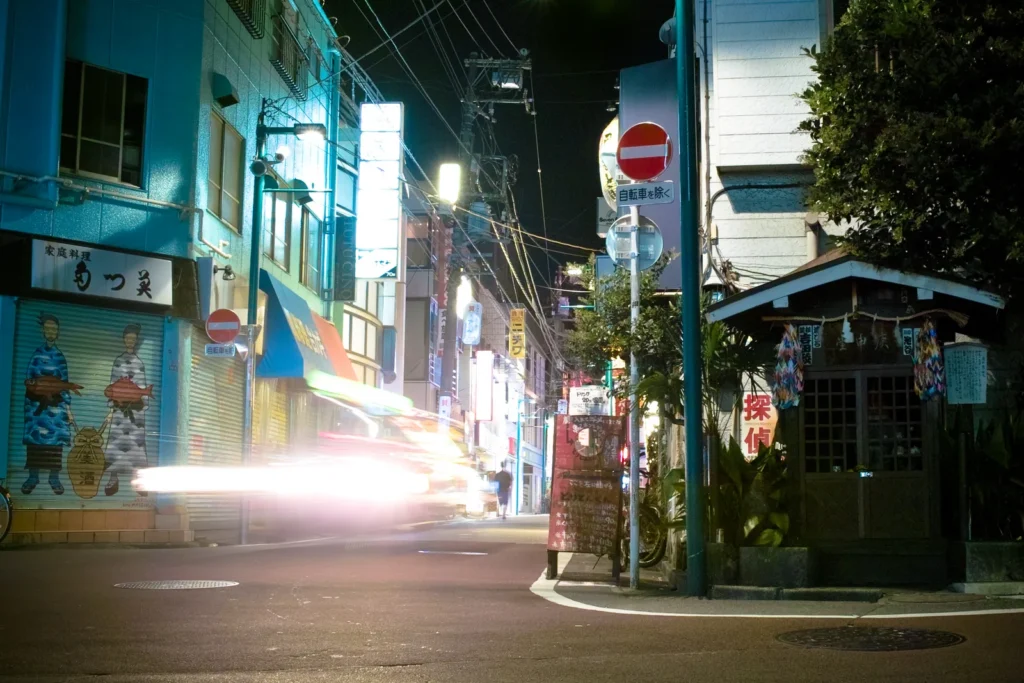
Shimokitazawa SHELTER
A basement under the Senda Building, a few minutes on foot from the station, running since 1991. It is small, low-ceilinged, loud, and almost exactly the shape of the room in the anime. It is also a commercial live house with a show on nearly every night of the year, which is the single most important thing to understand before you go.
This is the venue STARRY was drawn from. The anime’s official site has announced Kessoku Band performances tied to SHELTER’s anniversary and SHELTER has sold merchandise carrying both logos; neither has issued a formal declaration, and this guide does not invent one. With a ticket you get a 1990s Tokyo basement live house with a stage barely raised off the floor, and whichever band is playing. Without one you get a stairwell and a door.
- Where: Senda Building B1, 2-6-10 Kitazawa, Setagaya-ku, Tokyo 155-0031, a few minutes on foot from Shimo-Kitazawa Station.
- Cost: the price of the show, plus the drink charge every Japanese live house adds at the door. SHELTER’s own menu lists soft drinks at 400 yen and draught beer at 600 yen.
- How to get in: buy a ticket for a specific show. The schedule is on the venue’s own site, and each show has its own on-sale date, price, drink charge and entry conditions. Check the show you want rather than assuming a general lead time: some go on sale months ahead and sell out, others are still available on the day. There is no tour, no open day and no daytime access.
It is not a visitor attraction. Turning up to photograph the entrance, standing in the stairwell, or asking staff to let you look inside outside show hours is exactly the behaviour that gets anime visitors a bad name. If you want to see the room, pay for a show, like everyone in the story does.
Shimokitazawa itself
The production bills the band “From Shimokitazawa”, which is the only place name anyone official has attached to this story. The district is about a kilometre across, sits either side of the station, and is built from narrow streets that cars mostly cannot use. Walking it is the pilgrimage.
The work is set in this neighbourhood rather than in a set of landmarks, and the production uses its name, so walking the streets at the hour the characters would be walking them is the closest thing to a location visit that exists here. What you walk through is second-hand clothing shops stacked three to a building, record shops, small theatres, coffee roasters, curry restaurants, and the signage of a dozen live houses on basement stairwells.
Three hours is the minimum and a full day is easy. It costs nothing to walk; everything else is up to you. Shimo-Kitazawa Station is on the Odakyu line and the Keio Inokashira line. The streets are narrow and shared with delivery vans, cyclists and residents, so stop at the side rather than in the middle, and do not photograph into shop interiors or at the people working in them.
The live house circuit
The thing the story is actually about is a scene: a dozen or so small venues within a few minutes of each other, each with its own booking policy, each running three or four bands a night for a few thousand yen. SHELTER is the famous one. It is not the only one, and on any given night it may not be the best one.
Kessoku Band’s world is that circuit rather than one room, which is why seeing a Tuesday-night four-band bill in a basement for 2,500 yen is a more faithful visit than standing outside any single door. It is the single best piece of advice in this guide.
- How it works: tickets are usually bought in advance through the venue or a ticket site, with a separate drink charge paid in cash at the door. Doors open about thirty minutes before the first act.
- Cost: commonly 2,000 to 3,500 yen for a multi-band bill, plus the drink.
- Timing: bills are usually three to five acts, start early and finish by 22:00 so everyone can get the last train — which means a show and a full afternoon of walking fit in the same day.
- Practicalities: many small venues are standing-only, cash-only at the bar, and small. If you do not speak Japanese, buying through the venue’s own site and showing the confirmation at the door works fine.
This is a scene rather than a tourist product. Nobody on stage is performing for visitors, and the audience is there for the band.
Shinjuku LOFT, for completeness
Not in Shimokitazawa, and included here only because the production put Kessoku Band on its fiftieth anniversary bill in 2026. It is the older and larger sibling of SHELTER under the same company, it is in Kabukicho rather than Setagaya, and it is a twenty minute journey away. If you are chasing the venues the franchise has actually appeared at, it belongs on the list. If you are walking Shimokitazawa, it does not.
How to Get There
Shimokitazawa is inside Tokyo, four and a half kilometres from Shinjuku, and it is one of the easiest places in this series to reach. Two private railways cross there, and the journey from either end of the city takes less time than the walk from most stations to most hotels.
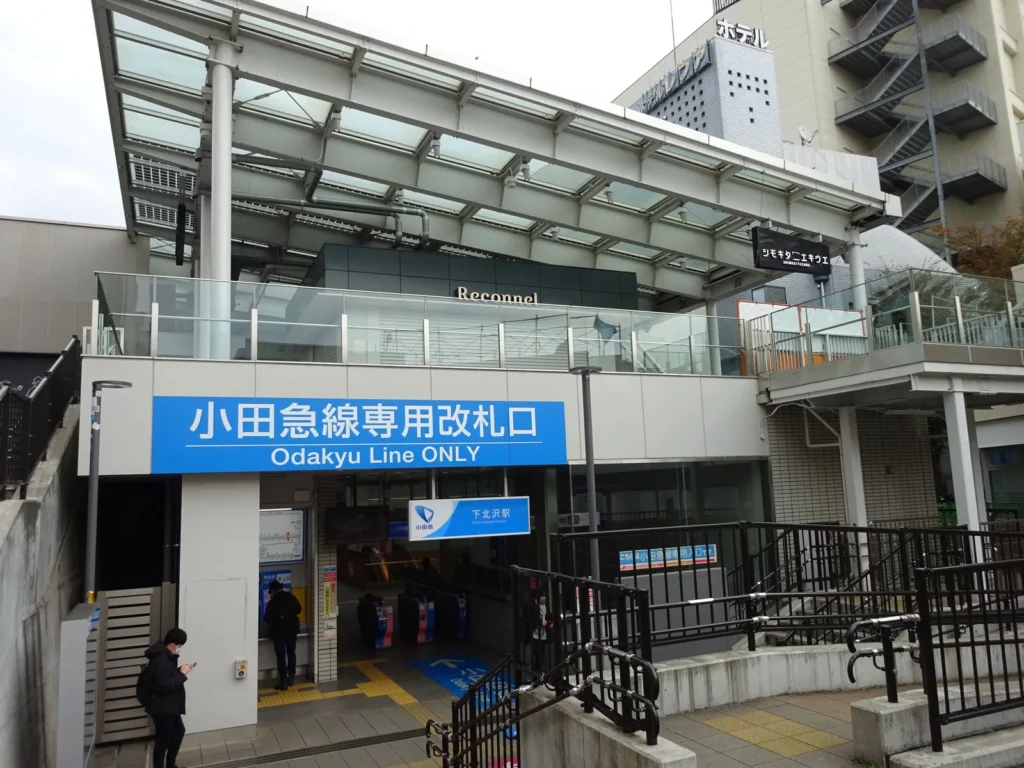
From Shinjuku and Shibuya
- Odakyu line from Shinjuku: seven minutes, according to the official Tokyo tourism guide. Rapid express and express services both stop at Shimo-Kitazawa. Trains run every few minutes all day.
- Keio Inokashira line from Shibuya: a short hop of a few minutes. The Inokashira line is the one that runs on the elevated tracks through the station; the Odakyu line is underneath it.
- Keio Inokashira line from Kichijoji: the other end of the same line, and a good pairing if you want two neighbourhood days back to back.
Both operators run frequent all-day services on these sections and both accept Suica, Pasmo and the other national IC cards, so there is no need to buy a paper ticket or work out a fare in advance. Neither publishes a simple station-to-station fare table on its public site, so use the fare search on the operator’s own site if you need the exact figure; for journeys this short it is a small amount either way.
From Tokyo Station
About thirty-five minutes in total: the JR Chuo line to Shinjuku, then the Odakyu line. There is no direct service, and the change at Shinjuku involves a long walk between the JR and Odakyu concourses, which is worth knowing if you are carrying anything.
From the airports
- Haneda: about an hour. The usual route is the Keikyu line or the monorail to Shinagawa or Hamamatsucho, JR to Shibuya or Shinjuku, then one short hop.
- Narita: about an hour and forty-five minutes, via the Narita Express or the Keisei Skyliner to Shinjuku or Shibuya and then the same short hop.
Those times are the ones published by the official Tokyo tourism guide, and they assume you make your connection. With luggage, add twenty minutes and consider dropping bags at your hotel first, because Shimokitazawa’s streets are narrow, crowded and not built for suitcases.
Which entrance you want
- The station has the Odakyu line underground and the Keio Inokashira line above it, with a shared concourse between them.
- The west and south sides lead towards the older shopping streets, the theatres and most of the live houses.
- The east side leads to Mikan Shimokita, the complex built under and beside the Inokashira line viaduct.
- The Senrogai promenade runs north and south from the station along the old Odakyu track bed, and is the easiest way to orient yourself on a first visit.
Best Way to Get Around
On foot, and only on foot. Shimokitazawa is roughly fifteen minutes from one end to the other at a slow pace, most of its streets are too narrow for two cars to pass, and parts of the centre are pedestrianised during the day. There is no bus you need, no taxi worth taking, and nothing to rent.
How the district is laid out
- The station sits in the middle, with the Odakyu line underground and the Inokashira line on the viaduct above.
- North and west is the oldest part: the tight grid of shopping streets, most of the vintage clothing, and the theatres.
- South is the other half of the old centre, with more bars, more curry and the route towards SHELTER.
- Along the old track bed runs the Shimokita Senrogai, an Odakyu development stretching 1.7 kilometres from Higashi-Kitazawa through Shimokitazawa to Setagaya-Daita, which has added a string of new, deliberately low-rise places since 2020.
- Under and beside the viaduct is Mikan Shimokita, which holds the vintage clothing annex of Toyo Hyakkaten and a coworking floor.
Walking times that are actually useful
- Station to SHELTER: a few minutes.
- Station to BONUS TRACK, at the Setagaya-Daita end of the Senrogai: about ten minutes along the promenade.
- Station to reload, at the Higashi-Kitazawa end: about seven minutes the other way.
- End to end along the whole Senrogai: about twenty-five minutes without stopping, which nobody manages.
Timing your day
- Shimokitazawa wakes up late. Many vintage shops open at noon and a lot of the eating places do not open until 11:30.
- The best hours for walking are early afternoon; the best hours for the district’s own atmosphere are after dark.
- Weekends are busy in the way that narrow streets amplify. A weekday afternoon is a different and better experience.
- If you are going to a show, work backwards: doors usually open around 18:00 or 18:30, and the last trains leave before 01:00.
What to Eat
Shimokitazawa’s signature dish is curry, and it is not a marketing invention. The Shimokitazawa Curry Festival has run since 2012; the organising committee put the 2026 edition at 8 to 25 October, its fifteenth year, with the district’s restaurants each serving an original curry for the duration. Outside the festival the curry is still there, because the restaurants are.
Curry, several different ways
- Spice curry, the Osaka-descended style of layered, non-roux curry that took over Tokyo in the 2010s, is the house style of a lot of the newer places here.
- Old-school Japanese curry, thick and brown and served with a spoon the size of a trowel, at the places that have been here for decades.
- Aigake, two different curries on the same plate, which is how most of the district expects you to order if you cannot decide.
- The festival, if you are here in October: a stamp card, a few dozen participating restaurants, and queues at the good ones from the moment they open.
Everything else
- Coffee: Shimokitazawa has an unusual density of small roasters, including the second branch of Kyoto’s Ogawa Coffee in the reload complex, where you can roast and brew your own beans.
- Fermentation: Hakko Department in BONUS TRACK stocks over five hundred fermented products from across Japan and the world, with a small eating area attached.
- Standing bars and izakaya: the south side of the station has a dense run of small, loud places that fill up from about 18:00.
- Bakeries and focaccia: BONUS TRACK keeps adding food tenants, most recently an offshoot of a Gakugeidaigaku focaccia and wine shop.
Eating here without wasting time
- Most places are small. A party of four will wait; a party of two usually will not.
- Lunch service at the curry restaurants typically runs 11:30 to 15:00, then a break, then dinner. Arriving at 14:00 avoids most queues.
- A lot of the district is cash-friendly but card-patchy. Carry some cash.
- If you are going to a live house afterwards, eat first. The venues sell drinks, and nuts.
Things to Do Beyond the Anime
Shimokitazawa was a destination for about forty years before this anime, and the part of it that has changed most is the part nobody expected: in 2013 the Odakyu line went underground, and the 1.7 kilometres of track bed it left behind has been turned into a linear strip of new, small-scale places that now give the district a second spine.
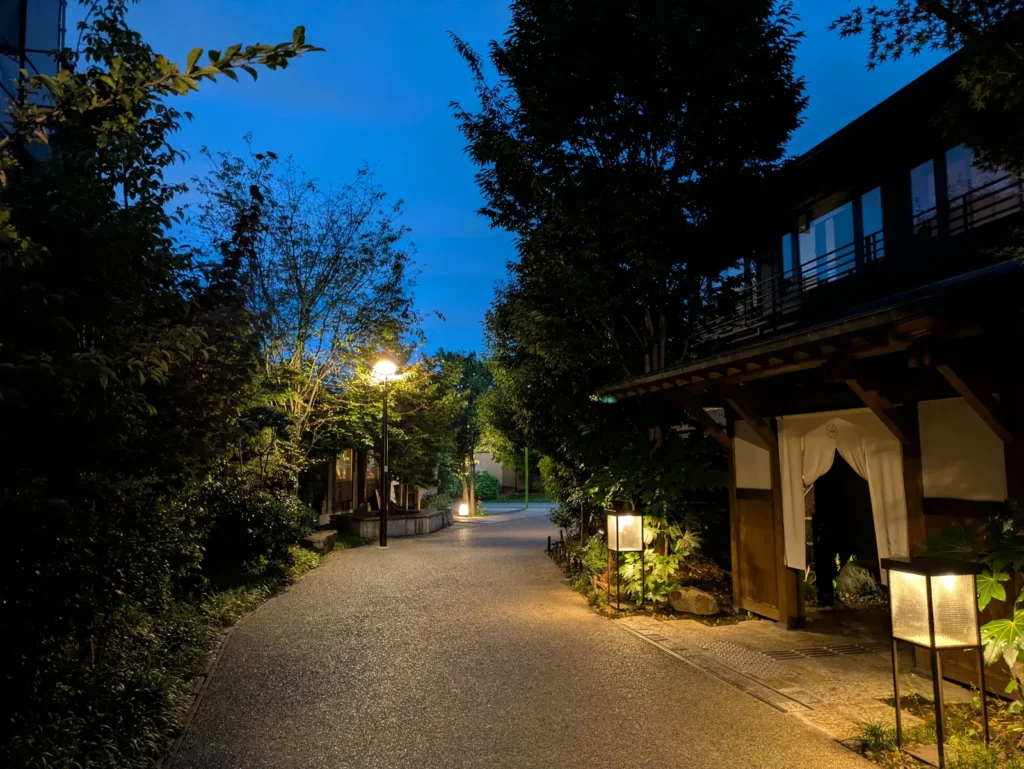
The Shimokita Senrogai
Odakyu’s name for the whole development along the old track bed, running from Higashi-Kitazawa through Shimokitazawa to Setagaya-Daita. It is not a shopping mall; it is a sequence of separate small projects strung along a footpath, with gardens, a hot spring inn, a hotel, a nursery and a lot of benches between them.
- What it is: 1.7 kilometres of former railway land, redeveloped as a walkable strip rather than built over.
- Where it runs: Higashi-Kitazawa to Setagaya-Daita, through Shimokitazawa.
- How long to allow: about twenty-five minutes to walk end to end, or two hours to do it properly.
- Good to know: it is also the quietest route through the district, which makes it the easy way to cross Shimokitazawa at a weekend.
reload
At the Higashi-Kitazawa end: twenty-four units over two floors, opened in 2021, built as a cluster of small white boxes with stairs and terraces between them rather than a single building. The tenants are mostly single-shop businesses, including the Ogawa Coffee Laboratory, an eyewear maker from Fukui, a barber and a tea specialist.
BONUS TRACK
At the Setagaya-Daita end: fifteen shops around an open square, deliberately rented to small independent operators. The bookshop B&B, which has been in Shimokitazawa since 2012 and sells beer while you browse, is here and runs author events most evenings; it opens 12:00 to 21:00 on weekdays and 11:00 to 21:00 at weekends and holidays, with occasional early closes for private events.
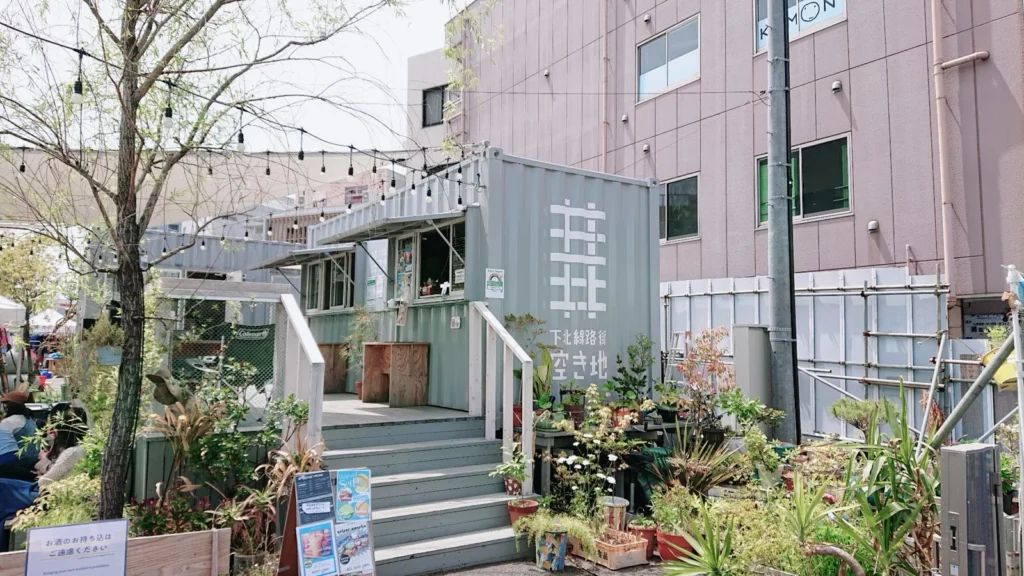
Akichi and the open spaces
Between the two, the Senrogai keeps several deliberately unprogrammed spaces, the best known of which is Akichi, a cluster of shipping containers and a yard used for markets, food stalls and whatever the organisers have agreed to that month. It is also where a lot of the district’s events happen, so it is worth checking the Senrogai site before you go.
Mikan Shimokita
Built under and beside the Keio viaduct on the east side of the station, and named from the word for “unfinished” rather than the fruit. It holds the annex of Toyo Hyakkaten, one of the district’s long-running vintage clothing operations, alongside restaurants and a coworking floor. The through-passage under the tracks is closed late at night.
Vintage clothing
The thing Shimokitazawa is most famous for after live music. The official Tokyo tourism guide singles out New York Joe Exchange, which occupies a converted public bathhouse and runs on a trade-in model, along with Antique Life Jin and Tokyo Retro a.m.a. There are well over a hundred more. Most open around noon and many are cash-preferred.
Theatre
Shimokitazawa is also Tokyo’s small-theatre district, with several hundred-seat venues within a few minutes of the station. Performances are in Japanese and usually sell out to regulars, but the presence of the theatres explains a lot about why the neighbourhood looks and behaves the way it does.
What to Bring Home
There is no official merchandise stand for this work in Shimokitazawa, and the collaboration items SHELTER has sold in the past were limited runs tied to specific events rather than permanent stock. Treat anything you find as a bonus and plan around the district’s own trade instead.
- Second-hand clothing, which is the thing the neighbourhood is actually good at. Prices run from a few hundred yen at the trade-in shops to serious money for 1970s imports.
- Records, from the handful of shops that have survived the decades, mostly Japanese pressings and 1990s indie.
- Band merchandise, bought at whatever show you go to. A shirt from a band nobody at home has heard of is a better souvenir of this trip than anything licensed.
- Coffee beans, from the roasters in reload and around the station, ground to order.
- Fermented food, from Hakko Department in BONUS TRACK: miso, soy sauce, pickles and vinegars from small producers, in sizes that travel.
- Books and zines, from B&B and the independent bookshops, including a steady supply of small-press music writing.
Buying sensibly
- Vintage shops here are small and often cash-preferred. Bring notes.
- Trade-in shops price in bands rather than individually, so the rail you are looking at usually tells you the price.
- Liquid fermented products are heavy and some are restricted on arrival in other countries. Check before you commit to a bottle of soy sauce.
- Band merchandise is cash at the merch table, almost always, and almost always only at the show.
Where to Stay
Shimokitazawa has very few hotel rooms, which is a consequence of being a residential district with a planning history of resisting large buildings. That is not a problem: it is seven minutes from Shinjuku, so almost anywhere in central Tokyo works as a base. Staying in the district itself only matters if you want the evening.
Because the practical answer here is usually “stay somewhere else in Tokyo and come in”, a city-wide search is more useful than a district one: Compare hotels in Tokyo on Trip.com. That is a Tokyo-wide hotel list, not a Shimokitazawa one, so filter by station or area for the districts named below.
Affiliate link: We may earn a commission if you book through this link.
In Shimokitazawa
MUSTARD HOTEL SHIMOKITAZAWA, at 3-9-19 Kitazawa, is the obvious choice and describes itself as a base for enjoying the town rather than a destination in itself. The Senrogai also added a small hot spring inn and a hotel at the Setagaya-Daita end, which are the quieter option. All of them are small, and all of them book out at weekends.
Shinjuku
Seven minutes away on the Odakyu line, and the largest concentration of hotel rooms in Tokyo at every price point. If you are combining this with other trips in this series, Shinjuku is also where the Odakyu services for Hakone and Enoshima start.
Shibuya
A few minutes on the Inokashira line, busier and more expensive than Shinjuku but with the shortest possible journey. Good if you are pairing Shimokitazawa with a night out somewhere larger.
Kichijoji
The far end of the Inokashira line, about twenty minutes away. Quieter, cheaper, and a neighbourhood in much the same spirit as Shimokitazawa, which makes it a sensible base if you want two days of this kind of walking.
Choosing a base
- Here for a show: Shimokitazawa itself, booked well ahead, or Shinjuku as the reliable fallback.
- Here for the day: anywhere in central Tokyo. This is a day trip, not an expedition.
- Travelling with luggage: stay near a JR station and come in unencumbered. The streets here are not suitcase country.
- Two neighbourhood days: Kichijoji, and ride the Inokashira line between them.
Enoshima, on a different day
In episode 9 the band takes a day trip to Enoshima, and the episode is named after the island’s escalator. It is a genuine part of the story and it is nowhere near Shimokitazawa: the island is out on the Shonan coast, roughly an hour and a quarter away by Odakyu from Shinjuku. Treat it as its own day rather than an afternoon add-on, because the two halves have nothing to do with each other geographically and the island deserves the light.
Our Kamakura and Enoshima guide covers the island in detail. Note that it is scenery in both stories rather than a shared location: nothing on Enoshima is a Bocchi the Rock! landmark in the way SHELTER is.
Suggested Itinerary
This is the one guide on the site where the main attraction has a ticket and a start time. Walking Shimokitazawa is free, open-ended and the setting of the story; seeing a band in a basement is the thing the story is about, and it has to be planned around the venue’s schedule. They are different trips and you can do either on its own.
| Which trip | Walk the district | Walk it, then see a show | Add Enoshima |
|---|---|---|---|
| Plan ahead | Nothing. Turn up | Buy a ticket when the schedule goes up, usually a month or two out | A separate day |
| Time | An afternoon, three hours minimum | Afternoon plus an evening, finishing around 22:00 | A full day of its own |
| Cost | Whatever you eat and buy | 2,000 to 3,500 yen for a multi-band bill, plus a cash drink charge | Train fares and whatever you do there |
| Why | The production bills the band “From Shimokitazawa” and this is that place | Kessoku Band’s world is this circuit, not one room | Episode 9 is a day trip to the island |
One afternoon and evening covers Shimokitazawa comfortably. The version below assumes you are coming in from central Tokyo and want to end the day at a show.
A day and an evening
- 11:30. Arrive at Shimo-Kitazawa. Start on the Senrogai promenade beside the station so you can see how the district is laid out before you get lost in it, which you will.
- 12:00. Curry. Pick one and commit; the queue at the famous one is not better than the queue at the one next door.
- 13:30. Walk north-west into the old grid for the vintage shops, which are open by now. Give it ninety minutes and do not try to see all of them.
- 15:00. Walk the Senrogai north to reload for coffee, or south to BONUS TRACK for the bookshop and the square. Both if you are quick.
- 16:30. Mikan Shimokita, under the viaduct, for the last of the vintage and a sit down.
- 18:00. Doors at whichever live house you booked. Pay the drink charge in cash at the door.
- 21:30. Out, and either a late izakaya on the south side or the seven-minute train back to Shinjuku.
Adding Enoshima, for episode 9
In episode 9, worried that Hitori has been left out of the summer, the band takes her to Enoshima — the episode is titled after the island’s escalator. It is an easy addition: the Odakyu line from Shimo-Kitazawa runs towards Katase-Enoshima, and the island, its shrine, the escalators and the caves fill half a day. Our Slam Dunk guide covers Enoshima and the Enoden coast in detail; the two series share the island as scenery, not a location, so treat it as one day out with two stories in it.
If you only have an afternoon
Station, curry, one loop of the old grid, the Senrogai in whichever direction looks better from the platform, and out. Two and a half hours covers it, and you will still have seen more of the district than a list of locations would have given you.
If you came for the show and nothing else
Book the ticket first, then build the day around it. Doors are usually 18:00 or 18:30, and most small-venue bills finish by 22:00 so the audience can get home. That leaves the whole afternoon free, which is more than enough for everything above.
Planning that actually matters
- Check the SHELTER schedule for the night you want, and read that show’s own on-sale date and entry conditions. Anniversary and one-man shows sell out early; a midweek four-band bill often does not.
- Check the Senrogai site for events: Akichi and the open spaces run markets most weekends, and they change what the district feels like.
- If you are here between 8 and 25 October 2026, the curry festival is on, and the queues are longer than usual at the good places.
- Shops open late and close early. A 10:00 start here is wasted; a 20:00 finish is not.
Travel Tips & Etiquette
Shimokitazawa is not a sightseeing district that happens to have residents. It is a residential and commercial neighbourhood that happens to attract visitors, and the difference shows up in how narrow the streets are and how close the shopfronts are to people’s front doors.
At SHELTER and the other venues
- A ticket is the only way in. There is no tour, no daytime opening and no lobby to look at. Buy a ticket for a show or do not go to the door.
- Do not photograph the entrance as an attraction. It is a working fire exit and stairwell on a narrow street, and people need to get past it.
- The drink charge is not optional and is usually cash at the door, separate from the ticket.
- Photography inside is normally prohibited unless the venue or the artist says otherwise that night. Assume no, and look for the sign.
- Do not ask staff for a look round. They are setting up for a show, and they are asked this a great deal.
About the businesses in the background
- Individual shops, cafes and street corners in Shimokitazawa are identified as locations by fans, not by the production and not by the businesses themselves.
- Several small businesses in anime-associated neighbourhoods across Japan have asked visitors to stop photographing their shopfronts, and this guide does not publish that kind of list.
- If you want to go into a shop, go in as a customer. If you do not want to buy anything, walk past rather than photographing the front.
- Nobody living or working here signed up to be scenery.
On the streets
- The streets are narrow and shared. Delivery vans, bicycles, pushchairs and residents all use the same two metres you do.
- Stop at the edge, not the middle. This is the single most useful thing a visitor can do here.
- Eating while walking is frowned on in most of Tokyo and particularly awkward in streets this tight. Most food places have a bench or a corner.
- There are very few public bins. Carry your rubbish until you find one, or until you are back at the station.
- Late at night, keep your voice down. There are flats above almost every shop.
General
- Opening hours run late. A lot of Shimokitazawa is shut before noon and open until 20:00 or later. Plan the day backwards from the evening.
- Cash still matters at the vintage shops, the smaller restaurants and every merchandise table.
- IC cards cover the trains on both lines, so there is no ticket to work out.
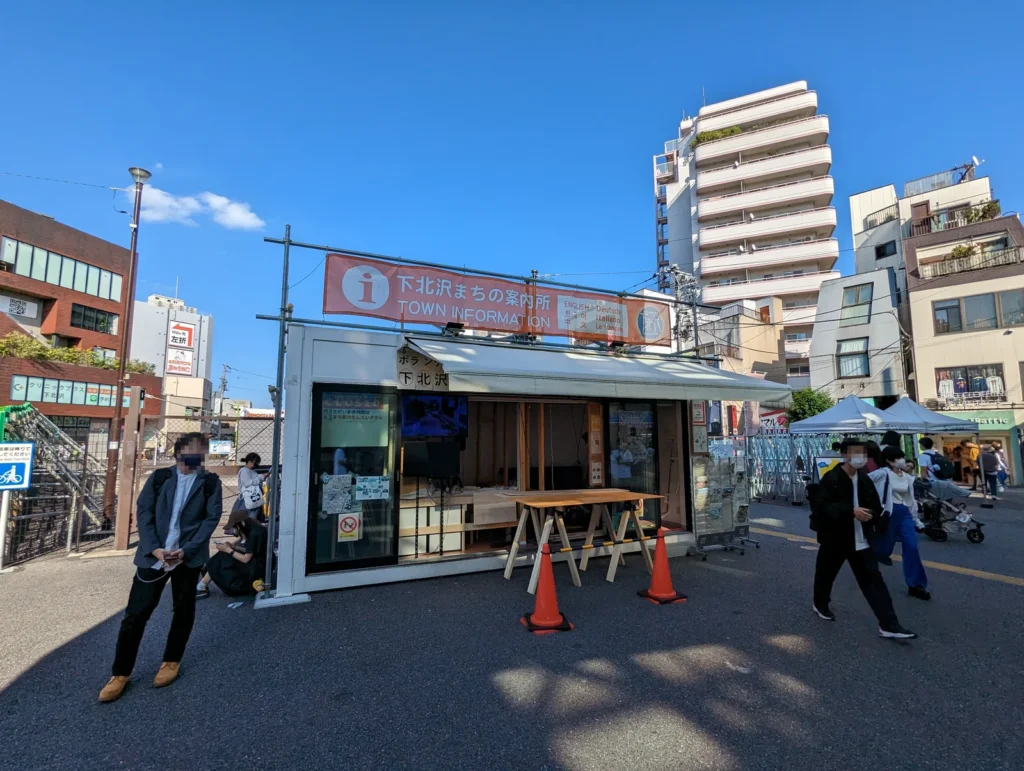
- The station is a genuine maze on a first visit, with two railways on different levels and several exits. The town information kiosk outside the station is the easiest place to get your bearings.
- Weekdays are better than weekends by a wide margin, for the streets, the queues and the shops.
Plan Your Trip
These pair naturally with it:
- Slam Dunk in Kamakura and Enoshima, an hour south on the Odakyu line from the same Shinjuku platforms.
- Your Name in Hida, Gifu, a mountain town with a canal and a UNESCO-listed festival.
- Initial D in Gunma, mountain passes two hours north of Tokyo.
- Love Live! Sunshine!! in Numazu, Shizuoka, and Yuru Camp in Yamanashi and Shizuoka, for Mount Fuji from two directions.
- Detective Conan in Hokuei, Tottori, ONE PIECE in Kumamoto and Attack on Titan in Hita, Oita, for a longer trip west.
How this guide was put together
This guide was researched and planned from published sources rather than written up from a visit. Checked on 12 October 2026, building on a source check of 6 October: SHELTER’s own site for the address, the nightly ticketed schedule and the drink prices; the series’ official site for the SHELTER and Shinjuku LOFT anniversary announcements and for the “From Shimokitazawa” billing; and the Tokyo tourism site for the station lines and journey times.
Two things are deliberately missing. No train fares are quoted, because neither operator publishes a station-to-station fare table that was reachable when this was checked, so journey times are given instead. And the Shimokitazawa Curry Festival dates below are the organising committee’s announcement as read on 6 October 2026; the domain that formerly hosted the festival site no longer belongs to it, so confirm the current year’s dates locally rather than from a search result.
Written and edited by Nick, who runs Anime Routes Japan from Japan. More about Nick, and about how these guides are made, is on the About page.
The practical details here — opening hours, fares, access and the operators’ own requests — were checked against official sources on 6 October 2026: the work’s official site, the venue’s own site, Odakyu’s Shimokita Senrogai site, the individual facility sites, and the Tokyo Metropolitan Government’s official tourism guide. Live house schedules, opening hours and festival dates all change, and the one thing that will not change is that SHELTER is a venue rather than an attraction. Check before you travel, and buy a ticket if you want to see the room.