Detective Conan Pilgrimage Guide: Hokuei, Tottori, Japan
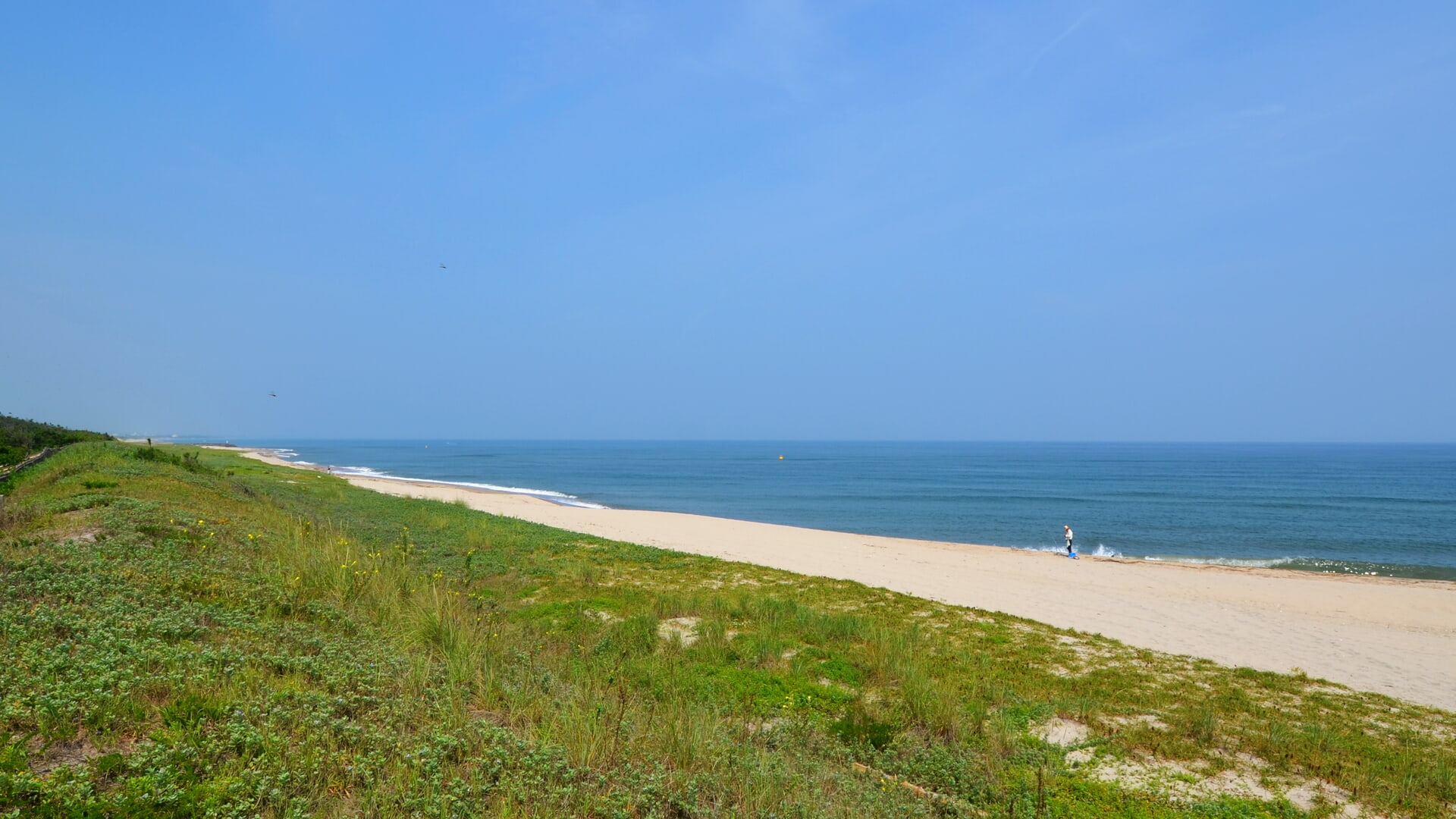
Header photo: Hojo coast in Hokuei, photographed in 2013. Photo: ㎇月例祭, public domain (cropped and resized). Source.
Hokuei is a small farming town on the Sea of Japan coast of Tottori, and the home town of Gosho Aoyama, who draws Detective Conan. The series itself is set in Beika, a fictional district of Tokyo; what Hokuei has is the author, and years of work turning that into a walk: from Conan Station to a museum in Yura itself, past seventeen bronze statues, the covers of the first twenty-eight volumes carved in granite, and a full-size copy of the gate to Shinichi’s house. Kurayoshi is ten minutes away by local train. What you choose here is how far past the walk you go — the street and the museum on their own, plus Kurayoshi, or plus the coast and the dunes — and remember that the museum’s last admission and the last bus back are two different deadlines.
The short answer. “Conan Town” is Hokuei, on the Sea of Japan coast of Tottori. The walk starts at Conan Station — JR Yura Station on the San-in Main Line and ends about twenty minutes on foot away at the Gosho Aoyama Manga Factory (青山剛昌ふるさと館), the museum of the author rather than of the series. Kurayoshi, ten minutes on by local train, is the base. If you are planning for 2027: the current museum building closes after 11 January 2027 and a new one is planned for spring 2027 — the dates, and what still works in between.
Quick Trip Guide
- Destination: Hokuei, Tottori Prefecture
- Best Gateways: Tottori Sand Dunes Conan Airport, or Osaka and Kyoto by limited express to Kurayoshi
- From Gateway: About 40 minutes by car from the airport, with selected airport buses serving the current museum; about 3 hours 10 minutes from Osaka to Kurayoshi by Super Hakuto
- Main Base: The Kurayoshi area
- Getting Around: Walking and local trains for the core route, with buses, taxis or a rental car for trips farther afield
- Car Needed: No for the core Conan Town route; useful for a wider Tottori trip
- Recommended Stay: 1 night, 2 days
- Day Trip: Possible, but staying overnight makes it far easier to add Kurayoshi or a hot spring
- Best For: Detective Conan readers who also want preserved merchant streets, regional ramen, hot springs and the Sea of Japan coast
Why This Place Matters in Detective Conan
Detective Conan — Case Closed to many English readers — starts with a high-school detective, Shinichi Kudo, who is forced to swallow a strange drug by a pair of men in black and wakes up in the body of a small child. He takes the name Conan Edogawa, hides his identity to protect the people around him, and goes on solving cases from a height of about a metre. The pleasure of the series is the deduction: the clue everyone else walks past, and the moment the child in the room is the only one who has understood.
Who the statues are
The series has run in Weekly Shonen Sunday since 1994; the TV anime began in 1996 and the first film in 1997, according to the author’s profile at the museum. Its premise is fixed in the first volume. Shinichi Kudo, a famous teenage detective, sees something he should not have seen, is given a drug meant to kill him, and survives as a child. To keep the people around him safe he becomes Conan Edogawa and moves in with his childhood friend Ran Mouri and her father Kogoro, a private detective whose reputation Conan quietly builds by solving his cases for him. Many of the characters who grew out of that set-up over three decades stand along the road in bronze, and the town’s guide map names each one.
None of this guide goes further into the story than the first volume. Thirty years of cases are best met on the page, not in a travel guide, and the museum is careful about spoilers too.
An author’s home town, not a reconstructed Beika
Hokuei is the author’s home town. The museum’s own profile gives his birthplace as Yura-juku in Hokuei, his schools as the local elementary and high schools, and his first serial as Magic Kaito in 1987, followed by YAIBA and then Detective Conan. The town has built a route around him rather than around a setting: Beika, Shinichi’s neighbourhood and the Mouri agency are fictional Tokyo. So the bronze figures are a welcome from the author’s town, not reconstructions of scenes, and the shopping street called Beika is a purpose-built attraction named after the fictional district.
That makes the visit straightforward in a way many pilgrimages are not. Everything here was put up to be found, the route is signposted and mapped, and the museum stands in the very district he grew up in.
If you are travelling in 2027
The current Gosho Aoyama Manga Factory closes after 11 January 2027 for a move to a new building planned to open in spring 2027; the goods shop at the current site trades separately from 14 January to 28 February 2027. Between those dates and the new opening, Hokuei is still worth the trip for the street itself — see the itinerary for a version built around the closure.
Anime Pilgrimage Spots
The town calls the 1.4 km road from Conan Station to the museum Conan Street. The museum’s own guide puts sixteen kinds of bronze statue, seventeen figures in all, and fifteen coloured objects along it, plus granite monuments shaped like books carrying the covers of volumes 1 to 28 and Conan on the manhole covers. Walking it from end to end takes about twenty minutes without stopping, and much longer if you stop at everything, which is the point.
Please respect local rules and manners at every location, and follow signs and staff guidance.
Where these places are
The map shows the places below and how far apart they are. It is drawn with OpenStreetMap: opening it loads map images from openstreetmap.org. The list works without it.
The map could not be loaded. The places are listed below, with their names and a link to each on Google Maps.
- Anime-related places
- Station or transport
- Nearby sight
The 8 places on this map
- 1Conan Station (JR Yura)由良駅HokueiIn this guideOpen in Google Maps
- 2Gosho Aoyama Manga Factory青山剛昌ふるさと館HokueiIn this guideOpen in Google Maps
- 3Tottori Sand Dunes Conan Airport鳥取砂丘コナン空港Tottori cityIn this guideOpen in Google Maps
- 4Kurayoshi Station倉吉駅KurayoshiIn this guideOpen in Google Maps
- 5Kurayoshi white-wall storehouses打吹玉川KurayoshiIn this guideOpen in Google Maps
- 6Tottori Sand Dunes鳥取砂丘Tottori city · area positionIn this guideOpen in Google Maps
- 7Misasa Onsen三朝温泉Kurayoshi · area positionIn this guideOpen in Google Maps
- 8Hawai Onsenはわい温泉Hokuei · area positionIn this guideOpen in Google Maps
Map data © OpenStreetMap contributors, ODbL. Positions were checked on 15 October 2026 against the source recorded for each place; a few are the published position for a large site rather than an entrance.
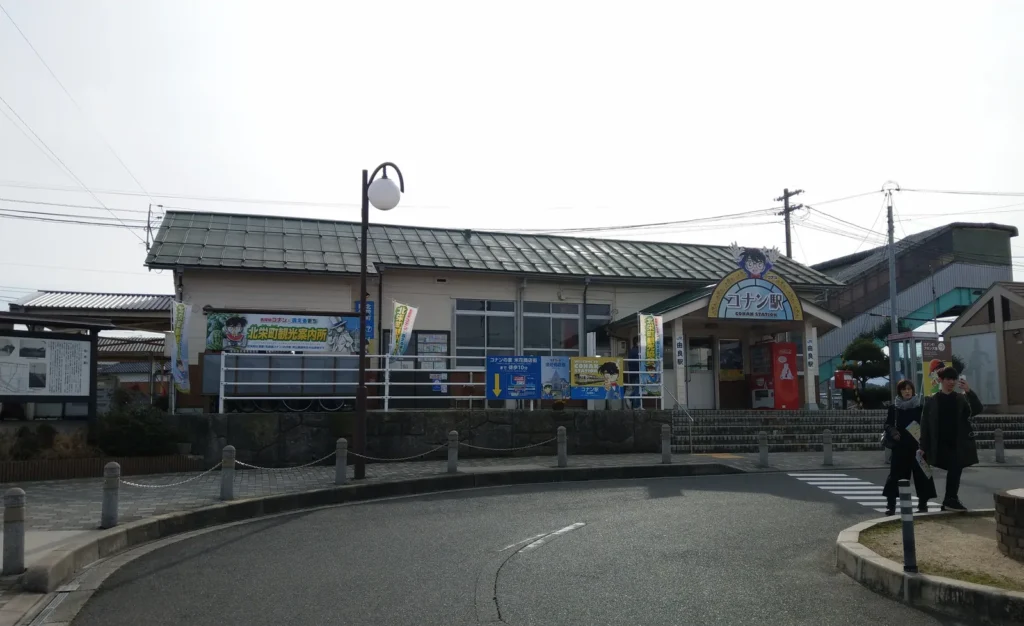
Conan Station (JR Yura Station)
Hokuei’s stop on the San-in Main Line is nicknamed Conan Station, and it is where the walk starts. The decoration begins on the platform and the first statues are on the approach, so the counting starts before you have left the forecourt — the town’s guide map numbers them, which turns the walk into something closer to a trail than a stroll. The museum’s access page puts Kurayoshi about ten minutes away by local train and Yonago about an hour.
The thing to do on arrival is read the departure board. Local trains on this line are not frequent, and the single most common way to lose an afternoon here is to walk the street beautifully and then wait an hour for a train. Note your return before you start walking. It is a working station used by residents and school students, so keep the approach clear and stay back from the platform edge.
Conan Bridge
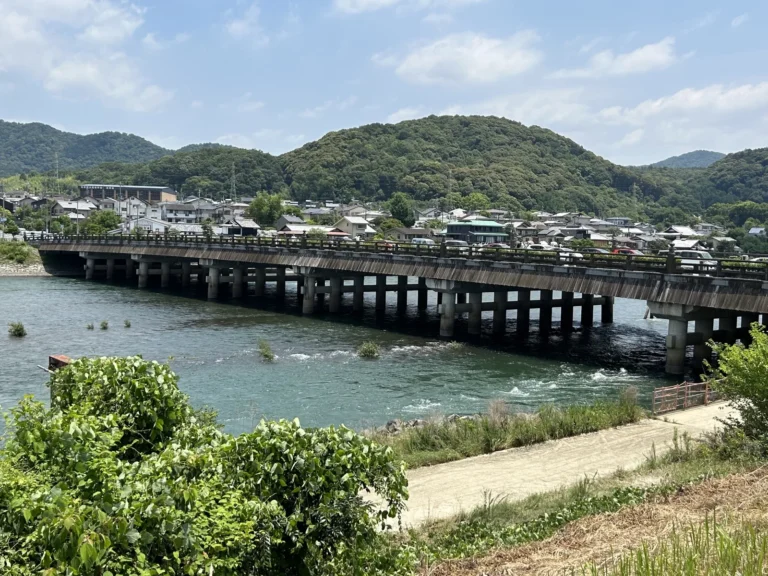
This is the densest stop on the walk and the one to slow down for. The museum’s own guide counts six bronze statues of five characters on the bridge and twelve relief panels in four designs along the railings, so both sides are worth a separate pass; most visitors walk one side and miss half of it. The town’s guide map names each figure, which is the difference between photographing a statue and recognising one.
It carries ordinary traffic. Stand on the footway rather than the carriageway, and let cars through before you set up a shot.
The granite volumes and the AR monuments
All along the street, black granite monuments shaped like open books carry the covers of the first twenty-eight volumes, coloured into the stone. The museum’s free app turns some of the stone monuments into augmented-reality photo spots: scan one and a character appears on your phone screen beside you. It is the most playful thing on the route and works best with someone else holding the phone.
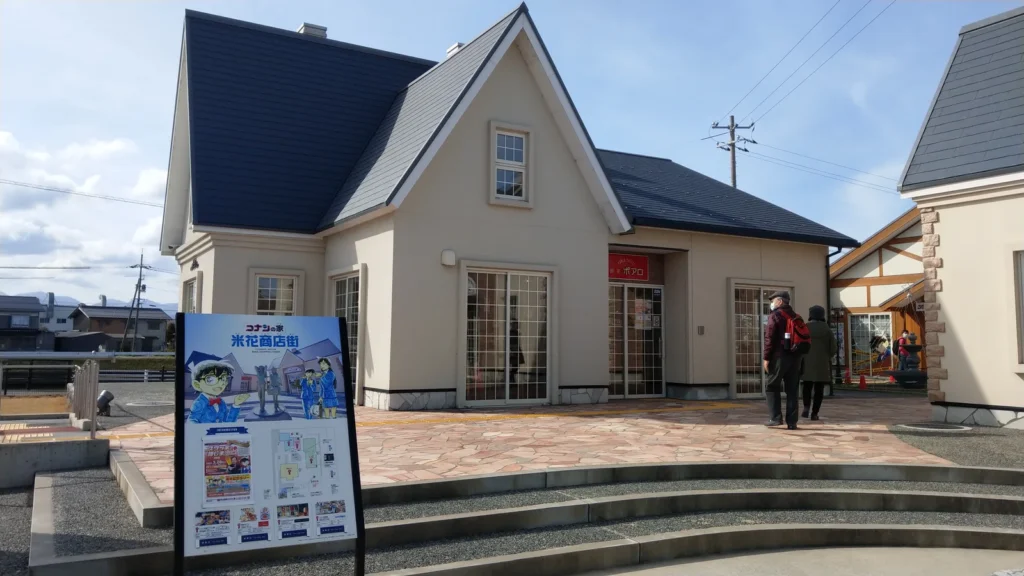
Conan’s House Beika Shopping Street
Beika is the Tokyo neighbourhood Conan lives in, and it does not exist; this is a purpose-built shopping and dining street in Hokuei that borrows the name. Knowing that in advance is what lets you enjoy it, because the centrepiece is worth the walk on its own: a full-size copy of the gate of the Kudo house, nameplate and intercom included, which is the door Shinichi can no longer walk through as himself. It sits about ten minutes on foot from Conan Station and about ten more from the museum, so it breaks the walk roughly in half and is the natural place to eat.
- Opening hours are set by each shop and are separate from the museum’s. The Hokuei Chamber of Commerce, 0858-37-4057, handles enquiries.
- Parking: the Beika car park has been closed since 18 May 2026 while the new museum is built nearby. Use the free car park by the Roadside Station Daiei instead.
Gosho Aoyama Manga Factory
Important for 2027 travel: the museum is moving
- The current building’s last day is 11 January 2027, ahead of a move to a new building planned for spring 2027. Check the museum’s announcement of 30 September 2026 for the confirmed opening date.
- The goods shop at the current site trades separately, from 14 January to 28 February 2027.
- The hours and prices below describe the current building while it is open.
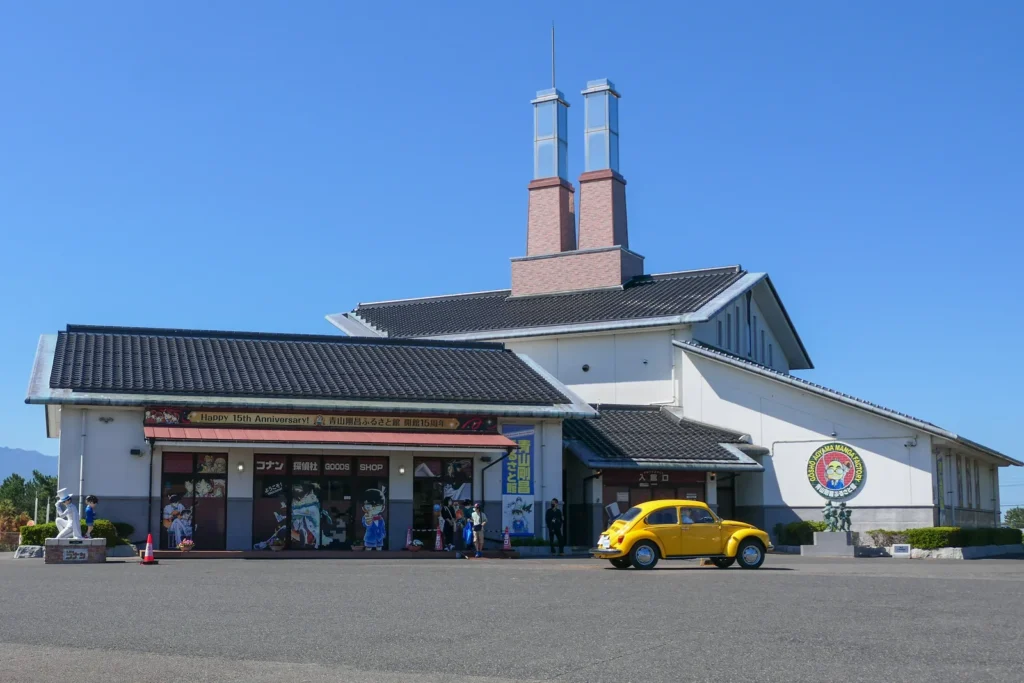
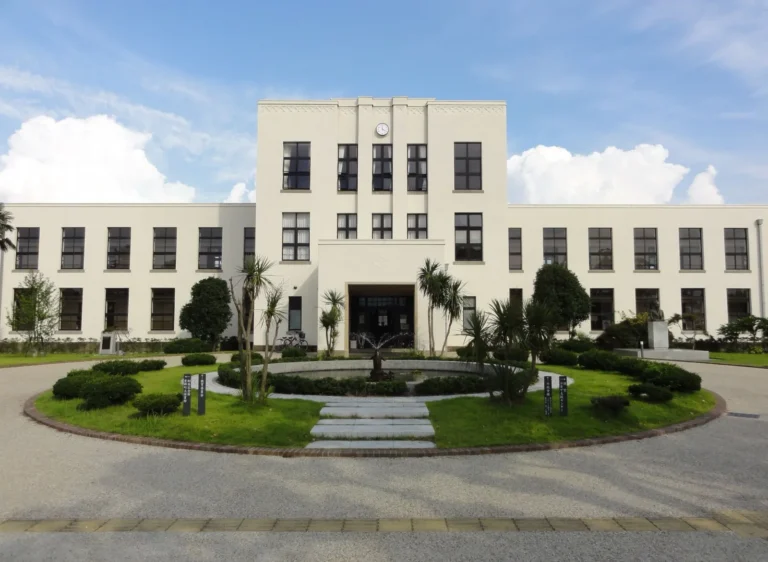
This is the one to protect in your schedule. It is the museum of the author rather than of the series, it stands in Yura-juku, the district he was born in, and it is the reason the rest of the street exists. The galleries run from Magic Kaito and YAIBA through to Detective Conan, with rooms on how he actually works, a fan board and a shop; an hour is the minimum and most readers want longer.
Two practical things make it easier than it looks. Your ticket allows re-entry on the day, so you can break for lunch in Beika and come back. And luggage is stored free for visitors, which turns an awkward day with a suitcase into a normal one — worth knowing if you are passing through between trains.
- Hours: 9:30 to 17:30 all year, last admission 17:00, with scheduled closing days. The site publishes the next one on its front page; at the time of checking that was 30 October 2026.
- Admission: 700 yen adults, 500 yen junior and senior high school students, 300 yen primary school pupils, preschool children free. Show a passport, a residence card or a JR-WEST RAIL PASS and an individual ticket is 100 yen cheaper.
- Tickets: advance tickets are sold all year and guarantee entry rather than faster entry; same-day tickets are sold at reception, and weekends and holidays can queue.
- Photography: the museum allows photography and video in the exhibition space except in the areas marked as no-photography, so watch for the signs rather than assuming it is all one way or the other.
- Getting there: about 20 minutes on foot from Conan Station, 5 minutes by taxi, or on the airport connection bus, which also runs the Kurayoshi to museum leg for 600 yen. Hinomaru and Nihon Kotsu also run local buses between the museum and the Yura Station area; both are infrequent, so check before counting on one. Cars use the free car park between the Roadside Station Daiei and the museum, around 120 spaces; the space directly in front of the entrance is for coaches.
- Photography is allowed in the exhibition except in restricted areas. Follow the signs.
Seasonal: the autumn rally
The museum runs a seasonal sticker rally. In 2026 it is Hagiwara Chihaya’s Investigation, from 16 October to 15 November: collect stickers at six points around Conan Street to work out which local speciality Ran has forgotten the name of, finishing at the Hokuei tourist information office. It is free with museum admission; 30 October is a museum closing day. Rallies change every season, so check the museum’s event page for your dates.
Tottori Sand Dunes Conan Airport
The prefecture’s main airport carries Conan in its official name and has themed displays inside the terminal, so if you fly in the pilgrimage starts before you have collected your bag. The souvenir shops usually stock official goods, which is useful on the way out if you have run out of time in Hokuei.
It is a working airport: keep clear of the check-in queues and security, and do not photograph staff or other passengers. Hokuei is about forty minutes away by car, or about an hour and ten on the connection bus described under How to Get There.
How to Get to Hokuei
Hokuei is on the San-in coast, the quiet side of western Honshu, and there is no shinkansen anywhere near it. That sounds like a problem and mostly is not: there are two practical ways in, by air or overland from Kansai.
Best Gateway
Which gateway is right depends entirely on where else you are going in Japan.
If Tottori is a destination in its own right, fly to Tottori Sand Dunes Conan Airport. It is a domestic airport, so an international visitor connects through Haneda, and the flight from Tokyo is short. The airport is roughly forty minutes from Hokuei by car and is linked to the museum area by a connection bus.
If Tottori is a side trip from a Kansai itinerary, come overland from Osaka or Kyoto. The Limited Express Super Hakuto runs from Osaka to Kurayoshi in about three hours ten minutes, and Kurayoshi is ten minutes from Conan Station. That is a long ride, but it is a single train for almost all of it, and it drops you in the town you will probably be sleeping in.
From the Airport or Major Station
From the airport the drive to Hokuei is about forty minutes, and the connection bus takes about an hour and ten to the museum. Which of the two you want depends less on time than on your flight: only two departures a day go beyond Kurayoshi, and the box below gives them.
From Kurayoshi, the last leg is a local San-in Main Line train to Yura, which is Conan Station, in about ten minutes. Limited express services do not necessarily stop at Yura, so plan on a local train for that final hop and check which departures actually call there.
If you fly into Tottori Sand Dunes Conan Airport
Two of the five airport connection buses run all the way to the museum door, which makes this the rare pilgrimage you can start without changing vehicles. Under the timetable valid 1 June to 24 October 2026, the airport departures are 8:25, 10:35, 14:40, 17:50 and 20:45, timed to ANA arrivals; the second and third of those continue past Kurayoshi and reach the Gosho Aoyama Manga Factory at 11:50 and 15:55. Coming back, the museum is served at 13:00 and 16:20.
- Fares from the airport: 1,500 yen to Kurayoshi Station, 2,000 yen to the museum, half price for children. Between Kurayoshi Station and the museum alone it is 600 yen, which is a useful alternative to the train and the twenty-minute walk.
- Buy before you board at the airport: tickets come from the machine in the arrivals lobby. In the other direction you pay cash on alighting, because there is no ticket machine at the museum, at Kurayoshi or at Matsuzaki.
- The 5:35 from Kurayoshi must be reserved by 20:00 the previous day on 0858-22-3155. The rest need no reservation, but a full bus can leave you behind.
- Buses are cancelled when the flight they connect with is cancelled, and they wait a stated extra period when a flight is late.
- It is a domestic airport; international arrivals connect through Haneda.
- That timetable expires on 24 October 2026 and the next one had not been published when this guide was checked, so confirm your dates on the airport transport page before you rely on any of it.
By Train
The limited express from Kansai is the most comfortable way in without flying. From Kyoto, check whether your chosen service is direct or requires a connection; also confirm that it continues to Kurayoshi rather than terminating at Tottori.
Two things to plan around. First, San-in Main Line local trains are not metro-frequent; gaps of an hour or more are normal, which matters more on the way back than on the way out. Second, if you are travelling on a rail pass, check whether it actually covers this whole route, because part of the Super Hakuto’s journey runs on a line that is not operated by JR and passes do not always include it.
From Tokyo, compare a flight via Haneda with a shinkansen and limited-express journey via the Kansai region, taking your wider itinerary and connections into account.
By Bus
Highway buses connect the Kansai area with Tottori and Kurayoshi and are worth considering alongside the limited express. Compare the fare and the journey time for your own dates when you book, because operators and timetables on these routes change. Once you are in Kurayoshi, the train is the straightforward way to cover the last ten minutes.
By Car
Driving is the option that unlocks the rest of the prefecture. Rental desks are at the airport and around Kurayoshi Station. Check the museum’s current parking map before driving; construction for the new museum has changed parking arrangements around Beika Shopping Street, and the area directly in front of the current museum entrance is for buses rather than cars. Snow is a real consideration on this coast: check the forecast and the road conditions for your dates, and confirm winter equipment with the rental company when you book.
Best Way to Get Around
Verdict for Hokuei: Car-free friendly for the core Conan Town route. A rental car adds flexibility for the rest of Tottori.
The main Conan walking route links the station with the current museum, so a car is optional for this part of the trip. For visits farther afield, compare the bus and train connections with driving. A rental car adds flexibility, but allow travel time between stops and choose an itinerary that fits the time you have.
Train
The JR San-in Main Line is the spine of a car-free version of this trip. Kurayoshi to Conan Station is about ten minutes, and the same line continues towards Tottori City if you are carrying on to the sand dunes. The limitation is frequency rather than coverage: check the departure board when you arrive and work backwards from the train you intend to catch home.
Bus
Buses matter in two places. Airport buses connect with flights and serve Kurayoshi Station, with selected departures continuing to the current museum. In Kurayoshi, a local route bus runs from the station out to the white-wall storehouse district in about twelve minutes, which is the normal way visitors do that leg. Confirm the timetable for your own date and service in both cases, and check the evening and weekend departures you intend to use.
Rental Car
A car is not needed for Conan Town, and makes everything around it easier. Misasa Onsen, Hawai Onsen, the coast and the sand dunes are all easier to combine by car than by train and bus. Driving-document requirements depend on where your licence was issued. Check Japan’s National Police Agency guidance and your rental company before booking; not every international permit or translated licence is valid in Japan. Check parking arrangements at each stop before you set out, including around the current museum, where construction for the new building has changed the layout.
Walking
Walking is the main mode in Hokuei. Conan Street is about 1.4 kilometres from the station to the current museum, on flat ground with footways, which is roughly fifteen to twenty minutes of walking at a normal pace. That is the walking time only: stops at the statues and the manhole covers, the themed shopping complex and a museum visit are separate, and together they make up most of the time you will spend here. The white-wall district in Kurayoshi is also a walking destination once the bus has dropped you at its edge. Bring an umbrella: this coast gets a lot of rain and, in winter, a lot of snow.
What to Eat in Hokuei and Kurayoshi
Central Tottori has one distinctive local dish, one regional speciality worth ordering if you see it, and a coastline that does the rest of the work.
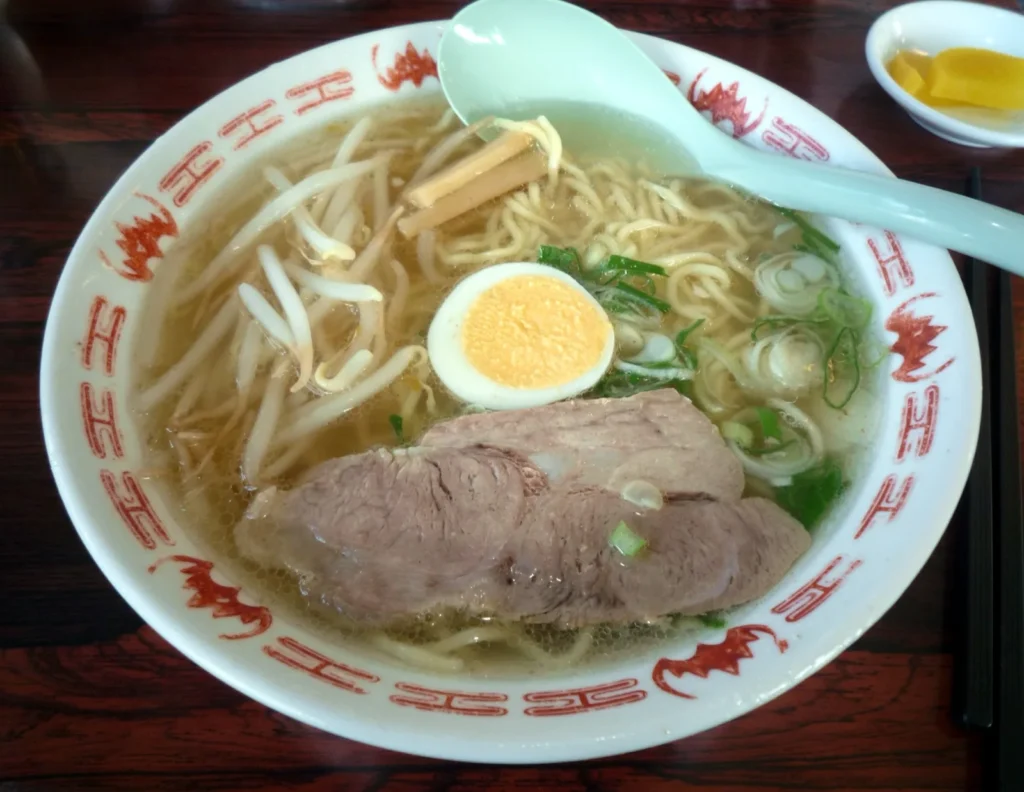
Tottori Gyukotsu Ramen
- What it is: Ramen in a broth made from beef bones rather than the pork bones or chicken used almost everywhere else in Japan. The result is lighter and sweeter than a tonkotsu, closer in weight to a clear soup, with a depth that takes a moment to place if you are used to the usual styles.
- Why it is local: It took root in central and western Tottori and stayed there. This is not a dish invented for visitors or revived for a campaign; it is what the ramen shops in these towns have been serving for decades, which is also why no single shop owns it.
- Where travellers commonly find it: Ordinary ramen shops and roadside restaurants around Kurayoshi, Hokuei and Tottori City. Look for gyukotsu on the sign or the menu. Treat it as lunch on the day you walk Conan Street.
Mochi Shabu
- What it is: Rice cake sliced thin and swished briefly through hot dashi, the way you would cook meat in a shabu-shabu pot. It comes out soft and faintly chewy rather than stretchy.
- Why it is local: It is associated with Kurayoshi, where it is offered as a local speciality rather than as a standard menu item. If you have eaten mochi only as a New Year food or a dessert, this reframes it completely.
- Where travellers commonly find it: A Kurayoshi speciality particularly associated with Machiya Seisuian. Check the restaurant’s current menu and booking arrangements if you want to try it.
Sea of Japan Seafood
- What it is: Whatever the boats have landed. Tottori’s coastal reputation rests on crab in the winter months, with squid and white fish through much of the year, served as sashimi, grilled, or over rice.
- Why it is local: The prefecture faces the Sea of Japan along its whole length, and winter crab in particular is the thing people in Japan travel to this coast for.
- Where travellers commonly find it: Inn dinners, restaurants in Kurayoshi and the coastal towns, and roadside stations. It is strongly seasonal, so check what is actually in season for your dates instead of expecting crab in July.
Things to Do Beyond the Anime
Conan Town is half a day. This is the half that decides whether the journey to Tottori was worth making, and the answer is in the three or four places within easy reach of the same base.
Kurayoshi White-Wall Storehouse District
This is the single best reason to stay a second day. A few streets of merchant houses and storehouses from the Edo and Meiji periods survive along a canal in the old centre of Kurayoshi: white plaster walls, black-burnt cedar boarding, red Sekishu roof tiles on many of the buildings, stone bridges across the water. It is a nationally designated Important Preservation District for Groups of Traditional Buildings, and the people who live and trade there are the reason it still looks like this.
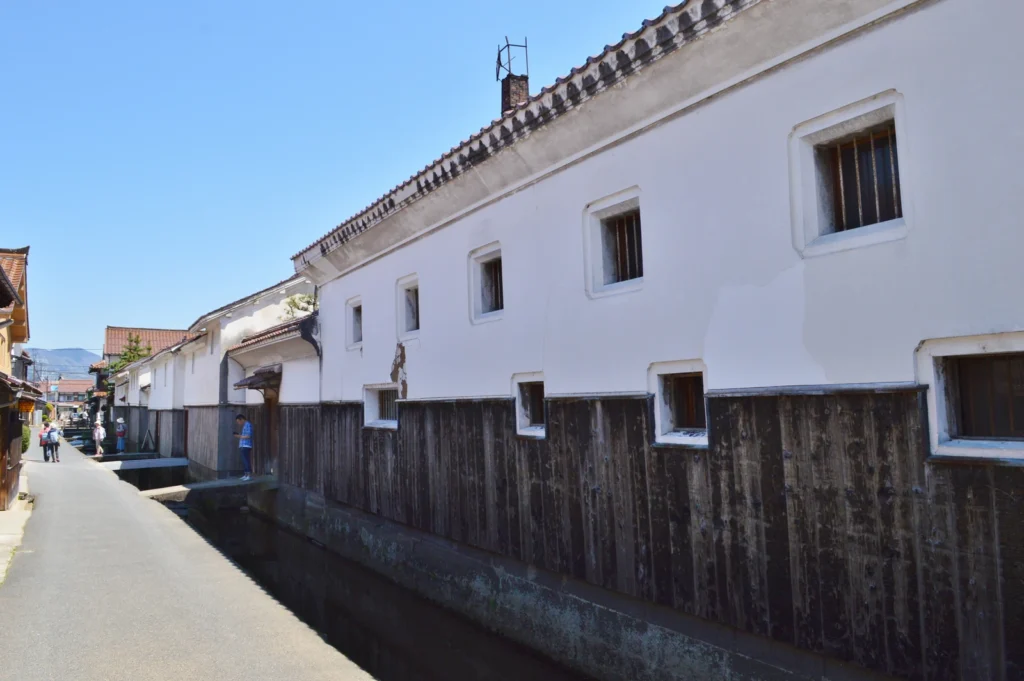
It is a small area and you can see it properly in two hours. Several of the buildings are open to look inside, and others have become cafes, craft shops and sake merchants. The route from the station is a local bus of about twelve minutes plus a short walk. Go in the morning if you can: it is quieter and it photographs better.
Nature and the Coast
Lake Togo sits just east of Hokuei, a shallow brackish lake with hot springs on its shore and a flat path around parts of it. It suits an easy hour on foot if you want a break from the Conan route.
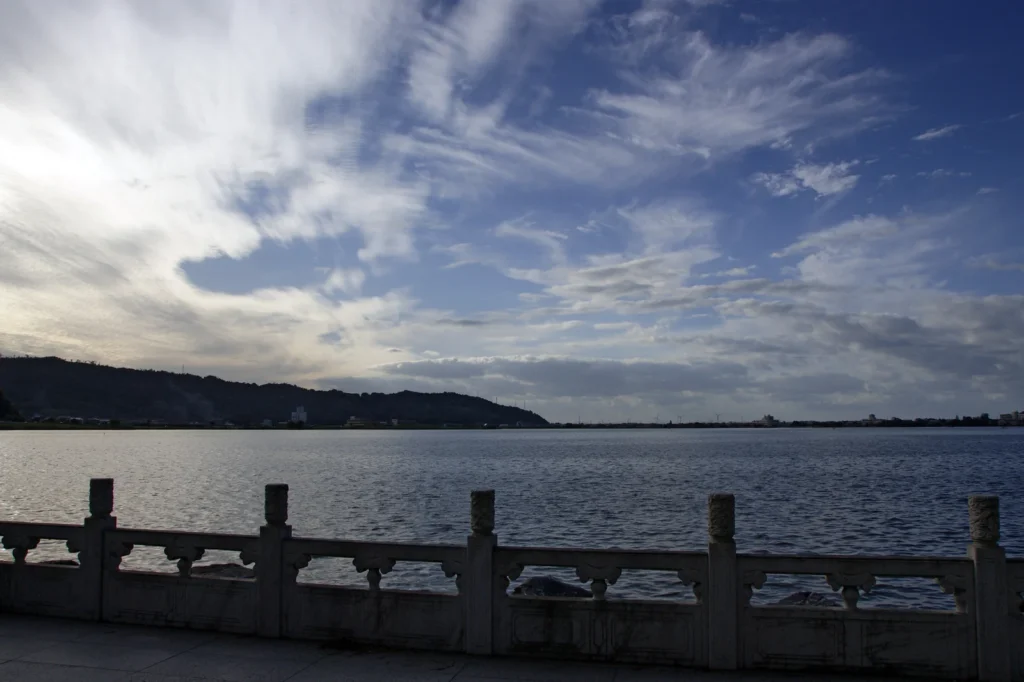
The Tottori Sand Dunes are the prefecture’s best known sight and deserve a clear note about geography. The Tottori Sand Dunes are in eastern Tottori, near Tottori City, while Hokuei is in the central part of the prefecture. Treat them as a separate excursion and allow for the journey to Tottori, the transfer to the dunes and your onward connection. There is a section on where they fit further down.
Hot Springs
Misasa Onsen lies in a river valley inland from Kurayoshi and is known for its radon-rich hot springs: an old, small hot spring town with inns along the river and day baths as well. If you are visiting rather than staying, check which baths take day visitors, their hours, and your transport back.
Hawai Onsen sits on the shore of Lake Togo, closer to Hokuei, and the name has nothing to do with the Pacific. It is a quiet cluster of inns with lake views, and it works well as a single onsen night tacked onto a Conan day.
Neither is within walking distance of Hokuei or of Conan Street. Both are a short bus, taxi or car trip from the Kurayoshi area, and if you want an onsen night you should book it as your accommodation rather than planning to visit and return. If you have tattoos, check the individual inn’s policy before booking; rules vary and the smaller the place, the more it depends on the owner.
Museums & Culture
Kurayoshi has the Enkei Gekijo Kurayoshi Figure Museum, which sits oddly well with an anime-themed trip and is a short walk from the old district. Confirm its opening days and admission on its own site before you build a day around it. The storehouse district itself also carries the local craft tradition: look for indigo-dyed cotton work, which is the textile Kurayoshi is known for, in the shops along the canal.
Seasonal Experiences
The San-in coast changes character completely through the year. Winter brings crab season and real snow, which makes the storehouse district beautiful and the driving slower. Spring is the easiest walking weather. Summer is hot, humid and the season for the Daiei watermelons this farming district is known for. Autumn brings colour to the inland valleys around Misasa. Local festival dates move from year to year, so check the Tottori prefectural tourism site for the period you are travelling.
What to Bring Home
Between the museum shop, the roadside station and the airport, this is an easy trip to shop on. The only discipline required is around the anime goods.
Regional Food
Boxed confectionery from the Kurayoshi shops, local sake from the merchants in the storehouse district, and dried or bottled goods from the roadside station all pack well. Before taking food or alcohol home, check your destination’s customs rules and your airline’s baggage and liquid restrictions.
Crafts
Kurayoshi’s traditional craft is an indigo-dyed cotton textile, and small pieces of it travel well: coasters, cloth wrappers, small bags. The shops along the canal in the storehouse district are the obvious place to look.
Local Products
Hokuei is a farming town first and a Conan town second, and the roadside station at the end of Conan Street is where that shows. Daiei watermelons and Japanese yam are the local produce, and both are strongly seasonal. Before taking food or alcohol home, check your destination’s customs rules and your airline’s baggage and liquid restrictions; fresh produce is usually best bought to eat on the trip.
Official Detective Conan Merchandise
The museum shop is the main source, with the roadside station and the airport terminal shops behind it. Some items are tied to this town specifically, which makes them worth more as souvenirs than anything you could buy in Tokyo. Buy from these shops, from official stores or from licensed retailers, so that you know the goods are licensed and the money reaches the rights holders.
Where to Stay in Hokuei
Most travellers do not sleep in Hokuei. It is a small farming town with limited accommodation, and the sensible base is Kurayoshi, ten minutes down the line, or one of the two hot spring towns near it.
Best Area to Stay
The Kurayoshi station area is the practical choice. It has the business hotels, it is where the limited express from Kansai terminates, and it puts both Conan Station and the storehouse district within a short ride. If you would rather spend the night somewhere with more character, book an inn at Hawai Onsen on Lake Togo or at Misasa Onsen in the valley, and accept that you will be making one extra connection each way. Staying in Hokuei itself only makes sense if you find something you specifically want to stay in.
Day Trip or Overnight?
A day trip works. From Kurayoshi you can reach Conan Station, walk the street, see the museum and be back by mid-afternoon, and even from Osaka a very long single day is physically possible.
It is the wrong shape of trip, though. The travel time in is three hours or a flight, and the Conan content is three or four hours. An overnight turns that ratio around: the storehouse district, a proper dinner, a hot spring, and the option of a separate excursion to the sand dunes. If you cannot stay, check the last realistic limited express back to Kansai before you set out and work the day backwards from it.
Types of Accommodation
- Ryokan: Concentrated at Misasa and Hawai Onsen. Choose a dinner-and-breakfast plan if you want meals included, and confirm the inn’s latest arrival time. Winter menus tend to be seafood-led.
- Hotel: Business hotels around Kurayoshi Station. Plain, inexpensive, reliable and well placed for the trains, which is exactly what you want if you are using the area as a base for two days of moving around.
- Hostel / guesthouse: Thin on the ground compared with the cities, but a handful of small guesthouses operate around Kurayoshi, including in and near the old district. Book early: there are only a handful of rooms.
Suggested Itinerary
Hokuei gives you one very good walk and then a decision. Conan Street is a 1.4 km line of bronze from the station to the museum and it is the whole reason to come; everything else is a choice about how much of Tottori you add to it. Here is that choice before the detail starts.
| Which trip | Conan Street only | Plus Kurayoshi | Plus the coast and dunes |
|---|---|---|---|
| Time needed | Half a day | One night | Two nights, or a car |
| Suits | A stop on a wider San-in trip | Most readers: the walk, then white-walled streets and a hot spring | Anyone who wants Tottori itself as well |
| Car needed | No. Train and a 20-minute walk | No. Local trains link Yura and Kurayoshi in about 10 minutes | Yes, in practice |
| Priority if rushed | The museum, then the bridge | Museum, Beika street, Kurayoshi storehouses | Keep the dunes for a separate day |
Both routes assume you are based in the Kurayoshi area and have checked the museum’s opening days for your dates. If any part of your trip falls in 2027, check the museum’s status before you build a day around it: the current building is scheduled to close after 11 January 2027 and the new one is planned for spring 2027. The one-day route assumes a night near Kurayoshi beforehand, or an arrival early enough to start in the morning. Times are deliberately loose, because the local train and the local bus will decide your actual day.
One day: possible, but only Conan Town
- Morning: Local train from Kurayoshi to Conan Station. Start at the station decoration and monuments, then set off down Conan Street.
- Midday: Walk the street properly, stopping at the statues, the monuments, the manhole covers and Conan Bridge. Conan’s House Beika Shopping Street is about ten minutes from the station along this route, and makes a natural stop on the way out or on the way back. Gyukotsu ramen for lunch.
- Afternoon: The Gosho Aoyama Manga Factory, roughly another ten minutes on foot. Allow more time than you think for the museum shop.
- Evening: Taxi or walk back to Conan Station and the train to Kurayoshi. If you are returning to Kansai the same day, be on the earlier of the trains you were considering.
Two days, one night: the recommended trip
Day 1: Conan Town, Hokuei
- Arrive at Conan Station
- Walk Conan Street and Conan Bridge
- Beika Shopping Street
- Gosho Aoyama Manga Factory
- Dinner and a night in the Kurayoshi area
Day 2: Beyond Conan
- Kurayoshi white-wall storehouse district
- Gyukotsu ramen or a local lunch
- Craft shops along the canal
- A hot spring, or onward travel
Travelling between 12 January and the new museum’s opening
- The current museum is closed after 11 January 2027 and the new one is planned for spring 2027 — check its opening date before you book.
- Conan Street, Conan Bridge, the granite volumes and the AR monuments are outdoors and do not depend on the museum. Walk them from Conan Station, slowly.
- The goods shop at the old site is open from 14 January to 28 February 2027.
- Beika Shopping Street keeps its own hours; check with the shops.
- Add Kurayoshi’s white-walled storehouses or a hot spring to make it a full day.
If you are flying in and out: the bus-door half day
Only two airport buses a day run past Kurayoshi to the museum, and once you know them the whole trip simplifies. On the timetable valid to 24 October 2026, the 10:35 from the airport reaches the museum at 11:50; the museum, Beika and the walk back down Conan Street to the station fill the afternoon comfortably, and the 16:20 from the museum is at the airport by 17:35. That is a genuine half-day pilgrimage with no car, no train change and one 2,000 yen fare each way.
The tighter version, 11:50 in and 13:00 out, gives you about an hour: enough for the museum alone if you have a connection to keep, and not enough for the street. The 14:40 is the bus leaving the airport, not a landing time: it reaches the museum at 15:55, which is 65 minutes before the 17:00 last admission. The catch is the way back, because the museum is served at 13:00 and 16:20 only — take the 16:20 and the 25 minutes between arrival and departure is the whole of your time there, the walk back to the stop included. So the afternoon arrival is for people staying the night in Kurayoshi, not for a same-day turnaround. Confirm the dates before relying on any of this: the timetable above runs 1 June to 24 October 2026 and nothing here is promised for 25 October onwards, when a new sheet takes over. The airport publishes the current one on its bus page, where it also gives the journey as about 67 minutes to the museum and about 45 to Kurayoshi Station.
Where the sand dunes fit
For Day 2, choose between a relaxed Kurayoshi and hot-spring day and a separate trip to the Tottori Sand Dunes. From the Kurayoshi area, a car-free visit requires a train journey to Tottori and a bus or taxi to the dunes, followed by a transfer back to the station or onward to the airport.
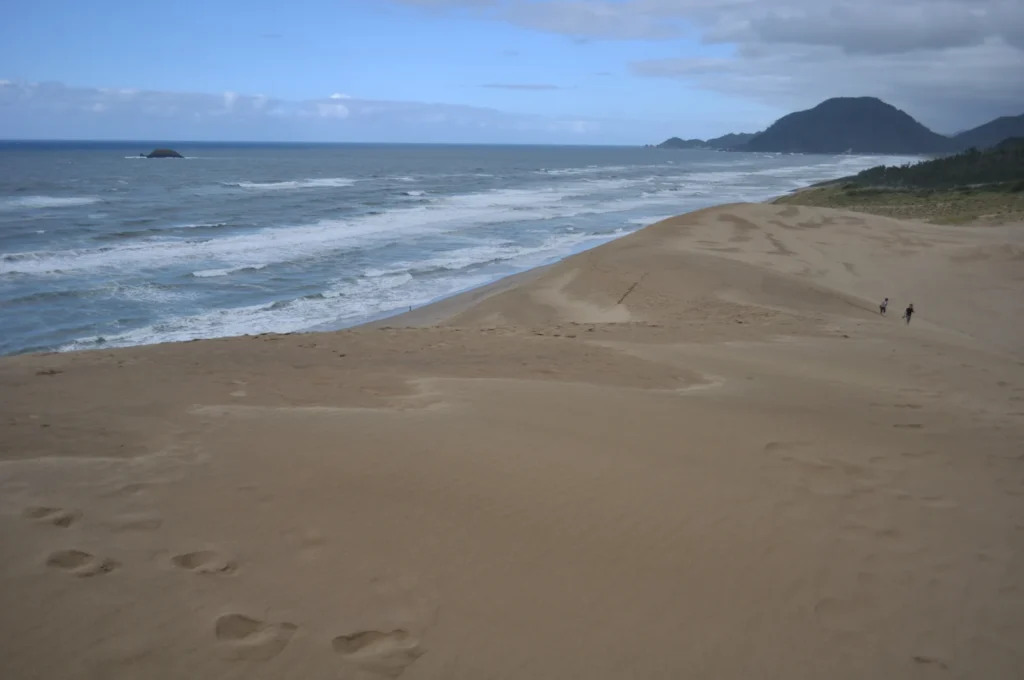
Include sightseeing time and a buffer for your train or flight. Travelling east can make the excursion easier to combine with your wider route, but the dunes are not simply a stop on the way through. For this relaxed two-day itinerary, keep the Conan walk and the dunes on separate days.
Travel Tips & Etiquette
Hokuei is an easy place to visit and a small one. The points below are the ones that actually change how a day here goes.
- Check the museum calendar before anything else. The museum is moving: the current building is scheduled to close after 11 January 2027, with a new one planned for spring 2027. The current building has designated closure dates; check the museum’s current calendar before travelling. The museum recommends buying tickets in advance, and same-day tickets are also sold at the exhibition reception. The whole trip is built around this one museum, so confirm its status first and plan the rest afterwards.
- Note the return train when you arrive. San-in Main Line local services are infrequent enough that an hour can disappear waiting at Conan Station. Photograph the departure board on your way out of the station.
- This guide visits the author’s home town, not the story’s setting. Beika Town, where the series is set, is a fictional district of Tokyo. What Hokuei offers is Gosho Aoyama’s home town and the official facilities built around it, so treat private houses here as homes rather than sights.
- Residential areas and private property. Conan Street runs past houses, fields and working businesses. Keep to the footway, keep noise down, and photograph the installations rather than the buildings behind them.
- Schools are not sightseeing spots. Places connected with the author’s childhood appear on local maps. Treat any school as off-limits: do not enter the grounds, do not photograph children, and view buildings only from the public road.
- Photography inside the facilities. Photography and video are allowed in the museum except in restricted areas, original artwork is generally off-limits, and the museum asks visitors not to stream video. Follow the signs and staff instructions. Permission to photograph does not automatically cover commercial reuse.
- Cash and IC cards. Tottori local buses operated by Nihon Kotsu and Hinomaru Jidosha accept ICOCA and compatible nationwide transport IC cards, including Suica. Keep some cash for businesses and services with different payment arrangements, and check the Kurayoshi-bound airport bus separately.
- Weather on the San-in coast. This side of Honshu is wet, and winter brings real snow rather than a dusting. Take an umbrella in any season. If you are driving in the colder months, check the forecast and the road conditions for your dates and confirm winter equipment with the rental company when you book.
- Luggage. Conan Street is a 1.4 kilometre walk each way, which is no fun with a suitcase. Leave bags at your accommodation in Kurayoshi or in a station locker.
- Language. The museum publishes information in English and the main installations are easy to follow without any Japanese. Away from the Conan route, expect much less English and have a translation app ready.
Plan Your Trip
Four things to settle first: the museum’s opening days for your dates, where you are sleeping, how you are getting to Kurayoshi, and whether you want a car for the second day.
- Accommodation: Base yourself around Kurayoshi Station for convenience, or at Hawai or Misasa Onsen for an inn dinner and a bath. Book the onsen inns early in crab season.
- Transport: Either a domestic flight into Tottori Sand Dunes Conan Airport, or the Limited Express Super Hakuto from Osaka or Kyoto to Kurayoshi. If you hold a rail pass, check whether it covers the whole limited express route before you rely on it.
- Rental cars: Not needed for Conan Town. Worth it for a two-day trip that adds the hot springs, the coast or the sand dunes. Pick up at the airport or near Kurayoshi Station. Driving-document requirements depend on where your licence was issued. Check Japan’s National Police Agency guidance and your rental company before booking; not every international permit or translated licence is valid in Japan.
- eSIM and mobile data: You will want data for the train timetables and the bus connections more than for anything else. Check the coverage map for the operator you plan to use, and save the maps and timetables you need offline before you set out.
- Tours and activities: Nothing here needs a guided tour, but onsen inn dinners, crab-season meals and any craft workshop in the storehouse district should be reserved rather than walked into.
The guides below are route pairings: journeys that combine well with this one. They are not guides to the same places.
- Attack on Titan in Hita, Oita — the closest parallel on this site: Hita built its project around Hajime Isayama’s home district rather than around locations from the anime, which is exactly how Hokuei treats Gosho Aoyama.
- Sound! Euphonium in Uji, Kyoto — a pairing if your trip runs through Kyoto or Osaka: the limited express to Kurayoshi starts from both, and Uji is a half day out of Kyoto.
How this guide was put together
This guide was researched and planned from published sources rather than written up from a visit. Checked on 12 October 2026: the Gosho Aoyama Manga Factory for opening hours, last admission, the next closing day, admission prices and the dates of the move; the museum’s own access page for journey times, the local bus operators and the car park; and Tottori Airport for the connection bus, whose timetable PDF was read directly for the departure times, the through services to the museum, the fares and the reservation rule.
What is an estimate. Suggested visit lengths and the shape of the itineraries are planning judgements, not measured times. Where no official source publishes a figure, none appears here: the airport bus timetable after 24 October 2026 had not been issued when this was checked, and the new museum’s opening date is given only as the season the museum itself announced.
Written and edited by Nick, who runs Anime Routes Japan from Japan. More about Nick, and about how these guides are made, is on the About page.
This guide currently contains no affiliate links.