Your Name Pilgrimage Guide to Hida, Gifu, Japan
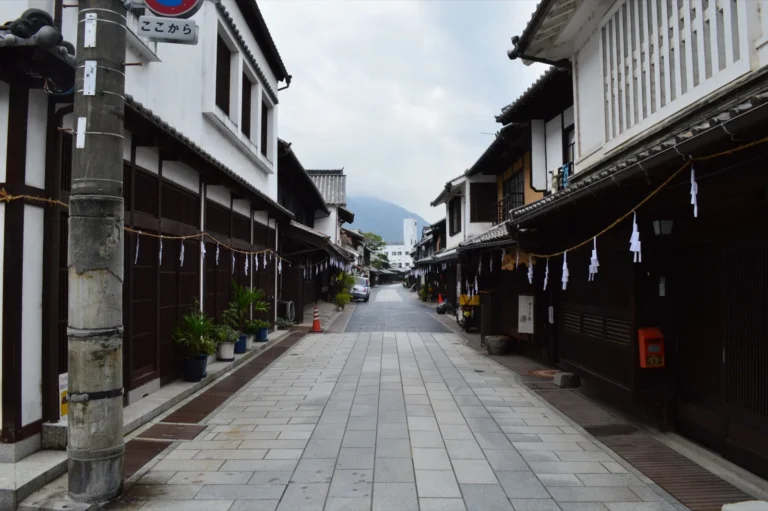
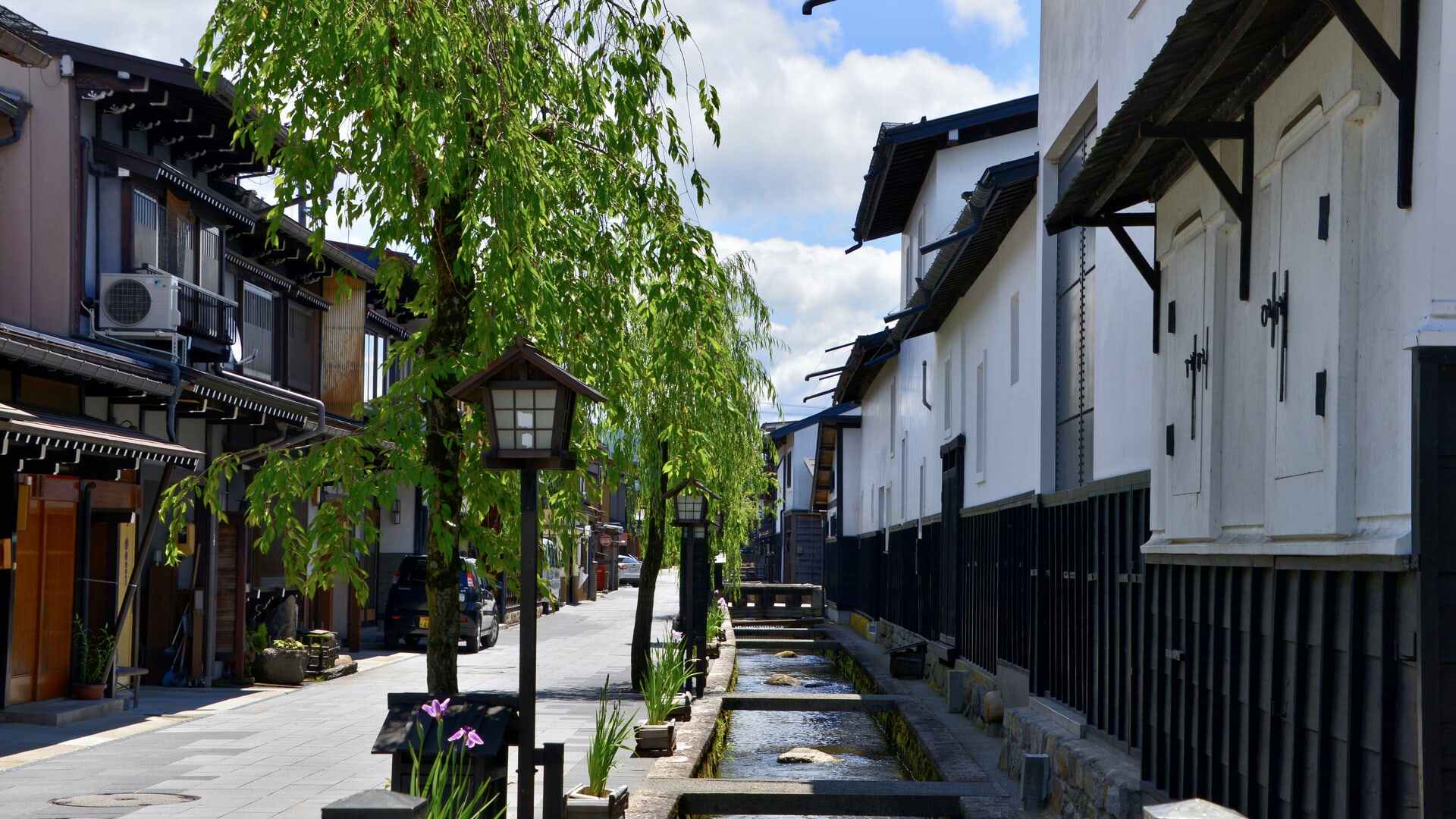
Header photo: white-walled storehouses along the Setogawa canal, Hida-Furukawa, photographed in 2020. Photo: Kougetsuki, CC BY-SA 4.0 (cropped and resized). Source.
Itomori, the lake town in Your Name, is fictional. Hida-Furukawa, in the mountains of northern Gifu, is real, and Hida City publishes its own walking course through the places the film drew on: a station on a single-track line, its bus rotary and footbridge, a public library, a shrine stairway, and a bus stop out in the valley. Ten years after the film, the town marks the anniversary with bookmarks you can pick up for free. This guide follows the city’s list and stops where it stops. The town itself is a morning on foot; the Ochiai bus stop out in the valley is a separate return trip, not a detour, so decide whether you are doing one or both before you look at bus times.
Quick Trip Guide
- Destination: Hida-Furukawa, Hida City, Gifu Prefecture
- Best Gateway: Nagoya, then the Limited Express Hida up the Takayama Main Line
- From Gateway: Around two hours and forty minutes from Nagoya to Hida-Furukawa; about 15 minutes on from Takayama
- Main Base: Hida-Furukawa for the quiet version, Takayama for the choice of hotels
- Getting Around: On foot in the town centre; a car or a guide taxi for the Ochiai bus stop
- Car Needed: No for the town. Yes, or a taxi, for the bus stop out in Miyagawa
- Recommended Stay: 1 night, 2 days, or a day trip from Takayama
- Day Trip: Yes, comfortably, from Takayama or Toyama
- Best For: Your Name readers, and anyone who wants a Hida town without the crowds of Takayama
Why This Place Matters in Your Name
The official site describes Your Name as a story of love and miracles between a boy and a girl who swap places in their dreams. Taki is a high-school boy in central Tokyo with a restaurant job and a quiet crush on a senior colleague; Mitsuha is a high-school girl in a small mountain town, living with her grandmother and little sister, tired of her family shrine’s customs and of her father’s election campaign, and longing for Tokyo. The film is about the distance between their two worlds — and, in its second half, about searching for a place you only half remember.
Two lives, one search
The film opened in August 2016. Director Makoto Shinkai’s official introduction calls it a drama of “distance”, built on the gap and the connection between two people in different worlds, with music by RADWIMPS. Half of it is Tokyo. The other half is Mitsuha’s town, and the half that brings pilgrims to Hida is the search: someone arriving by train in the mountains with a sketch of a place, asking strangers whether they recognise it. Hida City’s route is built around exactly those moments — the rotary where the characters question a taxi driver, the shrine stairway where the protagonist asks around, the bus stop where they wait, getting nowhere.
What is real, and what is not
Itomori, its lake and its shrine are drawings. Hida-Furukawa lent the film textures you can stand in, and the city is careful to say which: it names its spots as models for particular scenes, not as Itomori. This guide does the same, and leaves out places identified only by fans. It also avoids the film’s turns — if you have not seen it, nothing here will spoil it.
Ten years on, the pilgrimage has settled into something the town can live with. The library keeps a corner for the film, the tourist office gives out an anniversary bookmark, and a shop in the old streets teaches visitors to braid a kumihimo cord, the key object in the film.
Before you set off
- Hida-Furukawa is a residential town, not a visitor attraction. Most of the places in this guide are a working station, a working library, a working shrine and a working bus stop.
- The library is a library. Keep your voice down, do not photograph other users, and follow staff instructions about photography inside.
- At the Ochiai bus stop, Hida City asks visitors photographing there to take care not to obstruct people passing. It is on a live road with no pavement.
- This guide follows Hida City’s own list of locations. Where something is only widely identified by fans rather than confirmed by the city, it is left out.
Anime Pilgrimage Spots
Hida City’s official route runs through seven places. Five of them sit within a fifteen-minute walk of Hida-Furukawa Station, which is why this works so well as a half-day on foot. The sixth, the shrine, is a quarter of an hour further out. The seventh is a bus stop twenty minutes north by car, and it is the only part of the day that needs transport.
Please respect local rules and manners at every location, and follow signs and staff guidance.
Where these places are
The map shows the places below and how far apart they are. It is drawn with OpenStreetMap: opening it loads map images from openstreetmap.org. The list works without it.
The map could not be loaded. The places are listed below, with their names and a link to each on Google Maps.
- Anime-related places
- Station or transport
- Nearby sight
The 6 places on this map
- 1Hida-Furukawa Station飛騨古川駅Hida-FurukawaIn this guideOpen in Google Maps
- 2Hida City Library飛騨市図書館Hida-FurukawaIn this guideOpen in Google Maps
- 3Keta Wakamiya Shrine気多若宮神社Hida-FurukawaIn this guideOpen in Google Maps
- 4Takayama Station高山駅Takayama and Shirakawa-goIn this guideOpen in Google Maps
- 5Shirakawa-go白川郷Takayama and Shirakawa-go · area positionIn this guideOpen in Google Maps
- 6The Setogawa canal瀬戸川Hida-FurukawaIn this guideOpen in Google Maps
Map data © OpenStreetMap contributors, ODbL. Positions were checked on 15 October 2026 against the source recorded for each place; a few are the published position for a large site rather than an entrance.
How the locations are grouped
- Around the station, Hida-Furukawa: the library, the station building, the bus rotary, the overbridge, the tourist information office and the Sakura Bussankan.
- Above the town: Keta Wakamiya Shrine and its stone stairway.
- Out in Miyagawa: the Ochiai bus stop, 17 minutes by car to the north.
- All of the outdoor locations are free. The library is free. Only the braiding workshop costs anything: 800 yen for a strap in about 30 minutes, or 2,200 yen for marudai work in about 40. The town walk itself costs nothing beyond getting to Furukawa.
Hida City Library
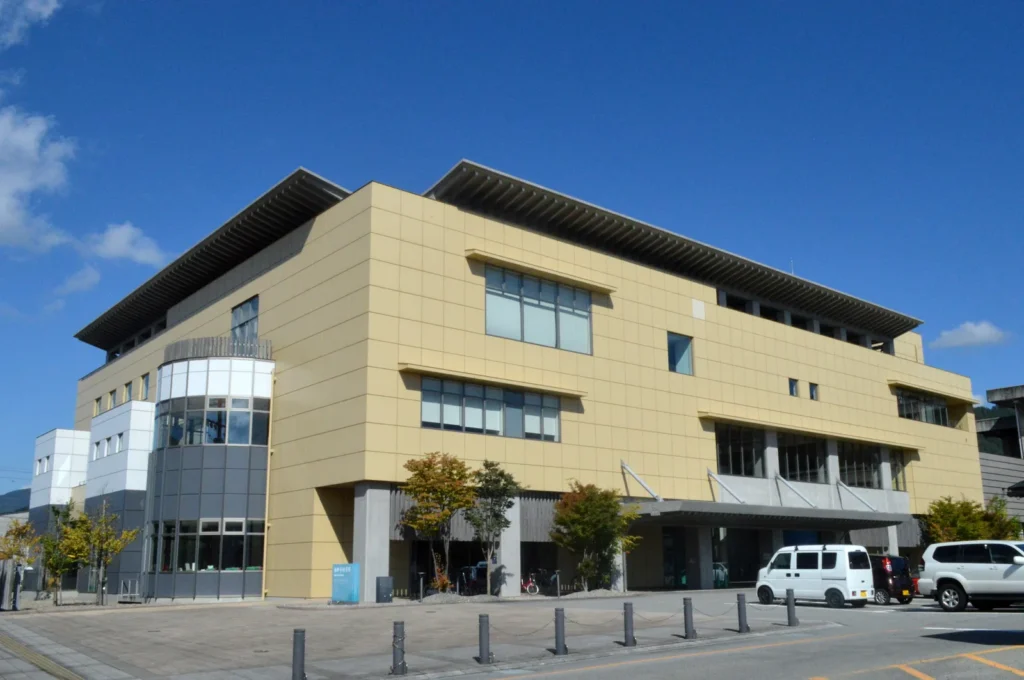
Hida City’s route starts at the library, and calls it one of the film’s memorable sceneries. A corner at the back is given over to Your Name; for the tenth anniversary the library reissued the bookmarks that circulated ten years ago, along with the notice that used to stand in front of the building, and the bookmarks are free to take. The building itself is a modern public library beside the city hall, with Hida-made wooden furniture and around eighty thousand volumes including a substantial local history collection — a pleasant half-hour whether or not you have seen the film.
- Closed Mondays and on the last Friday of the month, and on the following day when a public holiday falls on a Monday. Check the library’s own calendar for extra closures before you build a day around it.
- Free, and open 9:00 to 20:00 on weekdays and 9:00 to 17:00 on Saturdays, Sundays and public holidays, per its notice of changed hours. Its access page still shows the older pattern, in which Saturdays and public holidays ran to 20:00 and only Sunday closed at 17:00 — so if you are coming on a Saturday or a holiday, take the 17:00 and check the library’s calendar for your date.
- About five minutes on foot from the station, the figure the library gives on its access page. The free car park shared with the city hall is what Hida City suggests using as the base for the whole walk, which is the practical reason to start here.
It is a working public library used by residents and schoolchildren. Keep quiet, do not photograph other users, and ask at the desk before taking photographs inside.
Hida-Furukawa Station
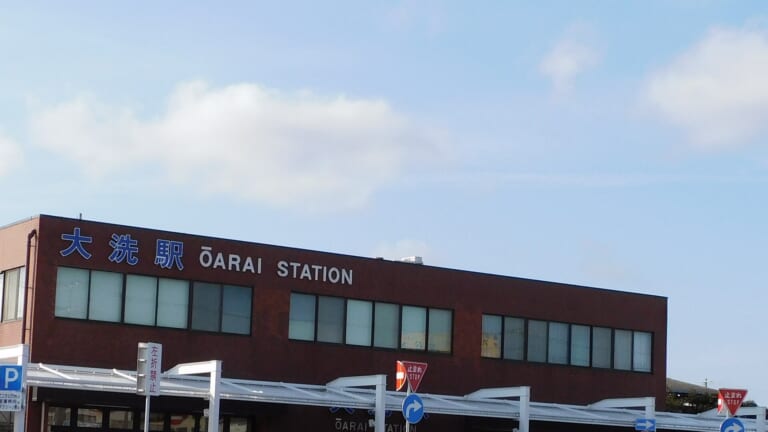
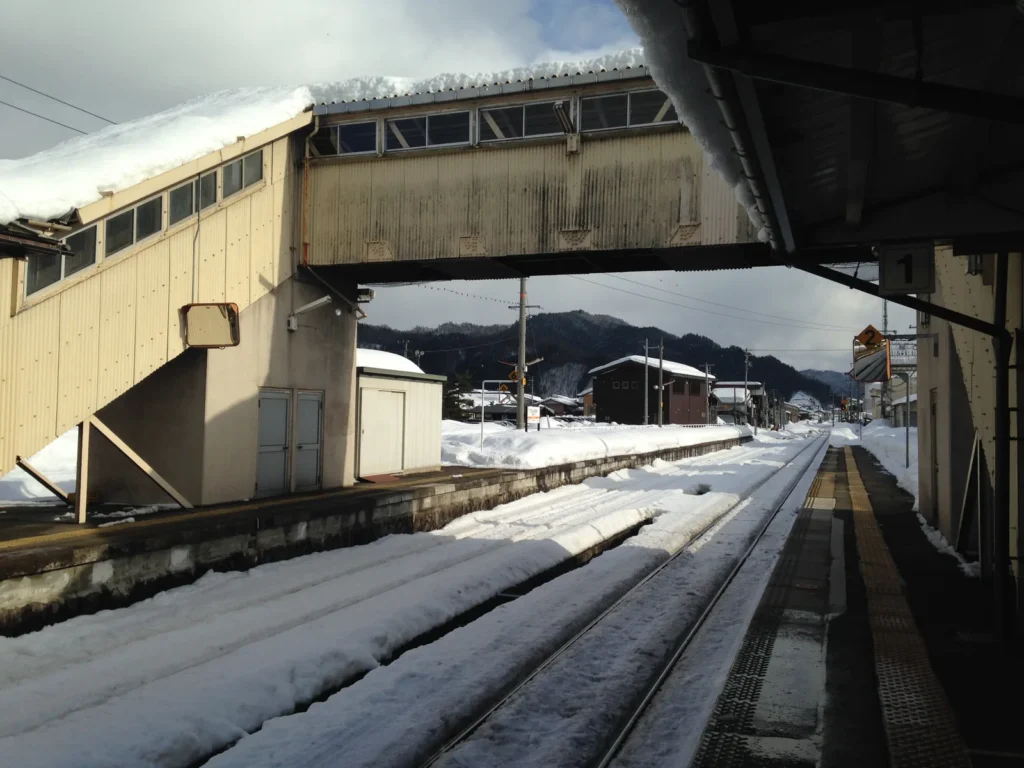
This is the arrival point of the search, and Hida City picks out three parts of it: the station building; the bus rotary to the right as you come out, which it ties to the scene where the characters question a taxi driver; and the footbridge over the tracks, which is where you stand to watch trains come in.
One detail is worth timing your morning around. Trains stand at platforms 1 and 2 in the same arrangement as in the film only once a day, at 9:57 — Hida City’s own figure as of August 2026. If that photograph is why you came, check it against the current timetable and be on the overbridge early; if it is not, the station is a two-minute stop at the start or end of the walk.
The station and the overbridge are free and open; a platform ticket or a valid ticket is needed beyond the gates. It is about fifteen minutes from Takayama by train. It is also a working station with commuters, school students and a bus rotary full of moving vehicles: stay behind the platform markings, keep out of the bus lanes, and do not block the gates.
Keta Wakamiya Shrine
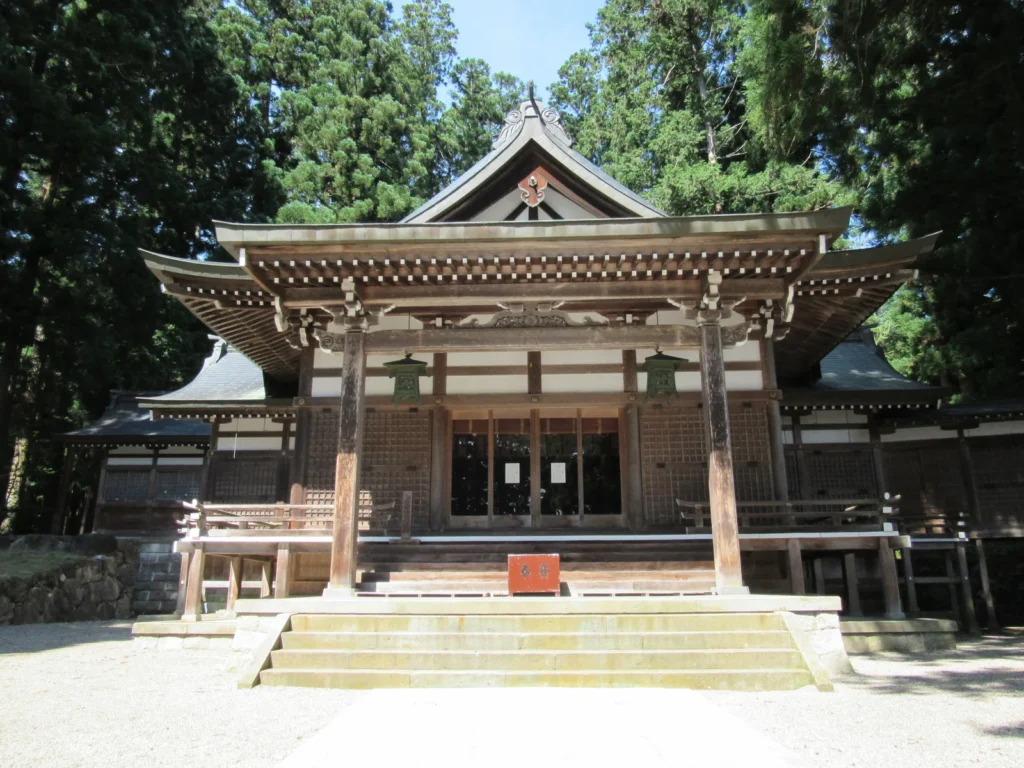
Hida City identifies the stone stairway up to Keta Wakamiya Shrine as the model for the scene in which the protagonist asks around for information. Separately from the film, it is one of the two or three most important places in the town: a long flight of stone steps through cedars opening onto a worship hall that looks back down over the roofs, with the shrine’s sacred oak below and to the left, its top broken off by lightning in the Meiji period.
The Furukawa Festival on 19 and 20 April is this shrine’s annual festival and is inscribed on the UNESCO list of intangible cultural heritage — which is either the best possible time to come or the time to avoid, depending on whether you want a crowd. Free, outdoors, no gate, with parking beside the torii; about fourteen minutes on foot from the station or four by car from the library.
It is an active shrine. Bow at the torii, keep to the side of the path rather than the centre, and do not photograph anyone at prayer. The steps are steep and ice over in winter.
The Ochiai bus stop
The shelter where the characters wait for a bus after a day of getting nowhere. It is the one location that takes real effort to reach and the one that most repays it, because there is nothing out there but the road, the river valley and the hills — which is the point of the scene.
Know what you are looking at before you travel for it. The stop had gone out of use before the film; the sign was put up afterwards, and the city’s circular bus serves it again now. So this is a restored version of the scene rather than an untouched original.
Getting there is the whole difficulty. About seventeen minutes by car north from Hida-Furukawa Station. By train the nearest station is Tsunogawa, 500 metres and about ten minutes away on foot, but services on this stretch are very limited and you must check both directions before you commit, because there is nothing at Ochiai to wait in. Hida City also lists local taxi companies that run guided trips for visitors who cannot drive, which is the sensible answer for most people.
Hida City specifically asks visitors photographing here not to get in the way of people passing. It is a live road with no footway and nowhere to park casually. Do not stand in the carriageway.
The tourist information office and the Sakura Bussankan
These two are on the city’s route for practical reasons, and both are worth the stop. The town-centre tourist information office has been giving out an original illustrated bookmark of the locations since 26 August 2026 for the tenth anniversary, while stocks last, and has English maps. The Sakura Bussankan is a product hall selling Hida crafts, sweets and preserved foods, with a workshop at the back where you can braid a kumihimo cord — which Hida City describes as a key item in the film — on a proper marudai stand, taught in the local dialect.
Braiding is the one thing here that costs money, and the one worth booking. Hida City publishes both courses: the marudai kumihimo is 2,200 yen, from 40 minutes, and strap making is 800 yen, from 30 minutes, each with its own booking form on the city’s tourism site. The kimono and dyeing shop Daibora in town also offers braiding. Book before you travel: a workshop is not something to discover is full when you arrive, and the hall closes on Thursdays.
- Sakura Bussankan: 10:00 to 16:30 from April to November, 10:00 to 16:00 from December to March. Closed Thursdays except public holidays, and over the new year. Those are Hida City’s page for the hall, which also carries the workshop listings.
- Where: about eight minutes on foot from the station, parking for about ten cars.
Both are staffed by local people doing a job. Ask before photographing staff or the workshop area.
How to Get to Hida-Furukawa
Hida-Furukawa sits on the Takayama Main Line, a single-track railway that runs up the Hida River from Gifu to Toyama. That one line is the whole answer to how you get here.
Best Gateway
Nagoya, for most people. The Limited Express Hida runs from Nagoya up the valley to Takayama and on to Hida-Furukawa and Toyama, and it is one of the better train journeys in central Japan. Coming from the north, Toyama is closer and the trip is shorter. Coming from Tokyo, you can go either way round: shinkansen to Nagoya and south-to-north up the valley, or shinkansen to Toyama and north-to-south.
By train
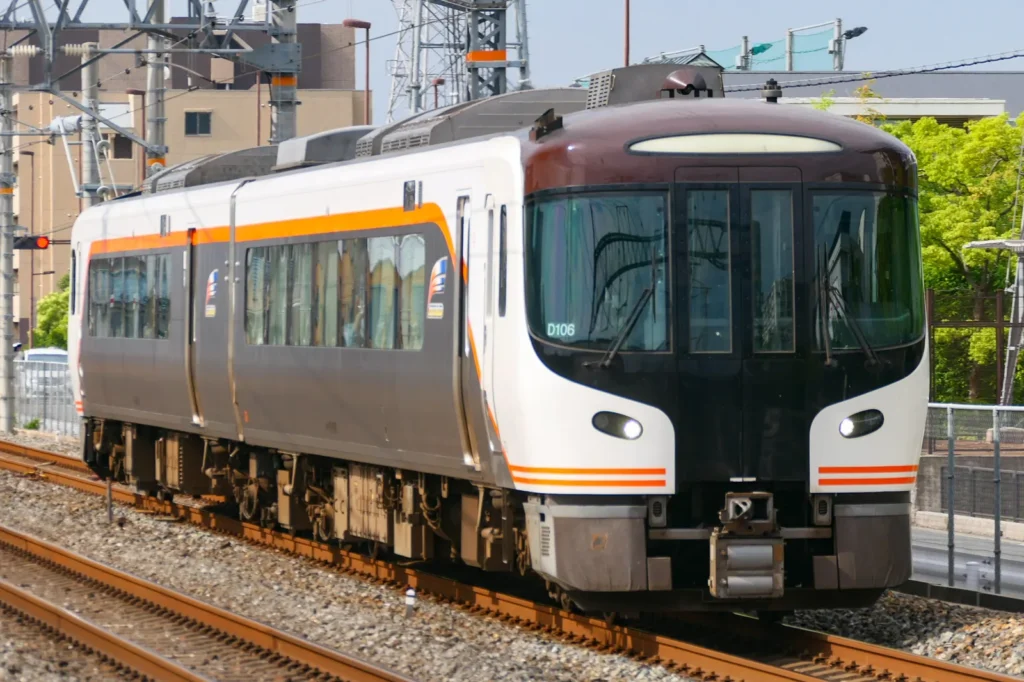
Hida-Furukawa is one stop beyond Takayama, about 15 minutes further on. Not every Hida service runs the whole way, so check that the one you want actually continues past Takayama rather than terminating there. The current trains on the route are the HC85 series, which replaced the old Kiha 85s; they have large windows and the valley scenery is the reason to take the train rather than the bus.
From Nagoya the journey to Hida-Furukawa takes a little over two and a half hours on a through service. From Toyama it is roughly an hour and a half. If you are travelling on a rail pass, check whether it covers the Takayama Main Line and the Limited Express Hida before you plan around it, because coverage varies between products.
By bus
Highway buses run to Takayama from Tokyo, Nagoya, Osaka and Kanazawa, and they are cheaper and slower than the train. They do not go to Hida-Furukawa; you change to the train at Takayama for the last 15 minutes. For a trip built around the town, the bus is a reasonable way to reach the region and a poor way to move around inside it.
By car
Hida-Furukawa is a short distance north of Takayama on Route 41, and the Tokai-Hokuriku and Chubu-Jukan expressways reach the area. A car is unnecessary for the town itself, where everything is walkable and parking is limited, but it is the easy way to reach the Ochiai bus stop and the obvious choice if you are combining Hida with Shirakawa-go or the Okuhida hot springs.
Two things to plan around: mountain roads here close or require winter tyres between December and March, and snow in this valley is serious rather than decorative. Confirm road status and winter equipment with the rental company when you book.
By air
There is no airport in Hida. Chubu Centrair, outside Nagoya, is the usual international entry point, with a direct train into Nagoya Station for the Hida. Toyama Airport serves the northern approach and has domestic flights plus a limited international schedule. Komatsu, near Kanazawa, is a third option if you are arriving via the Hokuriku side.
Best Way to Get Around
Verdict for this route: walk the town, and sort out the bus stop separately. Five of the seven places on Hida City’s route are within fifteen minutes of the station on foot. The shrine adds another quarter of an hour. Only the Ochiai bus stop needs wheels.
Walking
This is the main mode and it is a pleasure. The library is about five minutes from the station, the Sakura Bussankan eight, the shrine fourteen, and the old streets along the Setogawa canal sit between them. The town centre is flat; only the shrine steps climb. Allow half a day at a slow pace with stops, which is roughly what the whole walk deserves.
Rental car
Worth it only if you are doing the Ochiai bus stop, combining Hida with Shirakawa-go or the Okuhida hot springs, or travelling with people who cannot manage the shrine steps. Pick up in Takayama or Toyama rather than in Furukawa, where the choice is thin. Driving-document requirements depend on the country that issued your licence, so check Japan’s official guidance and your rental company before booking; not every international permit or translated licence is valid in Japan.
Taxi
The practical answer for the bus stop if you are not driving. Taxis wait at Hida-Furukawa Station, and Hida City lists two local operators who run guided trips out to the location for visitors who would find the journey difficult otherwise. Agree the route and the waiting arrangement before you set off, because there is nothing at the other end and very little passing traffic.
Train
The Takayama Main Line continues north from Hida-Furukawa, and Tsunogawa, the nearest station to the Ochiai bus stop, is a few stops up. The walk from the station to the bus stop is 500 metres and about ten minutes. The catch is the timetable: services on this stretch are very limited, and you need to have both the outbound and the return departure written down before you leave Furukawa. Done carelessly, this is a two-hour wait in the rain.
Bicycle
Rental bicycles are available in the town and the valley road is flat and quiet, which makes cycling a pleasant way to see the edges of Furukawa. It is not the way to reach the Ochiai bus stop, which is 17 minutes away by car on a road with no shoulder.
What to Eat in Hida
Hida has one famous ingredient and several quieter dishes that are more interesting. The town is small enough that lunch is a decision you make once.
Hida beef
- What it is: Wagyu from cattle raised in Gifu to a defined standard, heavily marbled and sold grilled, as sushi on a rice cracker, in buns, on skewers and in set meals. It is the thing the region is known for nationally.
- Why it is local: The breed and the grading are specific to the prefecture, and the Hida valley is the centre of it. It is expensive, and the cheap versions sold as street food are a reasonable way to try it without committing to a steak.
- Where travellers commonly find it: Restaurants and butchers in Furukawa and, in much greater number, in Takayama. A butcher’s counter selling skewers is usually better value than a restaurant.
Hoba miso
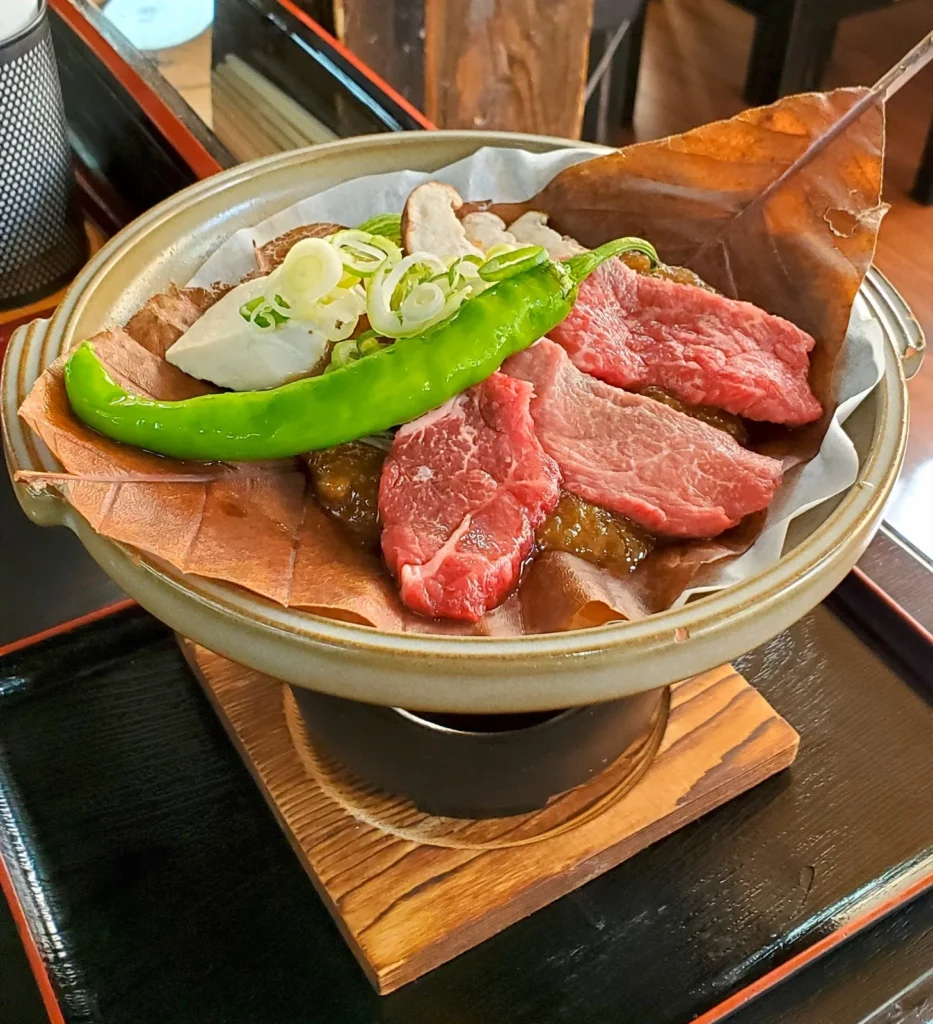
- What it is: Miso mixed with spring onion and mushrooms, spread on a dried magnolia leaf and grilled over a small burner at the table until it caramelises. You eat it with rice. Versions with Hida beef on top are common.
- Why it is local: A Hida farmhouse dish built around the magnolia leaves that grow in these mountains, and it is served almost nowhere else. The leaf is the cooking vessel, not a garnish.
- Where travellers commonly find it: Set-meal restaurants in Furukawa and Takayama, and as part of breakfast at inns across the region.
Gohei mochi
- What it is: Pounded rice pressed onto a flat wooden skewer, coated in a sweet-salty walnut or sesame miso glaze and grilled over charcoal. Hida City’s own route recommends it as the thing to eat on the walk.
- Why it is local: A mountain food of the Gifu and Nagano highlands, made where rice was scarce enough to be worth stretching. Every shop mixes its glaze differently.
- Where travellers commonly find it: Shops along the old streets in Furukawa, sold to eat standing up. It costs very little and is the right size for mid-morning.
Chuka soba and sake
- What it is: Hida’s ramen is an old-fashioned soy-sauce broth with thin curly noodles, called chuka soba rather than ramen locally. The town also has two long-established sake breweries, which open to visitors around the November brewery festival.
- Why it is local: Both are the everyday version of the region rather than the tourist version: this is what people here actually eat and drink.
- Where travellers commonly find it: Ramen shops around the station and in the centre; the breweries are in the old streets and sell at the shop counter year round.
A note on restaurants
This guide does not name individual restaurants. Opening hours and closing days change often in a town this size, and sending every reader to the same counter helps neither the town nor the reader. The town-centre tourist information office keeps the current list and will tell you what is open today.
Things to Do Beyond the Anime
Hida-Furukawa was worth a day before 2016 and still is. The film brings people to a town that would otherwise be a footnote to Takayama, which is the best thing it has done for the place.
The Setogawa canal and the white-walled storehouses
A narrow irrigation canal runs along the foot of a row of white-plastered storehouses in the old centre, and it is full of carp. The walk takes ten minutes and is the picture most people leave with. The carp are moved out for the winter in late November and returned in spring, which tells you something about how cold it gets here.
The Furukawa Festival
On 19 and 20 April, Keta Wakamiya Shrine holds its annual festival, which is on the UNESCO list of intangible cultural heritage. It has two halves: ornate wheeled floats in daylight, and the okoshi-daiko at night, in which a huge drum is carried through the town on a frame while teams compete to push smaller drums up against it. It is loud, physical and nothing like a tourist display. Accommodation across the Hida valley books out for it.
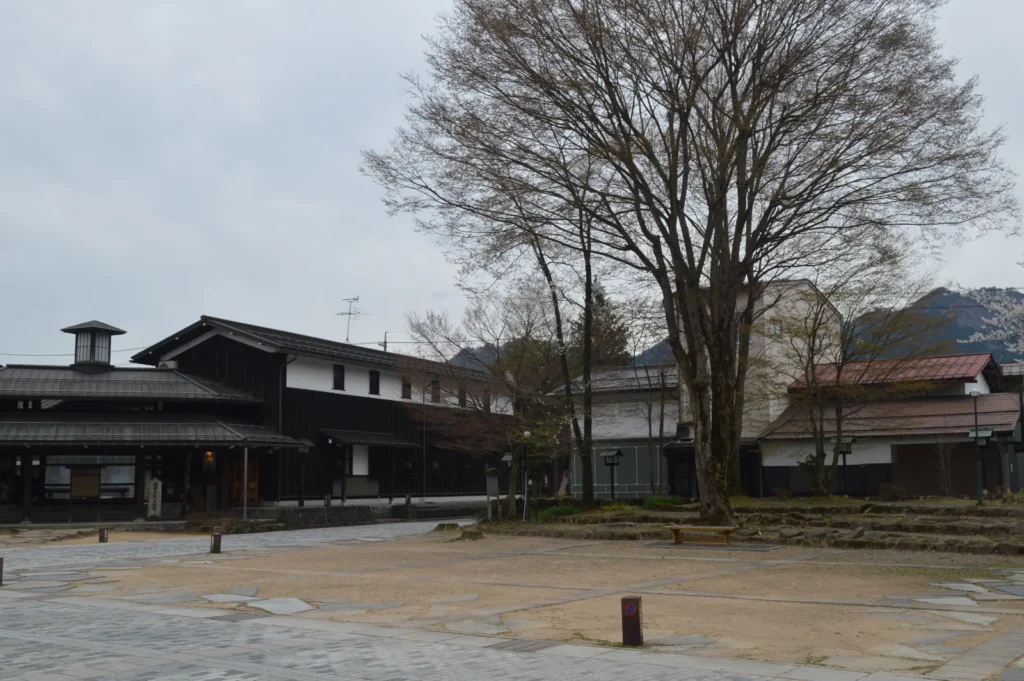
Takayama
Fifteen minutes south by train, with a preserved merchant quarter, a morning market along the river and far more restaurants and hotels. It is the obvious base and the obvious day out, and the contrast is instructive: Takayama is busy in a way Furukawa is not. If you are here for two days, use Takayama for food and beds and Furukawa for the walking.
Shirakawa-go
The UNESCO World Heritage village of steep-thatched farmhouses is about an hour by bus from Takayama. It is extremely popular and best done early in the day or out of season. Treat it as a separate day rather than something to bolt onto the Furukawa walk.
Hot springs
The Okuhida hot spring villages sit up the valley east of Takayama and have the best open-air baths in the region, with mountain views to match. Closer in, there are day-bathing facilities near the Ochiai bus stop out in Miyagawa, which is a sensible way to turn a long drive into an afternoon rather than an errand. If you have tattoos, check the individual bath’s policy before travelling; rules vary widely and the smaller the place, the more it comes down to the owner.
Seasonal experiences
Winter is heavy snow, quiet streets and the look the film gives the valley; it is also cold, and the shrine steps ice over. April brings the festival and blossom, and is the busiest and best time to be here. Summer is green, humid and the season for river fish in the valley. Autumn colour arrives in the hills from late October, and the town’s November brewery event is a good excuse for the season.
What to Bring Home
Hida has a real craft tradition rather than a souvenir industry, which makes shopping here better than it is in most pilgrimage towns.
Crafts
- Kumihimo braid – the braided cord the film turns into its central object. The Sakura Bussankan runs workshops from simple straps and friendship bands up to work on a marudai stand, and a dyer and kimono dealer in town offers braiding as well. Making your own takes under an hour and beats buying one.
- Hida furniture and woodwork – the valley has been a woodworking region for well over a thousand years, and the carpenters of Hida were once sent to the capital as a form of tax. Small pieces, chopsticks, boards and bentwood work travel home easily.
- Ichii ittobori – unpainted yew carvings, finished so the grain and the colour change of the wood do the decorating. A Takayama speciality sold throughout the region.
- Hand-made Japanese candles – wa-rosoku made from plant wax, still produced in Furukawa, and sold plain or painted. The Sakura Bussankan also runs candle-painting workshops.
Food and drink
- Sake – Furukawa has two long-established breweries in the old streets and both sell at the counter. Cold-climate rice and mountain water; buy a small bottle rather than a large one if you are flying.
- Miso – the base of hoba miso, sold in tubs with the dried magnolia leaves alongside so you can make the dish at home.
- Hida beef, preserved – as jerky, in retort pouches and in buns, which is the only sensible way to take it home.
- Local sweets – mitarashi dango and the monaka ice cream sold at the Sakura Bussankan, which is best eaten there rather than carried.
Official film merchandise
There is very little, and that is deliberate. What the town gives out is free: the library reissued the original bookmarks for the tenth anniversary and lets visitors take them, and the town-centre tourist information office has been handing out an illustrated bookmark of the locations since 26 August 2026 while stocks last. Commercial merchandise is sold through the usual anime retailers in the cities, not here.
Where to buy
- The Sakura Bussankan, eight minutes from the station, carries the widest range of Hida crafts and foods in one place and runs the workshops.
- The old streets along the Setogawa canal for the breweries, the candle maker and the individual craft shops.
- Takayama, fifteen minutes away, for a much larger selection at a slightly higher price.
- Pack liquids and glass in your checked bag, and check what your home country allows before buying meat products.
Where to Stay
The real question is Furukawa or Takayama, and it is worth deciding deliberately because the two give you different trips. Furukawa buys you the mornings: the Setogawa canal with nobody on it, the library and the shrine on your doorstep, and a short drive to Ochiai if you are going. Takayama buys you the evenings: beds at short notice, restaurants that are open, and onward connections, at the cost of a fifteen-minute train each way and a town that is busy when Furukawa is not. If you are here for one morning’s walk and a train onward, stay in Takayama; if the walk is the trip, stay in Furukawa.
Best area: Hida-Furukawa
Small inns, a handful of restored townhouses let as whole buildings, and a few minshuku and business hotels. The town is quiet in the evening in a way that is either the point or the problem, depending on what you came for. Staying here means you get the Setogawa canal early in the morning with nobody else on it, and it puts the library and the shrine on your doorstep.
Takayama
Fifteen minutes by train, with by far the widest choice of hotels, hostels and inns in the region, and the restaurants to go with them. This is the sensible base if you want a bed at short notice, if you are travelling with people who want options, or if Furukawa is one stop on a longer Hida trip.
Okuhida and the hot spring villages
Up the valley east of Takayama, and the right choice if the baths matter more than the walking. Allow an hour or more each way by bus, and treat Furukawa as a day trip from there rather than the other way round.
Booking notes
Two periods fill up across the whole Hida valley: the Furukawa Festival on 19 and 20 April, and the Takayama festivals in April and October. If your dates are near any of those, book months ahead or stay further out. Winter is the quietest season and the easiest to book, with the caveat that heavy snow occasionally disrupts the trains.
Suggested Itinerary
Hida-Furukawa is the rare pilgrimage that fits in a morning on foot. Five of the seven places on the city’s official route are within a fifteen-minute walk of the station, the shrine is a quarter of an hour beyond that, and only the bus stop out in Miyagawa needs transport. So the planning question is small: how far out do you go, and where do you sleep.
| Which trip | The town on foot | Add Ochiai | Furukawa inside a Hida trip |
|---|---|---|---|
| Time | Half a day | A full day | One stop of several |
| Transport | None. Walk from the station | Car, a guided taxi, or a very sparse train | Train from Takayama, 15 minutes |
| Base | Furukawa, for an empty canal at dawn | Furukawa, so the drive is short | Takayama, for beds and restaurants |
| Also costs | Nothing. Everything here is free except the braiding | Car hire or a taxi | Nothing extra |
Hida-Furukawa is a half-day on foot. What you add around it decides whether this is a day trip or a trip.
Half a day: the official walk
Possible as a side trip from Takayama. Train up in the morning, park at the library if you drove, then the library, the station, the tourist information office, the Sakura Bussankan, the Setogawa canal and the shrine, with gohei mochi somewhere in the middle. Back on the train in the afternoon. This covers six of Hida City’s seven places and needs no transport at all.
Two days, one night: the recommended trip
Day 1: The town on foot
- Morning – Arrive at Hida-Furukawa, ideally in time to see the 9:57 line-up of trains at platforms 1 and 2 from the footbridge. Start at the library, then walk back to the station for the building, the rotary and the overbridge.
- Midday – Gohei mochi or chuka soba in the centre; collect the bookmark at the tourist information office.
- Afternoon – Braid a kumihimo cord at the Sakura Bussankan, then walk the Setogawa canal and climb to Keta Wakamiya Shrine.
- Evening – Stay in Furukawa for the quiet, or drop down to Takayama for dinner and a wider choice of beds.
Day 2: Out to the bus stop
- Morning – Drive or take a guide taxi north to the Ochiai bus stop, about 17 minutes. Allow time; there is nothing to do there but stand and look.
- Midday – A day bath at one of the facilities out in Miyagawa, or back to town for Hida beef.
- Afternoon – Takayama’s old quarter and morning-market street, fifteen minutes south by train.
- Evening – Limited Express Hida back to Nagoya or Toyama.
Three days: add Shirakawa-go
With a third day, put Shirakawa-go in from Takayama by bus, going early to get ahead of the coaches, or go east to the Okuhida hot springs for a night. If your dates fall on 19 or 20 April, abandon everything else and build the trip around the Furukawa Festival instead.
Travel Tips & Etiquette
Hida-Furukawa is an easy place to visit and a very easy place to visit badly, because almost everything on the route is somewhere people are trying to get on with their day.
- The library is a library. It is where local people read and where children do their homework. Keep your voice down, do not photograph other users, and ask at the desk before taking pictures inside. The film corner is at the back; you do not need to wander the building to find it.
- Check the library’s calendar first. It closes on Mondays and on the last Friday of the month, and on the day after a public holiday that falls on a Monday. It is the first stop on the official route, so a closed day reshapes the whole walk.
- Do not obstruct the road at the Ochiai bus stop. Hida City asks this directly. The shelter is on a live road with no footway and nowhere obvious to leave a car. If a vehicle comes, get out of the way first and take the photograph afterwards.
- Write down the return train before you go north. Services past Hida-Furukawa are sparse. If you are reaching the bus stop via Tsunogawa, note the return departure when you arrive, because the gap between trains can be hours.
- Itomori is not a place. The lake, the crater and the mountain shrine are invented. Asking residents to direct you to them, or treating a real house or garden as a location, is the fastest way to wear out the town’s patience.
- Respect the shrine as a shrine. Bow at the torii, walk at the side of the approach rather than up the middle, and do not photograph anyone praying. The steps are steep and ice over in winter.
- This is a residential town. Keep to public space along the canal and the old streets, do not enter gardens or doorways for a better angle, and do not photograph residents without asking.
- Snow is real here. From December to March expect deep snow, icy pavements and the occasional disruption to the trains. Bring boots with grip, and allow extra time for everything.
- Carry some cash. The larger shops and the station take cards, but small shops, workshops and taxis in the valley may not.
- Language. The tourist information office handles visitors routinely and has English material. Elsewhere, expect much less, and have a translation app and offline maps saved before you head north out of town.
- Ten years on, the displays change. The anniversary bookmarks and the reissued library notice are time-limited and run while stocks last. Check the city’s tourism site for what is actually on when you travel rather than relying on an article, including this one.
Plan Your Trip
Four things to settle: whether you are staying in Furukawa or Takayama, whether you want the Ochiai bus stop at all, which day of the week you arrive, and whether your dates collide with the festival.
- Accommodation: Hida-Furukawa for a quiet night and an early morning on the canal; Takayama for choice, food and availability; Okuhida if you want the baths. Book months ahead for 19 and 20 April, and for the Takayama festival dates in April and October.
- Transport: Limited Express Hida from Nagoya or Toyama, with a change at Takayama if your service terminates there. Everything in the town is on foot. If you hold a rail pass, check that it covers the Takayama Main Line and the Hida before you build a plan on it.
- Rental cars: Only needed for the Ochiai bus stop or for combining Hida with Shirakawa-go and the hot springs. Pick up in Takayama or Toyama. Ask for winter tyres between December and March, and check that your driving documents are valid in Japan before you book.
- eSIM and mobile data: Useful for train times more than anything else, and the signal thins out in the valley north of Furukawa. Check the coverage map for the operator you plan to use and save maps and timetables offline.
- Tours and activities: Nothing here needs a guided tour, but the kumihimo and candle workshops at the Sakura Bussankan, and the guide taxis out to the Ochiai bus stop, should be checked for availability and booked ahead where possible.
The guides below are route pairings: journeys that combine well with this one. They are not guides to the same places.
- Makeine in Toyohashi, Aichi — the other guide on this site that starts at Nagoya, in the opposite direction: the Limited Express Hida runs north into the mountains, while Toyohashi is about an hour east along the coast.
How this guide was put together
This guide was researched and planned from published sources rather than written up from a visit. Checked on 12 October 2026: Hida City’s own location route for which places are on it and what the city says each one is, including the 9:57 platform arrangement it published in August 2026 and its request about photography at Ochiai; Hida City Library for its hours and closing days; and the Sakura Bussankan for its seasonal hours, its Thursday closure and the kumihimo workshops.
Itomori is fictional. Nothing here is presented as the town in the film; the places listed are the ones the city publishes as models or as part of its route, and the lake, the shrine on the ridge and the town itself have no real counterpart to visit. Visit lengths and the choice of base are planning judgements rather than measurements.
Written and edited by Nick, who runs Anime Routes Japan from Japan. More about Nick, and about how these guides are made, is on the About page.
This guide currently contains no affiliate links.