Initial D Pilgrimage Guide to Gunma, Japan
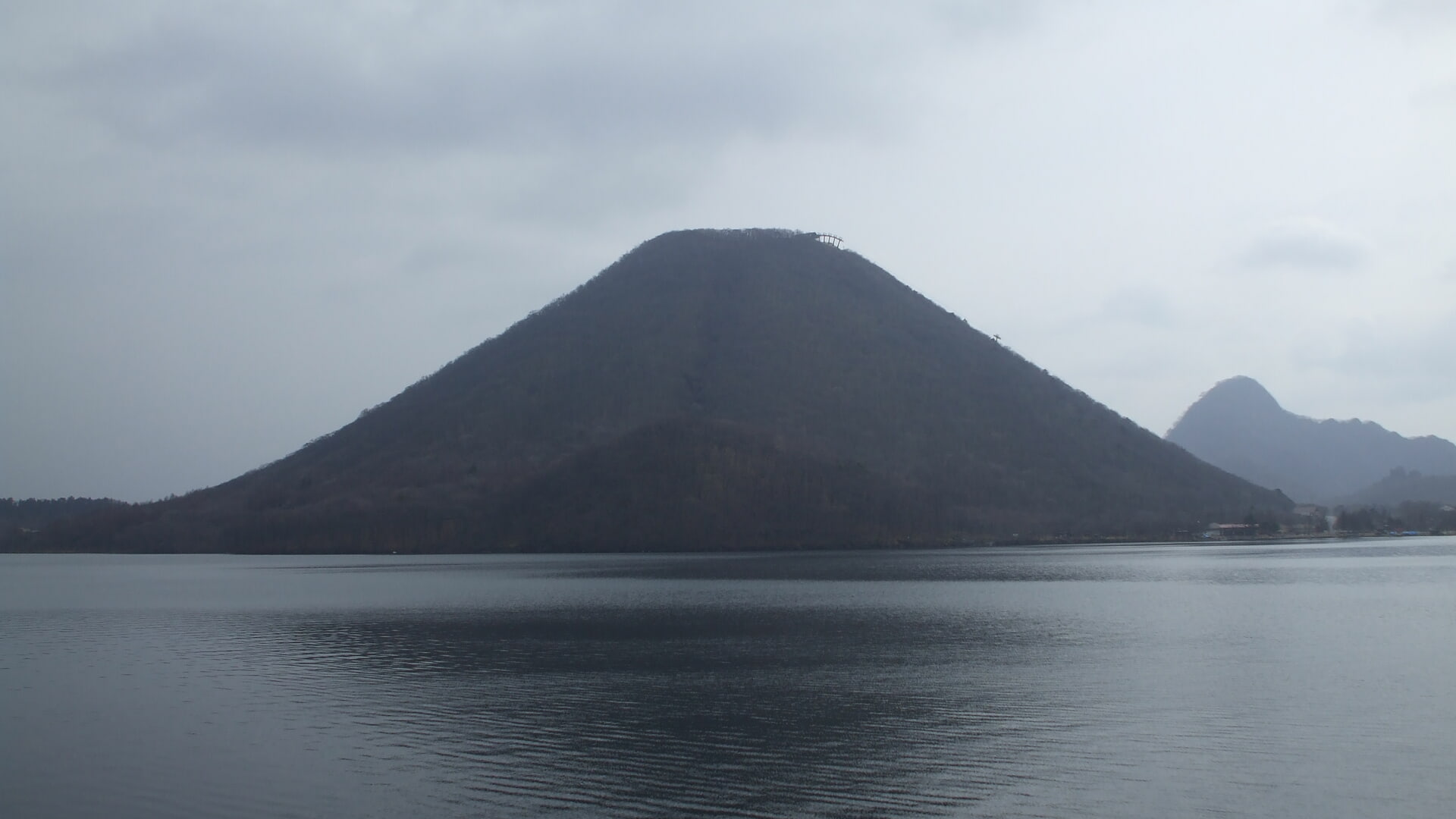
Header photo: Haruna Fuji across Lake Haruna, photographed in 2009. Photo: Mass Ave 975, CC BY-SA 3.0 (cropped and resized). Source.
The passes Initial D races over are real Gunma mountains, lightly renamed. Akina is Mount Haruna, above the hot spring town of Ikaho; Akagi and Myogi keep their own names; Usui is the old pass to Karuizawa. In February 2026 Gunma was named an Anime Seichi 88 destination for the series. This guide visits them as places — a crater lake, a stone stairway with a shrine at the top, a brick viaduct, a station bento — on roads that carry buses, lorries and people going to work, not racing. Pick one transport area rather than the whole map: Haruna and Ikaho by bus from Takasaki, the Usui pass by train and a short walk, or Akagi and Myogi, which need a car. Gunma’s own tourism site has the lake in English.
Quick Trip Guide
- Destination: Mount Haruna, Shibukawa and Annaka, Gunma Prefecture
- Best Gateway: Tokyo, then the shinkansen to Takasaki
- From Gateway: Roughly 50 minutes Tokyo to Takasaki by shinkansen; from Takasaki, local trains and buses reach Shibukawa, Ikaho, Lake Haruna and Yokokawa
- Main Base: Ikaho Onsen, or Takasaki if you prefer a station town
- Getting Around: Trains and buses for the main sights, with a rental car for the mountain roads and the quieter corners
- Car Needed: No for Ikaho, Lake Haruna and Usui Pass; useful for everything beyond them
- Recommended Stay: 1 night, 2 days
- Day Trip: Possible from Tokyo, but an onsen night is the point of coming here
- Best For: Initial D readers who also want hot springs, mountain scenery, railway history and strong regional food
Why This Place Matters in Initial D
Initial D starts with a teenager who does not know he is fast. Takumi Fujiwara has spent years delivering tofu for his father’s shop over a mountain road before dawn, in an elderly Toyota AE86 — the Hachi-Roku — and the official portal sums up the whole series in one line: the tofu shop’s 86 is faster than the mountain’s charismatic street racers. Rival teams from other mountains come to test the rumour, and the story moves from one Gunma pass to the next.
A delivery run that becomes a reputation
The manga ran in Kodansha’s Young Magazine from 1995 for eighteen years, by Shuichi Shigeno. Its hero is not a racer by choice. Takumi drives because he has to do the deliveries, his friends Itsuki and Iketani are the ones who care about cars, and in the official synopsis of the second New Theatrical Movie he is still bewildered when people call him a street racer at all. The rivals are the ones with the ambition: the Takahashi brothers of the Akagi Red Suns, Ryosuke in his FC and Keisuke in his FD, and the Myogi Night Kids. Each mountain in the story belongs to somebody, and the 86 keeps turning up on it.
That is what makes the geography matter. Haruna is Takumi’s home mountain and the place everyone else has to come to; Akagi is the Red Suns’; Myogi is the Night Kids’; Usui is somewhere else again. Gunma Prefecture’s own tourism site has published a two-part pilgrimage feature that walks these mountains with a long-time fan and cites the manga by volume and page, and this guide leans on it for which corner is which.
Which Initial D
There are several. The manga is the original. The TV anime ran over several stages, the New Theatrical Movie retold the early story in a series of films, the second of them released in May 2015, and there is a separate live-action film. Their details differ. Scene references in this guide are to the manga, by volume and page, as cited in the prefecture’s feature; where a place matters to the series in general rather than to one scene, it says so.
The harder thing, said plainly
Initial D is about illegal street racing. The roads it uses are ordinary public roads that carry commuters, route buses, cyclists and people walking to the lake. Nobody in Gunma wants a re-enactment, and the prefecture’s own feature is full of reminders about where it is and is not safe to stop. The pilgrimage here is about seeing the mountains, eating what the characters eat, and soaking in a bath at the bottom.
Anime Pilgrimage Spots
The sites split into three clusters that do not join up neatly. Mount Haruna and Ikaho sit together on the north-western side and make an easy day. Usui Pass and Yokokawa are south-west of Takasaki on a different railway line. Mount Akagi is on the far side of the plain to the north-east. Plan around the clusters, not around a list of mountains, and expect to pick two of the three unless you are staying longer.
Please respect local rules and manners at every location, and follow signs and staff guidance.
Where these places are
The map shows the places below and how far apart they are. It is drawn with OpenStreetMap: opening it loads map images from openstreetmap.org. The list works without it.
The map could not be loaded. The places are listed below, with their names and a link to each on Google Maps.
- Anime-related places
- Station or transport
- Nearby sight
The 9 places on this map
- 1Lake Haruna榛名湖Haruna and IkahoIn this guideOpen in Google Maps
- 2Mount Haruna (Haruna Fuji)榛名富士Haruna and Ikaho · area positionIn this guideOpen in Google Maps
- 3Ikaho Onsen伊香保温泉Haruna and Ikaho · area positionIn this guideOpen in Google Maps
- 4Haruna Shrine榛名神社Haruna and IkahoIn this guideOpen in Google Maps
- 5Usui Megane Bridge碓氷第三橋梁Usui PassIn this guideOpen in Google Maps
- 6Usui Pass Railway Heritage Park碓氷峠鉄道文化むらUsui PassIn this guideOpen in Google Maps
- 7Mount Akagi赤城山Akagi and Myogi · area positionIn this guideOpen in Google Maps
- 8Mount Myogi妙義山Akagi and Myogi · area positionIn this guideOpen in Google Maps
- 9Takasaki Station高崎駅TakasakiIn this guideOpen in Google Maps
Map data © OpenStreetMap contributors, ODbL. Positions were checked on 15 October 2026 against the source recorded for each place; a few are the published position for a large site rather than an entrance.
Before you go anywhere near these roads
- Every road in this guide is a public road under the Road Traffic Act, used by residents, service buses, cyclists and pedestrians. Racing, drifting and speed contests on them are criminal offences, and the penalties for Japanese and foreign drivers are the same.
- Stop only in marked car parks and laybys. Stopping on a bend, on a shoulder or across a field entrance blocks the people who live and work here, and it is the single complaint local authorities make about this kind of visit.
- Engine and exhaust noise carries a very long way up a quiet valley, and Ikaho is full of people who came to sleep. Keep it down, especially at night.
- Mountain roads here close or require winter tyres and chains in the cold months, and conditions change quickly. Check the road status for your dates before you commit to a driving plan.
- Within ten metres of a bus stop, stopping and parking are prohibited. The prefecture’s feature specifically warns about the stop by the Ikaho Forest Nature Park, a popular photo spot on the Haruna climb.
- You do not need a car for the main sites at all. Buses and local trains reach Ikaho, Lake Haruna and Yokokawa.
Mount Haruna and Lake Haruna
Haruna is Akina, Takumi’s mountain, and the most recognisable place in the series. The prefecture’s own feature puts several moments at the lake itself: the boat pier, drawn again and again, and the lakeside path where Takumi goes on a date. It also admits that the drawings differ from the real place in places and that some locations are argued over, which is the right attitude to arrive with.
What is actually there is a dormant volcano of 1,449 metres with a caldera at the top, holding a crater lake and a near-symmetrical cone called Haruna Fuji. Rowing boats and swan pedal boats go out in the warmer months and the ropeway up Haruna Fuji runs all year, which matters if you are visiting in winter and want something to do besides look at a cold lake. Give the lake two hours; it is the one stop here that rewards slowness.
Getting there without a car is straightforward. Gunma Bus runs from JR Takasaki Station up through Muroda to Haruna Shrine and on to Lake Haruna; the operator’s own table puts the shrine at about an hour and a quarter from Takasaki and the lake at about an hour and a half. That single line is the reason the shrine and the lake belong on the same day. Services are not frequent and the pattern changes with the season, so check departures before you commit — and note that the timetable PDFs on the operator’s site carry an old revision date, so use the bus centre at Takasaki Station or a live journey planner for the actual times.
Photograph from the lakeside rather than from the road up. Use the car parks, stay off the carriageway, and remember the shoulder is where cyclists ride.
The road between Ikaho and Lake Haruna
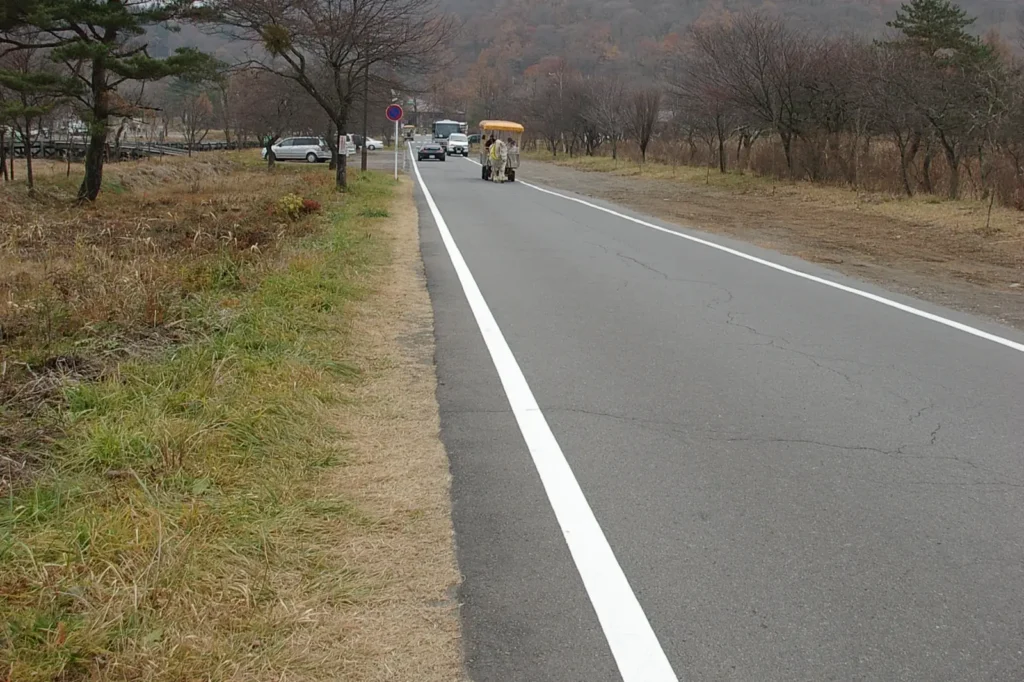
This is the course. By the prefecture’s account the downhill finishes near the car park of the Tokutomi Roka Memorial Museum at the Ikaho end and starts by the old toll gate at Yaseone Pass near the top, where only a water tower remains; the third bend up from the bottom is where the climaxes of two early battles are drawn, in volumes 5 and 9. The Takane viewpoint, whose view of the hairpins opens volume 1, is now mostly hidden by trees — worth knowing before you go looking for it.
The best way to see it is from a bus window. The same road carries the service bus between Ikaho and the lake, roughly twenty minutes, which means you can watch the whole course go past without driving a metre of it, and without needing anywhere to stop. If you are driving it, you are sharing two lanes of prefectural road with buses and with cyclists who will be slow uphill and fast down.
There is nowhere safe to stand on this road for a photograph. Shoot from the designated viewpoints and car parks, and do not stop on a bend for any reason.
Shibukawa’s Initial D manhole covers
These are the sanctioned, street-level part of the pilgrimage, and the easiest thing here to do well. Shibukawa City, which includes Ikaho, has set seven cast covers into its pavements, each with different characters — some in the Dandan plaza at the foot of the Ikaho steps and one by the old toll gate at the top of the course, where people line their own cars up beside it.
They are spread across the city rather than clustered, so treat them as something you collect while doing other things rather than a route in themselves. Shibukawa Station is the base. Locations have changed over the life of the project, so pick up the current map from the city or the tourism association instead of following an old blog post. Several sit in the road surface or at a pavement edge: check for traffic before you crouch, and never stand in a lane to line up a shot.
Ikaho Onsen
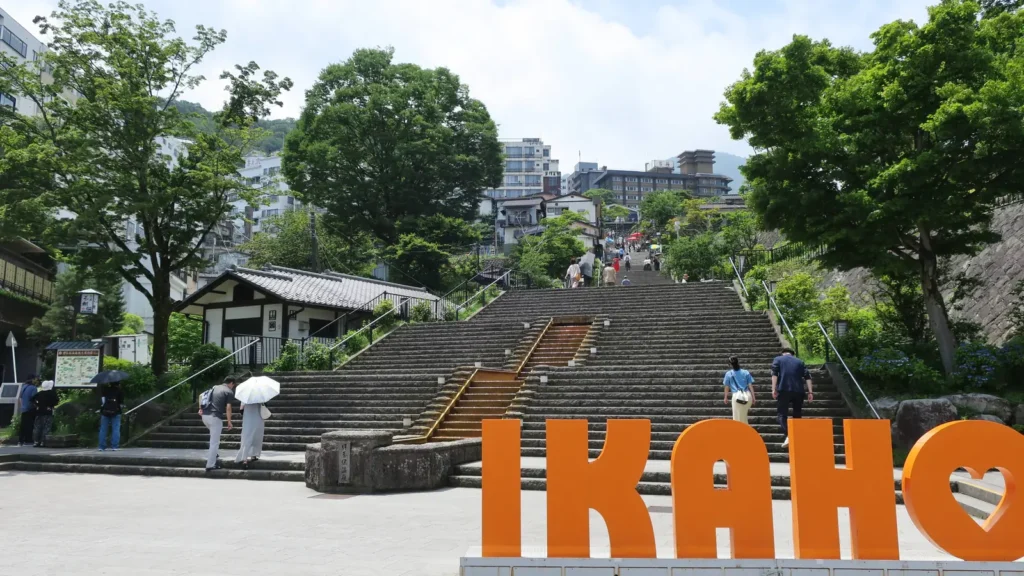
Ikaho is the hot spring town below Takumi’s mountain, and it holds the most re-enactable scene in the whole series: by the prefecture’s account, he and a friend sit on the shrine steps eating yunohana manju. You can do exactly that, legally, for a few hundred yen, which is more than can be said for the driving.
The town is built around a stone stairway of 365 steps climbing through the middle of it, lined with inns, souvenir shops, old-fashioned arcades and cafes, with Ikaho Shrine at the top. The step count dates from a rebuild completed in 2010 and was chosen so the town would be busy 365 days a year; people photograph the step matching their birthday. Allow two hours for the climb, the shrine and a manju stop, and more if you are bathing.
Getting there: local bus from JR Shibukawa Station, in the order of twenty to thirty minutes, and Shibukawa is a short local train ride from Takasaki. There is also a Gunma Bus line direct from Takasaki Station that runs via Mizusawa Kannon — which is where Mizusawa udon comes from — so lunch and the hot spring town sit on the same bus.
The stairway is a working street. Keep to one side when you stop, and remember that many of the people around you are guests of the inns on either side.
Usui Pass and the Megane Bridge
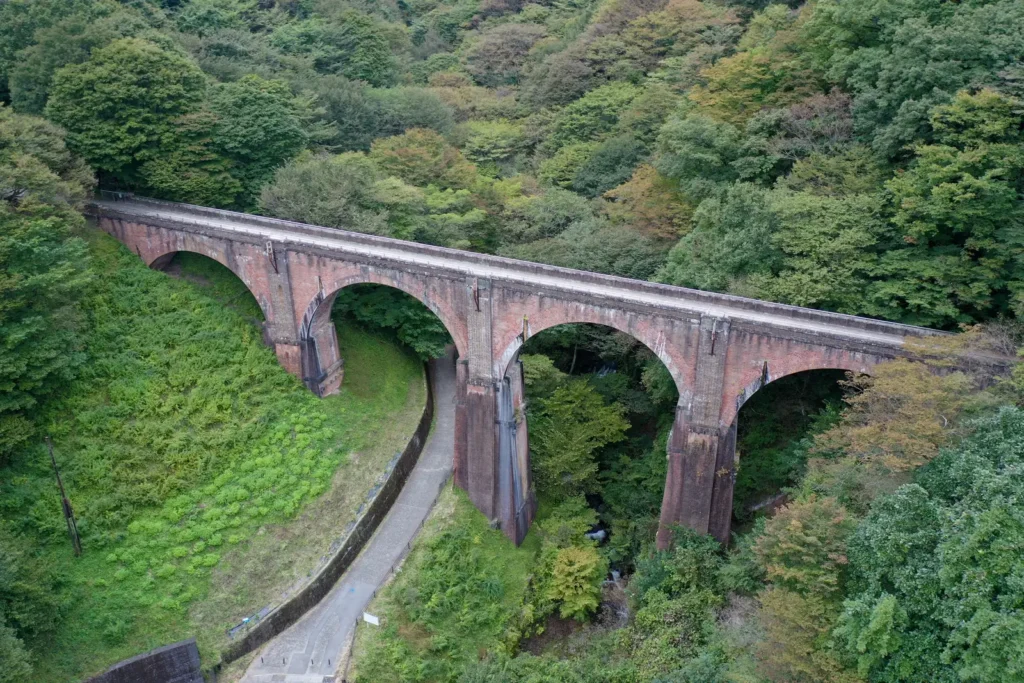
In the manga Usui is where Takumi’s 86 meets a Sileighty driven by a woman his senior has fallen for at first sight, “under the sign of the kamameshi shop in Yokokawa” as he puts it in volume 5. The Megane Bridge appears on the climb, and the old road has a bend named the Sayaka corner after a professional drift driver who credits the series. The pass and its railway were famous long before any of that, which is why this is the cluster that works best for a travelling companion who has never read a page.
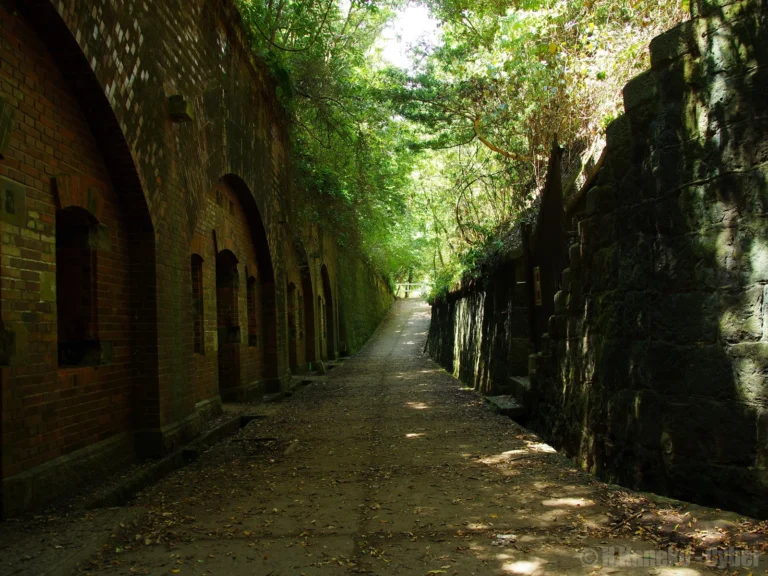
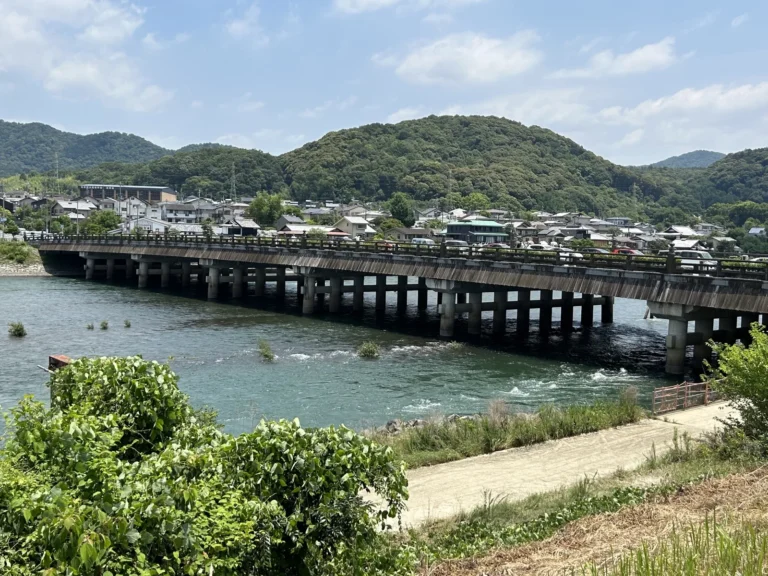
The Usui Third Bridge, known as Megane Bridge for its arches, is a brick viaduct of 1893, about 91 metres long and 31 metres high and a national Important Cultural Property. The old track bed on top is now a footpath, so you walk across it. Outdoors, free, no gate and no ticket.
This is the easiest cluster to reach without a car and the hardest to rush. JR Yokokawa Station, at the end of the Shin-etsu Line from Takasaki, is the trailhead; the Apt no Michi path follows the abandoned railway for about 6.3 km and the bridge is roughly 5 km along it, about an hour and a half each way on foot. Budget the full three hours of walking plus time at the bridge before you look at your train home, and eat the kamameshi at Yokokawa while you wait. There is road access and a car park near the bridge if you drive.
The classic view is from the road below, looking up at the arches. The path on top is narrow in places with no shelter, so take water and watch your footing.
Mount Akagi
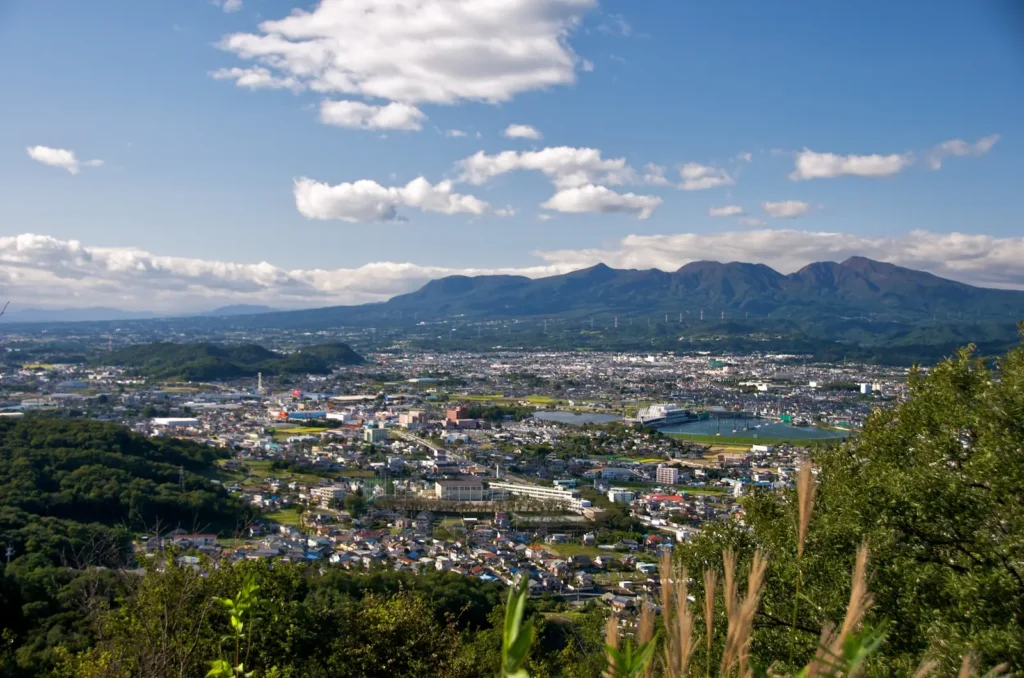
Akagi is the home course of the Akagi Red Suns. The prefecture’s feature puts the downhill finish at the Himeyuri car park and identifies a lay-by at about 1,200 metres as the place the 86’s engine finally gives out in volume 10 — a rough-surfaced spot where low cars can scrape. At the summit, the caldera lake Onuma has an AKAGI letter sculpture to match the IKAHO one down in Ikaho, and Akagi Shrine stands on its shore.
This is the one to leave out if you are relying on buses. Akagi is reached from Maebashi, on the opposite side of the plain from Haruna, and services to the top are seasonal and limited; what runs in August is not what runs in February. With a car it is a comfortable half-day and the view back over the Kanto plain on the climb is the reason to come. Without one, check exactly what is running for your dates before you build a day around it, and have a fallback.
Same rules as Haruna: designated viewpoints and car parks only, and no stopping on the climb.
Mount Myogi
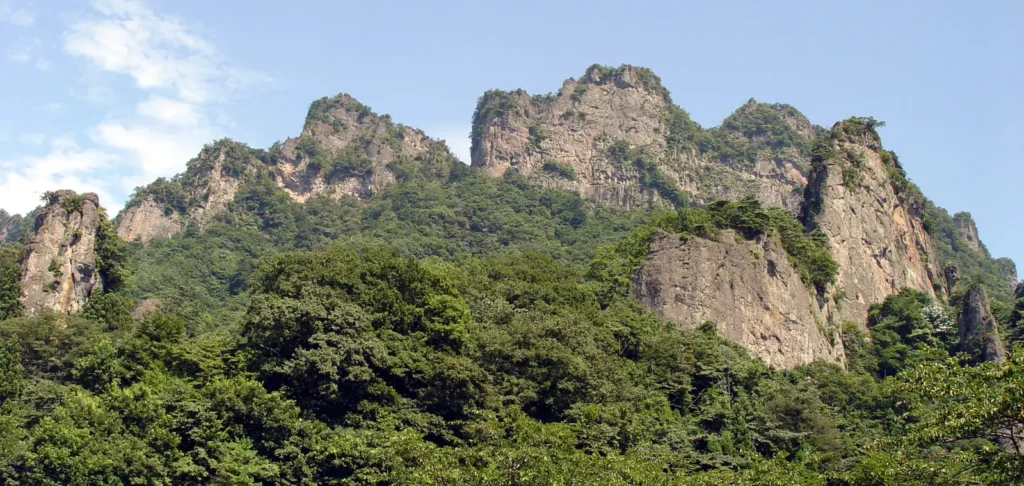
Myogi is the home of the Myogi Night Kids and the setting of one of the Red Suns’ battles, which the prefecture’s feature starts near the Michi-no-Eki Myogi roadside station and finishes at the prefectural park’s first car park by Nakanotake Shrine, in volume 7. The rock spires are the reason to come either way: jagged andesite pinnacles above forested slopes, with Myogi Shrine at the foot behind a long stone approach and some of the most heavily carved buildings in the prefecture.
Pair it with Usui, not with Haruna. It sits on the Yokokawa side of the prefecture, so the two make one day and Haruna makes another. Check current bus services from Matsuida or Annaka before relying on them.
Know which paths you are on. The shrine and the lower paths are an ordinary walk. The ridge routes, with their chained sections, are for experienced and properly equipped walkers and are not a casual detour from a pilgrimage. The rock faces photograph best from the approach roads and the shrine grounds anyway.
How to Get to Gunma
Gunma is the easiest pilgrimage destination on this site to reach. It borders the Tokyo metropolitan area, the shinkansen stops in it, and the whole trip is realistic as an overnight from Tokyo without an early start.
Best Gateway
Tokyo, and then Takasaki. International visitors arrive at Haneda or Narita, cross to Tokyo or Ueno, and take the Joetsu or Hokuriku Shinkansen north. The ride to Takasaki is in the order of fifty minutes on a fast service. Takasaki is the junction where the lines to Shibukawa, Yokokawa and Maebashi all begin, so almost everything in this guide starts there.
There is no airport in Gunma and you will not need one.
From Tokyo to the mountain
For Haruna and Ikaho: shinkansen to Takasaki, local train on the Joetsu Line to Shibukawa, then the bus up to Ikaho. For Lake Haruna there is also a direct Gunma Bus service from Takasaki Station. For Usui Pass: shinkansen to Takasaki, then the Shin-etsu Line west to Yokokawa, which is the end of the line. All three legs are straightforward, and none of them needs a reservation.
Check the current timetables when you plan. This guide deliberately prints no departure times, because the mountain bus services in particular change with the season and a schedule quoted in an article is a schedule that will eventually be wrong.
By Train
The shinkansen is the fast option and the one most visitors will use. There is also a slower conventional route north from Ueno on the Takasaki Line, which costs less and takes close to two hours; whether that trade is worth it depends on your pass and your patience.
If you are travelling on a rail pass, check how far it covers before you rely on it: shinkansen validity, local line validity and the regional passes that cover this area are all different products, and the bus legs at the end are not covered by any of them.
By Bus
Highway buses run from the Tokyo area to Takasaki, Maebashi and Ikaho, and a direct coach to Ikaho removes the train-plus-bus transfer entirely, which is worth considering if you are going straight to the onsen with luggage. Compare the fare and the journey time against the shinkansen for your own dates, and book ahead in holiday periods.
By Car
Gunma is well served by expressways from the Tokyo side, and a car widens what you can reach here, particularly Akagi and Myogi. Rental desks cluster around Takasaki Station. Three things to plan around: the mountain roads are narrow and twisting and take longer than a map suggests; parking at the popular spots fills up in autumn colour season and on fine weekends; and winter brings snow, closures and tyre requirements across all of these passes. Confirm road status and winter equipment with the rental company when you book rather than at the counter.
Best Way to Get Around
Verdict for Gunma: Car-free works for the core route. A rental car opens up the rest of the prefecture.
Ikaho, Lake Haruna and Yokokawa are all reachable by public transport, and the bus up to the caldera is a better seat for the scenery than the driver’s one. Where a car earns its keep is Akagi, Myogi, and any plan that strings several of these together in a single day.
Train
Takasaki is the hub. The Joetsu Line runs north to Shibukawa for Ikaho, the Shin-etsu Line runs west to Yokokawa for Usui Pass, and the Ryomo and Joetsu lines reach Maebashi for Akagi. Services are reasonably frequent on the plain and thin out as you go. Check the last train back before you set off, especially from Yokokawa.
Bus
Buses do the last leg almost everywhere here. Gunma Bus covers Takasaki to Lake Haruna and Shibukawa to Ikaho, and a separate service links Ikaho with the lake. These are ordinary regional route buses: not frequent, and in several cases seasonal. Confirm the timetable for your own date and direction, note the last departure when you arrive rather than when you want to leave, and carry some cash in case a service does not take IC cards.
Rental Car
Worth it for a two-day trip that reaches beyond Haruna. Driving-document requirements depend on where your licence was issued, so check Japan’s National Police Agency guidance and your rental company before booking; not every international permit or translated licence is valid in Japan. Then drive these roads the way you would drive any mountain road at home: within the limit, within your lane, and parked only where parking is provided.
Walking
Two stretches are properly walkable and both are worth the effort. The Ikaho stairway is 365 steps and about 300 metres of climbing street, which is more tiring than it sounds and best done slowly with stops. The Apt no Michi trail from Yokokawa runs about 6.3 kilometres along an abandoned railway, with the Megane Bridge roughly 5 kilometres in; allow around an hour and a half each way and treat it as a half-day. Everything else here is short walks from a bus stop or a car park.
What to Eat in Gunma
Gunma eats well in a specific, unglamorous way: wheat, miso, river fish and a lot of konjac. Three things are worth planning around.
Toge no Kamameshi
- What it is: A rice bowl of chicken, burdock, bamboo shoot, chestnut and apricot, cooked and served in a small glazed clay pot with a lid. The pot is the point: it keeps the rice warm and you are meant to take it home.
- Why it is local: It was created as a station bento for Yokokawa, where every train once stopped while banking locomotives were attached for the climb over Usui Pass. The trains stopped doing that in 1997; the bento outlived the railway.
- Where travellers commonly find it: At Yokokawa, from Oginoya, the company that invented it — and the shop whose sign Takumi’s senior is standing under in volume 5. The prefecture’s feature notes collaboration variants of the bento and a cafe inside the shop themed on the drift driver after whom the Sayaka corner is named; check what is on at the time, with branches elsewhere in the region and along the expressway. Eating one at Yokokawa after walking to the bridge is the correct order of operations.
Yunohana manju at Ikaho
These are the snack Takumi and a friend eat on the Ikaho Shrine steps in the manga, by the prefecture’s account: small brown-sugar buns filled with sweet bean paste, steamed and sold hot. Buying one and sitting on the steps with it is the cheapest and most faithful thing you can do on this whole trip.
Shokado, beside the shrine at the top of the steps, is described by the prefecture as the originator of the onsen manju and still makes them by hand to the method of its founding in 1910. Eat one sitting on the steps, out of other people’s way.
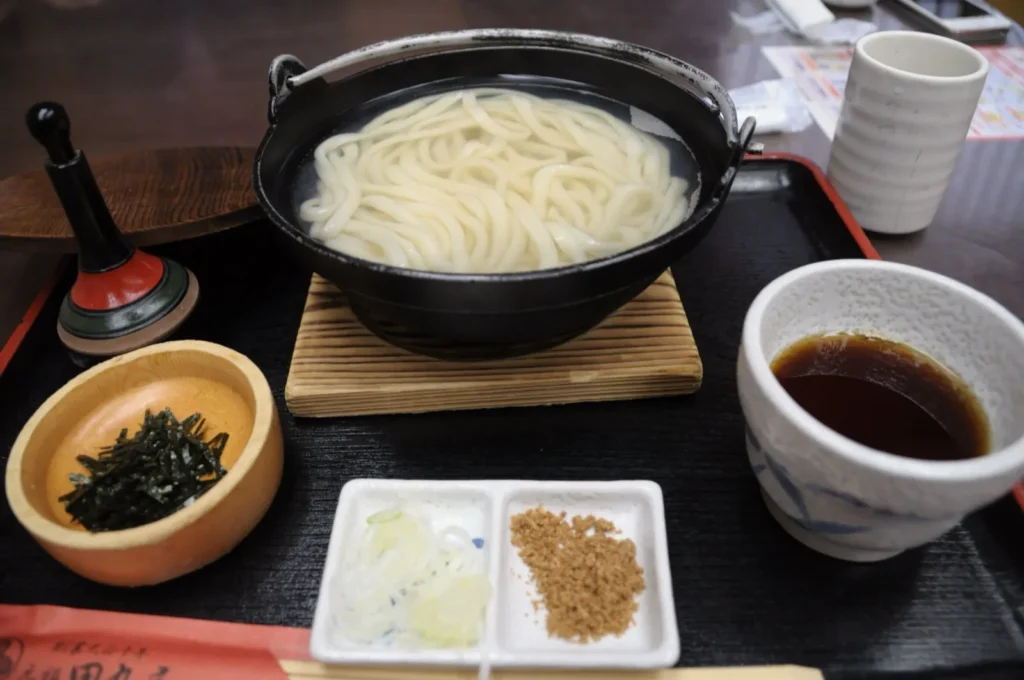
Mizusawa Udon
- What it is: Thick, pale, notably chewy wheat noodles, served cold with a dipping sauce. Counted among Japan’s great udon styles alongside Sanuki and Inaniwa.
- Why it is local: It grew up around Mizusawa Temple, between Shibukawa and Ikaho, as food for pilgrims. The shops are strung along the approach road to the temple, which is why the area is known as the udon street.
- Where travellers commonly find it: On the road between Shibukawa and Ikaho, which puts it directly on the way to the mountain. Many of the shops close in the afternoon rather than the evening, so treat it as lunch.
Yakimanju
- What it is: Steamed wheat buns on a skewer, painted with sweet miso and grilled over heat until the glaze blackens at the edges. Usually plain inside rather than filled. Sweet, salty, smoky and much better than the description.
- Why it is local: It is Gunma’s own snack and barely exists outside the prefecture, which is reason enough to eat one while you are here.
- Where travellers commonly find it: Festival stalls, shopping streets, roadside stations and the souvenir shops around Ikaho. Eat it immediately and over the paper, because the miso goes everywhere.
Things to Do Beyond the Anime
The mountain is half a day. This is the half that decides whether the trip was worth making, and in Gunma it is an unusually strong half.
Haruna Shrine
On the way up the mountain from the Takasaki side, and the best single thing on this route that has nothing to do with cars. The grounds run to about fifteen hectares and the approach alone is roughly seven hundred metres, climbing through cedar trees along a gorge with buildings, gates and carved halls appearing as you go, several of them designated Important Cultural Properties. The main hall is built hard against a rock pillar. Allow an hour and wear something you can walk uphill in.
Hot Springs
Ikaho is the one built into this itinerary. Its older source runs a distinctive brown from dissolved iron and is known as the golden water; a second, clear source is called the silver water. You can bathe at the public baths at the top of the stairway without staying overnight, though an inn is the better experience.
Further out, Gunma has some of the best-known hot spring towns in Japan. Kusatsu, with its steaming wooden yubatake in the middle of town, is the famous one and sits well to the north-west; Shima is quieter and set in a river valley. Neither is close enough to combine with Haruna in a single day, so treat them as the reason for a third night rather than a detour.
If you have tattoos, check the individual bath or inn’s policy before booking. Rules vary widely, and the smaller the place, the more it comes down to the owner.
Usui Pass Railway Heritage Park
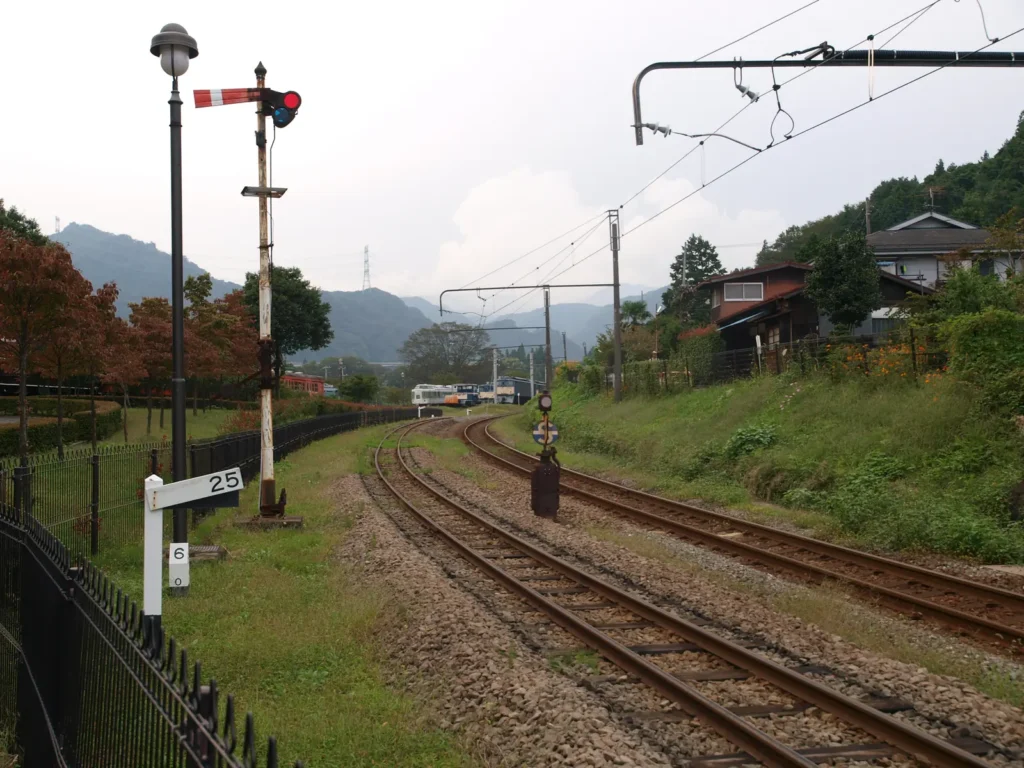
Beside Yokokawa Station, on the site of the depot that once supplied the banking locomotives for the pass, and the natural companion to walking out to the bridge. There is a large outdoor collection of rolling stock, an indoor exhibition, and a miniature railway. Admission is 900 yen for junior high school age and above and 500 yen for elementary school pupils, with younger children free when accompanied. It opens at 9:00, closing at 17:00 from 1 March to 31 October and at 16:30 from 1 November to the end of February, with last admission half an hour before closing. It is closed every Tuesday except in August and from 29 December to 4 January; when a Tuesday falls on a public holiday it opens and closes the following weekday instead. Check the official site for your dates.
Seasonal Experiences
Gunma’s mountains change completely through the year, and the season decides the trip more here than in most places. Spring brings late cherry blossom at altitude, well after Tokyo has finished. Summer is the reason the plain empties out for the hills: Lake Haruna is cool when Takasaki is not. Autumn is the best and busiest, with colour through the Usui gorge and around both caldera lakes, and car parks that fill early on fine weekends. Winter closes or restricts several mountain roads and brings snow and ice to all of them, but it is also when the hot springs make the most sense. Check road and service status for your dates on the Gunma official tourism site rather than assuming a season behaves the way it did last year.
What to Bring Home
Gunma gives you one souvenir nobody plans for and several that pack properly.
Regional Food
Konjac in every form, since Gunma grows most of Japan’s crop and the roadside stations sell it as blocks, noodles and snacks. Boxed sweets from the Ikaho shops, local sake, and the dried and bottled goods that fill any Gunma roadside station. Before taking food or alcohol home, check your destination’s customs rules and your airline’s baggage and liquid restrictions.
Crafts
Daruma. Takasaki makes a very large share of Japan’s daruma dolls, and the ones sold around the city and at Shorinzan Darumaji are the regional craft in a way nothing else here is. You buy one with both eyes blank, paint one in when you set a goal and the other when you reach it. They are light, they survive a suitcase, and they come in every size from thumb-sized upwards.
Local Products
The kamameshi pot, which is the souvenir you acquire by accident. It is a real glazed clay vessel, it is heavier than you expect, and people cook rice in them at home. If you want to carry one back, wrap it properly and put it in checked baggage.
Official Initial D Merchandise
The collaboration between Shibukawa and the series has produced official goods over the years, usually sold through the city, the tourism association and licensed retailers, and sometimes tied to a campaign with a limited run. Buy through those channels so that you know the goods are licensed and the money reaches the rights holders, and check what is currently available rather than expecting an old campaign to still be running.
Where to Stay in Gunma
There is a clear best answer here, and it is not the station town.
Best Area to Stay
Ikaho Onsen. It puts you on the mountain rather than under it, it is the one place on this route with a real evening, and it means your Haruna morning starts twenty minutes from the lake instead of an hour and a half. The inns run from large hot spring hotels to small family-run places on the side streets. Takasaki is the alternative if you want business hotels, late food and the earliest trains, and it makes more sense if your second day is Usui Pass rather than the lake.
Day Trip or Overnight?
A day trip from Tokyo works. Fifty minutes on the shinkansen each way leaves enough of a day to reach Ikaho and the lake, or to walk the Usui trail, and be home in the evening.
But the overnight is the better trip by a wide margin, and not because of the distance. It is because the thing Gunma does best is the evening: a bath in brown iron water, a meal that arrives at your room, and a stairway full of lit lanterns with the mountain black behind it. If you do go back the same day, check the last realistic shinkansen before you set out and work the day backwards from it.
Types of Accommodation
- Ryokan: Concentrated at Ikaho, and also at Kusatsu and Shima further out. Choose a dinner-and-breakfast plan if you want meals included, and confirm the inn’s latest arrival time, which is usually earlier than hotel check-in.
- Hotel: Business hotels around Takasaki and Maebashi stations. Plain and well placed for trains, which is what you want if you are moving every day.
- Hostel / guesthouse: A limited number around Takasaki and in the onsen towns. Book early, because the inventory is small.
Suggested Itinerary
Gunma gives you three mountains and they do not join up. Haruna and Ikaho are one easy day and the heart of the series; Usui Pass is a different railway line to the south-west; Akagi is across the plain to the north-east. Pick two at most unless you are staying several nights, and pick them before you book anything.
| Which trip | Haruna and Ikaho | Plus Usui Pass | Akagi or Myogi |
|---|---|---|---|
| Why | Akina, the course, the hot spring town and the manhole covers | Myogi-Usui Quasi-National Park scenery, the Megane Bridge and the railway heritage | Akagi is Red Suns territory; Myogi is the Myogi Night Kids’ mountain |
| Public transport | Yes. One Gunma Bus line links Takasaki, Mizusawa Kannon and Ikaho; another links Takasaki, Haruna Shrine and Lake Haruna | Yes. JR to Yokokawa, then walk | Difficult. Treat a car as necessary |
| Time | One full day | A second day | A third day, or swap it for Usui |
| Season | Lake and ropeway all year; boats in the warmer months | Best in autumn colour; the walking trail is the point | Mountain roads close or need winter tyres |
Both routes assume you start from Tokyo and that you have checked the bus timetables for your dates, which is the one thing that will reshape your day. Times are deliberately loose.
One day: Haruna and Ikaho
- Morning: Shinkansen from Tokyo to Takasaki, then the bus towards Lake Haruna. Haruna Shrine on the way up if the timetable allows it.
- Midday: Lake Haruna. The ropeway up Haruna Fuji, the lakeside path, and lunch by the water.
- Afternoon: The bus down the mountain road to Ikaho, which is the stretch you came to see. The 365 steps, Ikaho Shrine at the top, a yunohana manju on the steps where Takumi eats one, and a bath.
- Evening: Bus to Shibukawa, train to Takasaki, shinkansen home. Check the last connection before you start the stairs, not after.
Two days, one night: the recommended trip
Day 1: Haruna and Ikaho
- Takasaki by shinkansen
- Haruna Shrine
- Lake Haruna and the ropeway
- Down the mountain road to Ikaho
- The 365 steps, then an onsen night
Day 2: Usui Pass
- Mizusawa udon on the way down
- Train to Yokokawa
- Apt no Michi to the Megane Bridge
- Usui Pass Railway Heritage Park
- Kamameshi at Oginoya in Yokokawa, then the train home
Where Akagi and Myogi fit
Neither fits into the two days above without taking something out, and both are worth a trip in their own right. Mount Akagi is the better swap for Day 2 if you are driving, because it is a straightforward run from Maebashi and the view on the way up is the payoff; by public transport it is harder, because the services to the caldera are seasonal and sparse.
Mount Myogi pairs naturally with Usui Pass instead, since both sit on the same western side of the prefecture. If you have a car and a full second day, Myogi Shrine in the morning and the Megane Bridge in the afternoon is a strong combination. Do not try to add either mountain to the Haruna day; they are across the plain, and the attempt turns a good trip into a day spent in transit.
Travel Tips & Etiquette
The points below are the ones that actually change how a trip here goes.
- These are public roads, not a venue. Racing, drifting and speed contests on them are criminal offences in Japan, and the law applies to visitors exactly as it applies to residents. Drive within the limit, park only where parking is provided, and keep noise down. This is the single most important thing in this guide.
- Check the mountain bus timetable first. It is the constraint that shapes everything else on a car-free trip. Services to Lake Haruna and up Akagi are infrequent and in places seasonal, so build the day around the bus rather than fitting the bus into the day.
- Note the last departure when you arrive. Photograph the timetable at the stop. Yokokawa in particular is the end of a branch line and the gaps are long.
- Residents live here. Ikaho, the villages along the Haruna road and the houses around Yokokawa are not sets. Keep off private land and driveways, and treat early mornings and late evenings as quiet hours.
- Altitude changes the weather. Lake Haruna sits in a caldera well above the plain and runs noticeably colder and wetter than Takasaki. Take a layer even in summer, and check the forecast for the mountain rather than the city.
- Winter is a planning decision, not a detail. Snow and ice affect all of these passes, roads close or require winter equipment, and some seasonal services stop entirely. Confirm road status and what the rental company provides before you book.
- Cash and IC cards. Trains, larger facilities and hotels are fine, but regional route buses, small shops and some of the udon restaurants may not take cards. Carry enough cash for a day and draw it in Takasaki or Shibukawa rather than on the mountain.
- The stairway is a climb. 365 steps is more than it sounds, especially after a day out. There is a bus that reaches the upper part of Ikaho if you would rather not start from the bottom with luggage.
- Luggage. Leave bags at your accommodation or in a station locker before going up the mountain. Neither the stairway nor the Apt no Michi trail is suitcase territory.
- Language. Takasaki and the main sights have some English, and the heritage park and larger inns are used to visitors. Away from those, expect much less, and have a translation app and offline maps ready before you lose signal on the mountain.
Plan Your Trip
Four things to settle first: your dates and the season, where you are sleeping, the bus timetables for the mountain legs, and whether you want a car for the second day.
- Accommodation: Ikaho Onsen for the experience, Takasaki for convenience. Book onsen inns early for autumn weekends and holiday periods.
- Transport: Shinkansen from Tokyo to Takasaki, then local trains and Gunma Bus. If you hold a rail pass, check how much of that chain it actually covers, and note that the buses are separate.
- Rental cars: Not needed for Haruna, Ikaho or Usui. Worth it for Akagi, Myogi or a wider loop. Check the National Police Agency guidance on which foreign licences and permits are valid in Japan before booking, and confirm winter equipment for cold-season trips.
- eSIM and mobile data: You will want data for timetables more than anything else. Check the coverage map for the operator you plan to use, and save maps and bus times offline before you head up the mountain.
- Tours and activities: Nothing here needs a guided tour, but onsen inn dinners, the ropeway in peak season and any workshop should be checked or reserved ahead.
The guides below are route pairings: journeys that combine well with this one. They are not guides to the same places.
- anohana in Chichibu — the other mountain day within reach of Tokyo, on the Saitama side: a train out, a town in a basin, and a bus for whatever is further out.
- Botan Kamiina in Chichibu and Nagatoro — the same Chichibu basin, built around its sake and whisky rather than around its childhood friends.
How this guide was put together
This guide was researched and planned from published sources rather than written up from a visit, and deliberately contains no driving advice beyond ordinary road rules. Checked on 12 October 2026: Gunma Prefecture’s own Initial D feature for which scenes are placed where and for the locations it says are disputed; Gunma Bus for the route structure and the journey times quoted, including the line that links Takasaki, Mizusawa Kannon and Ikaho and the line that links Takasaki, Haruna Shrine and Lake Haruna.
Where a figure is missing, so is the source. No bus departure times are printed here: the timetable PDFs published on the operator’s own site carry a revision date from several years ago, so they are not safe to quote as current. Use the bus centre at Takasaki Station or a live journey planner. Suggested visit lengths are planning estimates.
Written and edited by Nick, who runs Anime Routes Japan from Japan. More about Nick, and about how these guides are made, is on the About page.
This guide currently contains no affiliate links.