Girls und Panzer Pilgrimage Guide to Oarai, Ibaraki, Japan
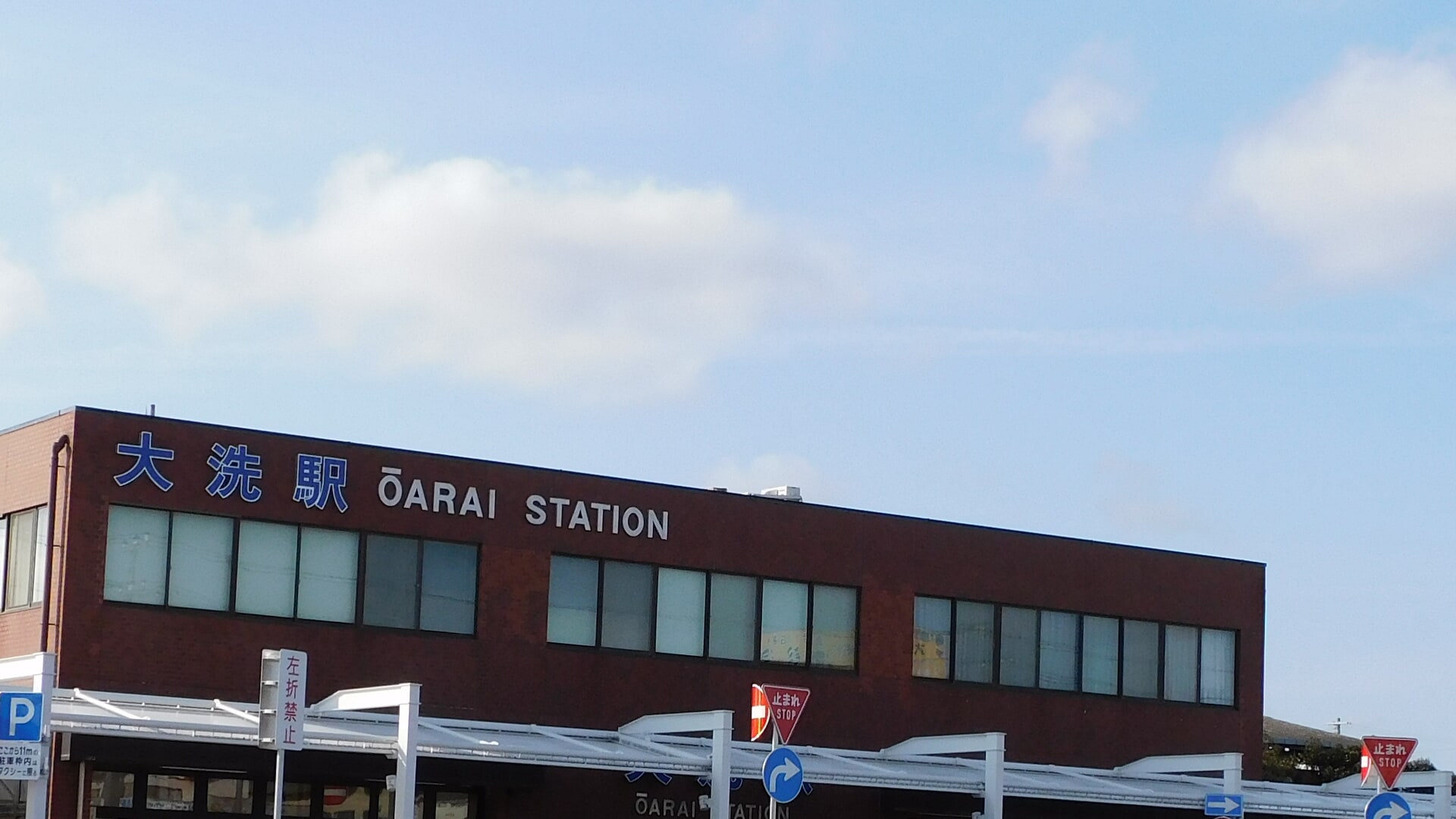
Header photo: Oarai Station on the Kashima Rinkai Railway, photographed in 2021. Photo: Miyuki Meinaka, CC BY-SA 4.0 (cropped and resized). Source.
Oarai is a fishing and ferry town of about fifteen thousand people on the Ibaraki coast, two hours north-east of Tokyo, and it has spent more than a decade building its visitor offer around one anime series. Not because a studio chose it and left, but because the town said yes and then kept saying yes. Oarai’s own tourism association describes Girls und Panzer as “the anime set in Oarai”, and the things it has built around that sentence are not a poster in a window: fifty-four life-size character panels standing outside the shops that host them, forty-five tank illustrations spread across the town, a stamp rally, a café inside the observation tower, and a free gallery. The centre is a short walk with a handful of panels in it; what you choose is how much further the day goes — on foot, by bicycle, on the town bus, or around the aquarium. The tourism association’s notice about the new Umimachi Line bus is in Japanese.
Quick Trip Guide
- Destination: Oarai, Ibaraki Prefecture
- Best Gateway: Tokyo, via Mito
- From Gateway: About 1 hour 30 minutes from Ueno: limited express to Mito, then the Oarai Kashima Line
- Main Base: Oarai itself. The town has inns, and the point is the evening
- Getting Around: On foot and by rental bicycle. The town centre is about 2 km across
- Car Needed: No, but it helps for Aqua World and the beach
- Recommended Stay: 1 night, 2 days
- Day Trip: Possible from Tokyo, but you will be rushing
- Best For: Girls und Panzer readers, and anyone who wants to see what a town looks like when it commits
Why This Place Matters
This guide covers Oarai. It is a regional guide to one town, not a complete list of every place connected to the series: the story is set on a school ship and moves through tournament venues elsewhere, and other locations have their own associations. What Oarai has is the town the series is set in, and a local welcome that has outlasted most of the anime tourism booms of the last fifteen years.
Girls und Panzer is set in a world where sensha-do, the way of the tank, is a traditional accomplishment for young women, ranked alongside flower arranging and the tea ceremony. The broadcaster’s official synopsis begins quietly: Miho Nishizumi has just transferred to Oarai Girls Academy, left her family home for a dormitory and has no friends yet, until two classmates, Saori Takebe and Hana Isuzu, start talking to her. Then the student council president tells her that sensha-do is a required elective and she is taking it — though Miho chose Oarai precisely because it had none. With Yukari Akiyama and Mako Reizei, the five become the crew of one tank, the Anglerfish team, named like every team at the school after an animal, and in their case after the fish this town is famous for.
The television series (2012–13) was directed by Tsutomu Mizushima and written by Reiko Yoshida; there are OVAs, a feature film, and Das Finale, a six-part cinema series whose fifth episode opened in Japan on 9 October 2026. They share a setting but not every location, and this guide does not assign a scene to a film or episode unless an official source does.
The school is fictional, and it is not even on land: Oarai Girls Academy sits on an enormous school ship moored off the coast. What is real is the town the ship is named after and modelled on. Oarai’s shopping streets, its shrine, its port and its observation tower are drawn with a precision that visitors recognise immediately, and the town recognised it back.
That is the unusual part. The first tank illustrations went up in June 2012, two months before the series aired. Events have run since 2013, the stamp rally since March 2015, and more than a decade later the town still has fifty-four life-size character panels standing outside the businesses that volunteered to host them, forty-five tank illustrations, a café in the Marine Tower, and a free gallery. The panels are not a municipal installation dropped on the town; each one stands outside a shop that agreed to look after it, and shopkeepers will tell you which character is theirs.
The other thing worth knowing before you go is the context. Oarai was hit hard by the 2011 tsunami, and the series arrived eighteen months later into a town that badly needed visitors. The relationship that grew out of that is why the welcome here is different in kind from a licensing deal, and why the town’s own tourism office writes that it is glad if you come “手ぶらで遊びに頂けるだけで”, just to visit empty-handed.
What the town says, and what this guide does not claim
- The town is the setting. Oarai’s own tourism association says so in those words.
- Oarai Girls Academy is not a real school. It is fictional, and it is on a ship.
- No shopfront is matched to a specific frame. The businesses host official panels, which is a different claim.
- Anime, official collaboration and ordinary sightseeing are kept apart, because in this town all three are within one kilometre of each other.
- There are no photographs of the panels here. They are licensed artwork and this site does not hold a licence for them.
Anime Pilgrimage Spots
Everything below is in the town centre or a short ride from it. The panels and tank illustrations are official installations rather than confirmed screen locations, and this guide labels them as what they are.
Please respect local rules and manners at every location, and follow signs and staff guidance.
Where these places are
The map shows the places below and how far apart they are. It is drawn with OpenStreetMap: opening it loads map images from openstreetmap.org. The list works without it.
The map could not be loaded. The places are listed below, with their names and a link to each on Google Maps.
- Anime-related places
- Station or transport
- Nearby sight
The 6 places on this map
- 1Oarai Station大洗駅OaraiIn this guideOpen in Google Maps
- 2Oarai Marine Tower大洗マリンタワーOaraiIn this guideOpen in Google Maps
- 3Oarai Isosaki Shrine, Kamiiso no Torii大洗磯前神社OaraiIn this guideOpen in Google Maps
- 4Oarai Seaside Station大洗シーサイドステーションOaraiIn this guideOpen in Google Maps
- 5Aqua World Oarai Aquariumアクアワールド茨城県大洗水族館OaraiIn this guideOpen in Google Maps
- 6Mito Station水戸駅MitoIn this guideOpen in Google Maps
Map data © OpenStreetMap contributors, ODbL. Positions were checked on 15 October 2026 against the source recorded for each place; a few are the published position for a large site rather than an entrance.
The character panel hunt
The town calls it machinaka kakurenbo, hide and seek in the streets: fifty-four life-size character panels standing outside shops, cafés, garages and offices across Oarai. Finding them is the single activity that defines a visit here, and it takes you into streets you would otherwise never walk down.
The installation covers the whole town rather than one street, and it has been maintained for over a decade. The panels are official merchandise placed with the consent of each host business, standing at roughly life size outside the shop that looks after it; several shops have built their own displays around theirs. Start at Umimachi Terrace, the information centre beside Oarai Station, which has the maps.
Allow half a day for a serious attempt and two hours for the central cluster — and get a bicycle if you want the full fifty-four, because on foot you will see fifteen. It costs nothing to walk and a great deal if you buy something at every shop, which is rather the point.
The town’s requests are not optional: do not step out suddenly into the roadway, do not spill off the pavement, and do not stop a car in the street to photograph. Do not touch the panels either; they are fragile and they belong to the shops. These are shops, not exhibits — go in, buy something, say hello. The town has asked for nothing, which is exactly why you should.
The stamp rally
A long-running town stamp rally built around eight points across Oarai; collect six and you can claim a prize. It has run since March 2015 and it is the easiest way to structure a first visit, because the eight points are spread deliberately to make you cross the whole town.
It is the town’s own route through its own installation, which makes it a better first day than anything you could design from a map. Pick up the sheet at Umimachi Terrace or at the Oarai Seaside Station information office.
Three to four hours on foot, under two by bicycle. What is at the eight points changes, and rallies and prizes are periodically refreshed, so confirm the current edition at the information centre rather than working from an older description.
Oarai Marine Tower and the Panzer Vor café
The sixty-metre observation tower at the port is the town’s landmark and the single most recognisable silhouette in the series. The second floor holds Panzer Vor, the official collaboration café, and the first floor has the tourist information corner and a souvenir shop.
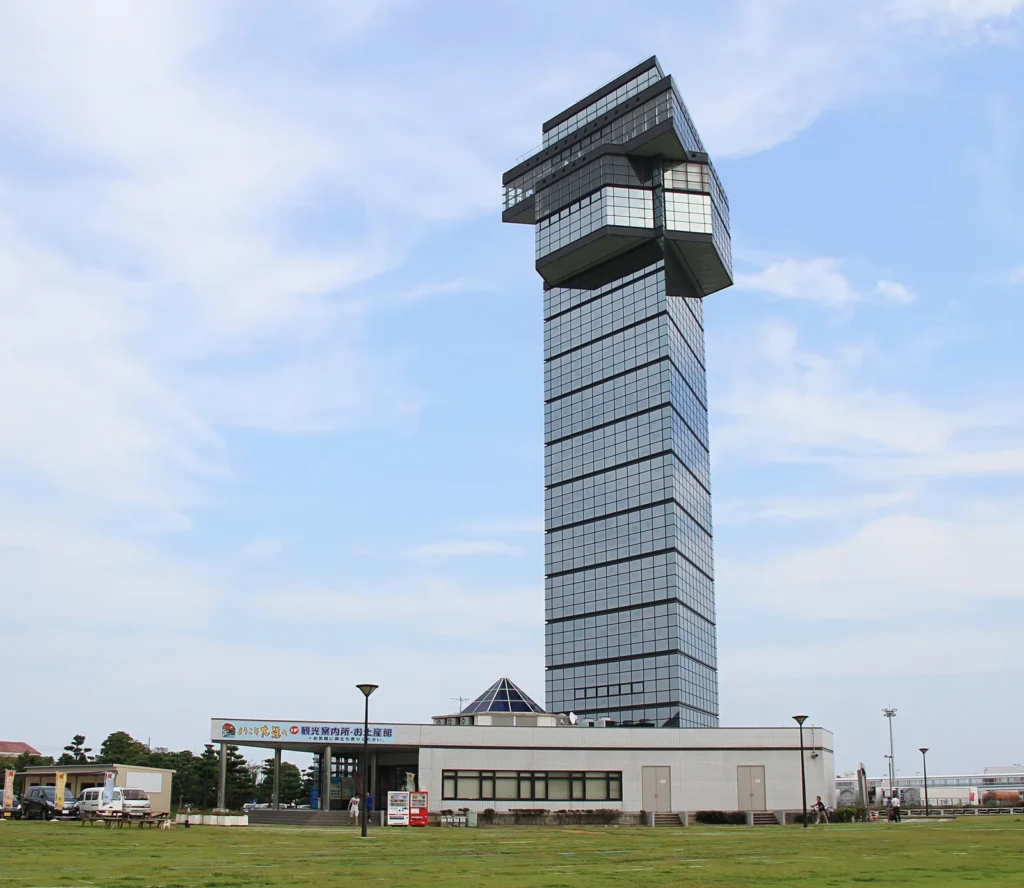
The observation floor gives a 360-degree view over the port and the coast, and Panzer Vor is the longest-running official collaboration space in the town rather than a pop-up that will be gone next season.
- Café hours: 10:00 to 18:00, closed Tuesdays, which is the single thing that catches visitors out here.
- Admission: the observation deck is charged separately from the café. Holders of the Umimachi Line one-day pass pay a special rate of 310 yen for adults and 150 yen for primary and middle school children; the town does not publish the standard rate alongside it, so check at the desk.
- Getting there: about twenty minutes on foot from Oarai Station, a few minutes by bicycle, or the Umimachi Line sightseeing route to the Oarai Marine Tower stop, one minute away.
An hour covers it, longer if the café is busy.
The Oarai Galpan Gallery
A free exhibition space devoted to the series, open 10:00 to 19:00. It is the one place in town where you can see the material properly presented rather than standing in a car park, and it costs nothing.
This is the town’s own permanent display, and the fact that it is free says something about how Oarai treats all of this. Thirty to forty-five minutes covers it, 10:00 to 19:00, and the long closing time makes it the right place to finish a day when the shops have shut. Contents rotate, so if you came for something specific, ask at the information centre first.
Magarinomatsu shopping street and the town centre
The old shopping street inland from the station is where the density of panels is highest and where the town feels most like itself: small shops, a lot of them family-run, several of which have been quietly fielding visitors from across the world for more than ten years.
This is the ordinary commercial heart of Oarai and the part of the town the series spends most time in: a working shopping street, a short walk inland from the station, with panels outside a large share of the shops and the highest density anywhere in town. An hour or two, more if you stop, which you should.
These are narrow streets with real traffic. The town’s request about not stepping into the roadway applies here more than anywhere else in Oarai.
Oarai Isosaki Shrine and Kamiiso no Torii
A shrine founded in the Heian period on the hill above the coast, with a second torii standing on the rocks in the sea below it, where the deity is said to have come ashore. It appears in the series and it is the most photographed thing in Oarai regardless of why you came.
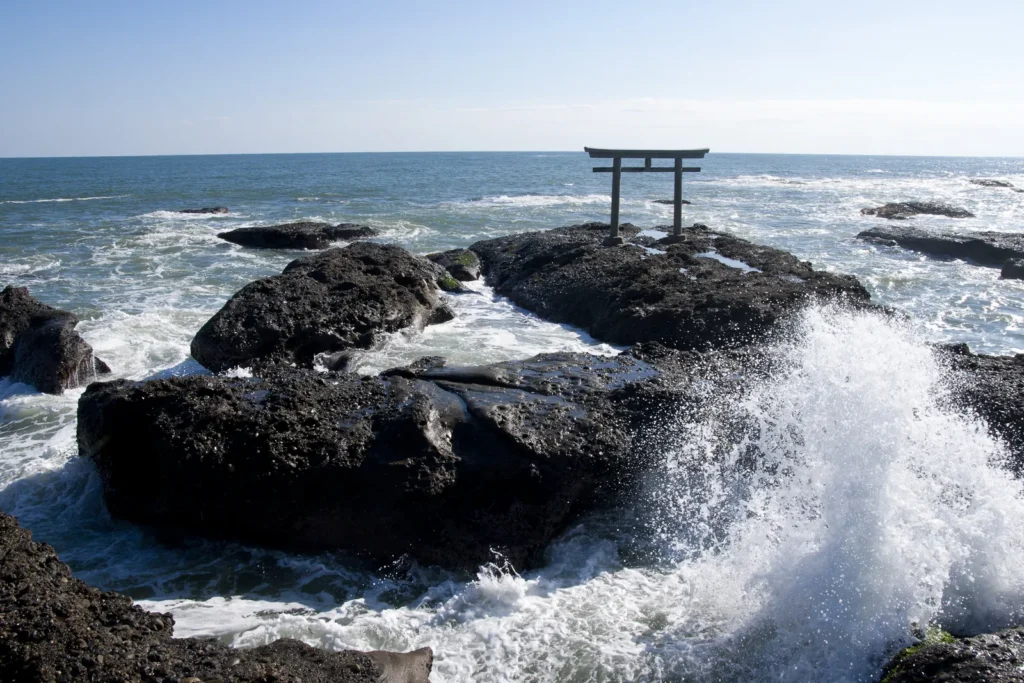
It is the town’s oldest and most important institution, and it long predates any of this. Sunrise with a swell running is when people come for the photograph, which is the one real argument for staying the night.
Getting there: about fifteen minutes by bicycle from the station, forty on foot, or the Umimachi Line sightseeing route to the Oarai Isosaki Shrine-shita stop, which is the stop nearest the sea torii. Free, and about forty-five minutes.
Do not go out onto the rocks. The shrine’s own page on Kamiiso (in Japanese) calls it the place the deity came ashore and a kinsokuchi — ground that is not to be set foot on. Photograph the torii from the shore wall and the viewing area, follow the signs and anything staff ask of you on the day, and remember that the rocks are wet, uneven and open to the swell.
How to Get There
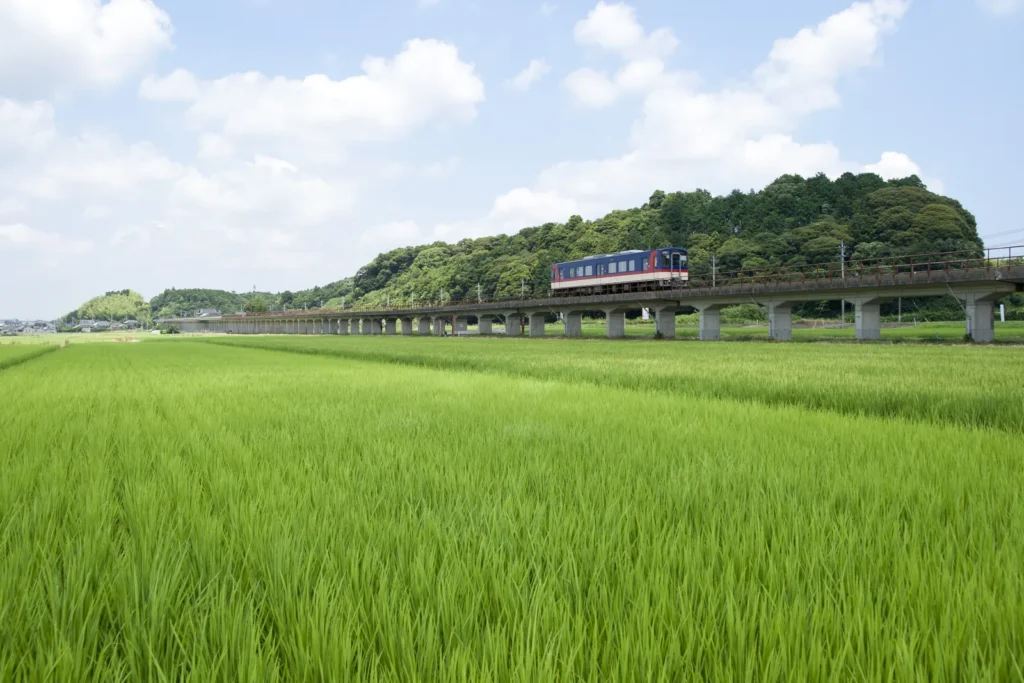
Oarai is on the Kashima Rinkai Railway’s Oarai Kashima Line, one stop sequence out from Mito. Everything depends on getting to Mito first, which is straightforward from Tokyo and awkward from the airports.
From Tokyo
The route the town’s own tourism office gives is JR Ueno to Mito on a Joban Line limited express, then the Kashima Rinkai Railway Oarai Kashima Line to Oarai: about one hour thirty minutes in total. Limited expresses on the Joban Line are the Hitachi and Tokiwa services, which also start from Shinagawa and Tokyo, so you rarely need to go to Ueno specifically.
- Mito to Oarai on the Kashima Rinkai Railway costs 420 yen for adults and 210 yen for children, on the fare table revised 14 March 2026.
- The highway bus is the cheaper alternative: the Mito-go leaves Tokyo Station’s Yaesu South Exit from platform 4 for Mito, where you change to the railway or a local bus.
- By car, the town gives about an hour and a half from Tokyo: Joban Expressway to Tomobe JCT, Kita-Kanto Expressway to the Mito-Oarai interchange, then Route 51.
From the airports
There is no neat answer here, and it is worth planning around.
- Ibaraki Airport is the local airport and the easy one: an expressway bus reaches Mito Station in 40 minutes, or about 1 hour 10 minutes by ordinary roads. It is a small airport with limited routes, so check whether anything serves you.
- Narita and Haneda both need you to reach Tokyo or Mito first, and the journey depends entirely on which connections you catch. Put your actual landing time into a route search rather than working from an average, and treat Oarai as the second half of a travel day rather than the first.
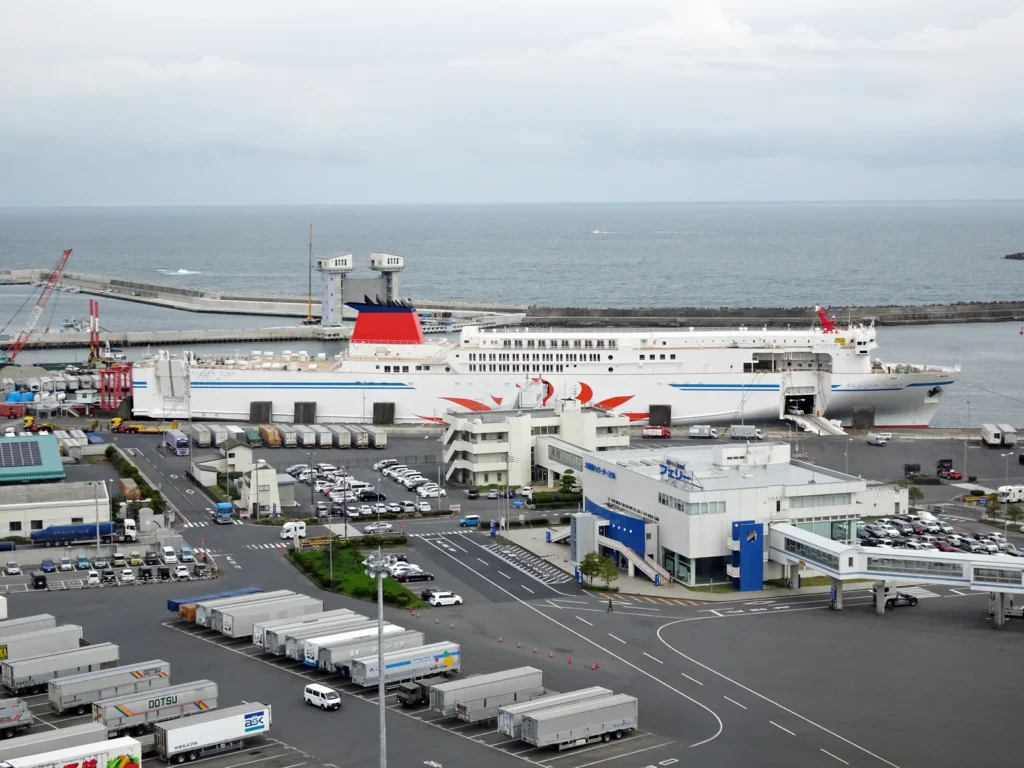
- By sea, Oarai is the Honshu end of the ferry to Tomakomai in Hokkaido, which is a genuine and rather good way to arrive if you are coming south.
Working out your arrival
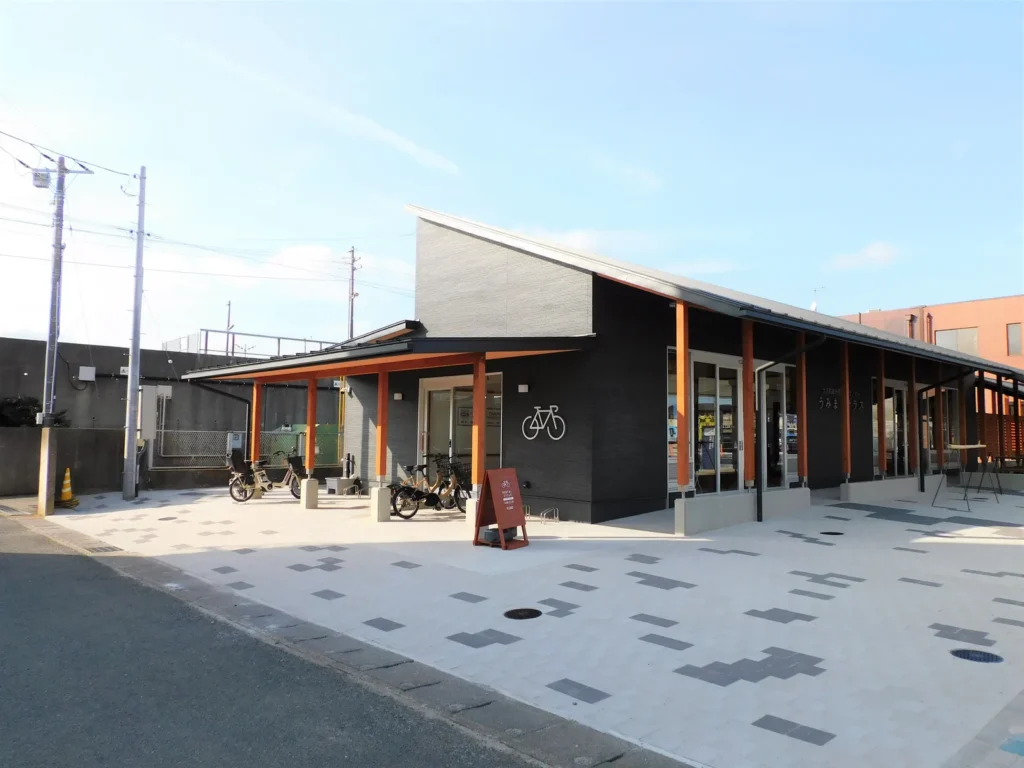
- Oarai Station is small, and the information centre beside it, Umimachi Terrace, is where a visit should begin.
- The last useful trains back towards Mito are early by city standards. Check the return before you commit to an evening.
- If you are coming for the day from Tokyo, aim to be on the 08:00 limited express out of Shinagawa or Tokyo rather than a later one.
- If you are driving, the town centre streets are narrow and the panels stand on pavements. Park once and walk.
Best Way to Get Around
Oarai’s town centre is roughly two kilometres across, which is walkable, but the places you actually want are spread from the station to the port to the shrine to the aquarium, and that is further than it looks on a map. The answer the town has arrived at is bicycles.
Rental bicycles
The information centre beside the station rents bicycles at 1,000 to 1,500 yen and electric bikes at 1,500 to 3,000 yen. On a bicycle the whole town including the shrine and the aquarium opens up in an afternoon; on foot it does not. For a panel hunt specifically, the bicycle is the difference between seeing fifteen and seeing fifty.
The Umimachi Line town bus
On 1 October 2026 the town’s circulating buses, previously called Kaiyu-go and Natchan-go, were reorganised and renamed the Umimachi Line. Routes, timetables and fares all changed at the same time, so any older guidance you find elsewhere is out of date. There are now six routes; the one visitors want is the sightseeing route, which links Oarai Station with Oarai Seaside Station, Oarai Marine Tower, Mentai Park, the fishing port, the Oarai Isosaki Shrine-shita stop below the sea torii, and Aqua World. It is the right choice in bad weather or if you are travelling with someone who would rather not cycle. The current route map and timetables are published by the town and the tourism association: see the official notice of the 1 October 2026 reorganisation, which carries the route maps for every line.
- Fares: 200 yen a ride for anyone of middle-school age and over, 100 yen for primary school children.
- One-day pass: 500 yen for adults and 250 yen for children, bought from the driver. It also carries admission discounts, including the 310 yen special rate at Marine Tower and ten per cent off at Aqua World.
- Paying: cash, the local Ibappi card, QR payment or a contactless credit card. Suica, Pasmo and the other national IC cards are not accepted. Board at the rear door and pay at the front when you get off.
- Not the same thing: Ibaraki Kotsu route 50, which runs Mito Station to Oarai Station to Nakaminato Station, is a separate service that also calls at Oarai Station. The Umimachi Line one-day pass is not valid on it, and it charges its own fares: from Oarai Station, 270 yen to Oarai Isosaki Shrine-shita, 380 yen to Aqua World and 450 yen to Nakaminato Station.
- The ferry terminal: the Umimachi Line does not serve it. Route 50 calls there on only a few evening departures, so plan to walk or take a taxi if you are catching a sailing.
Walking distances that are actually useful
- Oarai Station to the Magarinomatsu shopping street: a few minutes.
- Oarai Station to Marine Tower and the port: about twenty minutes.
- Oarai Station to Oarai Isosaki Shrine: about forty minutes on foot, fifteen by bicycle.
- Marine Tower to Aqua World: the two ends of the seafront. No walking time for that stretch is published by either of them, and it is long enough that the town bus is the sensible way to join them — the sightseeing route stops at both, and the other Umimachi Line routes do not reach the aquarium at all.
- Right across the town centre, station to beach: about thirty minutes.
Timing a day here
- Shops in the town centre keep small-town hours. A lot of them are shut by 17:00 or 18:00, and some close one weekday.
- The Panzer Vor café is closed on Tuesdays, which catches people out.
- Weekends bring other visitors and a better atmosphere; weekdays bring empty streets and shopkeepers with time to talk.
- If you want the sea torii at sunrise, stay the night. It is the one thing here that rewards an early start.
What to Eat
Oarai is a working fishing port on a coast where the cold Oyashio and the warm Kuroshio meet, which is why the fish here is worth the journey on its own. The town’s signature is the thing most visitors have never eaten.
Anko: the monkfish
Anglerfish, anko, is the dish Ibaraki is known for and Oarai is its centre — and the reason Miho’s crew is the Anglerfish team. It is a winter fish, at its best from roughly November to February, and it is served as ankou-nabe, a hotpot built on miso with the whole fish in it, including the liver that gives the broth its weight. The liver on its own, ankimo, is served steamed and is often described as the foie gras of the sea, which undersells it.
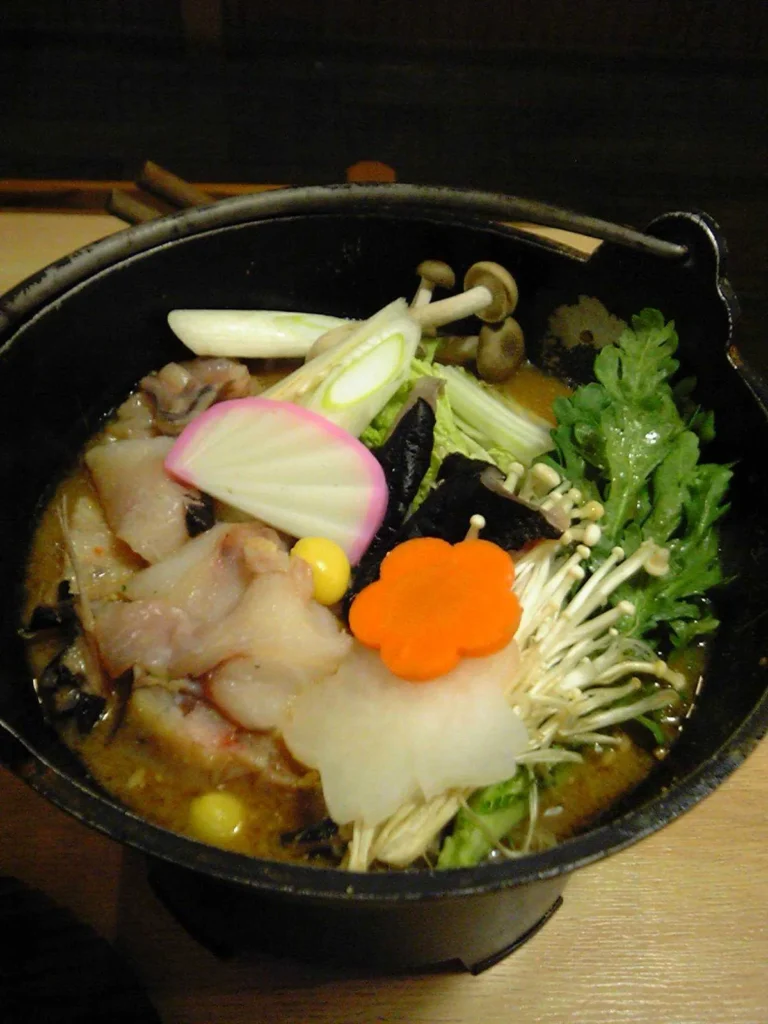
The town’s festival is built around it. The Oarai Anko Matsuri runs with the Chamber of Commerce’s autumn festival each November; the organisers have announced the 2026 edition for 14 and 15 November 2026 at the plaza in front of Marine Tower, and the series’ own official site confirmed in September 2026 that there would be festival merchandise and a cast talk show. Confirm the dates with the organisers before you plan around them, because this one draws a crowd and the town fills.
The rest of the catch
- Shirasu, whitebait, landed along this coast and served raw or boiled over rice.
- Hamaguri, large clams, grilled in the shell. Oarai’s beach is also a clam-digging beach in season.
- Kaisen-don, a bowl of rice under whatever came in that morning, at the market and around the port.
- Mentaiko, the spiced cod roe, from the factory-and-shop on the edge of town that lets you watch it being made and gives out samples.
- Hoshi-imo, dried sweet potato, which is an Ibaraki speciality and much better than it sounds.
Where to eat it
The market buildings by the port and the seaside complex hold most of the visitor-facing restaurants, and the town centre holds the rest. Many of the shops hosting a character panel are also places to eat, which is not a coincidence: the town built the panel trail through its own businesses. Eating at one of them is the straightforward way to put something back.
Eating here without wasting time
- Anko is seasonal. Outside roughly November to February, do not expect it, and be suspicious of anywhere that promises it in July.
- The port restaurants run on lunch. Several stop serving by 14:00 or when the day’s fish is gone.
- The town centre has fewer dinner options than you would expect. If you are staying the night, ask your inn or book.
- Carry cash. A lot of the smaller shops in the shopping street still prefer it.
Things to Do Beyond the Anime
Oarai was a seaside resort town long before 2012, and the things that drew people then are still the best things here on a wet afternoon.
Aqua World Ibaraki Prefectural Oarai Aquarium
One of the largest aquariums in Japan and the serious reason families come to Oarai: over 580 species and 68,000 animals, with more than fifty species of shark, which is the biggest shark collection in the country.
- Admission: 2,300 yen for adults, 1,100 yen for primary and middle school children, 400 yen for children aged three and over.
- Discounts: show a boarding pass from Ibaraki Airport used within the past three months and the adult price drops to 2,100 yen. On 13 November, Ibaraki Prefecture Day, everyone pays half price and small children go free.
- Getting there: the Umimachi Line sightseeing route to the Aqua World Oarai stop, one minute away; the line’s other routes do not stop here. The aquarium gives about eight minutes by taxi from Oarai Station and about five from Nakaminato. On foot it is the length of the seafront from Marine Tower, so allow more than it looks on the map.
- How long to allow: two to three hours.
- Good to know: opening hours shift through the year and there are occasional closure days. Check the date you are going.
Oarai Seaside Station
The waterfront shopping complex, with shops, restaurants and one of the town’s two information offices and a gallery space. It is also one of the stamp rally points, which means most visitors pass through it anyway.
Oarai Sun Beach
A wide sand beach south of the port, used for swimming in the short official season, for surfing the rest of the year, and for clam digging in spring. It is one of the few beaches in Japan with a barrier-free section, with matting laid to the water and beach wheelchairs available in season.
Mentai Park Oarai
A cod-roe factory with a viewing gallery, a shop, a food court and a children’s play area, free to enter. It sounds like an odd thing to recommend and it is consistently one of the most popular stops in the town.
The ferry, as an attraction
The Oarai ferry terminal is the Honshu end of the overnight crossing to Tomakomai in Hokkaido. Even if you are not sailing, the terminal and the port are worth twenty minutes, and the ships are very large seen from the quay.
Mito, thirty minutes away
Mito has Kairakuen, one of the three great gardens of Japan, at its best when the plums flower in late February and March. If you are building a two-day trip, Mito is the obvious other half of it.
What to Bring Home
Oarai is one of the few anime towns where buying the merchandise and buying the local produce are the same act, because the shops that sell the one are the shops that host the other.
- Official series merchandise, sold at the information centres, the gallery, the Marine Tower shop and a long list of individual businesses. Each panel-hosting shop tends to carry something tied to its own character.
- Dried and preserved fish, from the market by the port: dried shirasu, dried sweet potato, and anglerfish products in season.
- Mentaiko, from the factory shop, chilled and packed for travel.
- Hoshi-imo, dried sweet potato, the Ibaraki souvenir that people actually finish.
- Sake from Ibaraki, which is not the famous prefecture for it and is better than its reputation.
- Nothing at all, which the town explicitly says is fine. Its tourism office writes that it is glad if you simply come and enjoy the place.
Buying sensibly
- Buy from the shops hosting panels. That is the economic circuit the town built and it is the reason any of this still exists.
- Chilled seafood and mentaiko need a cool bag for a long journey home. Several shops sell one.
- Licensed merchandise from the official outlets supports the rights holders. Unlicensed goods have been prosecuted in Ibaraki before.
- Small shops here are often cash-only. Bring notes.
Where to Stay
Oarai is a seaside resort town, so it has more accommodation than a town of fifteen thousand would normally hold: hotels along the shore, inns in the town centre, and minshuku run by families who have been in the fish business for generations.
In Oarai
Staying in the town is the whole point of a two-day trip. It gets you the sea torii at sunrise, dinner in a town-centre restaurant rather than a station concourse, and a morning in the shopping street before the day visitors arrive. Several inns have been fielding series visitors for over a decade and are entirely used to it. Book ahead for the November festival weekend and for summer, when the beach fills.
Mito
Thirty minutes away by train, with business hotels at every price and the largest choice in the prefecture. The right base if you are combining Oarai with Kairakuen, or if everything in Oarai is full.
As a day trip from Tokyo
Possible, and a lot of people do it, but you will spend three hours of the day on trains and you will see perhaps half the town. If you only have a day, take the first limited express out and the last one back, rent a bicycle the moment you arrive, and accept that the panel hunt will be partial.
Choosing a base
- First visit, two days: Oarai itself, in the town centre or by the shore.
- Combining with Mito: one night in each, or two in Mito.
- Festival weekend in November: book months ahead or stay in Mito.
- Arriving by ferry from Hokkaido: stay in Oarai the night you land; the ship docks in the afternoon.
Suggested Itinerary
Oarai is a small town with its attractions spread right across it, so the only real decision here is how you move. The panel hunt is the thing people come for and it is the thing that punishes walking; the tower, the shrine and the port are a different, tidier day. Compare them on the actual distances rather than in the abstract.
| How you get around | On foot | Bicycle | Umimachi Line bus |
|---|---|---|---|
| Cost | Nothing | 1,000 to 1,500 yen, or 1,500 to 3,000 electric | 200 yen a ride, or a 500 yen day pass |
| Panel hunt | The central cluster only, about two hours | The whole town. This is what the bicycle is for | Poor fit: panels are between stops, not at them |
| Tower, shrine, port | Station to tower 20 min, shrine 40 min, tower to Aqua World 25 min | All of it comfortably in an afternoon | The sightseeing route links all of them |
| Best when | You only have a morning | Dry weather and you are here for the panels | Rain, cold, or you would rather not cycle |
Two days does Oarai properly. One day does the centre and not much else.
Day 1: the town
- 11:00. Arrive at Oarai Station. Go straight into Umimachi Terrace next door for the panel map, the current stamp rally sheet, and a rental bicycle.
- 11:30. Lunch in the town centre, at one of the shops on the panel trail.
- 12:30. The Magarinomatsu shopping street and the central cluster of panels. This is the densest and best part of the hunt.
- 14:30. Cycle to the port. Marine Tower for the view, then the Panzer Vor café below it, remembering it is shut on Tuesdays.
- 16:00. The Oarai Galpan Gallery, which is free and open until 19:00.
- 17:00. Oarai Seaside Station and the waterfront, then back into town.
- 18:30. Dinner. Anko hotpot if it is winter, a seafood bowl if it is not.
Day 2: the coast
- 06:00. Oarai Isosaki Shrine, and the sea torii below it as the sun comes up over the Pacific. This is the reason to have stayed the night.
- 08:30. Breakfast, then the rest of the panel hunt in the outlying streets.
- 10:30. Aqua World for the sharks, about two hours.
- 13:00. Lunch at the port, then Mentai Park if you have children or curiosity.
- 15:00. The beach, or the ferry terminal, or one more loop of the shopping street for whatever you did not buy yesterday.
- 16:30. Train back to Mito and on to Tokyo.
If you only have one day
Station, information centre, bicycle, shopping street, Marine Tower, gallery, back. Six hours in the town, three on trains. You will see the heart of it and you will want to come back, which is not the worst outcome.
Planning that actually matters
- Check the Panzer Vor café and the gallery hours before you go. Small-town opening hours change and these two are the ones people travel for.
- The anglerfish season is roughly November to February. Outside it, the food story here is different.
- The November festival is the biggest weekend of the year. Go for it deliberately or avoid it deliberately.
- Das Finale Episode 5 opened in Japanese cinemas on 9 October 2026, so expect the town to be busier than usual this autumn.
Travel Tips & Etiquette
Oarai has the best-earned goodwill of any anime town in Japan, and it is maintained by visitors behaving well in streets where people live and work. The requests below are the town’s own, not ours.
Around the panels
- Do not step out into the roadway. The town asks visitors not to rush suddenly into the road or spill off the pavement while photographing. These are narrow streets with real traffic.
- Do not stop a car in the street to photograph. Also an explicit request from the town. Park properly and walk.
- Do not touch the panels. They are fragile, they are outdoors in sea air, and they belong to the shop that looks after them.
- Do not photograph into shops or at the people working in them. Ask first if you want a photo of a shopkeeper with their panel; most will say yes, which is the point of asking.
- Go in and buy something. Not an obligation, but the panel trail exists because businesses volunteered, and the obvious way to thank them is across the counter.
About photographing the artwork
- The panels and the tank illustrations are licensed character artwork. Photographing them for yourself is normal; publishing those photographs is a different question, and this site does not do it.
- A Creative Commons licence on a photograph covers the photographer’s rights in that photograph. It does not clear the rights in artwork that happens to be inside the frame.
- Counterfeit merchandise has been prosecuted in Ibaraki before. Buy from the official outlets.
- If you run a site or a channel, the safe version is to write about the panels and photograph the town.
In the town
- Small-town hours apply. Shops shut earlier than in a city and some close one weekday. Do not leave the shopping street until the end of the day.
- Carry cash. Card acceptance is patchy among the smaller shops.
- Oarai is a working port. The quays, the fish market and the ferry terminal are workplaces; stay out of the operational areas.
- Sea conditions are serious here. The rocks at the sea torii are slippery and exposed, and the Pacific swell on this coast is not decorative.
- This town was badly hit in 2011. It is not a sensitive subject locally, but it is worth knowing why the welcome here runs as deep as it does.
Before you travel
- Check the café, the gallery and the stamp rally. All three change, and all three are reasons people come.
- Check the festival dates with the organisers if you are aiming for the November weekend.
- Do not plan around a collaboration you read about online. Tie-ups in this town come and go in weeks; the official sites are the only reliable source.
- Start at the information centre. Umimachi Terrace beside the station exists exactly for this, in a way almost no other anime town has managed.
Plan Your Trip
These pair naturally with it:
- Bocchi the Rock! in Shimokitazawa, Tokyo, two hours south and a completely different kind of town.
- Initial D in Gunma, the other northern Kanto route in this series.
- Slam Dunk in Kamakura and Enoshima, for a coast on the other side of Tokyo.
- Your Name in Hida, Gifu and Yuru Camp in Yamanashi and Shizuoka, for mountains instead of sea.
- Love Live! Sunshine!! in Numazu, Shizuoka, Detective Conan in Hokuei, Tottori, ONE PIECE in Kumamoto and Attack on Titan in Hita, Oita, for a longer trip west.
How this guide was put together
This guide was researched and planned from published sources rather than written up from a visit. Checked on 12 October 2026: the Oarai tourism association’s notice of the 1 October 2026 reorganisation of the town buses into the Umimachi Line, which carries the route maps and is the source for the fares, the one-day pass, the payment methods and the fact that national IC cards are not accepted; Ibaraki Kotsu for the separate route 50 fares; the Marine Tower for the Panzer Vor hours and the pass-holder admission rate; and the town’s own requests to visitors about the panels.
Where a price is missing, the town does not publish it: Marine Tower’s standard observation-deck rate is not given alongside the pass-holder rate, so only the pass-holder figure appears here. The panels and tank illustrations are official installations rather than confirmed screen locations, and this guide labels them as what they are. Walking times are the published figures; the comparisons between walking, cycling and the bus are editorial judgements built on them.
Written and edited by Nick, who runs Anime Routes Japan from Japan. More about Nick, and about how these guides are made, is on the About page.
The practical details here — opening hours, fares, access and the operators’ own requests — were checked against official sources on 6 October 2026: the Oarai Tourism Association, the work’s official sites, the Kashima Rinkai Railway fare table and Aqua World. Opening hours, fares, festival dates and collaboration spaces all change, and in a town that has been running this for more than a decade, the details change more often than the welcome does. Check before you travel, and remember that the shops hosting those panels are shops.
This guide currently contains no affiliate links.