Botan Kamiina Fully Blossoms When Drunk Pilgrimage Guide to Chichibu and Nagatoro, Japan
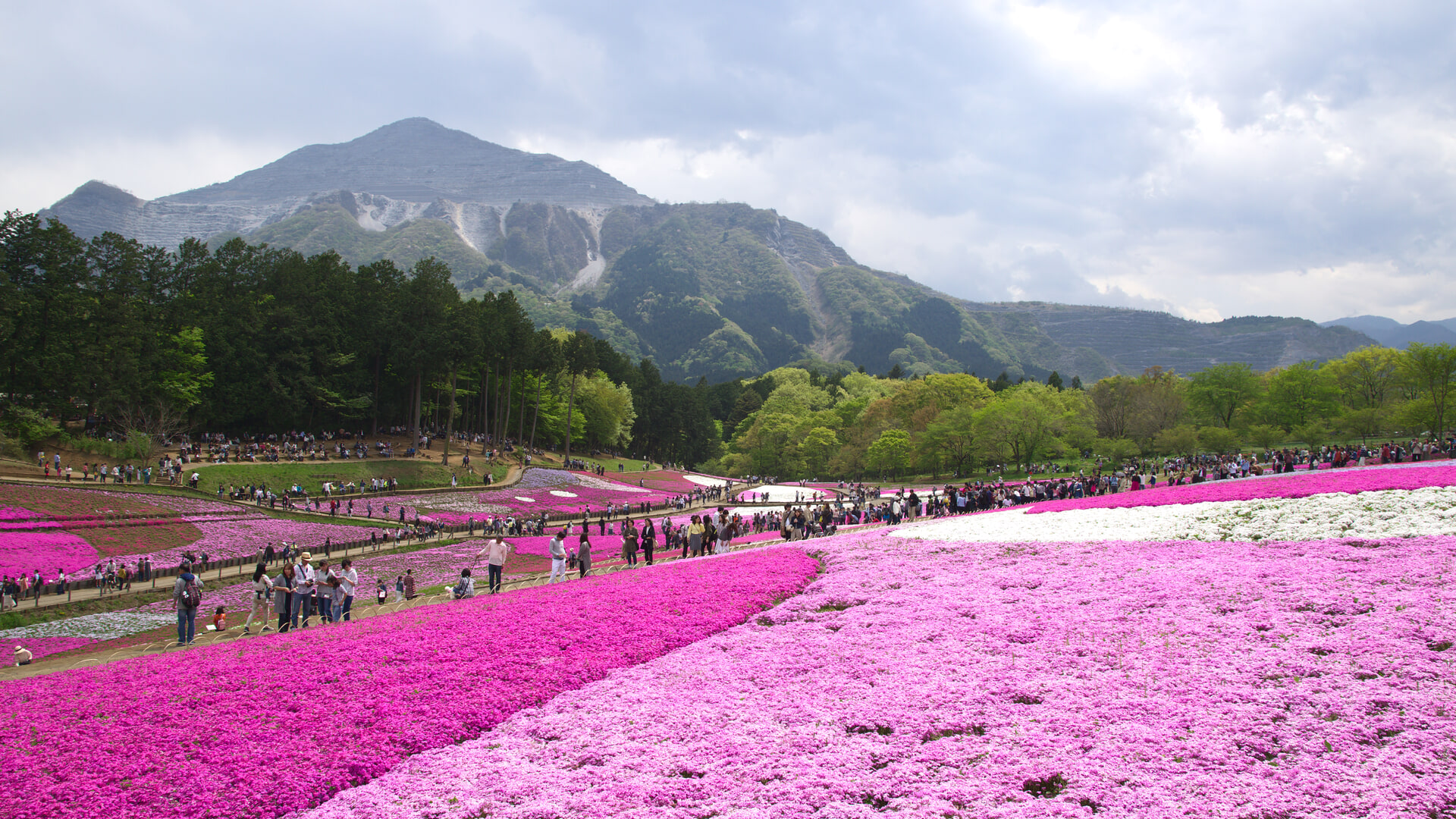
Header photo: the shibazakura slope at Hitsujiyama Park in Chichibu, with Mount Buko behind. Photographed in April 2017. Photo: 雷太, CC BY 2.0 (cropped and resized). Source.
Chichibu is about ninety minutes from Ikebukuro, in the mountains at the western edge of Saitama. It is a basin ringed by hills, with a quarried mountain standing over the town, a shrine at the centre of one of Japan’s great night festivals, several sake breweries and a whisky distillery with an international reputation. The series also travels well beyond it — to Kawagoe, Okutama and Echigo-Yuzawa — but Chichibu and neighbouring Nagatoro are where the official pilgrimage project is, and they make a very good one- or two-day trip whether or not you drink. Choose between Chichibu and Nagatoro, and between the flower season and an ordinary town walk; nothing here needs a drink to work.
Quick Trip Guide
- Series: Botan Kamiina Fully Blossoms When Drunk (上伊那ぼたん、酔へる姿は百合の花), TV anime from April 2026, from the manga by Hei
- Where: Chichibu and Nagatoro, western Saitama
- Getting there: Seibu Laview limited express from Ikebukuro to Seibu-Chichibu, fastest 77 minutes
- Confirmed scenes: The shibazakura festival (episode 1) and Mount Buko (episode 7)
- Official map: Free paper map from 1 August 2026, five named pick-up points. Paper only
- Best season: Mid-April to early May for the shibazakura; autumn for the hills; December for the night festival
- Time needed: One day for the town, two with Nagatoro
- If you do not drink: Everything below works without a drink, and the guide says where
- Budget: Low. The walking is free, the shibazakura slope is 500 yen in season
Why Chichibu Matters in Botan Kamiina
Botan Kamiina Fully Blossoms When Drunk opens with a day trip. A first-year who has just moved into a university dormitory goes with her housemates to the shibazakura festival in Chichibu, loses track of the dorm head somewhere among the flowers, and finds her sitting alone on a bench with a highball. That is the whole series in one scene: a girl who drinks by herself because it is easier that way, and a girl who has just discovered she would rather not.
Drinking alone, and drinking together
The official character page introduces Ibuki Tonami as a fourth-year who runs the dormitory and knows a great deal about alcohol, and who finds it hard to drink in front of other people — so she enjoys it by herself. Botan Kamiina is the new first-year, in after a year of re-sitting exams, who has her first drink because she sees Ibuki enjoying one. The whole first season is the slow distance between those two facts: Ibuki has a reason for drinking alone, and gradually comes to want to drink with Botan instead.
Around them the dorm fills out. Kanade Gujo is a master’s student who knows film and art and who, by her own official description, collects alcohol as an excuse to drink with Ibuki. Akane Yusa plays guitar in her own band; Yaeka Kitamori has a motorcycle licence and likes being outdoors, and the two of them have the kind of long, bickering friendship the series is very good at. Chang Chin-lan arrives later, an exchange student from Taiwan who says exactly what she thinks.
Why that makes Chichibu worth the trip
Because the first thing they do together is a day out. The official synopsis for episode 1 puts the dorm at the Chichibu shibazakura festival in spring: Botan goes looking for the missing dorm head and finds her on a bench with a highball, and drinks her first drink there. Nothing is staged. It is a flower park, a bench, and a canned drink.
That is the right register for the trip too. Chichibu is a working mountain town with a very good line in things to drink and a short list of things worth standing in front of, and the series gives you a reason to do both slowly. If you do not drink at all, the day still works: the flowers, the hills, the shrine, the river and the food are all here, and this guide flags the alcohol-free version of every section.
Which Botan Kamiina
The original is a manga by Hei, published by Akita Shoten and serialised in Champion Cross. The TV anime began in April 2026. Scene references in this guide are to the first TV season and come from the official episode synopses; nothing here spoils how the season ends.
What the official sources confirm
- Only two Chichibu-area scenes are confirmed from official sources: the shibazakura festival in episode 1, and Mount Buko in episode 7. The episode 7 attribution comes from Chichibu City itself, which published a correction saying that the Mount Buko page of the official map printed “episode 6” by mistake.
- The official butai tanbo map is a free paper map, handed out from 1 August 2026. We could not find a digital edition or an online list of its spots, and we have not read its pages, so nothing below is attributed to it. Where a place appears without an episode number, it is ordinary Chichibu or Nagatoro, said plainly as such.
- Several episodes are set a long way from here — Kawagoe, Okutama and Echigo-Yuzawa among them. They are not in this guide.
- The 2026 summer stamp rally (24 July to 23 September) and the Matsuri-no-Yu summer collaboration (to 23 August) have ended. Do not travel for them.
- Opening hours, fees and seasons change. Everything below was checked on 12 October 2026 against the operator’s or the authority’s own site.
Anime Pilgrimage Spots
Two confirmed locations, one map to pick up, and a neighbouring town the project itself calls a pilgrimage spot.
Please respect local rules and manners at every location, and follow signs and staff guidance.
Where these places are
The map shows the places below and how far apart they are. It is drawn with OpenStreetMap: opening it loads map images from openstreetmap.org. The list works without it.
The map could not be loaded. The places are listed below, with their names and a link to each on Google Maps.
- Anime-related places
- Station or transport
- Nearby sight
The 7 places on this map
- 1Hitsujiyama Park羊山公園ChichibuIn this guideOpen in Google Maps
- 2Mount Buko武甲山Chichibu · area positionIn this guideOpen in Google Maps
- 3Seibu-Chichibu Station西武秩父駅ChichibuIn this guideOpen in Google Maps
- 4Chichibu Shrine秩父神社ChichibuIn this guideOpen in Google Maps
- 5Nagatoro Station長瀞駅NagatoroIn this guideOpen in Google Maps
- 6Nagatoro gorge, the Iwadatami rocks長瀞渓谷Nagatoro · area positionIn this guideOpen in Google Maps
- 7Mount Hodo宝登山Nagatoro · area positionIn this guideOpen in Google Maps
Map data © OpenStreetMap contributors, ODbL. Positions were checked on 15 October 2026 against the source recorded for each place; a few are the published position for a large site rather than an entrance.
Hitsujiyama Park, the shibazakura slope (episode 1)
This is where the series starts. The official synopsis for episode 1 has the dorm visiting the Chichibu shibazakura festival, and it is where Botan takes her first drink from a bench. The slope is a hillside planted in bands of pink, white and purple with the quarried face of Mount Buko directly behind it, which means the episode 1 location and the episode 7 location are in the same photograph — about 17,600 square metres planted with more than 400,000 shibazakura of ten varieties.
It is a spring-only attraction and there is no second flowering. Flowering runs from mid-April to early May and varies by year; in 2026 the slopes were already past their peak by 2 May. Outside spring this is a grassy hillside with a very good view, and that is all it is.
- Admission: in 2026 entry was charged from 10 to 30 April, 8:00 to 17:00, at 500 yen for adults and free for junior high school age and under, then free from 1 May with a voluntary contribution invited. Check the year you travel: the charged period has been shortened mid-season before.
- Getting there: about 20 minutes on foot from Seibu-Chichibu Station, or from Ohanabatake Station on the Chichibu Railway. It is a climb out of the town rather than a flat walk.
- Parking: charged 10 April to 6 May, 700 yen for a car. A free overflow car park behind Michi-no-Eki Chichibu operates on selected dates and is a 40 to 50 minute walk from the flowers, with no shuttle.
- Do not confuse the areas. Hitsujiyama Park has several, and Miharashi-no-oka — a hill over central Chichibu with a cherry-blossom reputation and two small museums — is a different part of the same park, not the shibazakura slope. The episode 1 scene is tied to the shibazakura festival, so this guide does not place it anywhere else in the park.
Mount Buko (episode 7)
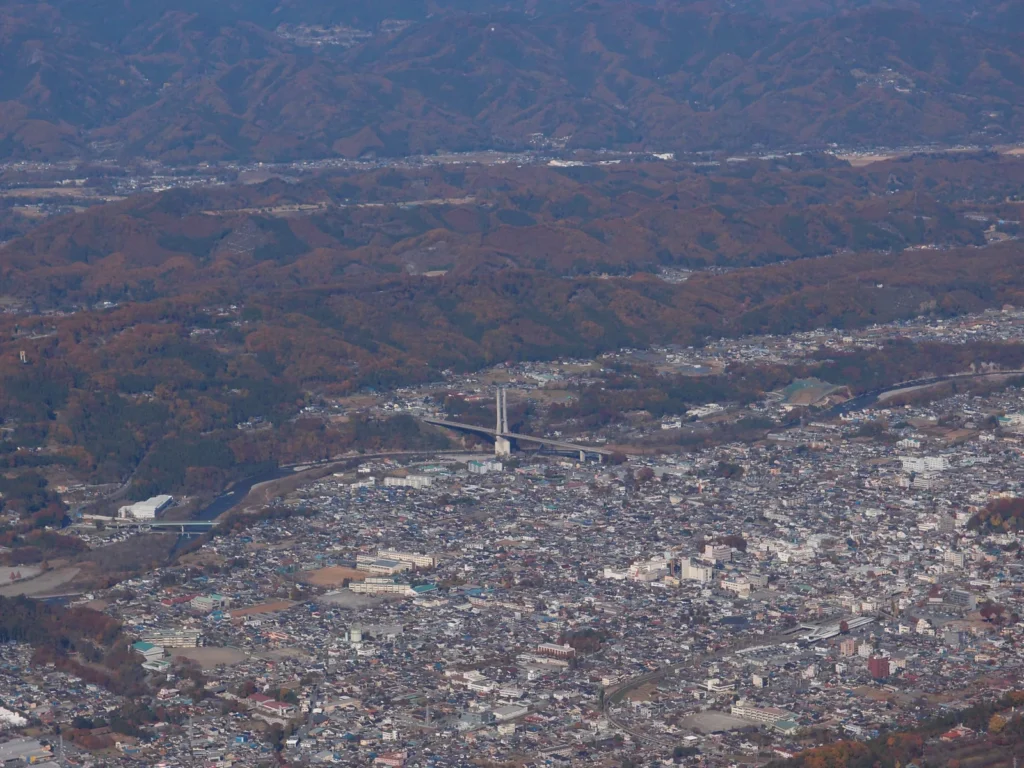
Mount Buko is entry 7 in the series and the mountain that stands over everything in Chichibu. The official synopsis for episode 7 takes Ibuki, Kanade and Chin-lan up it: dappled light, a long climb, and a dorm head who cannot see the point of hiking until an elderly woman in difficulty changes her afternoon. Chichibu City’s own notice confirms this is episode 7 and not episode 6, as the map’s first printing says.
What you are looking at is a 1,300-metre limestone mountain whose northern face has been quarried in terraces for a century. It is not pretty in the ordinary way, and that is exactly why it is the symbol of the town: every Chichibu photograph has it in the background.
Climbing it is a real mountain walk, with a long approach from the trailhead on the Yokoze side and several hours each way — boots, water, a weather check and an early start, and nothing else in that day. Not climbing it is perfectly reasonable, and most visitors do not: the mountain is the view from the shibazakura slope, from the river and from half the streets in town.
Picking up the official map
The official butai tanbo map has been given out free since 1 August 2026 by the Chichibu Anime Tourism Executive Committee (the city’s distribution notice is a Japanese PDF; we have not read the paper map itself). The pick-up points named by the city are the Chichibu Tourist Information Centre in front of Seibu-Chichibu Station, Michi-no-Eki Chichibu, Jibasan Shoten, Hot Spot Chichibu-kan and the Nagatoro Tourist Information Office in front of Nagatoro Station. Collect it at the first one you reach, which for most people is the one across from the Seibu station.
About that map
- As far as we could find it is distributed on paper; we did not find a PDF, a digital edition or a published list of its spots.
- Stock is not guaranteed. It has been in distribution since August 2026, so ask rather than assume.
- This guide does not reproduce it, and does not claim to know what is on its pages.
- The companion street-light flags went up in Chichibu’s shopping streets and in Nagatoro from mid-August 2026. They are street decoration, not a numbered trail.
Nagatoro
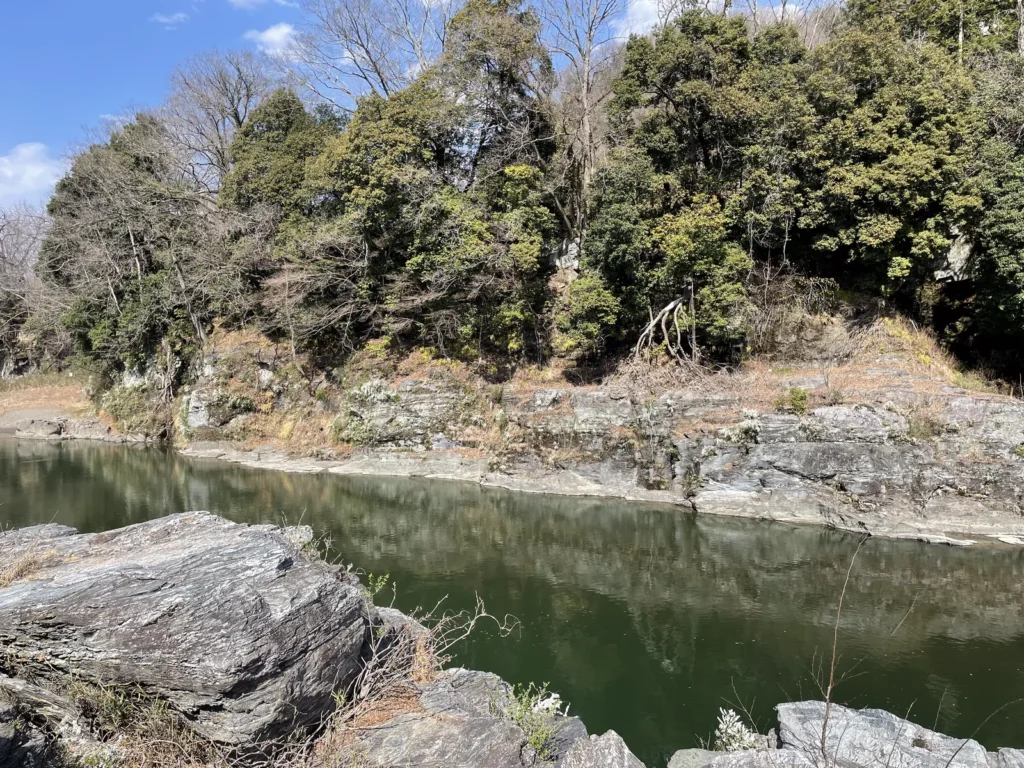
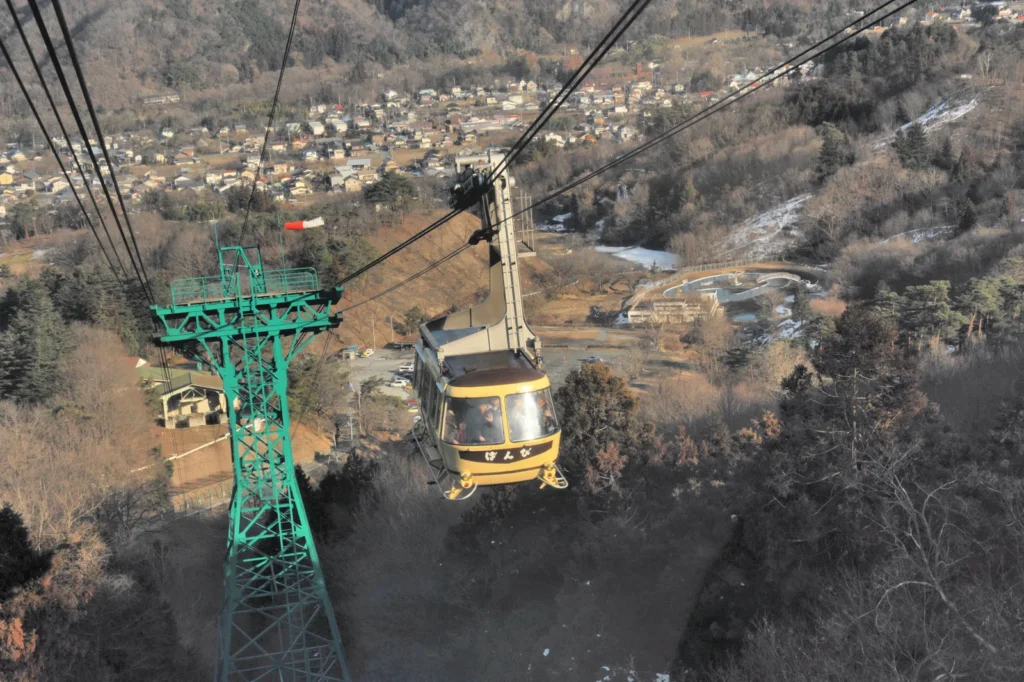
The committee’s own notice describes Nagatoro as one of the pilgrimage locations and put the collaboration flags there alongside Chichibu’s shopping streets. It is the next town downriver, fifteen or so minutes from Chichibu on the Chichibu Railway, and it is the part of the trip that looks least like a town: flat shelves of rock called the Iwadatami running along the Arakawa, flat-bottomed boats working the rapids in season, and a cable car up Mount Hodo behind the station.
None of the official synopses names a Nagatoro scene, so this guide does not attach one. Go because the project points there, and because it is the best hour of scenery within reach of Chichibu.
How to Get to Chichibu
Chichibu is a day trip from Tokyo and it is easiest by Seibu. The one thing to get right before you go is which of the four local stations you actually want.
From Tokyo by Seibu
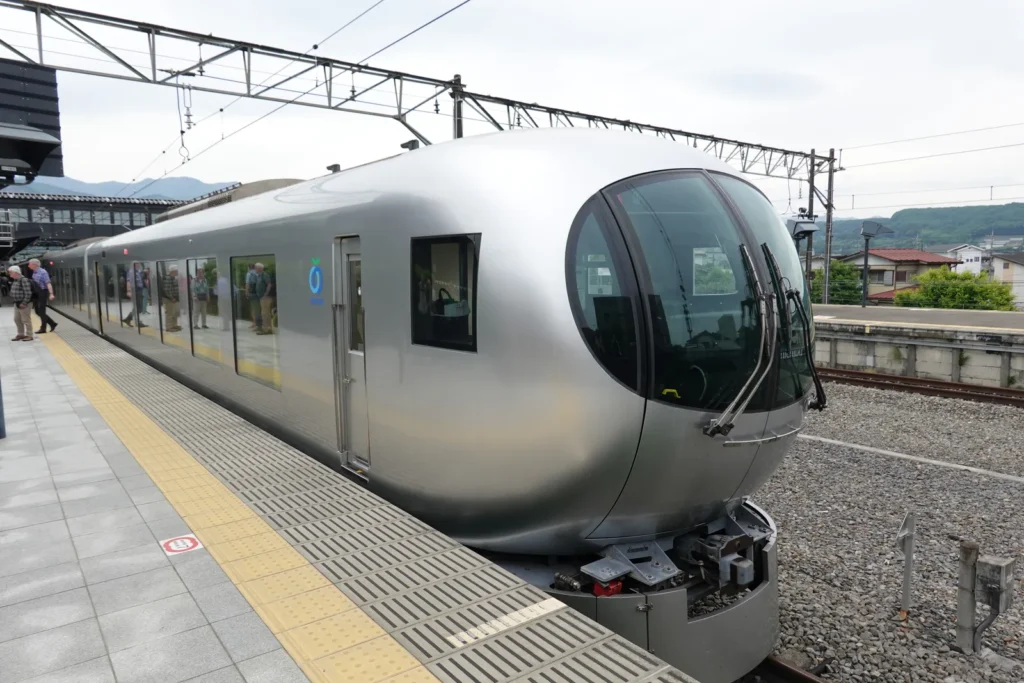
- Laview limited express. From Ikebukuro to Seibu-Chichibu, fastest 77 minutes. All seats are reserved, so you need a limited-express ticket on top of the ordinary fare; they go on sale a month ahead and can be bought online, at a ticket machine or at the window. Buy it before you board, because boarding without one costs more.
- Without the limited express. Ordinary trains run the same way for the price of the basic fare, with a change at Hanno. Slower, cheaper, and fine.
From Tokyo by JR and Chichibu Railway
The other way in is JR to Kumagaya and then the Chichibu Railway up the valley. It is longer, but it comes into Chichibu Station rather than Seibu-Chichibu, and it passes through Nagatoro on the way, which makes it a good outbound route if Nagatoro is on your list.
Four stations, and which is which
- Seibu-Chichibu — the Seibu terminus, where the Laview arrives. The tourist information centre and the Matsuri-no-Yu complex are in front of it.
- Ohanabatake — the Chichibu Railway station a few minutes’ walk from Seibu-Chichibu. This is where you change between the two companies. They are not the same station and there is no through gate.
- Chichibu — one stop further on the Chichibu Railway, beside the local products centre, and the closest station to the shrine and the old streets.
- Nagatoro — the Chichibu Railway station for the river, the rock terraces and the ropeway.
Tickets
- Seibu and the Chichibu Railway are different companies. A Seibu ticket does not cover the Chichibu Railway.
- IC cards work on Seibu. On the Chichibu Railway, check before you rely on one and carry cash.
- Seibu sells combination tickets covering the journey and local travel in the Chichibu area. Buy at the station rather than guessing online.
- If you are coming for the shibazakura in late April, trains and roads are crowded. The city says so itself.
Best Way to Get Around
Verdict: walk the town, take the train to Nagatoro, and do not drive if the point of your trip is a drink.
On foot in Chichibu
The centre is small. Seibu-Chichibu to Ohanabatake is a few minutes, Ohanabatake to the shrine and the old streets is another ten or so, and you can cross the whole walkable core in half an hour. Hitsujiyama Park is a climb out of the centre rather than a flat walk — it is a hill, and the slope is the point of it — so allow for the ascent and be honest with yourself about doing it in the April heat.
The Chichibu Railway
The line runs along the valley through Ohanabatake, Chichibu and Nagatoro and on towards Kumagaya. It is the way to the river and the only sensible way to combine the two towns in a day without a car. Services are not frequent, so look up the return before you commit to the far end of anything.
Buses and taxis
Seibu bus routes fan out from the stations into the valleys — to the shrines, the dams and the outlying temples. Timetables thin out at weekends and in winter; check the route and the day. Taxis exist at the stations and are the practical answer for a trailhead at an awkward hour.
Car
A car makes the outlying parts of Chichibu much easier and makes the drinking part of the trip impossible. If you drive, you do not taste anything. Japan has a zero-tolerance drink-driving law and it is enforced. Either make someone a designated driver for the whole day, or leave the car and use the trains.
What to Drink and Eat
This is the section the series earns. Chichibu makes sake, it makes a whisky with an international reputation, and it eats very well for a town of its size. Everything below also has a version for somebody who is not drinking, and the guide says which.
Sake
Chichibu has old breweries in the middle of town rather than out in the fields. Buko Shuzo occupies a late-Edo brewing house that is a registered tangible cultural property, a short walk from the centre. Yao Honten runs a larger complex called Sake-zukuri no Mori on the edge of town. Both sell their own sake; tours and tasting depend on the day and the season, so check each brewery’s own site before you build a visit around it rather than turning up and hoping.
If you are not drinking: brewery shops sell amazake and sake-lees sweets, and the buildings themselves are worth the walk.
Whisky
Chichibu’s name is on a single malt that collectors chase worldwide. The distillery is a working production site rather than a visitor attraction, so treat it as a thing the town is known for rather than a stop on your itinerary. The practical way to drink it is the way the series would: order a glass in a bar in town, or look along the shelves of a local liquor shop.
If you are not drinking: the town’s liquor shops are interesting to walk into whether or not you buy, and a bar will pour you something soft while the rest of the party has the malt. Nothing in this trip stops working if nobody drinks — the series is about the evening together, not the glass.
Miso potato
The Chichibu dish to eat first. Steamed potato, battered, deep fried, and finished with a sweet-savoury miso sauce — sold at festival stalls, roadside stations and small shops all over the basin for a few hundred yen a skewer. It is the single most Chichibu thing you can eat standing up.
Soba
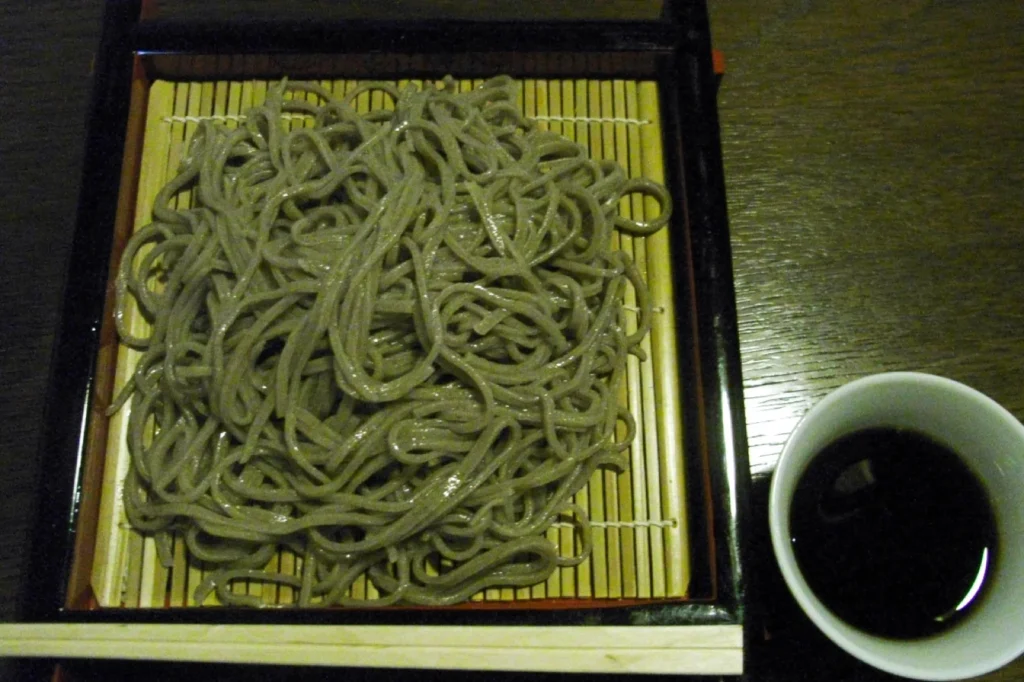
Chichibu is a soba town, and says so: the city counts around sixty soba restaurants in a basin this size, and the Arakawa district out west is the growing area, white with flower twice a year. There is a new-soba festival in autumn. If you only eat one sit-down meal here, make it this one.
The rest of it
- Waraji katsu — a pork cutlet the size and shape of a straw sandal, which is what the name means. Usually two of them, over rice.
- Pork horumon — grilled offal, and the local answer to where to go in the evening. This is the obvious place to put the drinking half of a Botan Kamiina day.
- Okkirikomi — wide noodles simmered with vegetables in a single pot, the regional winter dish.
- Tsutokko — rice steamed in a horse-chestnut leaf, a spring speciality made here.
Beyond the Anime: More to See
None of the places in this section is confirmed as a location from the series. They are here because they are the best of Chichibu and Nagatoro, and because a trip built only around two confirmed scenes would be a thin day.
Chichibu Shrine and the old streets
The shrine at the centre of town is carved and painted and very old, and it is the focus of the Chichibu Night Festival, held on 2 and 3 December every year — float-pulling, fireworks and one of the most serious winter festivals in the Kanto region. The climax is the night of the 3rd. The street alongside it, Banba-dori, is the best-preserved stretch of the old town: paved, lamp-lit and lined with pre-war shopfronts.
The Chichibu pilgrimage, and a once-in-twelve-years year
Chichibu has its own circuit of 34 Kannon temples, about 100 km in all, founded, by tradition, in the Year of the Horse. 2026 is a Horse year, which means the Umadoshi Sokaicho — a special opening held once every twelve years, running 18 March to 30 November 2026. If you are reading this before the end of November 2026, that is an unusual thing to walk into. Temple stamp reception is 8:00 to 17:00 from March to November, with a break from 12:00 to 12:30.
Nagatoro: the river and the ropeway
- Iwadatami: Flat shelves of green schist along the Arakawa, a short walk from Nagatoro Station. Free, open, and the best place in the area to sit down with nothing planned.
- River boats: Flat-bottomed boats run the rapids in season. Operating periods and prices change by year and by water level — check the operator.
- Hodosan Ropeway: Up Mount Hodo behind the station. 1,200 yen return and 700 one way for adults, 600 yen return for children from age 3. About 20 minutes on foot from Nagatoro Station, with a free shuttle bus. Hours differ between weekdays and weekends and change with the season, so check the day you travel.
- Hodosan Shrine: At the foot of the mountain, on the way to the ropeway, and free.
Further out
Mitsumine Shrine sits high in the mountains at the far end of the basin, reached by bus from Seibu-Chichibu; it is a half-day on its own. The Hashidate limestone cave, the dams and the Yoshida district with its rocket festival are all real reasons to come back, and none of them belongs in a one-day plan.
Souvenirs and Where to Buy Them
Two places cover almost everything: the local products centre beside Chichibu Station, and Michi-no-Eki Chichibu. Both are also official map pick-up points, which saves a trip.
- Sake from the town breweries, in bottles small enough to fly home with.
- Whisky, if the shelf has any. Prices reflect the demand.
- Soba, dried, from the Arakawa growing district.
- Miso and miso-potato sauce, so you can make the thing at home.
- Shibazakura goods in spring, which are seasonal and disappear with the flowers.
For the series itself there is no permanent official shop that we could find. The 2026 summer stamp rally and its goods have finished. If a collaboration is running when you travel it will be announced on the Chichibu tourism site, and if it is not, buy the manga and a bottle and call it done.
Where to Stay
The honest answer for most people is that Chichibu is a day trip from Tokyo. But a series about drinking is a poor argument for catching the last train, and staying changes the evening completely.
- Around Seibu-Chichibu Station — hotels and ryokan within walking distance of the station, the bars and the onsen complex in front of it. The right choice if the evening matters, which for this series it does.
- Nagatoro — riverside inns, quieter, and a good base if the second day is the river rather than the town.
- Tokyo, and come out for the day — fine for itinerary A, and the reason itinerary A is written to end in daylight.
Book well ahead for late April, when the shibazakura brings crowds the city warns about itself, and for 2 and 3 December, the fixed dates of the night festival — a Wednesday and a Thursday in 2026, not a weekend. We have not checked availability for any date, so treat both as a reason to book early rather than as a statement about what is still free.
Suggested Itinerary
This is a series about going out with the people you live with, so the trip it suggests is a day out together rather than a hunt. Chichibu town and Nagatoro are the two halves, twenty minutes apart on the Chichibu Railway, and the season decides more here than anything else does.
| Which trip | Chichibu town | Nagatoro | Both in a day |
|---|---|---|---|
| Suits | Breweries, soba, horumon in the evening, the shopping streets | The river, the rock terraces, a shorter and prettier walk | A long but easy day out |
| Transport | All on foot from the stations | Chichibu Railway, about twenty minutes | One railway, one ticket |
| If you are not drinking | Amazake and sake-lees sweets at the brewery shops, miso potato, soba | The boat ride and the walk are the point anyway | No part of this needs alcohol |
| Season | Shibazakura mid-April to early May only; soba festival in autumn | Spring blossom and autumn colour | Year round, with less to look at in winter |
A works on its own and needs no car and no second night. B adds the river. The third section is the one to read if you came for the spring.
A — One day in Chichibu, on foot
- Morning. Laview to Seibu-Chichibu. Pick up the official map at the tourist information centre across from the station before you do anything else.
- Late morning. Walk up to Hitsujiyama Park for the episode 1 location. In season that is the shibazakura slope; out of season it is a hillside with the best view of Mount Buko in the town, and it is free. It is a climb — allow more time than the distance suggests.
- Lunch. Back down into the centre for soba, or miso potato on the way if you would rather keep walking.
- Afternoon. Chichibu Shrine and Banba-dori, then one of the town breweries, then the local products centre by Chichibu Station. If you are doing the Chichibu pilgrimage in its Horse year, Jorin-ji and the other central temples are in this same walk.
- Evening. Pork horumon and a drink, which is the whole point. Then either the onsen complex at Seibu-Chichibu, or the train home.
Not drinking? Swap the brewery for the shrine’s carvings and the evening for an early soba dinner. Nothing in the day depends on alcohol.
B — Two days, adding Nagatoro
- Day one is itinerary A, and you stay the night.
- Day two, morning. Chichibu Railway from Ohanabatake or Chichibu to Nagatoro. Walk down to the Iwadatami first, while the light is on the river.
- Day two, midday. Hodosan Shrine on the way up, then the ropeway (1,200 yen return, twenty minutes’ walk from the station or the free shuttle) for the view back down the valley.
- Day two, afternoon. River boats if they are running and the water allows, lunch by the station, and the train back. Check the return service before you settle in — the Chichibu Railway is not frequent.
If you are coming for the spring
The shibazakura is the series’ opening scene and it has a narrow window: mid-April to early May, past peak in 2026 by 2 May, with a charged period that in 2026 ran only to 30 April. If that is why you are travelling, build the trip around the flowers first and fit everything else around them, go on a weekday if you can, and accept that the late-April weekend is the single busiest thing that happens in Chichibu all spring. There is no autumn shibazakura.
Travel Tips and Etiquette
Drinking, sensibly
- Never drive after drinking. Japan’s limit is effectively zero and the penalties reach the person who poured as well as the person who drove. If your group has a car, one person does not taste anything, all day.
- Drinking in public is legal in Japan, and the series does it on a park bench. Take your rubbish with you, keep the noise down, and do not do it where a facility asks you not to.
- Pace it. Chichibu is a day of walking and hills in the sun, and the trains out are not frequent at night.
- Tasting is not free drinking. Breweries that offer it set their own rules; ask, pay, and do not treat a tasting counter as a bar.
Places not to go looking for
The dormitory, the university and the characters’ homes are not identified by the project and are not identified here. Do not go looking for residential buildings, do not photograph private property, and treat anything that is not on the official map or in this guide as not part of the trip.
Practical
- Seasons. The basin is hot in summer and properly cold in winter. The shibazakura window is short; the autumn colour in the hills is long and underrated.
- Money. Carry cash. Small shops, shrine offices and some local transport prefer it.
- Two railways. Seibu and the Chichibu Railway are separate companies with separate tickets and separate stations. Ohanabatake is the interchange, and it is a walk.
- Crowds. Late April for the flowers and 2 to 3 December for the night festival are the two dates when Chichibu fills up. The city had not published the 2026 traffic restrictions or temporary parking when this was checked on 26 October 2026.
- Mountains are mountains. Mount Buko is a full day’s climb with a real approach, not an add-on.
Plan Your Trip
The one below shares a town with it; the rest are suggested as route pairings rather than shared ground:
- anohana in Chichibu, Saitama — the same town, a completely different afternoon. Chichibu has been an anime destination since 2011 because of it. The two trips share their practical bases — the station, the information centre, the old streets — and we found no location confirmed for both works.
- Food for the Soul in Hachioji and Mount Takao — another series about students, a club and what they eat, on the other side of Tokyo.
- Yuru Camp in Yamanashi and Shizuoka and mono in Kofu and Yamanashi — the next range of mountains west, for more of the same kind of day.
- Bocchi the Rock! in Shimokitazawa, Slam Dunk in Kamakura and Enoshima and Girls und Panzer in Oarai — if Chichibu is one day of a Tokyo trip.
How this guide was put together
This guide was researched and planned from published sources rather than written up from a visit. Checked on 12 October 2026: the official series synopses for which episode each location belongs to; Chichibu City’s own notice correcting the episode number for Mount Buko; the Hitsujiyama Park shibazakura festival information for the 2026 charged period, prices and parking; and the Chichibu Anime Tourism Executive Committee’s announcement of the free paper map and its pick-up points.
What we have not read. The official butai tanbo map is distributed on paper; we found no PDF, digital edition or published list of its spots, so this guide does not reproduce it and does not claim to know what is on its pages. The street-light flags are decoration rather than a numbered trail. Individual restaurant, bar and brewery hours are not verified here.
Written and edited by Nick, who runs Anime Routes Japan from Japan. More about Nick, and about how these guides are made, is on the About page.
The practical details here — opening hours, fares, access and the operators’ own requests — were checked against official sources on 12 October 2026: the work’s own site and its episode synopses, Chichibu City’s tourism service and the Chichibu Anime Tourism Executive Committee’s own notice, and the operators of the railway and the ropeway. The contents of the paper map are not reproduced or guessed at here. Seasons, fares and opening hours change — confirm the ones your day depends on, and leave time to sit on a bench.
This guide currently contains no affiliate links.