Yuru Camp Pilgrimage Guide to Yamanashi and Shizuoka, Japan
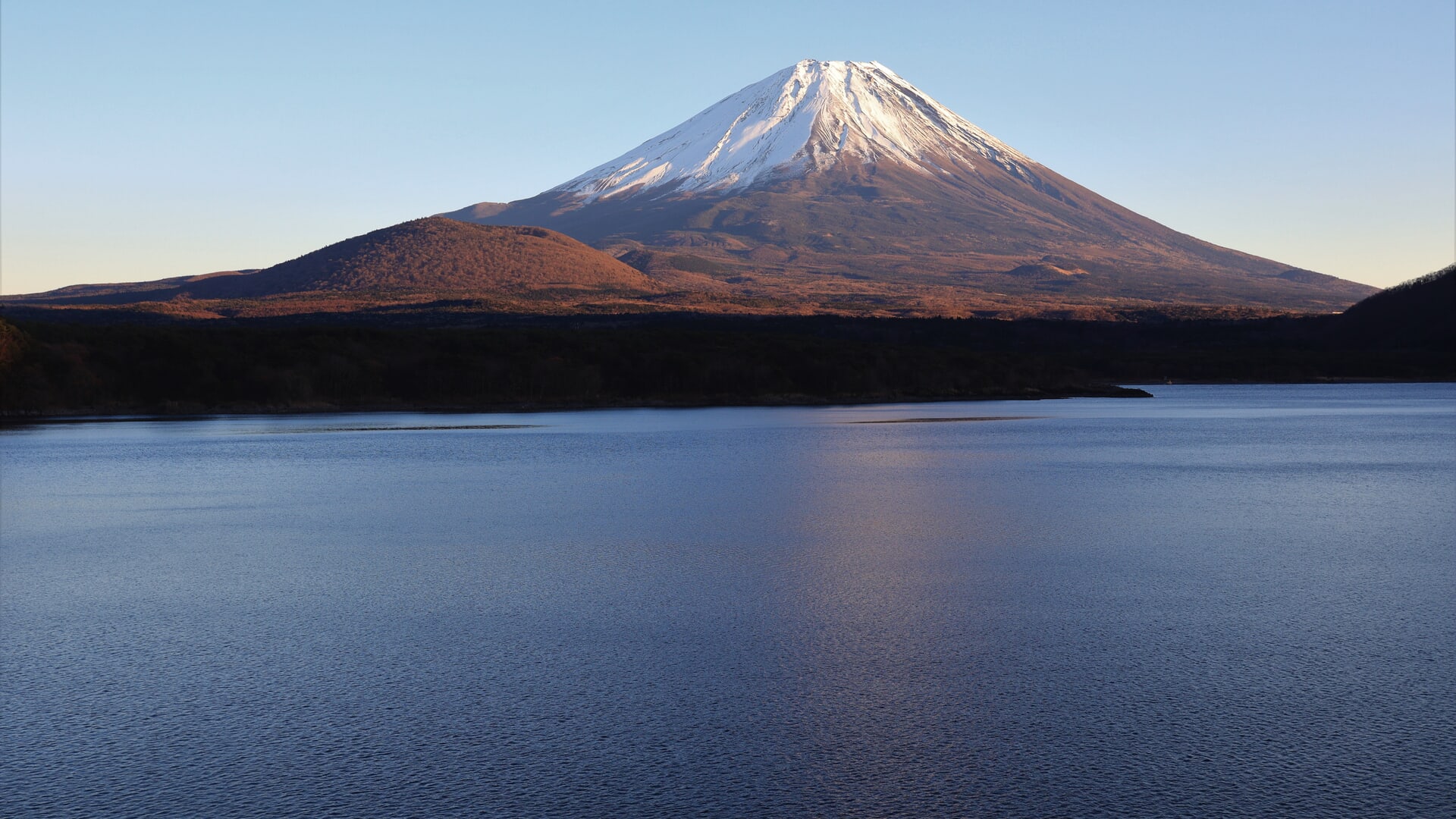
Header photo: Mount Fuji from Lake Motosu, Yamanashi, photographed in 2021. Photo: Alpsdake, CC BY-SA 4.0 (cropped and resized). Source.
The campsites, stations and baths in Yuru Camp are real places, and most of them still do what they do on screen. Yamanashi Prefecture’s own tourism site goes through the first season episode by episode and names the model locations — Lake Motosu, where episode 1 and episode 12 both happen; the station towns of the Minobu Line down the Fuji River valley, and the sweet shop in the temple town itself; Lake Shibire, which you walk in to; Yamanashi City, where Nokuru camps first; and the open-air bath at Hottarakashi Onsen above Kofu. This guide follows that list across southern Yamanashi and over the border onto the Asagiri plateau and Fumotoppara in Shizuoka, and is honest about which parts a train or a bus can reach, which need a booking and gear, and which are simply easier with a car. Two different trips share this map: day visits, which work by train, bus and the occasional taxi, and a camp you have booked, which means gear, a reservation and transport that can carry both. The prefecture’s own episode pages are in Japanese.
Quick Trip Guide
- Destination: Southern Yamanashi (Lake Motosu, the Fuji River valley, Lake Shibire, the hills above Yamanashi City) and the Asagiri plateau in Fujinomiya, Shizuoka
- Best Gateway: Tokyo, then a limited express to Kofu, or the shinkansen to Mishima or Shin-Fuji for the Shizuoka side
- From Gateway: About 1 hour 30 minutes from Shinjuku to Kofu by Chuo Line limited express; the Minobu Line then runs south down the valley towards Fuji
- Main Base: Kofu or Minobu for the Yamanashi side, Fujinomiya for the Shizuoka side
- Getting Around: Trains, a thin bus service and the occasional taxi reach everything in this guide; a rental car is what joins several of them in a day and carries gear
- Car Needed: Not for reaching places — Lake Motosu has three bus round trips a day, Fumotoppara publishes a train-and-bus route, Lake Shibire is a 30-minute taxi from Ichikawadaimon, and the Minobu Line towns and the Yamanashi City hills work by train and taxi. A car is for chaining them in one day and for carrying camping gear
- Recommended Stay: 2 nights, 3 days
- Day Trip: Possible from Tokyo for one lake, but it wastes the point of the trip
- Best For: Yuru Camp readers who want to camp, and travellers who want Mount Fuji from several sides without climbing it
Why This Place Matters in Yuru Camp
Yuru Camp — Yuru Camp△ in Japanese, published and streamed in English as Laid-Back Camp — opens with two girls who do not know each other at a campsite on Lake Motosu in winter. Rin Shima is there alone, because camping alone is how she likes it — her grandfather got her into it. Nadeshiko Kagamihara has just moved to the area and has never camped in her life. The first episode is called 「ふじさんとカレーめん」, Mount Fuji and curry noodles, and that is roughly the whole appeal of the series: a cold lake, a famous view, something hot to eat, and a slow friendship between someone who wants company and someone who mostly does not.
Two ways of camping
The official character pages set the series up in a few lines. Rin is a solo camper who started because of her grandfather, and who camps with somebody else for the first time only after meeting Nadeshiko. Nadeshiko is drawn into camping by that lakeside meeting and joins her new school’s Outdoor Activities Club — Nokuru, as it is called — which Chiaki, the loud one who arrives with the plans and the gear catalogues, founded with Aoi, the calm one with the Kansai accent who quietly looks after everybody. Rin’s friend Ena, who owns a small dog called Chikuwa, is in neither camp and drifts between both.
The series keeps cutting between the two kinds of trip, and that is the thing to carry with you. Episode 5 is titled 「二つのキャンプ、二人の景色」 — two camps, two views. The prefecture’s own page for it sets Nadeshiko’s photograph of the Kofu basin at night from Fuefukigawa Fruit Park beside Rin’s view from the Takabotchi plateau in Nagano, where she has gone alone on her new scooter. Group camping and solo camping on the same night, under the same sky.
What is real and what is not
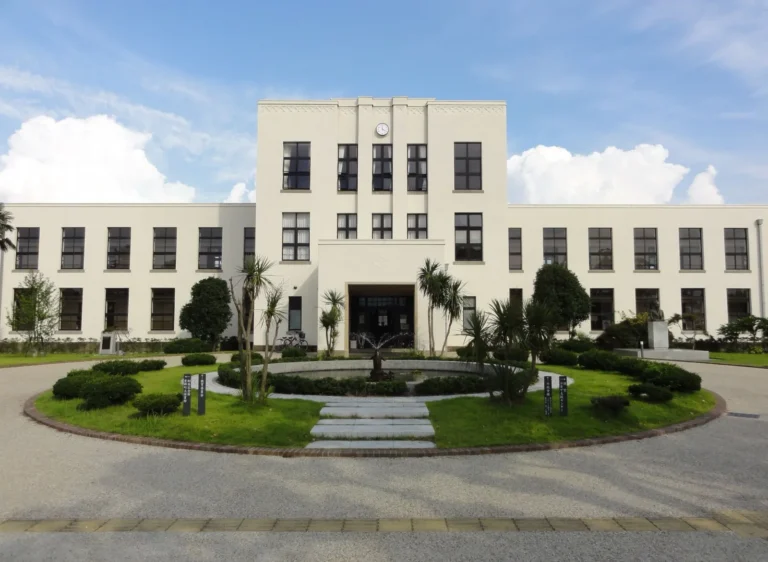
Yamanashi Prefecture’s tourism site publishes a page for each first-season episode naming the model locations, and that is the authority this guide follows for which place is in which episode. Two of its notes are worth repeating. The outdoor shop the characters call Caribou does not exist in Minobu. And the high school the girls attend is drawn from the former Shimobe elementary and junior high school, but the prefecture is explicit that the school buildings and interiors are not model locations; the closed campus is a community facility, opened only at organised events.
The series has kept going since: a second and third season, the short Heya Camp, a film, and a fourth season that the official site lists as scheduled for 2027. The prefecture has a separate series-wide model-location map for the later seasons. This guide is built around the first season, which is where most of these places come from; where something comes from a later season or the film, it says so.
Why winter, and why it is cold
The first season camps from autumn into winter, and so should you if the view is the point: winter is when the air is clear enough for Mount Fuji to stand behind every lake, and when the campsites are quiet. It is also properly cold. These are highland sites, and sub-zero nights are normal.
If you are going to camp, read this first
- Every site in this guide is a working business with its own rules, seasons and reservation system. Book directly, and read the rules page before you arrive rather than after.
- Winter here is properly cold. If this is your first winter camp, go with someone who has done one, or rent gear at a site with a heated building.
- Fires go in a fire stand, never on the grass, and the ash goes where the site tells you.
- Quiet hours are real. So are bans on generators and drones — the Kouan campsite at Lake Motosu bans drones outright.
- If you are only there for the view, use the public car parks and shorelines. The pitches belong to the people who booked them.
Anime Pilgrimage Spots
Organised by area. The Yamanashi side is the lake at the foot of Fuji, the Fuji River valley where Nadeshiko lives and the girls go to school, and the hills above the Kofu basin. The Shizuoka side is the Asagiri plateau above Fujinomiya. Episode numbers refer to the first TV season, as listed on the prefecture’s pages.
Please respect local rules and manners at every location, and follow signs and staff guidance.
Where these places are
The map shows the places below and how far apart they are. It is drawn with OpenStreetMap: opening it loads map images from openstreetmap.org. The list works without it. Fumotoppara is listed with the campsite’s published address only: no position for it is published, so it has a Google Maps link but no pin.
The map could not be loaded. The places are listed below, with their names and a link to each on Google Maps.
- Anime-related places
- Station or transport
- Nearby sight
The 9 places in this guide, 8 of them on the map
- 1Lake Motosu本栖湖Minobu line and Motosu · area positionIn this guideOpen in Google Maps
- 2Minobu Station身延駅Minobu line and MotosuIn this guideOpen in Google Maps
- 3Minobusan Kuonji身延山久遠寺Minobu line and MotosuIn this guideOpen in Google Maps
- 4Lake Shibire四尾連湖Kofu side · area positionIn this guideOpen in Google Maps
- 5Yashajin Pass夜叉神峠Kofu sideIn this guideOpen in Google Maps
- 6Kofu Station甲府駅Kofu sideIn this guideOpen in Google Maps
- 7Asagiri plateau朝霧高原Asagiri, Shizuoka · area positionIn this guideOpen in Google Maps
- 8Fujisan Hongu Sengen Taisha富士山本宮浅間大社Asagiri, ShizuokaIn this guideOpen in Google Maps
- 9Fumotoppara campsiteふもとっぱらAddress only, no published positionIn this guideOpen in Google Maps
Map data © OpenStreetMap contributors, ODbL. Positions were checked on 15 October 2026 against the source recorded for each place; a few are the published position for a large site rather than an entrance.
Lake Motosu — where it starts and where it ends
The Kouan campsite on the western shore is where Nadeshiko and Rin first meet in episode 1, and the prefecture’s page for episode 12 brings them back to it. The view across the water to Mount Fuji is the one printed on the back of the previous 1,000 yen note, issued from 2004 and still legal tender — if you have one in your wallet, hold it up. What you are looking for is the cone standing straight up from the far shore and the shingle beach the first episode spends so long on. Winter mornings are the clearest, which is the whole argument for coming in the cold.
Staying costs, and the numbers are published. The campsite’s own page gives standard-day rates of 800 yen per adult from junior high up and 500 yen per primary-school child per night, plus 1,200 yen per tent, 700 yen per tarp and 1,200 yen per car, with higher rates on holidays and busy periods; a day-camp rate exists. Reservations are made online and you arrive at a booked check-in time, and same-day cancellation is not possible after 15:00 — which is the detail that matters if the weather turns.
If you are not staying, come for the view and use the public viewpoints: the shore inside the site belongs to paying guests and walking through somebody’s pitch to photograph a lake is the single thing most likely to make you unwelcome. The campsite bans drones. You can reach the lake without a car: the Shin-Fuji line runs Shin-Fuji Station, Fujinomiya Station, Lake Motosu and Fujisan Station, three round trips a day under the timetable revised on 13 October 2026. What three departures will not do is let you arrive with a tent and a cool box and leave when you please, which is why most people here have driven.
The Fuji River valley — Nadeshiko’s town and the girls’ commute
This is the everyday half of the series, and the half you can do by train. The Minobu Line runs down the valley from Kofu towards Fuji, and the prefecture’s pages hang several episodes on its stations.
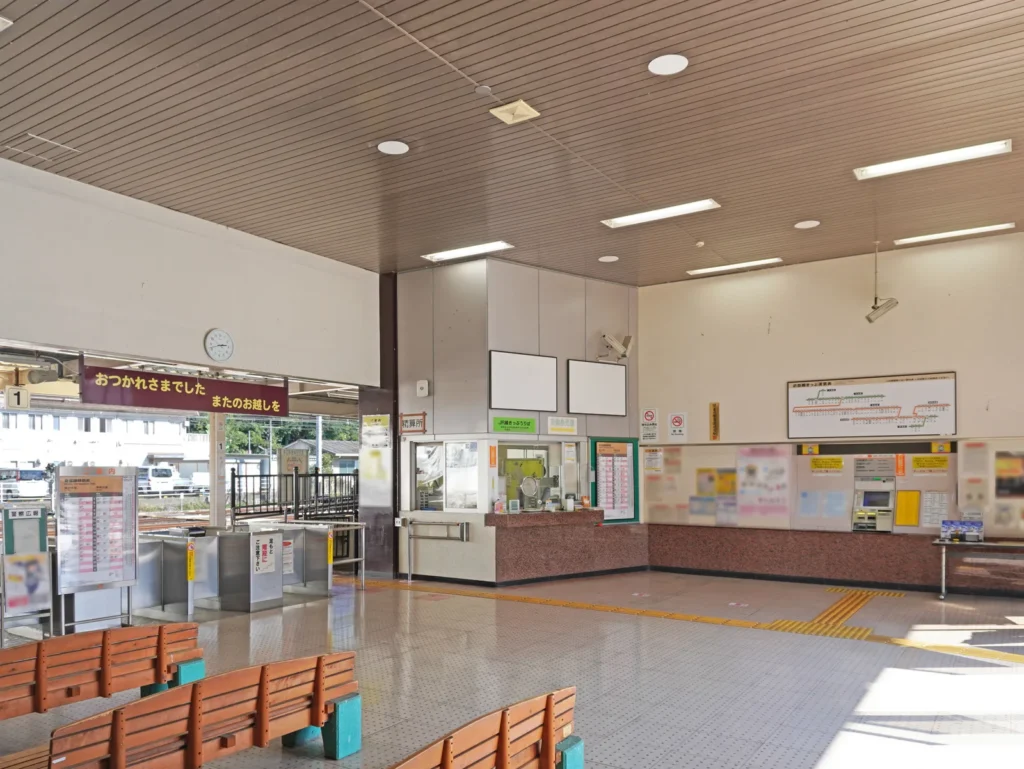
- Utsubuna Station (episode 1), Nadeshiko’s station for school, and Nanbu Bridge over the Fuji River nearby. The prefecture’s episode 3 page shows the Nanbu scenery around the house she has just moved into.
- Kai-Tokiwa Station and the road up from it to the former Shimobe school (episodes 8 and 12), which is the Nokuru members’ walk to school. The station is ordinary and in use; the school, as above, is not open except at events.
- Minobu Station and the Shonin-dori street in front of it (episode 8), the Minobusan ropeway (episode 8) and the confectioner Eishodo, whose Minobu manju gives episode 8 the last word of its title — 「テスト、カリブー、まんじゅううまい」.
- The Selva supermarket in Minobu, the model for the shop where Nadeshiko and Rin find Aoi working a part-time job in episode 6; the prefecture’s episode 3 page pairs it with a former liquor shop nearby, the model for the shop where Chiaki has a job interview. The supermarket is working; buy your camp food there and leave the staff alone.
- Shimobe Onsen (episode 10), the old hot spring village up a side valley, a sensible bath after a night outdoors.
Lake Shibire — the yakiniku camp
Episodes 6 and 7. Nadeshiko and Rin come here together for a meat-grilling camp, and Nadeshiko is seen praying at an old stone monument on the shore — a Fuji-ko pilgrims’ stele, according to the prefecture, because this was one of the lakes Fuji pilgrims visited. It is a small, still lake at about 850 metres, roughly 1.2 km around, forest on every side, with the Suimeisou lodge on the shore; the prefecture notes that the hot chai Nadeshiko’s older sister orders here is sold there.
The whole shoreline is campsite land, so parking is charged even for a look: the prefecture’s page gives 400 yen for a car, 200 yen for a motorcycle and nothing for bicycles, and camping rates come from the lodge. Getting here means a narrow mountain road and then a short walk in. Without a car, a taxi from Ichikawadaimon Station on the Minobu Line takes about 30 minutes, which makes this the one remote location you can reach on a day trip — reaching it and arriving with a tent and a cool box are different problems, and the second one is what the taxi is for.
Also mono: this lake is on the official map for mono, the later series by the same author.
Yamanashi City — Nokuru’s first camp
Episodes 4 and 5 are the club’s first group camp, and the prefecture traces it from JR Yamanashi-shi Station, over Nezu Bridge, up through Fuefukigawa Fruit Park and Hottarakashi Onsen to the Pine Wood campsite. It is the easiest stretch of the series to do without a car.
- Fuefukigawa Fruit Park: a hillside park above the Kofu basin with a night view rated among the New Three Great Night Views of Japan — the view Nadeshiko photographs in episode 5. There is a footbath to wait in. About seven minutes by taxi or city bus from Yamanashi-shi Station, by the park’s own access page.
- Hottarakashi Onsen: open-air baths above the park, opening an hour before sunrise; the club stops here on the way. The bath’s own site gives 900 yen for adults and 400 yen for children, about ten minutes by taxi from Yamanashi-shi Station, open until 22:00 with last entry at 21:30, cash only, and no phones or cameras in the bathing area. Its FAQ says weekday daytimes are the quieter times, and that it will not admit anyone who has been drinking. The prefecture’s page is honest that walking up from the park is hard work.
- Pine Wood campsite: about 1.2 km and a fifteen-minute forest walk from the onsen, according to the prefecture, which also asks that you book before you come and get the manager’s permission before taking photographs.
- Also mono: the fruit park and the onsen are both on the official mono map as well — two of four places the series share. Our mono guide covers this hillside in more detail.
Yashajin Pass — Rin’s road west
In episode 9 Rin rides from Minobu over to Kamiina in Nagano, and the prefecture marks her route through Yashajin Pass in Minami-Alps, where she remarks on the name. The pass is an hour’s walk up from the trailhead. The forest road to the trailhead is open all year according to the prefecture; the climbing bus from Kofu runs only from late June to early November; and the road beyond the gate is closed to private cars in summer and closed outright in winter. It is a mono location too. The rest of Rin’s route — Takabotchi, Kirigamine, Jinbagatayama — is in Nagano, outside this guide.
The Asagiri plateau and Fujinomiya, Shizuoka
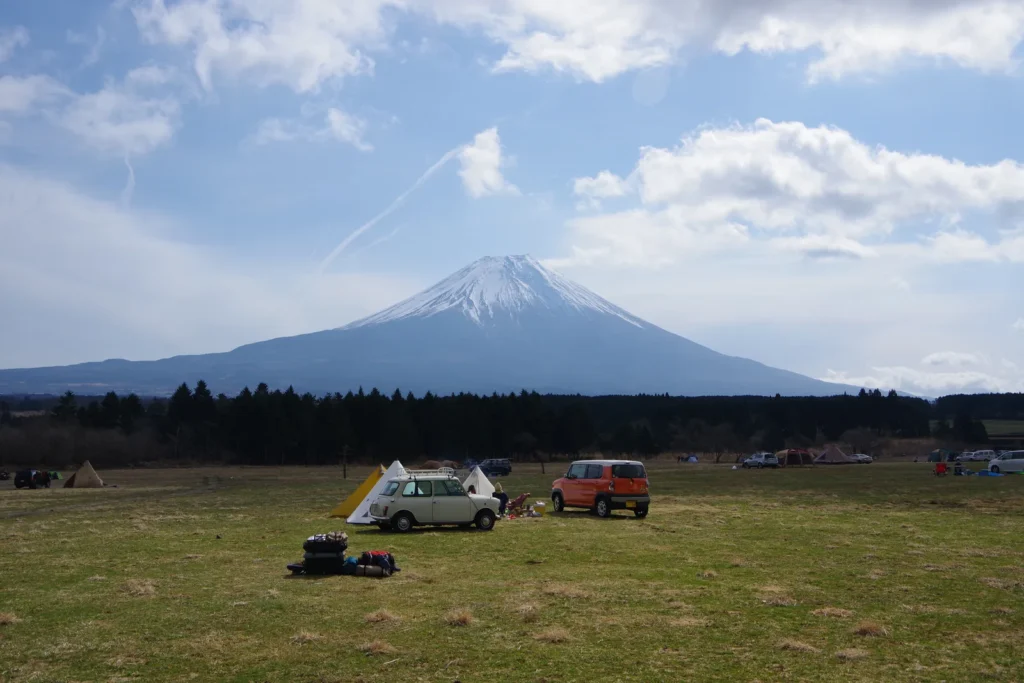
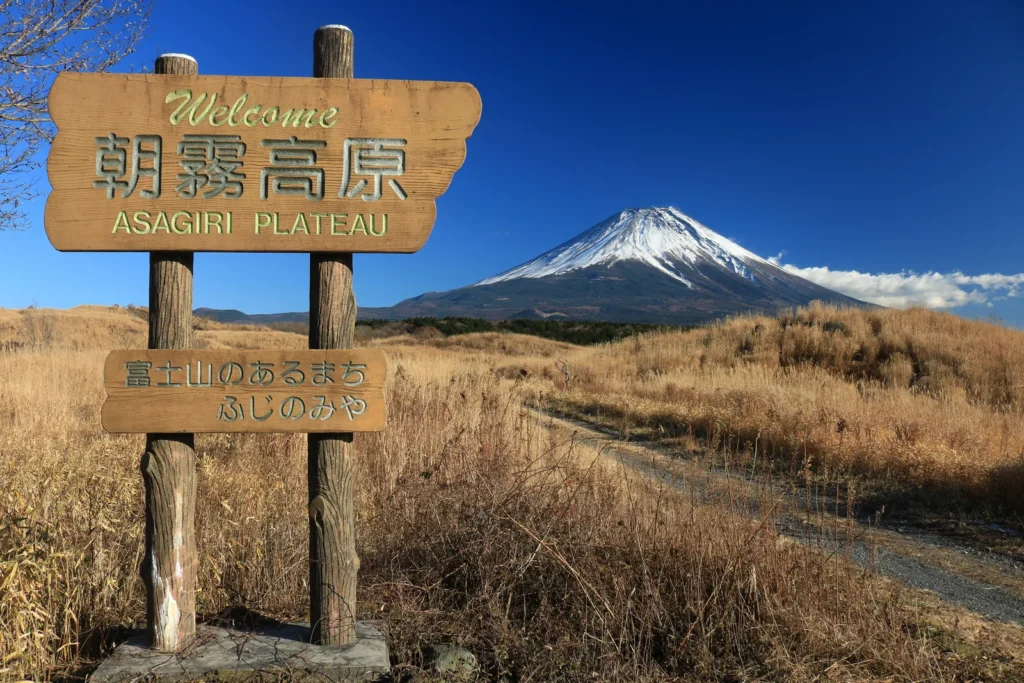
Fumotoppara, an enormous field under the western face of Fuji, is where Rin camps alone in episodes 2 and 3 and Nadeshiko comes to join her. Grassland with nothing between the tents and the mountain, and a great many very cold people in winter. The Asagiri plateau roadside station is on the prefecture’s episode 3 page; the Fuji YMCA eco village in Fujinomiya is the site of the Christmas camp in episodes 11 and 12, and Makaino farm nearby is where Chiaki and Aoi go for farm sweets after arriving early.
This cluster is in Shizuoka, not Yamanashi, which is the practical point: it is a separate base and a separate day from the Minobu Line and the Kofu hillside. The site’s own terms are in Japanese, and its access page recommends arriving by car while also pointing people who come by train and bus at the operator’s timetable; what decides it for you is how much gear you are carrying, the 17:00 cut-off for vehicle movement inside the site, and whether the last bus back suits your day. Fumotoppara is reservation-only for camping and lodging, booked online. Its price list is published as an image rather than as text, and read from that image on 13 October 2026 it gives, tax included, 1,000 yen per person from junior high school age and 500 yen per primary school child for one night, plus 2,000 yen for a normal car and 1,000 yen for a motorcycle or bicycle; day use is half of each. The large-vehicle rate, 4,000 yen a night or 2,000 yen for the day, applies to campervans other than kei-class ones, to trailers including small ones and anything towing them, and to vehicles that seat eleven or more. A kei-class campervan, any other vehicle seating ten or fewer and a hitch carrier pay the normal-car rate. Check-in is 8:30 to 17:00 and check-out 14:00 the next day, 17:00 for day use, with no check-in, check-out or re-entry after 17:00; overrunning is charged at 1,500 yen per booking for each hour. The site’s own rules, which apply here and not at other campsites: no vehicle movement inside the grounds after 17:00, including re-entry; quiet from 20:00 to 08:00, with generators and idling banned outright; no open fires, so bring a fire stand; and no drones. The site itself recommends arriving by car, and links bus timetables from its access page via Fujikyu if you will not be driving.
The Minobu Yuru Camp festival
The one officially organised event of the year, run by the Minobu New Tourism Council rather than by fans. In 2026 it runs on 28 and 29 November: on the Saturday, tours of the school building and a camp on the grounds of the former Shimobe school; on the Sunday, a cast talk show and stalls at the Minobu town cultural hall. Check the council’s page for entry arrangements. Outside the festival the campus is not open as an attraction.
Four places shared with mono
- The same author, あfろ, draws mono, a later series about a school photography club driving around Yamanashi. Houbunsha’s page for its first volume calls it a work by the Yuru Camp author and says it contains a pilgrimage chapter revisiting scenery readers of this series will recognise.
- Four places appear in both works: Lake Shibire, Fuefukigawa Fruit Park, Hottarakashi Onsen and Yashajin Pass. Each is on the official mono map and is named as a model location by the prefecture for this series.
- Minobu and Lake Motosu are Yuru Camp locations in Yamanashi that are not on the mono map, and Fumotoppara is not in Yamanashi at all but over the border in Fujinomiya, Shizuoka. Yuru Camp crosses both prefectures; mono’s fifty-three spots are all in Yamanashi.
- Full details of the mono side are in our mono pilgrimage guide to Kofu and Yamanashi.
Adding a mono day to a Yuru Camp trip
If you are already going to Yamanashi for this series, the four places in both works give you a second day that costs almost no extra travel. Fuefukigawa Fruit Park and Hottarakashi Onsen are on the same hillside above Yamanashi-shi Station, so one taxi ride covers both and they are the Nokuru first camp and a mono location at the same time. Lake Shibire is reachable by taxi from Ichikawadaimon on the Minobu Line, which you are already using. Yashajin Pass is the one to leave out unless you are driving and it is the right season: the climbing bus from Kofu runs only from late June to early November, the road beyond the gate is closed to private cars in summer and closed outright in winter, and it is an hour’s walk up from the trailhead.
In other words, a two-day trip can be Yuru Camp along the Minobu Line on day one and the Kofu hillside on day two, with the hillside doing double duty for both series. The other side of the pairing is in our mono guide.
How to Get to Yamanashi and Shizuoka
There are two front doors to this trip, and which one you use depends on which side of Mount Fuji you want to start on.
Best Gateway
For the Yamanashi side, Tokyo and then a limited express from Shinjuku to Kofu, which takes around an hour and a half. Kofu is the junction: the Minobu Line runs south from there down the Fuji River valley through Minobu and on towards Fuji in Shizuoka. For the Asagiri side, the Tokaido Shinkansen to Mishima or Shin-Fuji and then across to Fujinomiya is the faster approach.
By train
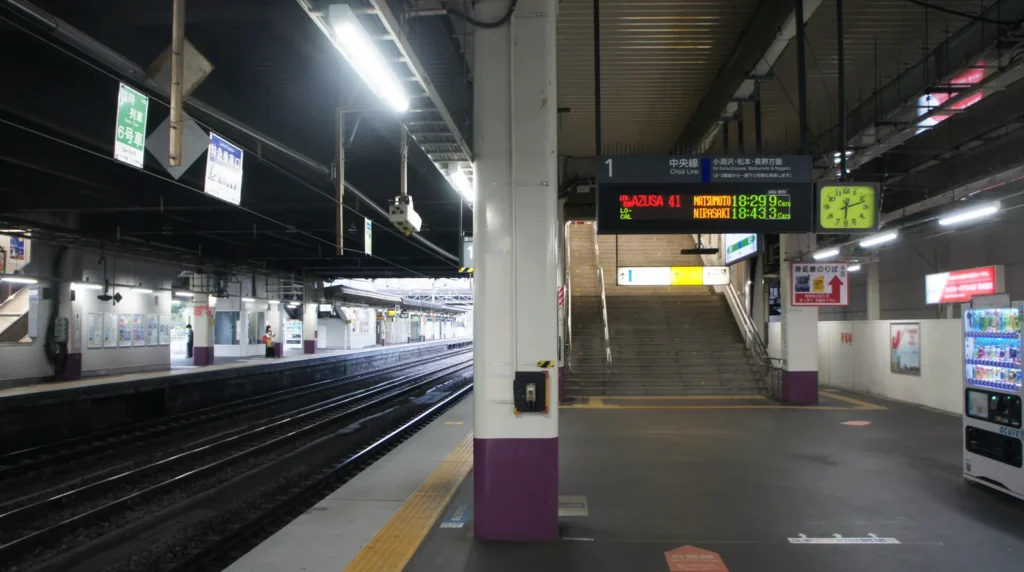
The Chuo Line limited expresses run frequently from Shinjuku to Kofu. The Minobu Line that continues south is a single-track local line through a river valley, and it is slow, scenic and infrequent by Tokyo standards; look up your connection rather than assuming one. If you are travelling on a rail pass, check which of these products it actually covers before you rely on it.
By car
A car is what makes this itinerary work as it is written: it links the lakes, the plateau and the valley in a day and it carries the gear. Reaching the places is a separate question — the lake, the plateau and the towns all have a published service, thin as it is.
The Chuo Expressway reaches Kofu from Tokyo and the Tomei and Shin-Tomei reach Fujinomiya; the road around the western side of Mount Fuji links the two sides in about an hour.
Three things to plan around: mountain roads here are narrow and some close in winter; the plateau and the lakes sit high enough for snow and ice from December to March; and parking at the popular viewpoints fills early on fine winter weekends. Confirm road status and winter equipment with the rental company when you book rather than at the counter.
By bus
Highway buses reach Kofu and Fujinomiya from the Tokyo area and are cheaper than the train. They do not go on to the campsites themselves, so with a tent they are the first leg before a rental car; without one, the local buses and a taxi take over from there.
Best Way to Get Around
Verdict for this route: a rental car if you are camping or doing both sides in one trip, and the Minobu Line with the Shin-Fuji bus if you are not. This is the guide in this series where going car-free costs you the most. The towns are easy by train; the lake and the plateau have a service, but three departures a day set the shape of your whole day.
Rental car
Pick up in Kofu, in Fujinomiya or at one of the shinkansen stations, depending on which side you start. Everything in this guide is within about an hour of everything else by road once you have one. Driving-document requirements depend on the country that issued your licence, so check Japan’s official guidance and your rental company before booking; not every international permit or translated licence is valid in Japan.
Train
The Minobu Line is worth riding for its own sake and is the right way to do the valley without a car. It is a single-track line through the gorge: local trains are slow and infrequent, several terminate short of Minobu, and the Fujikawa limited expresses between Kofu and Shizuoka also stop at Minobu. Note the return departure when you arrive.
Bus
Local buses link Minobu Station with the temple area and Fujinomiya with some of the plateau, and they are built around residents rather than visitors. The one that matters for this trip is the Shin-Fuji line between Shin-Fuji Station, Fujinomiya Station, Lake Motosu and Fujisan Station. It was revised on 13 October 2026 and still runs three round trips a day: the 12:16 from Shin-Fuji became 9:46, and the first departure back from Fujisan Station is now 10:57. Three departures is enough for a day at the lake planned around them, and not enough to improvise with. The operator’s notice of the revision and its route timetables are in Japanese.
Taxi
Taxis wait at Kofu, Minobu and Fujinomiya stations and can be called from the tourist information centres. They are the sensible fallback for the Minobu temple area if you would rather not walk up, and for a one-way trip to a campsite if you have arrived by train and are renting gear on site. Over the distances between the lakes they are expensive.
Bicycle
Rental bicycles are available in Fujinomiya and around the Fuji Five Lakes, and the lake roads are a genuine pleasure on two wheels in autumn. They are not the way to reach the plateau, which is a long climb, and not the way to carry camping gear. Treat cycling as something to do on a spare half-day rather than as transport.
Walking
Two stretches are properly walkable. The shopping street in Minobu climbs steadily from the station area towards the temple gate and is a pleasant half-hour with stops. The path in to Lake Shibire from the car park takes a few minutes and is the only way to reach the lake. Everything else is a short walk from where you parked.
What to Eat in Yamanashi and Shizuoka
The prefecture’s episode pages each end with a food note, which tells you how much of the series is about eating something hot outdoors. Some of these you can buy; some you cook yourself.
Eaten in the series
- Curry noodles (episode 1). A cup of instant curry noodles at Lake Motosu. Bring a stove and a flask.
- Kikyo Shingen mochi (episode 2). The club eats it in the clubroom, and Chiaki shows how to mix the soybean flour and syrup inside the wrapping cloth. Sold all over Yamanashi.
- The onsen-egg fritter at Hottarakashi Onsen (episode 5), a snack sold at the bath. Check the current price on the day.
- Hot chai at Suimeisou, Lake Shibire (episode 6).
- Minobu manju from Eishodo (episode 8), steamed buns with sweet bean paste from the shop on the prefecture’s map.
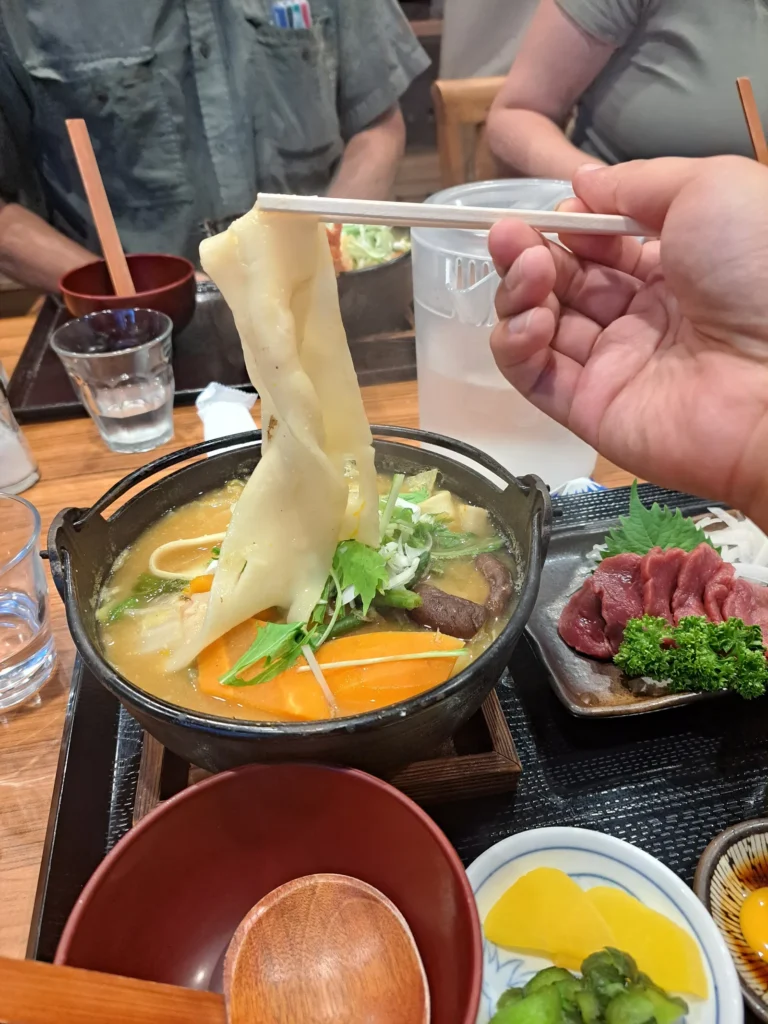
- Hoto (episode 9, on the prefecture’s page): flat wheat noodles stewed in miso with pumpkin and root vegetables, served in the iron pot. The Yamanashi dish, and close to perfect after a cold morning at a lake.
Local, and worth the detour
- Fujinomiya yakisoba, firm steamed noodles fried with lard crisps and dried fish flakes, the obvious lunch on the Shizuoka side.
- Fruit from the Kofu basin, peaches in summer and grapes into October, around the Yamanashi City hills.
- Temple-town sweets on the street up to Kuonji in Minobu, where several confectioners make their own buns.
This guide does not name individual restaurants beyond the places the prefecture links to the series: opening hours change often in towns this size. The tourist offices at Kofu, Minobu and Fujinomiya stations will point you to somewhere open.
Things to Do Beyond the Anime
The camping is half the trip. The other half is the mountain and the things that have grown up around it over the last eight hundred years.
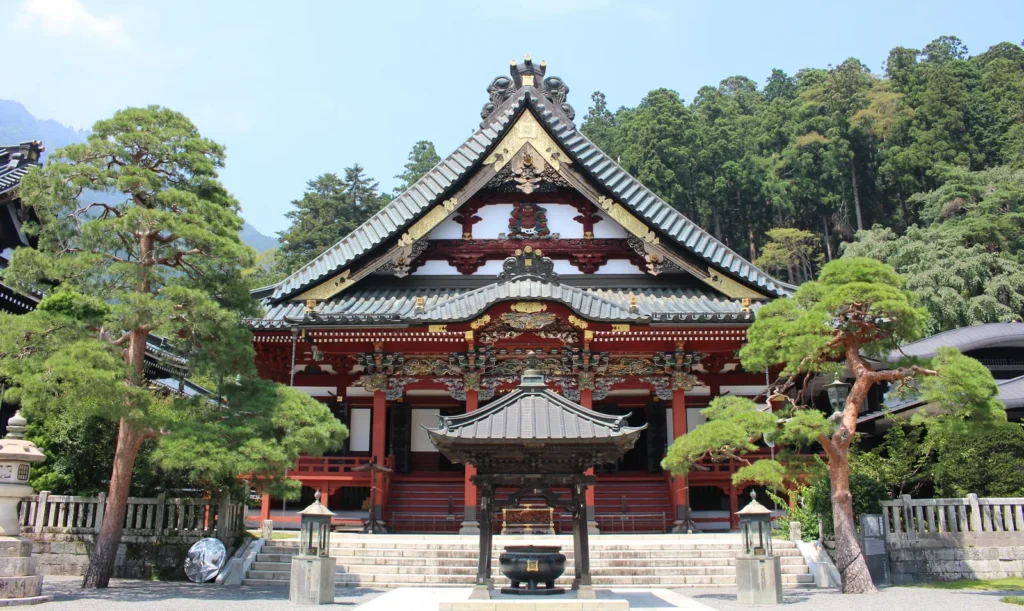
Minobusan Kuonji
The head temple of the Nichiren school, founded in the thirteenth century on a wooded mountainside above the Fuji River. The approach is the point: a long flight of stone steps rises straight from the gate to the main halls, and a ropeway continues from above the temple to the summit, where the view takes in Mount Fuji, Suruga Bay and the Yatsugatake on a clear day. Allow a couple of hours, more if you walk rather than ride.
A ropeway runs from beside the temple to the summit of Minobusan, and appears in episode 8. Under the fares the operator revised on 1 April 2026, a standard return is 1,700 yen for adults (junior high school age and over) and 850 yen for children aged four to primary school; one way is 1,060 and 550 yen. Tax is included. Cars run about every twenty minutes.
Hours change through the year, and the up and down services finish at different times. For the autumn season the operator announced, on 7 October 2026, that services run 9:00 to 16:00 with the last descent at 16:40 until 15 November, and 9:00 to 15:40 with the last descent at 16:20 from 16 November. Those are autumn figures, not a year-round timetable: check the operator’s own notices for your dates, and for any suspension on the day — Minobu Tozan Railway, tel. 0556-62-1081. Discounts exist for groups and for disability handbook holders, and cannot be combined.
Mount Fuji from several sides
This trip sees the mountain from the north-west at Lake Motosu and from the west at Asagiri, and the two look almost nothing alike. Motosu gives you the symmetrical cone over water; Asagiri gives you the full bulk of it rising straight off a grass plain. Doing both in two days is the single best argument for this itinerary over a more conventional Fuji trip.
The Fuji Five Lakes
Lake Motosu is the westernmost and the quietest of the five. Shoji and Sai are next along the same road and take only a few minutes each; Kawaguchi is the busy one with the hotels and the ropeway. If you have a car and a spare afternoon, driving the chain west to east is an easy way to understand the shape of the area.
Fujisan Hongu Sengen Taisha
The head shrine of the Sengen network, in the middle of Fujinomiya, with a spring-fed pond of meltwater from the mountain behind it. It is a ten-minute walk from the station and a natural pairing with a plateau day.
Hot springs
The Fuji River valley has hot springs, and after a night in a tent in February this stops being a cultural experience and becomes a medical necessity. Shimobe Onsen in Minobu is the oldest and best known on this route, a small cluster of inns in a side valley a short distance from Shimobe Onsen Station on the Minobu Line, and some of the inns there open their baths to day visitors. There are also bath houses around Fujinomiya and the lakes. Check day-use hours before you turn up, since many inns only open their baths to non-residents during the afternoon.
Seasonal experiences
Winter is the season the series is set in and the season this trip is best in: clear air, the mountain visible for days, and campsites that are quiet because everyone else has gone home. It is also cold, and the gear has to match it. Spring brings blossom along the valley and the end of the frost. Summer is hazy, hot on the plain and busy at the lakes, and Fuji is often invisible for weeks. Autumn is the compromise: colour in the valley, clear mornings from October, and no ice yet.
What to Bring Home
Yamanashi and Shizuoka both have strong product cultures, and between them they cover most of what you would want to carry back. The roadside stations along the valley and the plateau are the best places to buy, and the car makes them easy.
Regional food
- Shingen mochi – soft rice cakes dusted with roasted soybean flour, with a small pot of dark sugar syrup you pour on yourself. Yamanashi’s best-known confection, sold throughout the prefecture.
- Minobu manju – boxed sweet bean buns from the confectioners on the temple street, each shop with its own recipe and its own opinion about the others.
- Hoto noodle kits – the flat wheat noodles and miso base sold packaged, so you can make the dish at home. Heavier than it looks.
- Fujinomiya yakisoba noodles – the local steamed noodles, sold with the dried fish topping, which is the part that makes the dish.
Drink
- Wine from the Kofu basin – Yamanashi is Japan’s main wine-growing prefecture and Katsunuma, east of Kofu, is the centre of it. Bottles are sold at the stations and the roadside stations, and the smaller producers are worth asking about.
- Green tea from Shizuoka – the prefecture is the country’s best known tea region and Fujinomiya sits inside the growing area. Sold loose, bagged and as culinary matcha.
- Fruit juices and preserves – peaches and grapes from the Kofu basin, which travel much better as jelly and juice than as fruit.
Local products
- Inden lacquered deerskin – a Kofu craft, deerskin finished with lacquer patterns, usually sold as purses, card cases and small bags. Expensive, and made here.
- Crystal and jewellery – Kofu has been a gem-cutting town for centuries and still has a cluster of workshops and shops around the station.
- Camping gear – outdoor shops in Kofu and Fujinomiya, for when the trip converts you halfway through.
Official collaboration goods
Minobu’s tourism council and the shops on the temple street sell series collaboration items, and the range changes with the campaign and peaks around the late-November festival. Buy them in the town rather than online if you want the versions that are specific to it. Elsewhere, the usual anime retailers in Tokyo carry the general merchandise.
Where to buy
- The roadside stations along the Fuji River valley and around the plateau carry the widest range at the best prices.
- Kofu Station and Fujinomiya Station both have souvenir floors for a last-minute stop.
- The temple street in Minobu is the only place to get the town’s own sweets and its local collaboration items.
- Pack liquids and glass in your checked bag, and remember that fresh fruit may not be allowed into your home country.
Where to Stay
This is a camping trip, so the first question is whether you are actually camping. Both answers work, and plenty of people do one night in a tent and one in a bath house.
Campsites
The lakeside and plateau sites are the point of the trip. Most take reservations online, several are reservation-only in the busy seasons, and winter pricing and winter opening vary site by site. Check the operator’s own page for the dates you want rather than a listing site, and read what is included: some sites charge separately per person, per tent, per tarp and per car, which adds up differently than you expect. Several sites also rent equipment, which is the practical answer if you are flying in.
Best area: Kofu
Business hotels around the station, hot spring inns in the surrounding hills, and the limited express back to Shinjuku. This is the right base if you are arriving late, starting early, or not camping at all.
Minobu
Temple lodgings at Kuonji and small inns in the town and at Shimobe Onsen nearby. The quietest and most atmospheric option on this route, and the obvious choice for the festival weekend, which is also when it books out first.
Fujinomiya and the plateau
Business hotels near Fujinomiya Station and a handful of lodges up on the plateau. Convenient for Asagiri and for the great shrine, and about an hour from the Yamanashi side.
Camp or hotel?
If you have never camped in winter, do not make your first attempt at several hundred metres in February. One night at a site with rental gear and a heated building on the premises, with a hotel or an inn for the second night, is a much better introduction than two nights in a tent and a decision never to do this again. Clear winter weekends are the peak for Fuji views, so book both the site and the car well ahead.
Suggested Itinerary
The first question here is not where to go but whether you are actually camping. Visiting the places is a train-and-taxi trip anyone can do; sleeping at the campsites in the series means gear, a booking, transport that can carry it and — in the season the show is set in — real cold. The two trips barely overlap, so decide first.
| Which trip | Day visits, no gear | One camp, the easy way | Rin’s winter, properly |
|---|---|---|---|
| What you do | Minobu Line stations, the Kofu hillside, the lake shore from public viewpoints | One booked campsite, hire or bring gear, drive in | Lake Motosu in winter, plus a pass or two |
| Transport | Train and the occasional taxi. No car needed | A car for the gear and the return time; the lake and the plateau also have a bus | A car, and winter tyres |
| Book ahead | Nothing has to be booked; Hottarakashi publishes its own quieter hours | Yes, with a check-in time | Yes, and check what is open in the cold months |
| Best base | Kofu or along the Minobu Line | The campsite itself | Fuji Five Lakes or Fujinomiya |
Two shapes. The first works without a car and covers the everyday side of the series. The second is built around a car and a campsite booking, and covers the lakes and the plateau. Both leave time for the slow parts, which is rather the point of the show.
Without a car: two days
Day 1 — Nokuru’s first camp, by train and taxi
- Morning. Chuo Line to Yamanashi-shi Station, where the prefecture starts the club’s first camp. Taxi about ten minutes to Hottarakashi Onsen for a morning bath with Fuji across the basin.
- Midday. Down to Fuefukigawa Fruit Park for lunch and the orchards; the onsen-egg fritter at the bath if you skipped breakfast.
- Late afternoon. Stay at the park until dark for the night view Nadeshiko photographs, with a footbath to wait in. Taxi back to the station and on to Kofu for the night.
Day 2 — down the Minobu Line
- Morning. Minobu Line south from Kofu. Local trains are infrequent and some terminate before Minobu, so note the return times before you leave. Get off at Kai-Tokiwa for the Nokuru walk to school if you want it, then continue to Minobu.
- Midday. Shonin-dori in front of Minobu Station and up to the temple street; Minobu manju from Eishodo; hoto for lunch.
- Afternoon. Kuonji and, if it is clear, the ropeway to the summit. Continue south to Utsubuna, Nadeshiko’s station, and on to Fuji for the Tokaido line — or back north to Kofu.
- What the car is actually for. Lake Motosu has the Shin-Fuji line, three round trips a day; Fumotoppara publishes a train-and-bus route as well as driving directions; Lake Shibire is a 30-minute taxi from Ichikawadaimon. What a car buys is joining them up in one day, carrying gear and leaving when you want to — not access on its own.
With a car: three days
- Day 1, Lake Motosu. Pick up the car in Kofu and drive to Lake Motosu. Find the view on the old 1,000 yen note, and if you have booked, pitch at the Kouan campsite where the series begins. Curry noodles at sunset are compulsory.
- Day 2, Fumotoppara. Over the border to the Asagiri plateau in Fujinomiya, Shizuoka, for a booked night at Fumotoppara, or for a look at the plateau and the roadside station if you are sleeping indoors. Fujinomiya yakisoba for lunch.
- Day 3, the valley. North up the Fuji River valley through Nanbu and Minobu, then up to Lake Shibire for the walk in to the water. Return the car in Kofu. If you have a fourth day, swap in the Yamanashi City hills from the no-car plan.
- Late November. Build a weekend around the Minobu festival and book accommodation early; the town fills.
Adding mono
- The Yamanashi City day above is already half a mono day: the fruit park and the onsen are on both maps.
- Add a walking morning in Kofu, which this guide only passes through, and Lake Shibire on the car day, and you have covered three of the four shared places.
- See our mono guide for the Kofu walk and the rest of its fifty-three spots.
Travel Tips & Etiquette
Most of what can go wrong on this trip is weather, roads or campsite rules. All three are manageable if you read up before you leave rather than after you arrive.
- Book the campsite, then the car. Several sites on this route are reservation-only, some take bookings months out for clear winter weekends, and a few close for parts of the winter. Settle the site first; everything else on the itinerary follows from where you are sleeping.
- Read the site’s own rules. Quiet hours, generator bans, fire-pit requirements, whether you may burn wood directly on the ground, and what counts as one pitch all vary. The operator’s page is the authority, and staff will expect you to have read it.
- Winter here is cold. The plateau and the lakeshores sit several hundred metres up and drop well below freezing on clear nights. Summer gear is not enough. If you are renting equipment, confirm it is rated for the season.
- Clear and cold go together. The reason the series is set in winter is that this is when Mount Fuji is visible. Haze in summer can hide it for weeks. If you want the view, accept the temperature.
- Check the roads before you drive. Some mountain roads around the lakes and the plateau close seasonally or after snow, and winter tyres or chains may be required. Confirm with the rental company and the road authority for your dates.
- Fires only where fires are allowed. Use the fire pits or a stand, never the bare grass, and carry out your ash if the site asks you to. Dry grassland in winter burns easily.
- Take your rubbish with you. Many sites do not accept waste, or charge for bags. Assume you are carrying everything out unless told otherwise.
- Carry cash. Campsite offices, small shops and some car parks on this route are cash only, and the nearest convenience store may be a long drive.
- Respect the towns as towns. Minobu and the lake hamlets are places people live and work. Park in car parks, keep out of gardens and driveways, and do not photograph residents or private property.
- Mobile signal thins out. It is fine in the towns and patchy around the lakes and the plateau. Download maps and save your campsite’s directions and phone number offline before you leave the main road.
- Language. Kofu, Fujinomiya and the larger facilities handle visitors routinely. Campsite offices and small shops often do not. A translation app and your reservation details in Japanese will save a lot of time.
Plan Your Trip
If you are deciding where to sleep rather than which work to follow, the base-city planner groups all twenty-three routes by base city. This one is on the Tokyo list as a route that is better with a night, and the page says which seven from Tokyo really are a day trip.
Four things to settle before anything else: the season, the campsite, the car, and whether you are actually sleeping outdoors in winter.
- Accommodation: A campsite on the Asagiri plateau or a lakeside site for the nights that are the point of the trip; Kofu for an early start or a late arrival; Minobu for a quiet night in a temple town. Book the site directly with the operator and read the cancellation terms, which are often stricter than hotel terms.
- Transport: Reach Kofu by Chuo Line limited express from Shinjuku for the Yamanashi side, or use the Tokaido Shinkansen to Mishima or Shin-Fuji for the Shizuoka side. Follow the car-free itinerary by local train, bus and taxi; the driving itinerary uses a rental car to connect distant stops and carry camping gear. Check which services your rail pass covers.
- Rental cars: Recommended, and effectively required if you are camping. Reserve early for winter weekends, ask for winter tyres between December and March, and check that your driving documents are valid in Japan before you book.
- eSIM and mobile data: Useful for road conditions and weather more than anything else. Check the coverage map for the operator you plan to use, and save maps offline for the plateau and the lakes.
- Tours and activities: Nothing here needs a guided tour, but gear rental, campsite reservations, the Minobusan ropeway and the late-November festival events should all be checked for operating status and booked ahead where possible.
The guides below are route pairings: journeys that combine well with this one. They are not guides to the same places.
- Love Live! Sunshine!! in Numazu — the same Shizuoka approach: the Tokaido Shinkansen to Mishima serves Numazu as well as the Fujinomiya side of this trip.
- mono in Kofu and Yamanashi — the exception to the line above. It is by the same author, and four places sit on both official maps, Lake Shibire and the fruit park among them, so it overlaps this trip rather than extending it.
How this guide was put together
This guide was researched and planned from published sources rather than written up from a visit. Checked on 12 October 2026: Yamanashi Prefecture’s episode-by-episode pages for which scene is where and for the episode numbers used throughout; the Kouan campsite’s own page for its rates, the online booking and the 15:00 cancellation rule; Fumotoppara for its reservation-only policy; Hottarakashi Onsen for its prices and the taxi time; Fuefukigawa Fruit Park for its access; and the Minobu New Tourism Council for the festival dates of 28 and 29 November 2026.
Fumotoppara’s fees are published as an image rather than as text, and were read from that image (the price sheet carried on fumotoppara.net, file-dated 20 December 2025) on 13 October 2026 rather than left out; an earlier version of this guide quoted no figure for them. Campsite fees change yearly, so confirm them when you book. Visit lengths and the day-splitting are planning judgements, not measurements, and the four shared mono locations are the ones that appear on both official maps rather than fan identifications.
Written and edited by Nick, who runs Anime Routes Japan from Japan. More about Nick, and about how these guides are made, is on the About page.
This guide currently contains no affiliate links.