Love Live! Sunshine!! Pilgrimage Guide to Numazu, Shizuoka, Japan
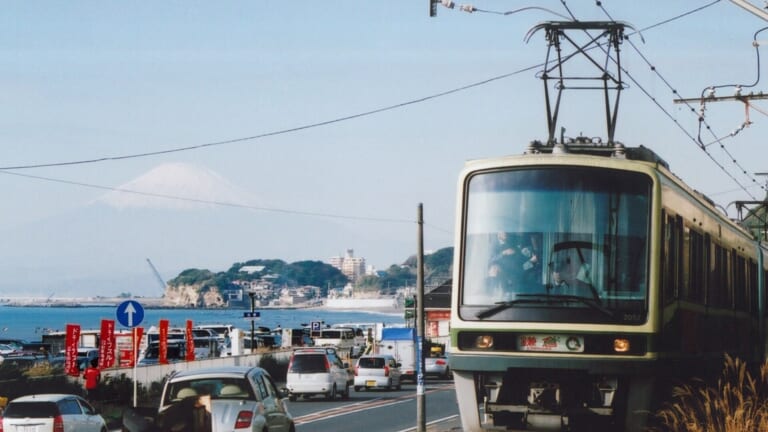
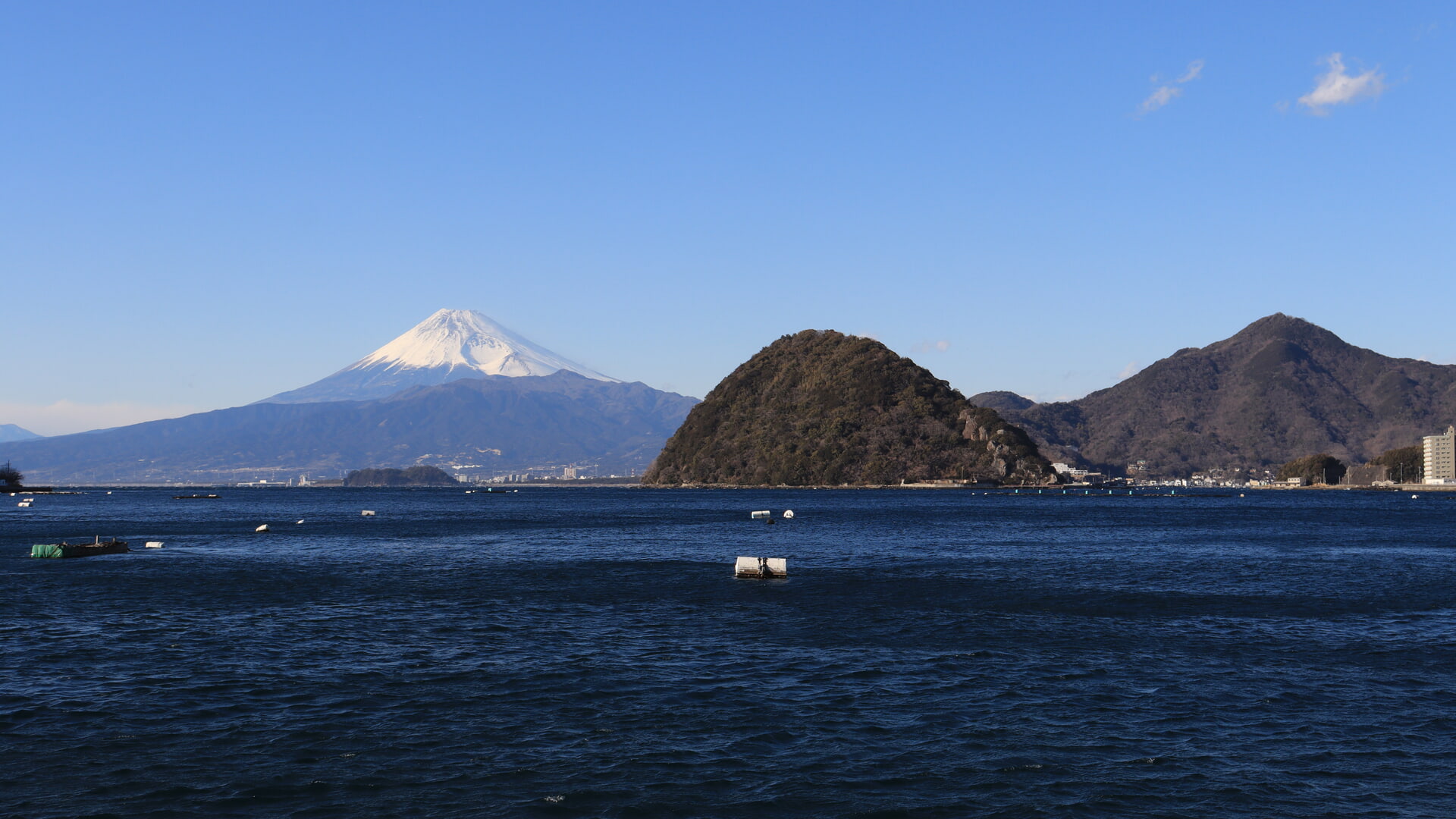
Header photo: Mount Fuji beyond Awashima island across Uchiura Bay, Numazu. Photographed in 2017. Photo: Alpsdake, CC BY-SA 4.0 (cropped and resized). Source.
Uchiura is the rare anime setting that is also the subject of the story. In the sixth episode the girls literally try to film the charms of their own town, get told the video misses the point, and go looking again. Visiting is a version of the same exercise: a bay facing Mount Fuji, fish farms and breakwaters, a castle headland and an island aquarium, and a bus that runs along the shore. Numazu has been chosen as an Anime Seichi 88 pilgrimage site for the series nine years running, according to the city. The choice is the city and the port on foot, or Uchiura by bus: the bus timetable and the aquarium’s last entry decide whether both fit into one day.
Quick Trip Guide
- Destination: Uchiura and Numazu, Shizuoka Prefecture
- Best Gateway: Tokyo, then the Tokaido Shinkansen to Mishima and one stop on the JR Tokaido Line
- From Gateway: Roughly an hour from Tokyo to Numazu Station on a Hikari with the transfer at Mishima; about two hours on the direct JR Tokaido Line. That hour reaches the station, not the bay: Uchiura is a further 35 minutes and 1,040 yen by bus
- Main Base: Around JR Numazu Station, or an inn on the Uchiura shore
- Getting Around: Local buses from Numazu Station to the port and to Uchiura, and walking at both ends
- Car Needed: No. The bus does everything in this guide, and parking in Uchiura is limited
- Recommended Stay: 1 night, 2 days
- Day Trip: Works from Tokyo, and is how most people do it
- Best For: Love Live! Sunshine!! viewers who also want a working fishing port, deep-sea fish and Mount Fuji across the water
Why This Place Matters in Love Live! Sunshine!!
Love Live! Sunshine!! is about a small school on the edge of the sea deciding to be seen. The official synopsis puts it in one breath: Uranohoshi Girls’ High School, a private school in Uchiura, a seaside town in Numazu, Shizuoka — “a small high school in a corner of Suruga Bay” — where nine girls centred on second-year Chika Takami stand up with a big dream. Chika sees the school idols of Tokyo and decides she wants to shine too. Then the school is told it may be merged into one in town, and the group they form, Aqours, sets out to show the world what is good about Uchiura.
Nine girls and a school by the sea
The official episode synopses for the first TV season build the group one member at a time, and each arrival is tied to the town. Chika and her classmate You Watanabe start the school idol club; Riko Sakurauchi, a transfer student from Tokyo, takes some persuading; first-years Ruby Kurosawa, Hanamaru Kunikida and Yoshiko Tsushima — who calls herself the fallen angel Yohane — follow; and the third-years Dia Kurosawa, the student council president, Mari Ohara, the new chairwoman, and Kanan Matsuura turn out to have tried this once before.
What holds it together is the place. When the merger news comes, the group’s answer is to promote Uchiura (episode 6). Their chance to perform at home is the Numazu fireworks festival (episode 9). Their summer holiday is split between a beach hut Chika has to help run and training in every spare hour (episode 10). And when they are stuck, the answer they find in the last episode is that everyone — classmates, the town — loves this place, and should sing with them.
Which series
This guide follows the TV anime, mainly its first season (2016), with the second season (2017) set in the same places. There is also a feature film, and Yohane the Parhelion, a fantasy spin-off, which this guide does not cover. Uranohoshi Girls’ High School is fictional.
The bay itself
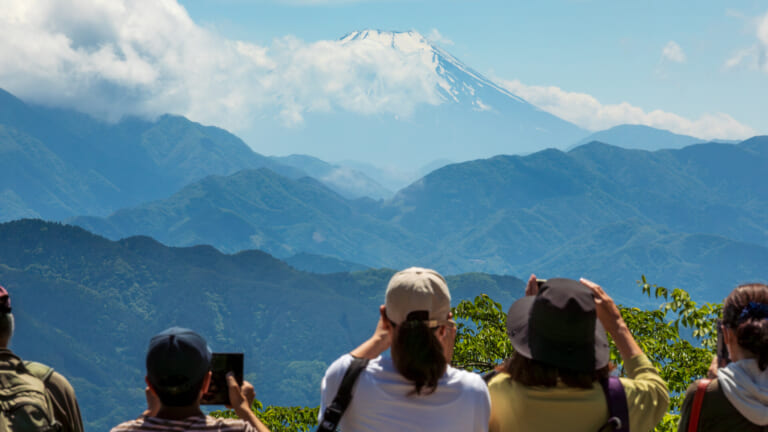
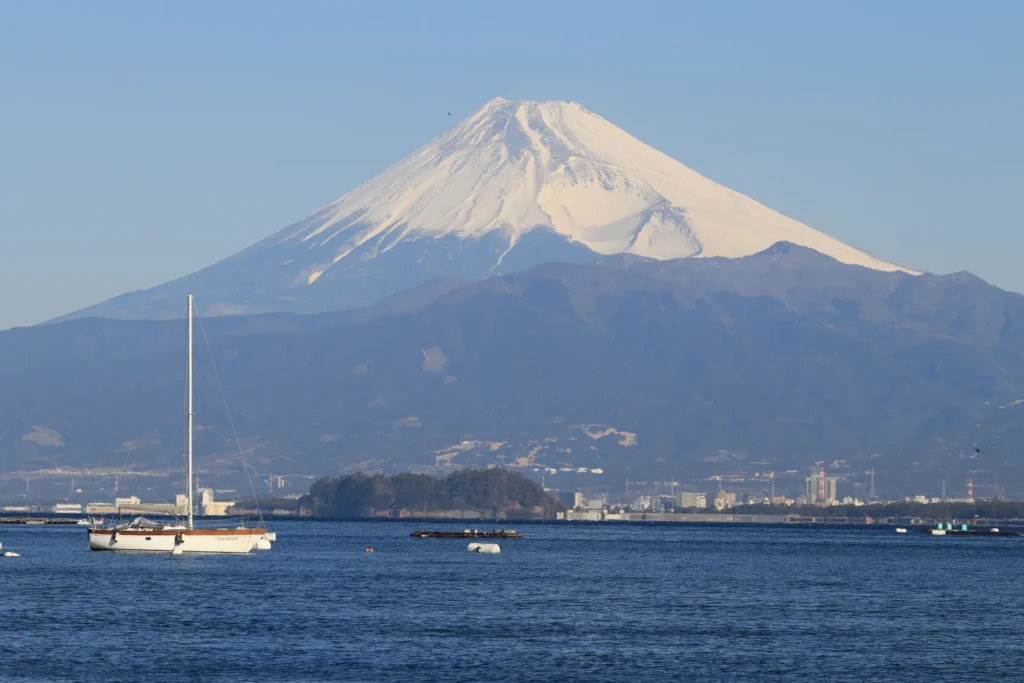
Uchiura faces almost due north, so Mount Fuji sits directly across the water above the rafts and the breakwaters. On a clear winter morning it is the picture the series is built on. In summer the mountain often hides in haze, and the bay becomes the place in episode 10: a beach, a lot of sun, and a lot of practice.
Before you go: this is somebody’s street
- Uchiura is a small residential and fishing community. The houses, the gardens, the boats and the working harbour are private property and private livelihoods.
- Park only in designated car parks. The coast road is narrow, and blocking it blocks the bus, the delivery vans and the fishermen.
- Keep voices down, especially early and late, and do not photograph people’s homes, their windows or their boats as subjects.
- The series’ official pilgrimage notice (Japanese) singles out the Okawa family nagaya-mon gate in Uchiura: it is a private home, and visitors are asked not to enter the property and not to photograph it at all, including the outside. Do not go and look.
- The real school that inspired the fictional one is a school. It is not named in this guide and it is not a destination. Do not go there.
- Character manhole covers may be photographed for personal use. Permission to take a photograph does not extend to commercial reuse.
Anime Pilgrimage Spots
The locations fall into two clusters with a bus ride between them. Uchiura is the bay itself, about forty minutes from the station, and is where the series is actually set. The Numazu city cluster, around the station and the port, is where the collaboration lives: the manhole covers, the shops, the port. Most visitors do Uchiura in the morning and the city in the afternoon, which also happens to be the right order for the light and for the fish market.
Please respect local rules and manners at every location, and follow signs and staff guidance.
Where these places are
The map shows the places below and how far apart they are. It is drawn with OpenStreetMap: opening it loads map images from openstreetmap.org. The list works without it.
The map could not be loaded. The places are listed below, with their names and a link to each on Google Maps.
- Anime-related places
- Station or transport
- Nearby sight
The 6 places on this map
- 1Awashima, Uchiura Bay淡島Uchiura · area positionIn this guideOpen in Google Maps
- 2Nagahama Castle site長浜城UchiuraIn this guideOpen in Google Maps
- 3Izu Mito Sea Paradise伊豆・三津シーパラダイスUchiuraIn this guideOpen in Google Maps
- 4Numazu Station沼津駅Numazu city and portIn this guideOpen in Google Maps
- 5Numazu Port沼津港Numazu city and portIn this guideOpen in Google Maps
- 6Mishima Station三島駅Numazu city and portIn this guideOpen in Google Maps
Map data © OpenStreetMap contributors, ODbL. Positions were checked on 15 October 2026 against the source recorded for each place; a few are the published position for a large site rather than an entrance.
How the locations are grouped
- Uchiura: the bay and the coast road, the Nagahama Castle site, Awashima island, and the aquarium at Mito. 35 minutes and 1,040 yen by bus from stand 3 at Numazu Station; 37 to 42 minutes coming back.
- Numazu city: the station area and Nakamise shopping street, and Numazu Port with the floodgate and the deep-sea aquarium. Walking distance plus a short bus ride.
- The manhole covers move. The city rotates the installation sites every few months, so get the current map from Numazu City rather than from an old blog post.
Uchiura Bay and the coast road
This is the setting: the town the girls set out to promote when their school is threatened. The road along the water, the bus stops, the breakwaters and the aquaculture rafts are the backgrounds the series uses most, and walking between two bus stops is the closest you can get to the everyday half of the show. What is actually there is a working bay — fishing boats, mooring buoys, rafts, a narrow coast road with houses on the inland side, and Mount Fuji across the water on a clear day.
Treat the walk as the attraction and the bus as the constraint. The Tokai Bus route from stand 3 at Numazu Station — service N24, bound for Enashi, Nishiura Line — reaches the Izu Mito Sea Paradise stop in 35 minutes for 1,040 yen, with no change. Services are not frequent, so get off one stop early, walk the shore, and pick the bus up further along. Note the return departure when you arrive: it leaves from stand 2 at the same stop and takes 37 to 42 minutes back.
Stand on the seaward side of the road, never in the carriageway: the bus uses this road and so do the people who live here. Do not photograph houses, gardens or residents as subjects.
The Nagahama Castle site
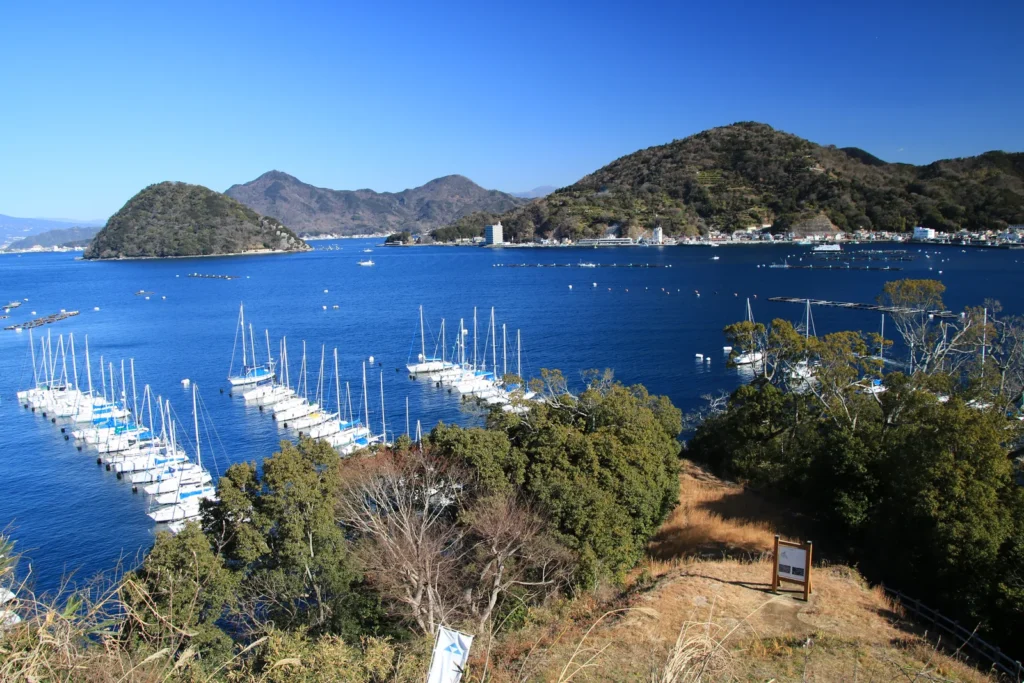
A low wooded headland with a sixteenth-century fortification site on top, and the best free viewpoint over the whole of Uchiura: the bay, the island and the boats in one frame. If you want the line in the synopsis about a small high school in a corner of Suruga Bay to make sense, this is where it does. Allow half an hour including the climb.
It is a short walk from the coast road bus stops, and the climb is brief but steep in places on an unsurfaced path — not somewhere to go in bad weather or after dark, and not somewhere to take a wheeled suitcase. There are interpretive boards and no staff, so keep to the paths and take your rubbish with you.
Awashima
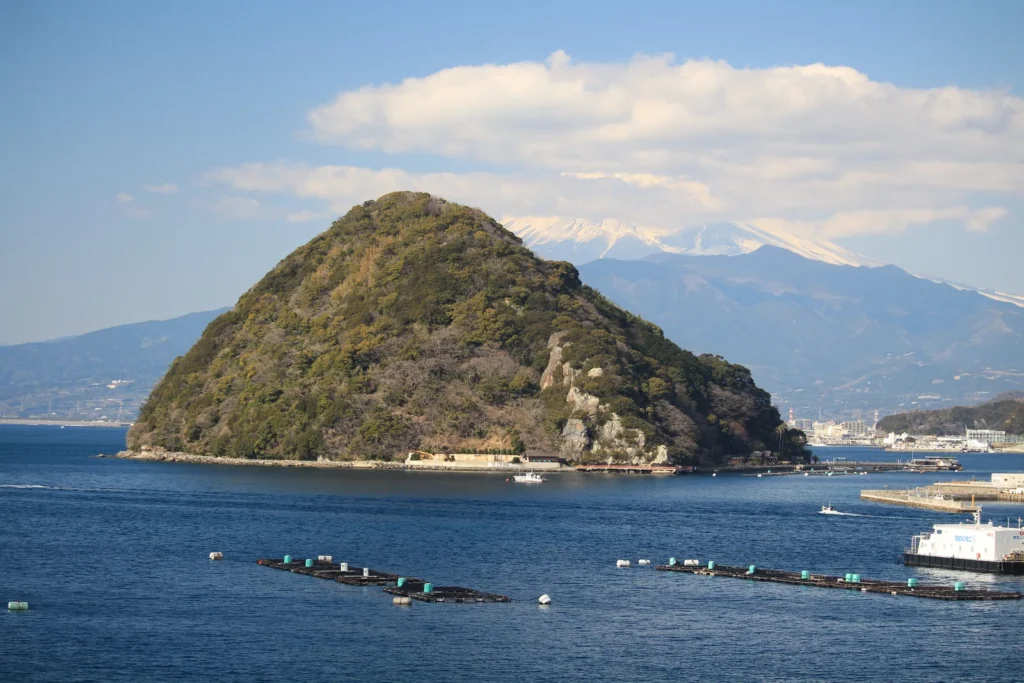
Awashima is the wooded island a few hundred metres off the Uchiura shore and the single most recognisable silhouette in the bay. It is in the background of the series constantly for the simple reason that it is in the background of the town. From the mainland it rises steep and green straight out of the water, and the view costs nothing from anywhere along the shore.
The island itself is a separate decision. It is reached by a short ferry from the Awashima landing, and the marine park on it has closed and reopened in recent years, so check whether it is operating before you build a morning around the crossing. The best light on the island is in the morning, with the sun behind you and Fuji to the north — another reason Uchiura belongs in the first half of the day.
Izu Mito Sea Paradise
The aquarium at Mito sits on the Uchiura shore with dolphin and sea lion programmes, tanks of Suruga Bay species and a terrace looking straight out at the water. It is part of the Uchiura the girls are trying to sell, and it is the rainy-day answer on this side of the trip, which matters because the rest of Uchiura is a walk along an exposed coast road.
It opens 9:00 to 17:00 with last admission at 16:00, which is the figure that decides whether it fits after the coast walk. Admission was revised on 1 April 2026, so take the price from Izu Mito Sea Paradise’s own site rather than from an article. There is a stop outside on the same Uchiura bus route, so it pairs naturally with the shore. Follow the signage and staff instructions, particularly around the animal programmes.
Numazu Nakamise and the station area
This is where the city meets the series. Numazu has worked with it for years, and the covered shopping street north of the station is an ordinary provincial arcade with a steady undercurrent of collaboration running through it: shop displays, seasonal campaigns, and whichever character manhole covers are currently installed nearby. It is also the practical place to buy goods, which makes it the right last stop rather than the first.
The manhole covers move. The city rotates the installation sites every few months, so get the current map from Numazu City on the day rather than following an old post. Walk out of the north side of JR Numazu Station and you are there. These are working shops with regular customers: buy something if you are spending time inside, and do not block an aisle or the pavement to photograph a display.
Numazu Port
The port is where you eat. It is the city’s working fishing harbour a short bus ride south of the station, with a fish market, a dense cluster of restaurants, the tall Byuo observation floodgate over the harbour mouth and the deep-sea aquarium. The Numazu fireworks the group performs at in episode 9 are the city’s real summer festival, held on the Kano River in town rather than here.
- Numazu Deepsea Aquarium: usually 10:00 to 18:00 with last admission half an hour before closing, with seasonal variation and a maintenance closure in winter. Check the Numazu Deepsea Aquarium site for your dates.
- Byuo floodgate: its own hours and a small charge, with shorter hours on one day of the week. The gate is a Numazu City facility, so check its page before you walk down expecting to go up.
- Getting there: bus from Numazu Station, roughly 10 to 20 minutes depending on the operator and route, or about half an hour on foot in good weather.
Eat first, then decide. The market and the restaurants are busiest in the middle of the day and several close in the afternoon, so the port rewards an early lunch and a late aquarium rather than the other way round. It is a working port: keep out of the market’s loading areas and do not photograph traders or their catch without asking.
How to Get to Numazu
Numazu is one of the easiest pilgrimage destinations in Japan to reach from Tokyo, which is why so many people do it as a day trip.
Best Gateway
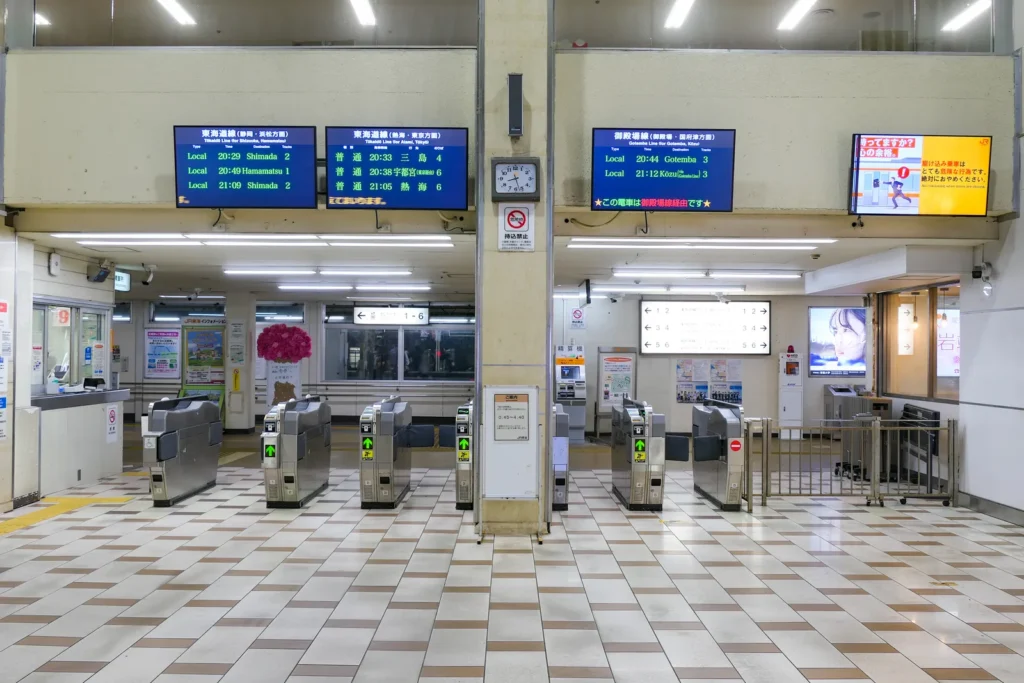
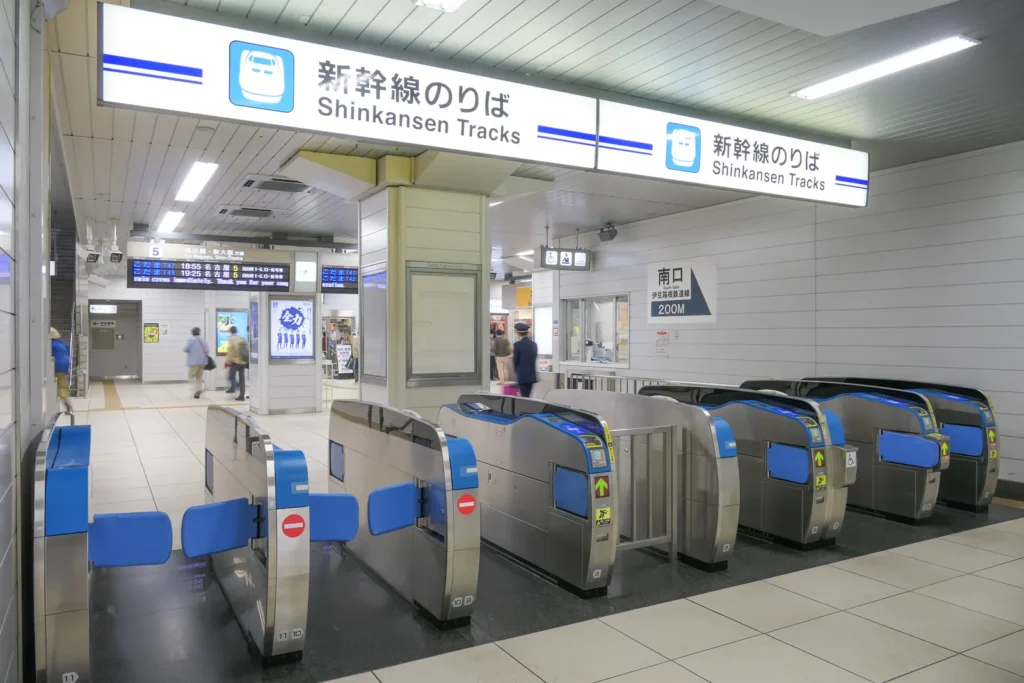
Tokyo. The fast route is the Tokaido Shinkansen to Mishima and then one stop on the JR Tokaido Line to Numazu, which comes to roughly an hour in total on a Hikari including the change. Mishima is a straightforward transfer: the shinkansen and the conventional lines share the station.
Planning the Uchiura bus, which is the whole trip
- One Tokai Bus route along the coast serves every location in Uchiura. It runs from stand 3 on the south side of Numazu Station and takes 35 minutes to the Mito aquarium stop, 14.3 km and 42 stops away, for 1,040 yen.
- It is not frequent, and the gaps between services are long enough to lose an afternoon. Look your own date up before you leave, not when you arrive: open the Tokai Bus stop, route and fare search, type 沼津駅 as the departure and 伊豆三津シーパラダイス as the destination, set your date, and run it again in the other direction for the way back. Tokai Bus’s main website is suspended at the time of writing and its own notice names this search as a service that is still usable.
- Photograph the timetable at the stop the moment you get off, so you know your last way back while you still have options.
- Buses here may not take IC cards on every service. Carry small notes and coins.
- If you miss the last bus, a taxi back into the city is possible but not cheap. The timetable is the cheaper plan.
By train from Tokyo
If you are not in a hurry, the direct JR Tokaido Line from Tokyo runs to Numazu without a change in around two hours and costs considerably less than the shinkansen. Whether that trade is worth it depends on your pass and your patience. If you are travelling on a rail pass, check which products cover the Tokaido Shinkansen before you rely on it, because several do not.
From the west, Numazu is on the same Tokaido Line, with Mishima again as the shinkansen connection.
By bus
Highway buses run from the Tokyo area to Numazu and Mishima and are cheaper than the train at the cost of roughly twice the time. For a day trip they rarely make sense; for an overnight with luggage they sometimes do.
By car
Numazu sits on the Tomei Expressway and the drive from Tokyo is straightforward. The problem is the other end. The Uchiura coast road is narrow, parking in the hamlets is extremely limited, and informal parking has been one of the real frictions between visitors and residents over the years. There are car parks at the aquarium and at a few of the larger facilities, and very little else. If you drive, use designated car parks only, and seriously consider leaving the car in the city and taking the bus out to the bay; it is the one trip in this series of guides where a car makes the day worse rather than better.
Best Way to Get Around
Verdict for Numazu: car-free is not just possible, it is the better way. One bus route covers the whole of Uchiura, another covers the port, and both start outside Numazu Station. The constraint is frequency, not coverage.
Bus
Buses do almost all the work here. Tokai Bus runs along the Uchiura coast from stand 3 at Numazu Station, 35 minutes and 1,040 yen to the Mito aquarium stop, and separate services run from the station down to Numazu Port in roughly 10 to 20 minutes. These are ordinary regional route buses: not frequent, and thinner at weekends and in the evening. Look your date up on the Tokai Bus stop, route and fare search before you travel, and photograph the timetable at the stop when you arrive in Uchiura so that you know your last way back.
Train
The JR Tokaido Line is how you arrive and, if you are adding Mishima or the Izu Peninsula, how you move on. Numazu Station is also the junction for the Gotemba Line, which runs north towards the foot of Mount Fuji.
Walking
Both clusters are walking at the far end. In Uchiura the whole point is to walk the coast road between the bus stops, which is flat, exposed and around a kilometre or two depending on where you get off and on; there is no pavement for parts of it, so walk facing the traffic and step off when a bus comes. In the city, the station, Nakamise and the arcades are a few minutes apart, and the port is about half an hour on foot along the river if you would rather not wait for a bus, which is a pleasant walk in anything but summer.
Bicycle
Rental bicycles are available around the station and turn the gap between the city and the port into a ten-minute ride. The Uchiura coast road is rideable but has no shoulder in places and carries buses, so it suits confident riders rather than a casual first outing.
Taxi
Taxis wait at Numazu Station and are the fallback if you miss the last bus out of Uchiura, which is a real possibility rather than a theoretical one. The fare back into the city is not trivial, so it is worth knowing the timetable instead.
What to Eat in Numazu
Numazu lands more fish than almost anywhere else on this coast, and Suruga Bay is deep enough to produce species most of Japan never sees. Three things are worth planning around.
Aji no himono
- What it is: Horse mackerel split, lightly brined and dried, then grilled. The drying concentrates the flavour and firms the flesh, so it tastes nothing like the same fish served fresh.
- Why it is local: Numazu is the largest producer of dried horse mackerel in Japan, and himono here is an industry rather than a souvenir line. The smell of it drying is part of the port.
- Where travellers commonly find it: Breakfast at an inn, set meals at the port, and vacuum-packed to take home from the market. Order it grilled and eat it with rice; that is the whole idea.
Suruga Bay seafood
- What it is: Whatever the boats brought in. Sakura shrimp in season, squid, white fish, and the deep-water species the bay is known for, served as sashimi, in rice bowls or fried.
- Why it is local: Suruga Bay is the deepest bay in Japan, which is why the city has a deep-sea aquarium and why the market sells things you will not recognise. The catch changes through the year rather than being a fixed menu.
- Where travellers commonly find it: The restaurant cluster at Numazu Port, which is dense enough that the queue outside a place at noon tells you most of what you need to know.
Numazu burgers and the port snacks
- What it is: Deep-fried fish in a bun, made with whatever the port has, including deep-sea species. Less a tradition than a local invention, and better than that description suggests.
- Why it is local: It exists because the port had fish that did not sell well as sashimi and someone decided to batter them. It has become a Numazu Port fixture.
- Where travellers commonly find it: Stalls and small shops around the port. Good as a walking lunch if you want to keep moving rather than sit down.
A note on restaurants
This guide does not name individual restaurants. Opening hours and closing days change constantly at a port, and sending every reader to the same counter helps neither the city nor the reader. The tourist information centre at Numazu Station keeps the current list.
Things to Do Beyond the Anime
Uchiura is half a day. This is the half that decides whether the trip was worth making, and in Numazu it is mostly about water and the mountain above it.
Mount Fuji across the bay
Uchiura faces north, which puts Mount Fuji directly across the water from the Numazu shore. In winter, when the air is clear and the mountain is snow-covered, the view from the coast road is as good as any paid viewpoint in the country, and it costs nothing. Mornings are generally clearer than afternoons, and the mountain is often invisible in summer haze, so treat a clear day as luck rather than a plan.
Senbonhama and the city shore
North-west of the city centre, a long pine grove runs behind the beach along Suruga Bay, planted centuries ago as a windbreak and now a walking and running park with the mountain at one end of the view and the Izu peninsula at the other. It is a twenty-minute walk or a short bus ride from the station and is the easiest green hour in Numazu.
The deep sea
Suruga Bay drops to around two and a half thousand metres, which is why Numazu has an aquarium devoted to deep-sea species and a preserved coelacanth on display. If you have an afternoon at the port and the weather has turned, this is the thing to do with it.
Mishima, next door
One stop up the line, Mishima has a large shrine in the middle of town, a spring-fed river running through a park, and a long suspension footbridge south of the city with a Fuji view. It is the obvious add-on if you are already changing trains there, and it works as a half-day.
Seasonal experiences
Winter is the best season here and it is not close: clear air, the mountain visible for days at a time, and the port at its best. Spring brings sakura shrimp and blossom along the Kano River in Mishima. Summer is hot, hazy and busy with beach traffic, and Fuji is usually hidden. Autumn is pleasant and quiet, with the air beginning to clear again from October.
What to Bring Home
Numazu is a fishing port, so the souvenir question answers itself, but there is more here than fish.
Regional food
Vacuum-packed himono is the obvious one and the market sells it in every grade and size. Sakura shrimp, dried or in a jar, travels well. Local sake and shochu from the Shizuoka breweries are easy to carry. Before taking food or alcohol home, check your destination’s customs rules and your airline’s baggage and liquid restrictions, and remember that dried fish is pungent enough to need double-wrapping in a suitcase.
Crafts
Shizuoka’s craft tradition runs to woodwork and lacquer, and Numazu’s shops carry small pieces that pack easily: chopsticks, bowls, boxes. The pine grove and the bay also show up endlessly in local prints and ceramics.
Local products
Mikan and other citrus from the slopes behind the bay, green tea from the rest of the prefecture, and wasabi from the Izu valleys. The roadside shops and the market all stock the processed versions when the fresh ones are out of season.
Official Love Live! Sunshine!! merchandise
Licensed goods tied to Numazu have been produced for years and are sold through the city’s own channels, the shops that run the collaborations and licensed retailers, often tied to a campaign with a limited run. Buy through those channels so that you know the goods are licensed and the money reaches the rights holders, and check what is currently available rather than expecting an old campaign to still be running.
Where to Stay in Numazu
Most people do not stay, and that is a defensible choice. If you do, the decision is whether you want the bay in the morning or the trains.
Best area: around JR Numazu Station
The practical base. Business hotels cluster on both sides of the station, you are on the bus routes for both Uchiura and the port, the restaurants and the arcades are a few minutes away, and you can leave early for Tokyo. If you are here for one night this is almost certainly where it should be.
The Uchiura shore
There are inns and small hotels along the bay, and waking up on that shore with the mountain across the water is a different trip from waking up beside a station. The cost is the bus timetable: evening services are thin and dinner options outside your accommodation are limited, so book a plan with meals and plan to stay put.
Mishima
One stop up the line and on the shinkansen, which makes it the better base if Numazu is part of a wider itinerary rather than the whole trip. Business hotels, more evening food than Uchiura, and an easy first train.
If you have tattoos, check the individual inn’s policy before booking. Rules vary widely, and the smaller the place, the more it comes down to the owner.
Day trip or overnight?
A day trip works, and it is how most visitors do this. An hour each way from Tokyo leaves a full day for Uchiura in the morning and the port in the afternoon. The argument for a night is the light: Fuji is clearest early, and the only way to be on the Uchiura shore at eight in the morning is to have slept nearby.
Suggested Itinerary
Numazu is two trips with a bus between them, and the bus is the whole planning problem. Uchiura, where the series is actually set, is 35 minutes and 1,040 yen from the station on a service that is not frequent; the city and the port, where the collaboration lives, are walking distance. Decide which you are protecting before you leave.
| Which trip | City and port only | Uchiura in one day | One night, both |
|---|---|---|---|
| Gets you | Nakamise, the manhole covers, the market, the deep-sea aquarium | The bay, the coast road, Nagahama, Awashima, Fuji across the water | Both, in the right order |
| Travel | On foot plus one short bus | One bus out, one bus back, timed from the stop | Bay in the morning, city in the afternoon |
| Suits | A short stop, bad weather, late arrival | Anyone who came for the setting itself | Most visitors |
| The risk | None to speak of | Missing the return bus | Only the weather |
Both routes turn on two numbers: Uchiura is 35 minutes out and 37 to 42 minutes back from Numazu Station, on a bus that does not run often, so the return trip costs you about an hour and a quarter of travelling and 2,080 yen before you have looked at anything. The other number is the last bus back. On the Monday this was searched, 26 October 2026, it left the Mito aquarium stop at 17:30 and reached Numazu at 18:12 — comfortably after the aquarium’s 16:00 last admission, but not a figure to carry to another date. Check both for your own date before anything else; times below are deliberately loose because the bus, not the sights, sets the shape of the day.
One day: Uchiura and the port
- Morning: First train to Numazu, then the bus out to Uchiura. Walk the coast road between bus stops, climb the Nagahama Castle site for the view over the bay, and look for Fuji while the air is still clear.
- Midday: The aquarium at Mito, or simply more of the shore, then the bus back into the city.
- Afternoon: Numazu Port. Lunch from the market, the deep-sea aquarium or the floodgate, and a walk along the harbour.
- Evening: Back to the station by bus, Nakamise and whichever manhole covers are currently installed, then the train home. Check the last realistic connection before you start the afternoon, not after.
Two days, one night: the recommended trip
Day 1: Numazu city
- Arrive at Numazu, drop bags
- Numazu Port and the market
- Deep-sea aquarium or the floodgate
- Nakamise and the station area
- Dinner in the city
Day 2: Uchiura
- Early bus out to the bay
- The coast road and Mount Fuji
- Nagahama Castle site
- Awashima from the shore
- Izu Mito Sea Paradise, then the bus back
Matching the season to the episodes
- Winter, for Fuji. Clear mornings and the mountain across the bay — the classic Uchiura view.
- Summer, for episodes 9 and 10. The Numazu summer festival and its fireworks on the Kano River, and the beaches of Uchiura in season. Busy, hot and often hazy; book the inn early and expect Fuji to hide.
- Any time, for episode 6. Walk the shore with the question the girls ask: what is actually good about this town? The answer is mostly fish, light and a slow bus.
Where Mishima fits
If you have a third half-day, Mishima is one stop away and is the natural addition: the shrine, the river park and the suspension bridge make a comfortable morning before you take the shinkansen home. Doing it on the way in is tempting but tends to eat the clear morning light in Uchiura, which is the thing you actually came for.
Travel Tips & Etiquette
Numazu is an easy place to visit. Uchiura is an easy place to visit badly, and the points below are mostly about that.
- Uchiura is a village, not a venue. A few thousand people live and work along that coast road. Keep to public space, keep the noise down, and do not treat gardens, driveways, boats or windows as backgrounds.
- Do not go to the school. The real building that inspired the fictional high school is a school. It is not named in this guide, it is not open to visitors, and turning up is the single thing most likely to end the goodwill this community has shown.
- Check the bus before anything else. The Uchiura service is infrequent and thins out in the evening. Photograph the timetable at the stop when you arrive, and work your day backwards from the bus you intend to catch.
- Park only in car parks. The coast road is narrow and informal parking blocks buses, delivery vans and fishermen. If you drive, consider leaving the car in the city.
- The manhole covers move. The city rotates them every few months. Get the current locations from Numazu City, not from an article or an old post, including this one.
- Mount Fuji is a morning thing. Clear air is normal in winter and rare in summer, and the mountain is usually clearest before mid-morning. If it is out when you arrive, photograph it then rather than later.
- Carry some cash. The city and the larger facilities take cards, but regional buses, small shops and market stalls may not.
- The coast road is exposed. No shade, no shelter and wind off the bay. Take sun protection in summer and a windproof layer in winter.
- Photography. Follow the signage and staff instructions in the aquariums and the market. Do not photograph traders, residents or other visitors without asking. Permission to photograph a manhole cover does not extend to commercial reuse.
- Language. The station, the port restaurants and the aquariums handle visitors routinely and have some English. Out in Uchiura, expect much less, and have a translation app and offline maps ready before the signal thins.
Plan Your Trip
Four things to settle first: whether you are coming back the same day, which bus you are catching out to Uchiura, what the weather is doing, and whether you want the aquariums.
- Accommodation: Around Numazu Station for convenience and an early start. The Uchiura shore if the morning view is the point and you are willing to book a plan with meals. Mishima if Numazu is one stop on a longer trip.
- Transport: Tokaido Shinkansen to Mishima and one stop on to Numazu, or the direct JR Tokaido Line if you would rather save the fare than the hour. Local buses from Numazu Station do everything else. If you hold a rail pass, check whether it covers the Tokaido Shinkansen before you rely on it.
- Rental cars: Not recommended for this trip. Uchiura has very little parking and the bus goes everywhere you want to be. If you do drive, use designated car parks only.
- eSIM and mobile data: You will want data for bus times more than anything else. Check the coverage map for the operator you plan to use, and save maps and timetables offline before you head out along the bay.
- Tours and activities: Nothing here needs a guided tour. The aquariums, the island boat and any inn dinner on the Uchiura shore should be checked for operating status and reserved ahead where possible.
The guides below are route pairings: journeys that combine well with this one. They are not guides to the same places.
- Yuru Camp in Yamanashi and Shizuoka — its Shizuoka half — the Asagiri plateau above Fujinomiya — is the same corner of the prefecture, reached west along the Tokaido Line to Fuji and then north on the Minobu Line. Mount Fuji from the land side instead of across the bay.
How this guide was put together
This guide was researched and planned from published sources rather than written up from a visit. Checked on 26 October 2026 in the Tokai Bus stop, route and fare search that the operator names as usable while its main site is suspended: 沼津駅 stand 3 to 伊豆三津シーパラダイス on service N24 (江梨行, 西浦線), 35 minutes, 14.3 km, 42 stops, 1,040 yen, no change; the return from stand 2 on N22 or N24, 37 to 42 minutes, 1,040 yen; and the last departure back on that Monday, 17:30, arriving Numazu 18:12. Checked on 12 October 2026: Tokai Bus for the service pattern; Izu Mito Sea Paradise for its hours and the 16:00 last admission, and for the fact that admission prices changed on 1 April 2026; the Numazu Deepsea Aquarium and the Byuo floodgate for their own hours; the Numazu tourism portal for the manhole-cover installation, which rotates; and the series’ official pilgrimage notice, which is the source for the request not to visit or photograph the Okawa family nagaya-mon gate.
What is editorial. Putting Uchiura in the morning and the city in the afternoon, the suggested walk between bus stops, and the visit lengths are planning judgements built from published times rather than measurements. No price is quoted where the operator has recently revised one.
Written and edited by Nick, who runs Anime Routes Japan from Japan. More about Nick, and about how these guides are made, is on the About page.
This guide currently contains no affiliate links.