Golden Kamuy Pilgrimage: Sapporo & Otaru, Hokkaido
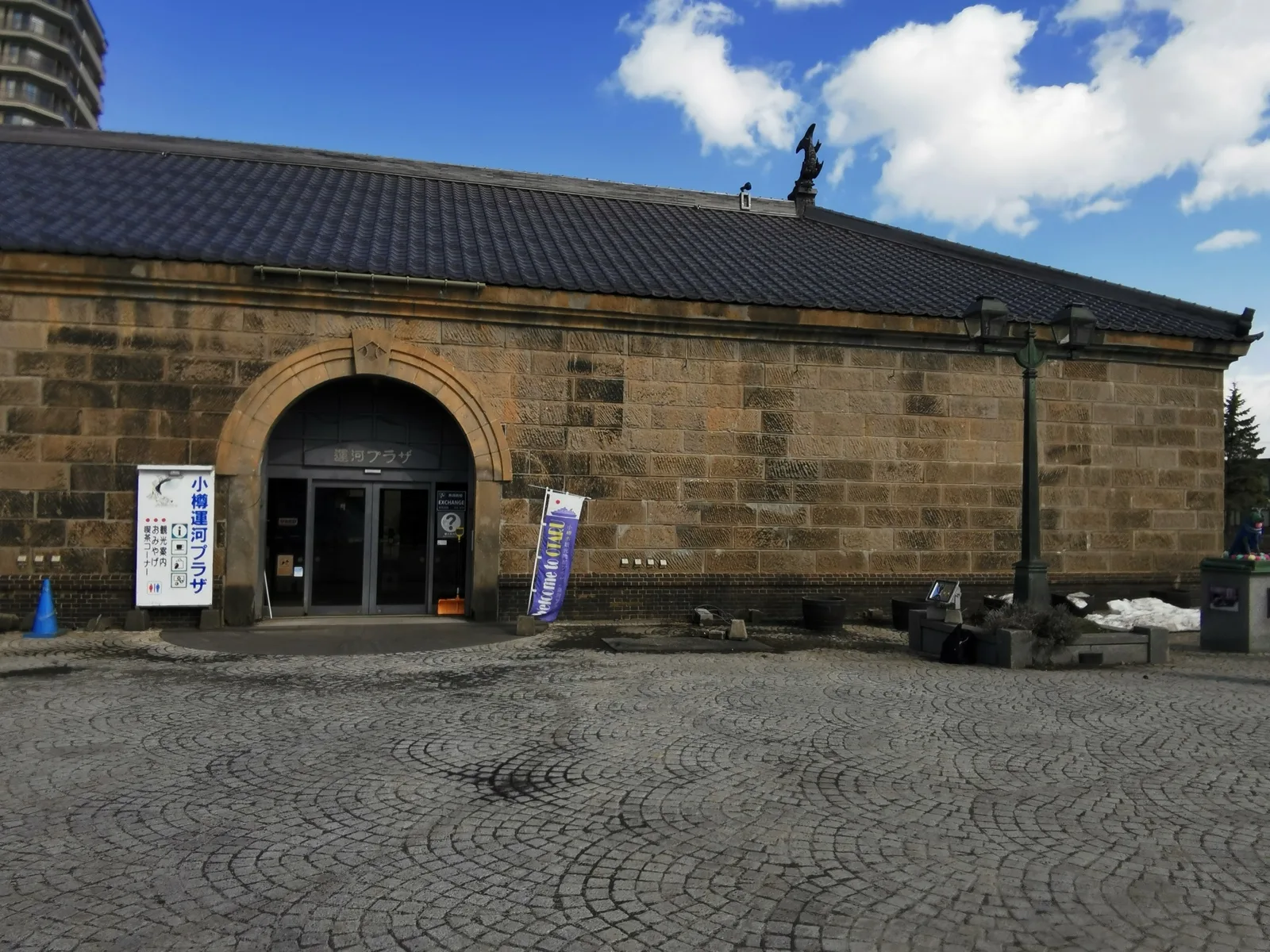
Header photo: the Former Otaru Warehouse beside the canal, the building that houses Unga-kan. Photographed in 2024. Photo: CoFfwqtv, CC BY 4.0 (resized). Source.
Golden Kamuy is a hunt for hidden gold across Hokkaido in the years after the Russo-Japanese War, and Otaru is where the story begins, as the city’s tourism association puts it. What you can see there today is a set of buildings rather than a set of scenes: a railway museum on the site of Hokkaido’s first railway terminus, stone warehouses beside the canal, and the merchants’ and bankers’ buildings of the same period that the tourism association matches to pages of the manga. Sapporo adds the Historical Village of Hokkaido, an open-air museum of relocated buildings that Sapporo’s official tourism site describes as a location for the live-action film. This guide plans both without a car, from Sapporo Station each time: Otaru in one day, or two days with the village, and which day to put first so that neither lands on a closing day.
Quick Trip Guide
- Series: Golden Kamuy (ゴールデンカムイ), the manga by Satoru Noda (Shueisha), the TV anime from 2018, and a live-action film
- Destination: Otaru and Sapporo, Hokkaido — Otaru on the coast west of Sapporo, the Historical Village on Sapporo’s eastern edge
- Best Gateway: New Chitose Airport, then JR to Sapporo: about 37 minutes and 1,230 yen in a non-reserved seat
- From Sapporo Station: Otaru about 34 minutes by JR, 800 yen. The Historical Village by JR to Shin-Sapporo, then a bus of about 20 minutes
- Main Base: Sapporo Station. Both days start and finish there
- Getting Around: Train, one city bus in Otaru, one bus to the village, and walking
- Car Needed: No. Every place in this guide is reached by train, bus and on foot
- Time Needed: A, Otaru in one day: 6 to 8 hours from Sapporo Station and back. B adds a village day of 5 to 7 hours. Both are planning estimates, not official durations
- Closed Days: The Otaru Museum main building closes on Tuesdays. From October to April the Historical Village closes on Mondays. The holiday exceptions are in the itinerary
- Day Trip: Yes. Each day is a return trip from Sapporo
- Best For: readers of the manga, railway history fans, and anyone who wants Meiji-era buildings without hiring a car
Why This Place Matters in Golden Kamuy
The story follows Sugimoto, a veteran of the war with Russia who needs money, and Asirpa, an Ainu girl, as they chase a hoard of gold across Hokkaido. The Otaru Tourism Association places it around 1907, and that is the age of most of what this guide sends you to: buildings put up between the 1880s and the 1900s, some still standing where they were built and some moved to an open-air museum outside Sapporo.
Where the story starts
Otaru’s harbour was a major hub for shipping in that period, and Hokkaido’s first railway was built to bring coal from the inland mines to the port at Temiya, on the north side of the town. The museum that now stands there is the reason a day in Otaru is worth planning: its main building holds the locomotive and the passenger carriage that the tourism association identifies in the manga, indoors, where they can be seen in every season. The canal-side warehouse and the shop and bank buildings a short walk away are the rest of the Otaru day.
Manga, anime and the live-action film
The links between places and the story in this guide come from two published sources, and they are not the same kind of link. The Otaru Tourism Association’s walking guide matches Otaru places to the manga, by volume and chapter; it does not say which of them also appear in the anime, and this guide does not claim that either. Sapporo’s official tourism site describes the Historical Village as a location for the live-action film. It does not say which buildings or scenes, so the village is described below as a film location and as a place in its own right, not as a set of scenes.
What this guide covers, and what it leaves out
The story moves across the whole of Hokkaido, and so do the places associated with it. This guide keeps to what Otaru and Sapporo can give you by train, bus and on foot in one or two days, and it avoids the plot: where a place is tied to the manga, the guide gives the volume the tourism association names and leaves the scene itself to the book.
Where each link comes from
- Otaru Museum main building, Unga-kan and the Former Otaru Warehouse, Taisho Glass, Romankan and the Former Ohya Warehouse — the Otaru Tourism Association’s walking guide, dated 3 April 2023, which ties each to the manga. That page is used here for the links only. Hours, fees and access come from the facilities themselves.
- Historical Village of Hokkaido — Sapporo’s official tourism site, as a location for the live-action film.
- Bank of Japan Otaru Museum and Niikuraya — background and food, not scenes. They are kept in Beyond the Anime and What to Eat and Drink.
Anime Pilgrimage Spots
The Otaru places run in a line from north to south: the museum’s main building at Temiya, then the canal, then the streets towards Sakaimachi and the station. Taking them in that order means one bus at the start and walking for the rest of the day. The Historical Village is a separate day on the other side of Sapporo.
Please respect local rules and manners at every location, and follow signs and staff guidance.
Where these places are
The map shows the places below and how far apart they are. It is drawn with OpenStreetMap: opening it loads map images from openstreetmap.org. The list works without it. Four rows carry an official address rather than a published position, so they have a Google Maps link but no pin.
The map could not be loaded. The places are listed below, with their names and a link to each on Google Maps.
- Anime-related places
- Station or transport
- Nearby sight
The 11 places in this guide, 7 of them on the map
- 1Sapporo StationJR札幌駅Sapporo · start and finish of both daysIn this guideOpen in Google Maps
- 2Otaru StationJR小樽駅Otaru · trains to Sapporo, buses from the terminalIn this guideOpen in Google Maps
- 3Otaru Museum, main building小樽市総合博物館 本館Temiya · Shizuka and the I-1 carriageIn this guideOpen in Google Maps
- 4Former Ohya Warehouse旧大家倉庫Ironai · outside onlyIn this guideOpen in Google Maps
- 5Otaru Museum, Unga-kan (Former Otaru Warehouse)小樽市総合博物館 運河館(旧小樽倉庫)Address only: Ironai 2-1-20, no published positionIn this guideOpen in Google Maps
- 6Otaru Taisho Glass main shop (Former Natori Takasaburo Store)小樽大正硝子館 本店(旧名取高三郎商店)Address only: Ironai 1-1-8, no published positionIn this guideOpen in Google Maps
- 7Otaru Romankan (Former Hyakujusan Bank Otaru Branch)小樽浪漫館(旧百十三銀行小樽支店)Address only: Sakaimachi 1-25, no published positionIn this guideOpen in Google Maps
- 8Bank of Japan Otaru Museum日本銀行旧小樽支店金融資料館Ironai · closed on WednesdaysIn this guideOpen in Google Maps
- 9Niikuraya, Hanazono main shop新倉屋 花園本店Address only: Hanazono 1-3-1, no published position · closed on ThursdaysIn this guideOpen in Google Maps
- 10Shin-Sapporo Bus Terminal, North Lane 10新札幌バスターミナル 北レーン10番Sapporo · bus 新22 to the village, next to JR Shin-SapporoIn this guideOpen in Google Maps
- 11Historical Village of Hokkaido北海道開拓の村Sapporo · live-action film location, closed on Mondays from October to AprilIn this guideOpen in Google Maps
Map data © OpenStreetMap contributors, ODbL. Positions were checked on 16 October 2026 against the source recorded for each place.
Otaru Museum main building: Shizuka and the I-1 carriage
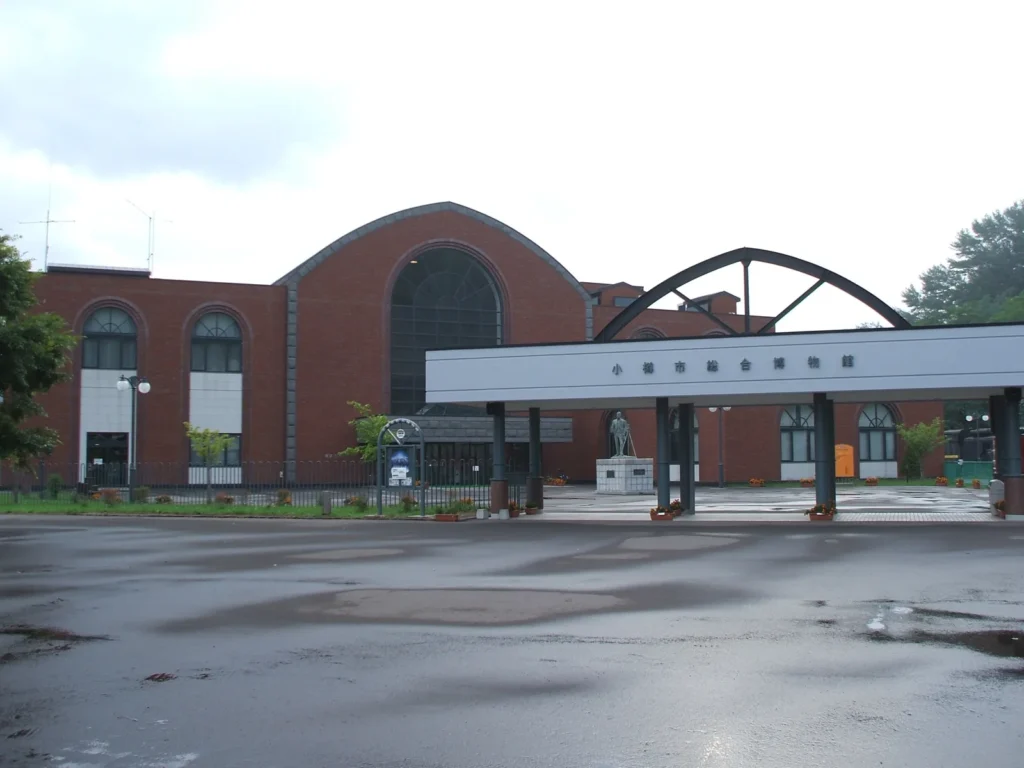
The main building of the Otaru Museum (小樽市総合博物館 本館) stands at Temiya, where Hokkaido’s first railway, the Horonai Railway, began; the line from Temiya to Sapporo opened in 1880, the museum notes. Its railway collection includes the Class 7100 steam locomotive Shizuka and the first-class carriage I-1. According to the tourism association, the locomotive and carriage that appear from chapter 274, in volume 28 of the manga, are these two.
Both are inside the Railway, Science and History building, and the city lists them among the vehicles whose interiors can be seen all year. That matters in Otaru, because much of the rest of the site is outdoors: from early November to late April part of the outdoor exhibition cannot be visited, and parts of the outdoor yard are closed off because of damage to the old platforms. The Iron Horse steam train that runs around the yard is seasonal; its 2026 season ran from 29 April to 12 October.
- Open: 9:30 to 17:00. Closed: Tuesdays, or the next weekday when a Tuesday is a public holiday, and 29 December to 3 January. The museum may also close on other days, so check its hours page for your date.
- Admission: 400 yen for adults, or 300 yen in the winter-price period from early November to late April; the 2026 summer price runs until 3 November. The 600 yen common ticket below covers this building and Unga-kan.
- Entrances: the main entrance is used all year. The Temiya entrance on the other side reopened on 1 April 2026, but it cannot be used in winter.
Unga-kan and the Former Otaru Warehouse
Unga-kan (運河館) is the museum’s second building, a 1.5-kilometre walk south of the main building along the canal, and it is a separate visit with its own ticket. It is inside the Former Otaru Warehouse, a stone warehouse complex built between 1890 and 1894, which the city’s list of historic buildings records as now shared by Unga-kan and two shops.
The tourism association links it to the manga twice. Unga-kan displays a garment close to the one Asirpa wears; the manga calls hers an attush, a cloth made from bark fibre, but the garment on display is a tetarape, made from nettle fibre, which the association notes points to connections with Sakhalin. Displays change, so treat it as something the museum holds rather than something guaranteed to be out on the day. And the harbour scene in volume 4 has a building behind it that closely resembles the warehouse itself.
- Open: 9:30 to 17:00, with no regular closing day, except 29 December to 3 January and any temporary closure the museum announces.
- Admission: 300 yen for adults. If you enter both museum buildings, two separate tickets come to 700 yen at summer prices and 600 yen at winter prices; the common ticket is 600 yen either way, adds the Former Nippon Yusen Otaru Branch, and is valid on two opening days.
Three buildings between the canal and Sakaimachi
Three more buildings on the walk are tied to the manga by the tourism association. All three are city-designated historic buildings; two are shops today, and you see the third from the street.
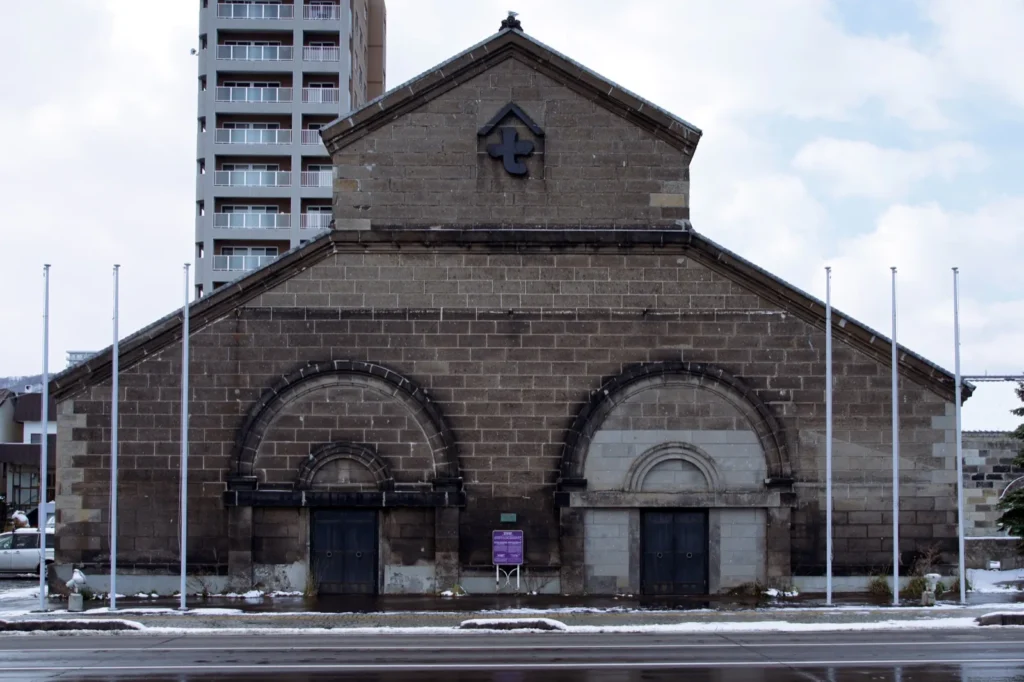
- Former Ohya Warehouse (旧大家倉庫, Ironai 2-3-11). A stone warehouse of 1891 with a double-arched doorway, built by Ohya Shichihei, a marine-products merchant from Ishikawa, according to the city. The tourism association matches it to a building in the background of volume 11. The inside is not open; look at it from the street.
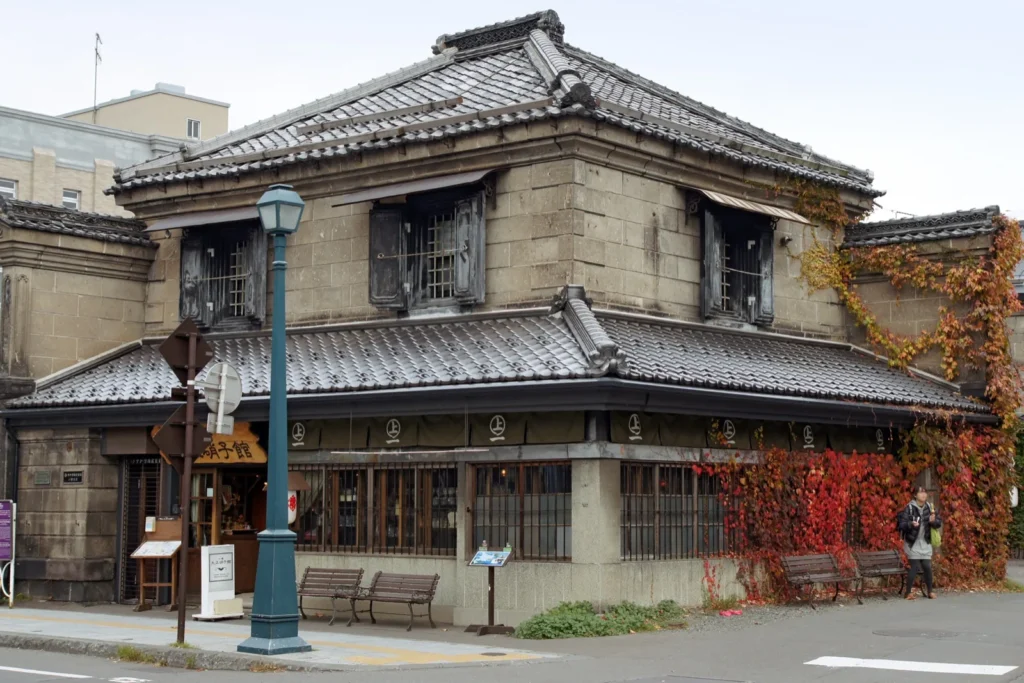
- Otaru Taisho Glass main shop, the Former Natori Takasaburo Store (旧名取高三郎商店, Ironai 1-1-8), built in 1906 or later. The raised firewall at the roof line, an udatsu, closely resembles a building in the background of a scene in volume 2. It is a glass and tableware shop.
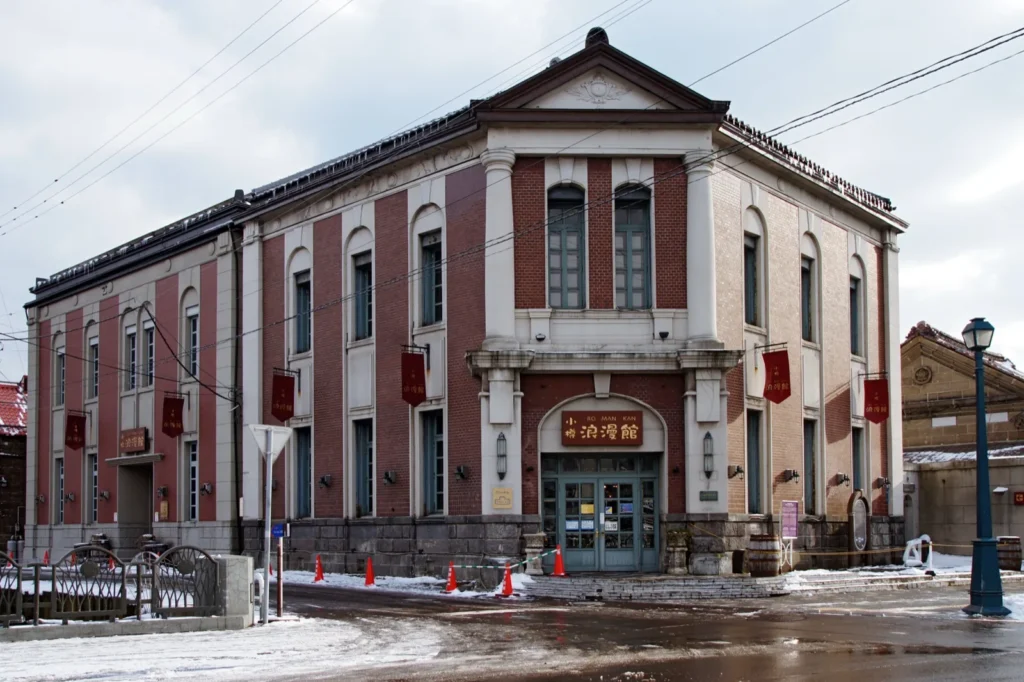
- Otaru Romankan, the Former Hyakujusan Bank Otaru Branch (旧百十三銀行小樽支店, Sakaimachi 1-25), built in 1908. The association reads the bank robbed in volume 4 as this one, and points out that the manga draws the building as it looks today rather than as the bank looked when it opened. It is a glass and accessories shop.
One name needs care. Close by, also in Sakaimachi 1-chome, at number 1-20, stands an older bank of almost the same name: the Former Dai-Hyakujusan National Bank Otaru Branch of 1895, now a music-box shop. The building in the tourism association’s guide is the 1908 one at Sakaimachi 1-25, Romankan.
Historical Village of Hokkaido
The Historical Village of Hokkaido (北海道開拓の村) is an open-air museum in the forest park on Sapporo’s eastern edge. It holds 52 historic buildings from across Hokkaido, built between the Meiji era and the early Showa era, moved here or reconstructed, and arranged as a town, a fishing village, a farm village and a mountain village. Sapporo’s official tourism site describes it as a location for the live-action Golden Kamuy film. It does not name the scenes, and neither does this guide.
The village recommends at least two hours to see the buildings and their displays, while an hour is enough for the outsides and the main sights. Two of the buildings come from Otaru, which ties this day back to the first; they are in Beyond the Anime. A horse-drawn tram, which is paid, runs through the village in summer, and a horse sleigh in winter.
- Open: from October to April, 9:00 to 16:30, last entry 16:00. From May to September, 9:00 to 17:00, last entry 16:30.
- Closed: from October to April, Mondays, or the Tuesday when the Monday is a public holiday or a substitute holiday; it opens on the Mondays of the Sapporo Snow Festival. From May to September it opens every day. It closes from 29 December to 3 January. All of this is on the village’s visitor information page.
- Admission: 1,000 yen for adults and university and high-school students. Junior-high age and under, and visitors aged 65 and over, enter free. The 800 yen rate is for residents of Hokkaido only, with proof of address.
How to Get There
Both days in this guide begin and end at JR Sapporo Station. Otaru is west of it on the line towards the coast; the Historical Village is east of it, reached through Shin-Sapporo. The fares below are adult one-way fares for non-reserved seats, and IC cards such as Suica and Kitaca can be used for all of the JR journeys here.
Sapporo Station to Otaru
- About 34 minutes, 800 yen each way, from JR Hokkaido’s travel-time table and fare list. A return trip is 1,600 yen. The Airport trains that run through to Otaru have one reserved car, car 4, which costs more; the other cars are non-reserved.
- Check where the train is going. Not every train from Sapporo goes to Otaru, and JR Hokkaido’s own page warns that trains bound for Teine or Hoshimi stop short of it.
Otaru Station to the museum’s main building
The main building is the one place in the Otaru day that is worth a bus. The city’s access page gives this route:
- Route 10, the Otaru Aquarium line via Takashima (おたる水族館線 高島経由), from platform 3 at the Otaru Station bus terminal, to the Sogo Hakubutsukan (総合博物館) stop. About 9 minutes on the bus and 3 minutes on foot to the main entrance. The fare in Otaru’s flat-fare area is 240 yen.
- Route 11 is not the same bus. It goes to the aquarium too, but via Akaiwa, and it does not stop at Sogo Hakubutsukan. If you take it, or another bus that stops at Temiya (手宮), get off there: about 6 minutes on foot to the main entrance, or 3 to the Temiya entrance outside winter.
- How often: on Chuo Bus’s Otaru timetable revised on 1 April 2026, route 10 leaves Otaru Station about once an hour through the day. That timetable is labelled as the summer one, so check the current timetable for your date, and plan the train from Sapporo around the bus rather than the other way round.
Sapporo Station to the Historical Village
- JR to Shin-Sapporo: about 10 minutes by rapid train, the figure on the village’s own access sheet, and 360 yen, the revised fare in JR Hokkaido’s fare table. Take an Airport train or another Chitose Line train: trains on the Hakodate Line towards Iwamizawa do not go through Shin-Sapporo.
- To the bus: the village’s sheet sends you straight ahead from the JR ticket gate, left out of the concourse, and up by lift to North Lane 10 of the Shin-Sapporo Bus Terminal. From the subway’s Shin-Sapporo Station, it is Exit 8.
- Bus 新22 to the village (開拓の村行き), run by JR Hokkaido Bus: the terminus is the village, about 20 minutes away, and the fare is 240 yen in the operator’s fare search. On its timetable dated 1 April 2026 buses leave Shin-Sapporo at 8:24 and 9:15, then every 30 minutes from 10:00 to 15:00. They come back from the village at 9:45, every 30 minutes from 10:30 to 16:30, and then at 17:10 and 17:40. Weekends and holidays use the same times.
From New Chitose Airport
- To Sapporo: about 37 minutes and 1,230 yen on the Airport train; the fastest train takes 33 minutes, JR Hokkaido says, but not every train is that fast.
- Straight to Otaru: 2,040 yen. Some Airport trains run through Sapporo to Otaru, and the fastest takes 73 minutes; on the others, change at Sapporo.
- The times start at the airport station. They do not include immigration, baggage or the walk to the platform, so leave room for those before you count on a train.
- An arrival-day option: Shin-Sapporo is on the airport line, and Sapporo’s tourism site suggests the village on the way in. The village has free lockers in its entrance building, and keeps larger bags at the ticket counter. The itineraries below still start from Sapporo Station.
Best Way to Get Around
Otaru: one bus, then on foot
After the bus to the main building, the Otaru day is a walk. The city gives 1.5 kilometres, about 20 minutes along the North Canal path from the main building to Unga-kan, and about 10 minutes on foot from Unga-kan to Otaru Station. From the warehouse towards Sakaimachi, the tourism association’s walking guide gives about 8 minutes to Taisho Glass, 1 more to Romankan, 3 from there to the Bank of Japan Otaru Museum, and 5 more to Niikuraya’s Hanazono shop.
If the bus times do not suit you, run the day the other way round: walk from Otaru Station to the Sakaimachi buildings and the canal first, follow the North Canal path up to the main building, and take route 10 back to the station from the Sogo Hakubutsukan stop.
Inside the village
The village is walked. Its four areas are spread over a large wooded site, and the paths include gravel, steps and slopes, the village warns; wheelchairs and pushchairs can be borrowed free while they last. The horse-drawn tram in summer and the horse sleigh in winter cover part of the distance. Free volunteer guide tours run from mid-April to the end of October, and an English-language explanation can be requested a week before your visit.
Car
Not needed, and this guide does not assume one. The village has a free car park and the museum’s main building has its own, but neither day is easier by car: Otaru is a walking day once you are at the museum, and the village bus leaves from the station you arrive at.
In winter
In the snow season, Otaru’s pavements and the canal path can be snowy or icy, and the walk from the main building can take longer than the city’s 20 minutes. Wear shoes with grip and allow extra time between places. At the museum, part of the outdoor exhibition is closed in the winter period and the Temiya entrance is not used, so arrive by the main entrance; Shizuka and the I-1 carriage are indoors either way.
What to Eat and Drink
Lunch in Otaru
Plan lunch between Unga-kan and the Sakaimachi buildings, which is the middle of the Otaru day and the part of the walk that passes through the town’s shopping streets. Going back to the station to eat adds a walk you would otherwise only make once. This guide does not name a restaurant: restaurant hours change often, and none of the places to eat on this walk is tied to the story.
Niikuraya’s dango, an optional detour
Skewered dango appear in volume 2, and the tourism association suggests Niikuraya (新倉屋) for something close to them. It is careful to say that this is not the shop of the Meiji period: Niikuraya began selling its dango in Hanazono around 1936.
- Hanazono main shop (花園本店), Hanazono 1-3-1. Open 9:30 to 18:00, to 21:00 on Fridays, and closed on Thursdays, the shop says; it also asks you to check its notices for the day before you go.
- The company’s head office and factory at Chikko 5-1 is a different building; the Hanazono shop is the one in the tourism association’s guide.
Lunch at the village
The village restaurant, Kaitaku-no-Mura Shokudo, is near the entrance and has about 200 seats. Its hours are shorter than the village’s, so plan around them:
- Meals: from October to April, 11:00 to 15:00 on weekdays and 10:00 to 15:00 at weekends and on holidays. From May to September they run to 15:30. The last order is at closing time.
- Café: 10:00 to 16:30 from October to April, to 17:00 from May to September, last order 30 minutes before.
- Its 2026 menu includes herring soba, a dish the tourism association notes Sugimoto eating in volume 2, and imo-mochi, the potato cakes the restaurant is known for.
- The light-meal stop at the entrance to the farm village area, Kita no Furusato, is closed at present, the village says. You can bring your own lunch and eat it on the lawns or benches, but not inside the historic buildings, apart from two halls the village sets aside for it.
Beyond the Anime
Bank of Japan Otaru Museum
The former Otaru branch of the Bank of Japan, at Ironai 1-11-16, is now a free museum of money and banking. The tourism association suggests it for the background to the story: the branch bought the gold dust mined in Hokkaido, and the museum’s next special exhibition, from 27 November 2026 to 23 February 2027, includes material on those purchases, the museum says.
- Open: 9:30 to 17:00 from April to November, 10:00 to 17:00 from December to March, last entry 16:30.
- Closed: Wednesdays, unless the Wednesday is a holiday, and 29 December to 5 January, per its visitor page. It also has a one-off closure on 26 November 2026.
- Admission: free, and no booking for individual visitors.
Two Otaru buildings that now stand in Sapporo
Two of the village’s buildings were moved there from Otaru, and they link the two days of this guide. The Former Otaru Shimbun building, home of a newspaper founded in 1894, was built in 1909 at Sakaimachi, of Sapporo soft stone over a timber frame. The Former Temiya Station Master’s House, built in 1884 as housing for staff of the Horonai Railway, came from Temiya, the district where the museum’s main building now stands. Both are in the town area of the village, in its building list. There is nothing to look for at their old Otaru sites.
The canal, and when it was built
The tourism association points out that the canal you walk beside on the way to Unga-kan was finished in the Taisho era, after the late-Meiji years in which the story is set, so it did not yet exist at the time of the story. The Former Otaru Warehouse and the Former Ohya Warehouse, both from the early 1890s, are older than the canal.
Souvenirs
Glass, in the old buildings
Two of the manga-linked buildings are working shops, which is the easiest way to see inside them. Otaru Taisho Glass in the Former Natori Takasaburo Store sells Japanese tableware and glass made in Otaru; Romankan in the former bank sells small glass pieces and accessories. Both have their own opening hours, which are not checked here.
Sweets
Niikuraya sells other Japanese sweets besides its dango. Check the Thursday closing before you build a detour around it.
At the village
The village shop sells its own goods, such as cotton bags, clear files and magnets, and the restaurant sells frozen imo-mochi to take home, which the village says it sells only there. The shop does not take credit cards, according to its FAQ, although the ticket desk and the restaurant do.
This guide does not list any series goods or collaboration items as on sale: what is stocked and where changes, and none of it was checked as current.
Where to Stay
This guide gives no hotel names or prices. The choice that matters is which town you sleep in, because it decides how much of each day is spent on trains.
Around Sapporo Station
The simplest base for both plans. The train to Otaru, the train to Shin-Sapporo and the train from the airport all use the same station, so both days start with a single JR journey, and the evening is in Sapporo either way.
Otaru
Worth it if you want Otaru early and late: the canal in the morning, and the evening in Sakaimachi without a train to catch. You save the two Sapporo–Otaru journeys on the Otaru day. The village day then starts with a longer train ride through Sapporo to Shin-Sapporo; some Airport trains run through from Otaru, so check the destination before you board.
Suggested Itinerary
Route A is Otaru on its own, from Sapporo Station and back. Route B keeps that day as it is and adds a second day at the Historical Village, also from Sapporo Station. The two are never combined into one day: Otaru and the village are on opposite sides of Sapporo, and either one fills a day once the waits for trains and buses are counted.
| Which plan | A — Otaru in one day | B — two days, with the village |
|---|---|---|
| Time | 6 to 8 hours from Sapporo Station and back, a planning estimate including the bus wait, lunch and both museum buildings | Day A, plus a village day of 5 to 7 hours from Sapporo Station and back, with two to four hours inside and lunch |
| What you do | Shizuka and the I-1 carriage at the main building, the North Canal walk, Unga-kan and the Former Otaru Warehouse, then the Former Ohya Warehouse, Taisho Glass and Romankan | All of A, plus the Historical Village of Hokkaido, a live-action film location with 52 historic buildings, two of them from Otaru |
| Transport | JR to Otaru and back, one city bus, the rest on foot | Add JR to Shin-Sapporo and the 新22 bus, both ways |
| Fares and admission, per adult | 2,440 yen: JR 1,600, bus 240, the museum common ticket 600 | 4,640 yen: A’s 2,440, plus JR 720, buses 480 and the village 1,000 |
| Day to avoid | Tuesday | Tuesday for Otaru; from October to April, Monday for the village |
| Check first | Route 10’s timetable for your date | The village bus: to have two hours inside, leave Shin-Sapporo by 14:00 from October to April, or by 14:30 from May to September |
A — Otaru in one day
The main building goes first because it is the longest visit, the only one that needs a bus, and the furthest from the station. After it, every part of the day brings you closer to Otaru Station on foot.
- Sapporo to Otaru, about 34 minutes. Check that the train goes to Otaru, and choose it to meet a route 10 departure from the Otaru Station bus terminal.
- Route 10 to Sogo Hakubutsukan, about 9 minutes, then 3 on foot. The main building opens at 9:30.
- The main building, about 1½ to 2 hours. Shizuka and the I-1 carriage in the Railway, Science and History building, and the rest of the railway collection.
- The North Canal path to Unga-kan, 1.5 kilometres, about 20 minutes. The Former Ohya Warehouse is in the same part of Ironai; look at it from the street.
- Unga-kan, about 45 minutes, and the warehouse building around it.
- Lunch on the way towards Sakaimachi.
- Taisho Glass and Romankan, about 8 minutes and then 1 more on foot from the warehouse, then the Bank of Japan Otaru Museum 3 minutes further, unless it is a Wednesday.
- Optional: Niikuraya’s Hanazono main shop, about 5 minutes from the Bank of Japan museum by the tourism association’s figure, except on Thursdays.
- Walk back to Otaru Station and take the train to Sapporo.
B — two days, with the Historical Village
Day 1 is Route A. Day 2 is the village, and the timetable sets its shape: buses are every 30 minutes for most of the day, the last bus out of Shin-Sapporo is at 15:00, and the village restaurant stops serving meals at 15:00 from October to April.
- Sapporo to Shin-Sapporo, about 10 minutes by rapid train, then up to North Lane 10.
- Bus 新22 to the village, about 20 minutes. The 9:15 or the 10:00 has you there soon after it opens.
- The village, two to four hours. The town area begins at the entrance building and includes the two buildings from Otaru; the fishing, farm and mountain village areas are the rest of the site.
- Lunch at the village restaurant, before the meal service ends.
- Back by bus and JR. Buses leave the village every 30 minutes until 16:30, then at 17:10 and 17:40.
Which day goes first: Mondays and Tuesdays
The two closing days sit next to each other, so the order of the days matters more than the order inside them. For Route A on its own, any day but Tuesday works.
- From May to September, the village opens every day. Keep the Otaru day off a Tuesday and the order is up to you.
- From October to April, a Monday and a Tuesday means Otaru on the Monday and the village on the Tuesday. A Sunday and a Monday means the village on the Sunday. A Tuesday and a Wednesday means the village on the Tuesday.
- When the Monday is a public holiday, the village opens that Monday and closes on the Tuesday instead, which is also the main building’s closing day. A holiday Monday and the Tuesday after it cannot hold both days; add a day, or move one of them.
- When a Tuesday is a public holiday, the main building opens and closes on the next weekday instead.
- 29 December to 3 January closes both museum buildings and the village; the Bank of Japan museum stays closed until 5 January.
- The optional stops have their own days: the Bank of Japan museum closes on Wednesdays and Niikuraya’s Hanazono shop on Thursdays.
Travel Tips and Etiquette
In the museums and the shops
- Follow the signs about photography in both museum buildings, and stay out of the restricted parts of the outdoor yard.
- Taisho Glass and Romankan are shops, and the historic buildings are their premises. Photograph the outsides from the street, and ask before you photograph inside.
- The Former Ohya Warehouse is not open. Look at it from the pavement, and keep off its steps and doors.
At the village, for fans and cosplayers
- Photographs for yourself need no permission. Photographs for advertising, sale or other commercial use need an application first, under the village’s photography rules.
- Cosplay and shoots with a model need the date booked in advance, the village says. Its rules do not allow weapons, firearms or anything shaped like them to be brought in, nor real uniforms, nor changing or making up in the toilets, and you may not block building entrances or narrow paths.
- No drones, and no pets other than assistance dogs. The village is inside a nature park.
Ainu culture is a living culture
Asirpa is a fictional character. The garments and tools at Unga-kan belong to the history of real people, and Ainu culture is lived today rather than being a costume from the past. Read the museum’s own labels for what each piece is, and treat the manga as a story set among that culture rather than as a source on it.
Practical
- Paying: the museum takes cashless payment as well as cash. At the village, the ticket desk and the restaurant take cards; the shop does not.
- Closures happen. Both museums and the village announce temporary closures on their own pages; look at them on the morning you go, not only when you plan.
Plan Your Trip
Do this first
- Choose A or B, then put the days in order: no Tuesday in Otaru, and from October to April no Monday at the village.
- Look up route 10 for your date on Chuo Bus’s Otaru timetable, and pick the train from Sapporo that meets it.
- For the village, pick your bus from the JR Hokkaido Bus timetable so that you have at least two hours before closing, and plan lunch before the restaurant’s meal service ends.
- If you want the optional stops, check the Bank of Japan museum and Niikuraya for your date.
Combine it with another guide
There is no other Hokkaido guide on this site yet, so none is suggested as a pairing. Every published guide is listed on All published guides, and by region on Destinations.
How this guide was put together
This guide was researched and planned from published sources rather than written up from a visit. Checked on 16 October 2026: the Otaru Tourism Association’s Golden Kamuy walking guide of 3 April 2023 for the links between places and the manga, the volume numbers, the note on the tetarape and the attush, the notes on Romankan’s design, on Niikuraya and on the canal, the walking minutes between the warehouse and the Sakaimachi buildings, and the gold-dust background; Otaru City for the museum’s hours, closing days, admission, the 2026 summer-price period, the 600 yen common ticket, the Temiya entrance, the bus routes and the walk between the two buildings, the year-round display of Shizuka and the I-1 carriage, the 2026 Iron Horse season, and its list of historic buildings with their dates, addresses and present uses; Chuo Bus’s Otaru timetable of 1 April 2026 for route 10 and the 240 yen fare; JR Hokkaido’s English pages for the Sapporo–Otaru time and fare, the airport fares and times, IC cards and the trains that do not reach Otaru, and its fare table for the 360 yen Sapporo–Shin-Sapporo fare; the Historical Village of Hokkaido for its hours, closing days, admission, building list, restaurant hours, access sheet and photography rules; JR Hokkaido Bus for the 新22 timetable of 1 April 2026 and its fare search for the 240 yen fare; Sapporo’s official tourism site for the film location and the arrival-day order; the Bank of Japan Otaru Museum for its hours, admission and special exhibition; and Niikuraya for its Hanazono shop and its October 2026 notices.
What is an estimate, and what could not be confirmed. The 6-to-8-hour and 5-to-7-hour figures, and the times given for each museum building and the village, are editorial planning estimates built from the published times, not official durations; the village’s own figure is a minimum of two hours. Both bus timetables were the ones in force on the day of checking, and Chuo Bus labels its timetable as the summer one, so a later timetable may move the times. The ten minutes from Sapporo to Shin-Sapporo is the village’s figure rather than JR’s. Unga-kan, Taisho Glass, Romankan and Niikuraya’s Hanazono shop have no published position that could be confirmed, so the map lists them by address and name, without a pin. The tourism association ties places to the manga only; whether each also appears in the anime was not confirmed, and no source checked names the film’s scenes at the village. The opening hours of Taisho Glass and Romankan were not checked.
Written and edited by Nick, who runs Anime Routes Japan from Japan. More about Nick, and about how these guides are made, is on the About page.
Opening hours, fares and admission prices change, and bus timetables change with the seasons. Confirm the ones your day depends on before you travel, and check the museum’s and the village’s own notices for closures on the day you are going.
This guide currently contains no affiliate links.