Attack on Titan Pilgrimage Guide: Hita, Oita, Japan
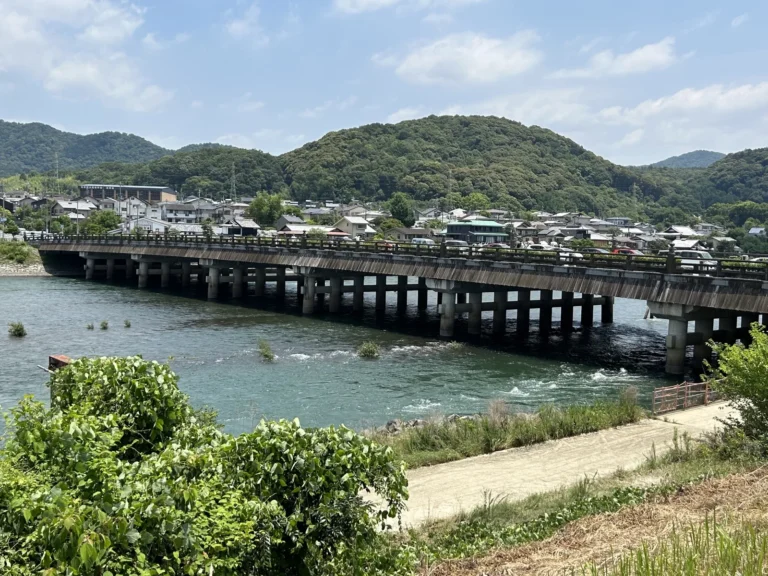
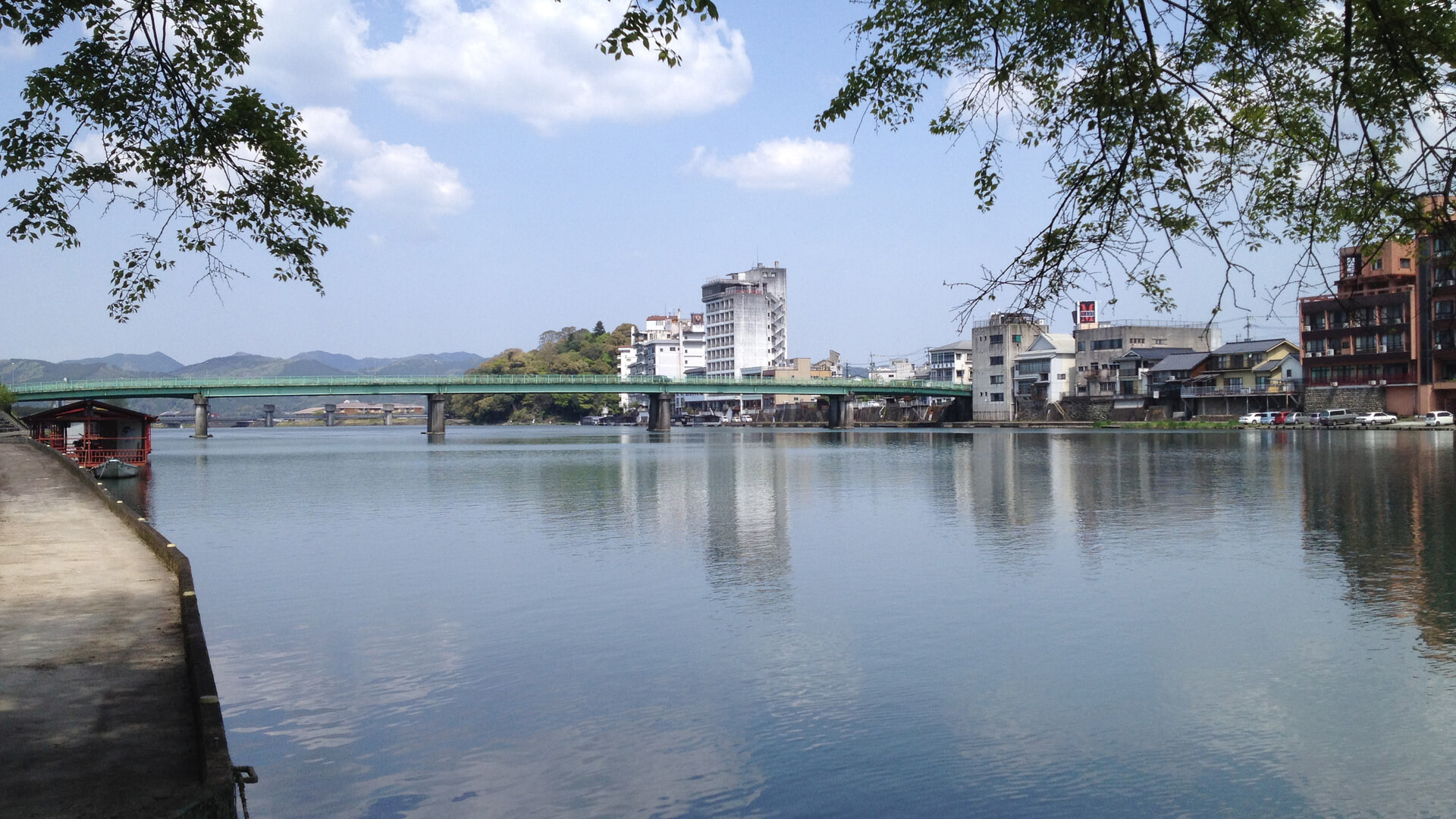
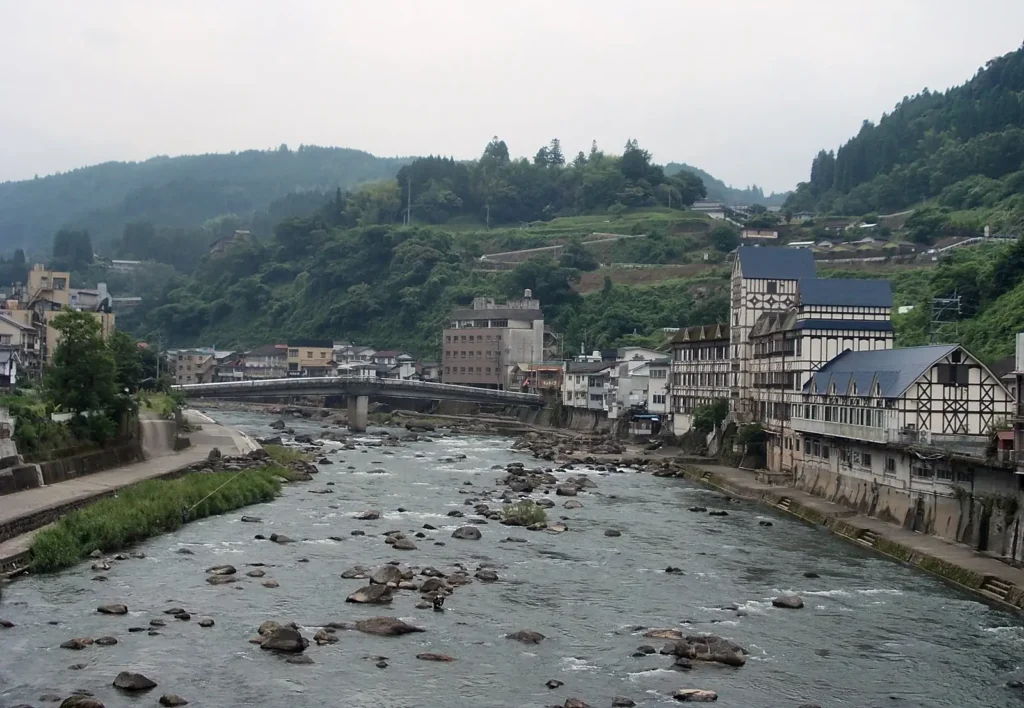
Header photo: the Mikuma River at Hita, photographed in 2017. Photo: Mukai, CC BY-SA 4.0 (cropped and resized). Source.
Hita, in a bowl of green mountains in western Oita, is where manga creator Hajime Isayama grew up, and the town has built its own landmarks for the story he went on to write: three children in bronze below a 94-metre dam wall out in Oyama, the district he is from; Levi outside the station; two museums of his work; and a tree he planted on a hill. This is a trip to an author’s home ground, where the wall is a working dam and the streets are a real town’s. It is about an hour and twenty minutes from Fukuoka Airport by highway bus. The choice here is the town centre on foot or the Oyama statues up the valley; on a Sunday the bus timetable, not your energy, decides whether you can have both. The official project site lists the spots and their opening days in Japanese.
Quick Trip Guide
- Destination: Hita, Oita Prefecture, Kyushu
- Best Gateway: Fukuoka Airport
- From Gateway: Direct highway bus from the Domestic Terminal, roughly 1 hour 20 minutes under the timetable in effect from 1 October 2026
- Getting Around: Walking, a 100 yen city circulator, the Tsuetate-line bus, electric-assist share cycles, taxi, or a rental car
- Car Needed: Car-free friendly, if you plan around one thin bus timetable
- Recommended Stay: 1 night, 2 days
- Best For: Attack on Titan fans who also want local food, hot springs, historic streets and mountain scenery
Why This Place Matters in Attack on Titan
Attack on Titan begins with a wall. In the official introduction, humanity lives inside walls fifty metres high, trading its freedom for safety from the Titans, and ten-year-old Eren Yeager dreams of the world outside them — until a Titan tall enough to look over the wall appears and breaks the peace. Eren, his adoptive sister Mikasa and his friend Armin are the three children at the centre of that opening.
Hita built this itself. The official project here is organised around the hometown of manga creator Hajime Isayama and around landmarks the town commissioned, rather than around backgrounds that fans identified in a finished anime. Isayama grew up in Oyama, a mountain district about ten kilometres south of the city centre along National Route 212, and every landmark you can visit today exists because his home town decided to build it.
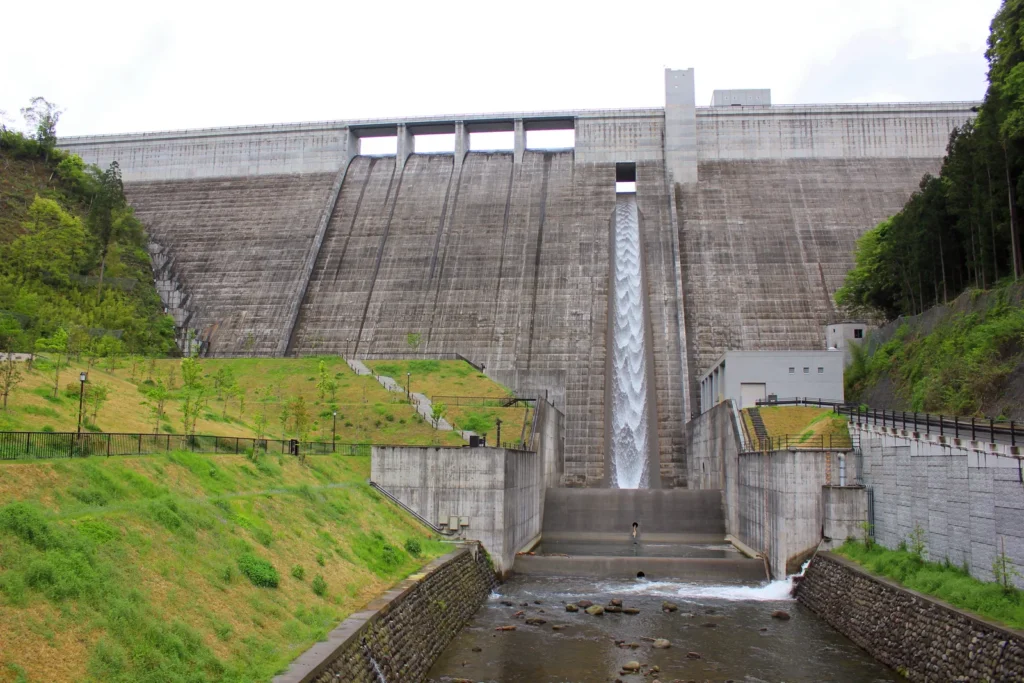
The project is called Attack on Titan in HITA, run by a town revitalisation committee together with Hita City. Its first result, unveiled in November 2020, is a set of life-size bronzes of Eren, Mikasa and Armin as children, standing on the open plaza below the Oyama Dam. The money came from a crowdfunding campaign raised by Hita residents to mark ten years of the manga. The 94-metre dam wall behind the three figures deliberately stands in for Wall Maria, and they are posed in the moment they first see a Titan. A second statue, of Captain Levi, followed in March 2021 in the plaza outside JR Hita Station.
Since then the project has added a museum at the roadside station in Oyama, an annex inside a brewery on the edge of town, and a cafe three minutes from the station. In November 2023, Isayama and Yuki Kaji, the Japanese voice of Eren, planted a metasequoia at a hillside park above the reservoir to mark the tenth anniversary of the television anime.
In practice that makes for a welcoming trip. The landmarks are signposted, the two museums are run as museums with opening hours and tickets, and nobody is standing outside a stranger house trying to match a screenshot. The cost is that the best of it sits half an hour up a valley on a bus you have to plan around, which is what most of this guide is about.
Anime Pilgrimage Spots
The project’s landmarks fall into two clusters and one outlier. The town centre is walkable: the Levi statue, the cafe and Mameda-machi, with the ANNEX a short ride out. Oyama holds the dam statues and the main museum, about half an hour up the valley by bus. Taraibaru park, on a hillside above the reservoir, has no bus service of any kind. How to move between them is in Best Way to Get Around.
Please respect local rules and manners at every location, and follow signs and staff guidance.
Where these places are
The map shows the places below and how far apart they are. It is drawn with OpenStreetMap: opening it loads map images from openstreetmap.org. The list works without it.
The map could not be loaded. The places are listed below, with their names and a link to each on Google Maps.
- Anime-related places
- Station or transport
- Nearby sight
The 6 places on this map
- 1Oyama Dam, the three statues大山ダムOyamaIn this guideOpen in Google Maps
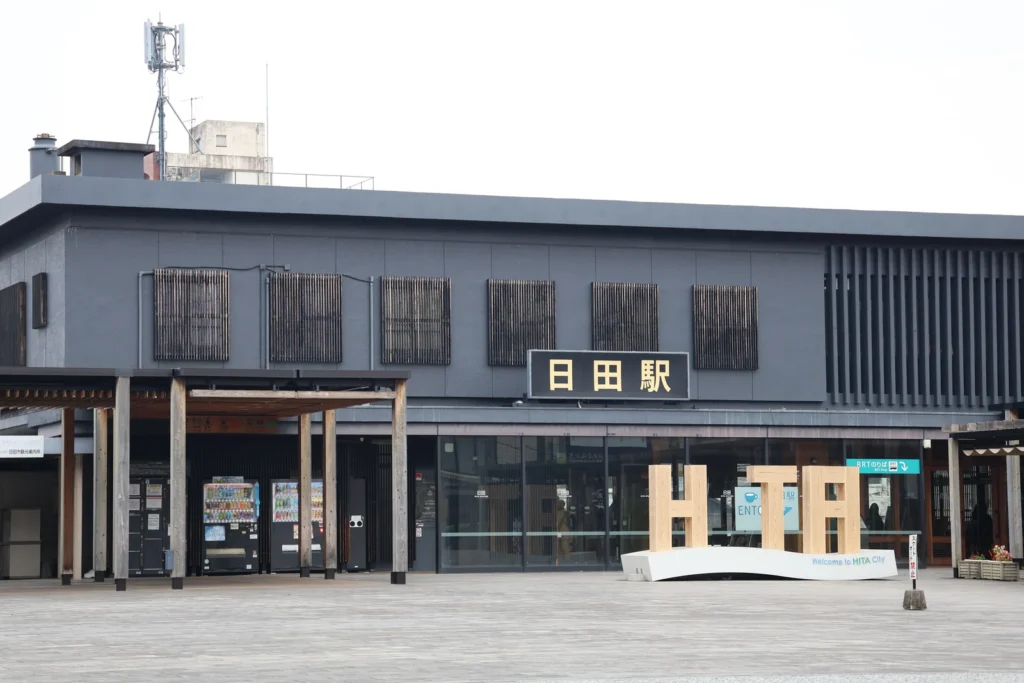
- 2Hita Station, Levi statue日田駅Hita townIn this guideOpen in Google Maps
- 3Mameda-machi豆田町Hita townIn this guideOpen in Google Maps
- 4Kangien咸宜園Hita townIn this guideOpen in Google Maps
- 5Mikuma River, Hita Onsen三隈川Hita town · area positionIn this guideOpen in Google Maps
- 6Fukuoka Airport福岡空港Fukuoka gatewayIn this guideOpen in Google Maps
Map data © OpenStreetMap contributors, ODbL. Positions were checked on 15 October 2026 against the source recorded for each place; a few are the published position for a large site rather than an entrance.
The project’s own spot list runs to more than twenty entries, including the author’s former primary school, now a municipal office, his high school, which is a working school, and a string of small businesses that keep an autographed board on the wall. This guide names those only where they are also somewhere you would reasonably eat or shop.
Hita’s Attack on Titan Spots: Two Clusters
Hita Town Centre — all within walking distance of the station
- Levi statue, in the station’s south plaza
- Attack on Titan Hita Cafe, three minutes away
- Museum ANNEX, about 3 km south inside the Sapporo brewery
- Mameda-machi, about 1.3 km north
↓ Tsuetate-line bus, about 30 minutes, 460 to 560 yen
Oyama — the district the author is from
- Oyama Dam statues, 30 minutes on foot from the Nakagawara stop
- Attack on Titan in HITA Museum, at the roadside station
- Okuhita Onsen Umehibiki and Umeshu-gura Oyama, four stops further on
Taraibaru Utsukushii Mori-zukuri Park
No bus reaches it at all. Taxi, hired bicycle, or the longer shuttle taxi course.
The two clusters are what you plan around, not the individual spots.
Oyama Dam Statues: Eren, Mikasa and Armin
This is the one most people come for, and it is worth understanding what you are looking at. Hita residents raised the money by crowdfunding to mark ten years of the manga, and the sculptors placed the three children at the foot of a 94-metre concrete gravity wall so that the dam itself does the work of Wall Maria. Eren, Mikasa and Armin are posed in the moment they first see a Titan. Standing on the plaza, the scale is the argument: the wall is too tall to take in from where you stand, which is the point.
The plaza is outdoors, free and open every day of the year, including the days the dam’s management office is shut. There is no gate, no ticket and no closing time, so the thing that governs your visit is daylight and the bus, not opening hours. Budget twenty minutes at the statues themselves; the official shuttle taxi tour allows exactly that, and it is about right.
- Getting there without a car: the Tsuetate-line bus from Hita Bus Terminal to the Nakagawara stop, about 30 minutes, 460 yen one way. From that stop it is a further 30 minutes on foot, so allow about an hour each way door to door.
- The faster way: stay on the bus two more minutes to Okuhita Tourism Information Center (520 yen), where there is a 24-hour share cycle port, and ride the 2.5 km to the dam in 10 to 15 minutes. The main museum is three minutes from the same port. The project recommends this itself, and it costs a fraction of a taxi.
- By taxi: about 20 to 30 minutes from Hita Station and roughly 4,000 to 5,000 yen each way, by the project’s own estimate. Free parking if you drive.
- What the dam does not offer: the management office runs free guided tours of the dam structure, but weekdays only, by written application two weeks ahead, and aimed at school and company groups. It is not something you can join on the day.
What the project asks of visitors. Please do not leave offerings at the statues: the project specifically asks people not to leave coins, flowers, alcohol, tea, sweets, scarves, letters or drawings behind, and to take away anything placed there for a photograph. Beyond that, do not climb on the figures or on any part of the dam. The plaza is a mountain site with no shelter at all, so watch the weather and the light.
Attack on Titan in HITA Museum
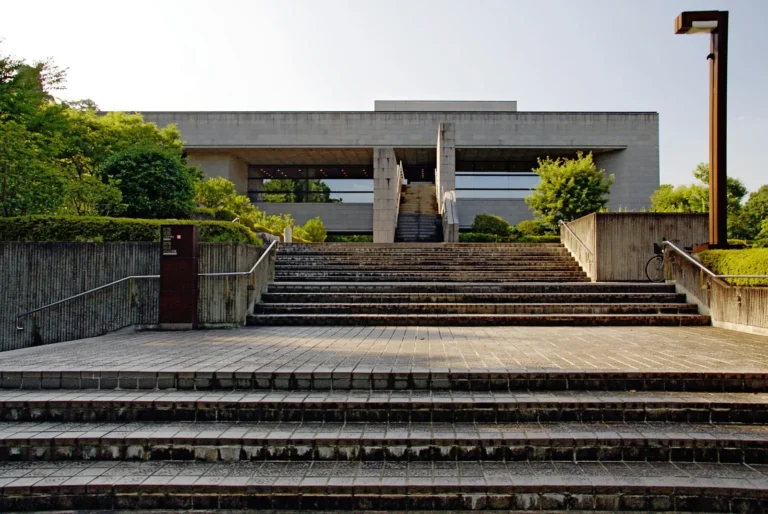
The main museum sits inside the Michi-no-Eki Mizube-no-Sato Oyama roadside station, a few minutes from the dam in the valley Isayama is from. Since 24 April 2026 its permanent display has been Hajime Isayama Selects: New Original Art, twenty-six pages of original manga artwork that he chose himself and captioned himself, with the captions given in Japanese, English, Korean and Traditional Chinese. These are the drawn pages, not reproductions: the ink, the corrections and the instructions written outside the panel borders are all visible. His actual drawing desk is on display as well.
For anyone who cares how the work was physically made, this room is the reason to come to Oyama rather than only to the statues. It is also small. An hour covers it comfortably, and the shop, which sells Oyama plum products alongside the licensed goods, is the easiest souvenir stop of the whole trip.
- Admission: 500 yen for visitors aged 18 and over, free for under-18s.
- Hours: 9:30 to 17:00, following the roadside station around it. The roadside station’s own operator publishes 9:30 to 16:00 on weekdays and 9:30 to 17:00 at weekends and holidays, so on a weekday plan to be finished by 16:00. No official source publishes a last admission time.
- Closed: the third Wednesday of every month, and over the new year.
- Getting there: the bus stops outside, at Mizube-no-Sato Oyama-mae, 560 yen from Hita Bus Terminal. Large free car park. See the project page for this museum.
Attack on Titan in HITA Museum ANNEX
The annex is the one for readers. Isayama picked scenes from across the whole run and wrote a comment on each; alongside them are a wall-sized digital installation the project calls an immersive comic, photographs and drawings from his childhood in Oyama, large collages, panels and tapestries, and a photo-sticker booth you will not find anywhere else. Multilingual support throughout. Levi’s chair, made in Hita from Isayama’s own drawing, was shown here from March 2026 before moving on to the cafe.
It is also the easy one: it is in town rather than up the valley, it opens until 19:00, and it is the single spot you can still reach after a late arrival. If your trip to Hita is only an afternoon, this is the museum to choose.
- Admission: 700 yen for 18 and over, free for under-18s.
- Hours: 10:00 to 19:00. Closing days are irregular and no fixed weekday is published, so check before you set out.
- Getting there: inside the grounds of the Sapporo Breweries Kyushu Hita factory, about 3 km south of the station. Fifteen minutes by Tsuetate-line bus to the Sapporo Beer Kyushu Hita Factory stop, 270 yen; about 15 to 20 minutes and around 2,500 yen by taxi; or a flat half-hour by bicycle. Not every bus on the line calls at the factory stop. Parking is shared with the factory.
- On site: you are on a working brewery. Stay on the visitor route and keep out of the production areas and staff car parks.
| If this is you | Main museum (500 yen) | ANNEX (700 yen) |
|---|---|---|
| First visit, limited time | Skip if the bus does not suit | Choose this: in town, open to 19:00 |
| Here for the art and the making of it | Choose this: 26 original pages and his desk | Reproductions, but far more of them |
| Read the manga, want the whole story | Narrow and deep | Choose this: scenes from every volume |
| Doing both | Combination ticket, 1,000 yen | Saves 200 yen, valid two days |
| Travelling with under-18s | They enter free | They enter free |
The combination ticket. One thousand yen covers both museums against 1,200 yen paid separately. It is valid on the day you buy it and the next day either museum is open, which means a closure rolls the second day forward rather than wasting it, and it allows re-entry. It must be date-stamped at your first entry to each museum or it is void, it is for the purchaser only, and it is sold to visitors aged 18 and over because under-18s already enter free. Buy it at the ticket machine at either entrance. The arithmetic: it pays only if you visit both, and the two are 10 km apart.
Levi Statue, Hita Station South Plaza
Levi arrived in March 2021, the second statue of the project, from a design Isayama drew for it. Putting the most popular soldier in the series on the station forecourt was a deliberate piece of welcome: he is the first thing you see when you step off a train or a bus, and he is free, outdoors and available at any hour, which makes him the one spot you can fit around anything else. Five minutes is enough.
It is a working station plaza with buses, taxis and people with trains to catch, so step out of the traffic lanes before you set up a shot and give other people their turn.
Attack on Titan Hita Cafe
The project’s own cafe moved to the Chuo-dori bus stop in April 2025 and added a second floor in April 2026 to take the pressure off the ground floor. Themed drinks come with limited character sleeves at 660 yen, ice cream is 845 yen, and there are photo spots, an AR feature and a merchandise corner; Levi’s chair moved here from late April 2026. Three minutes on foot from the Levi statue, so the two go together naturally.
Two things that catch people out. The cafe takes credit cards and electronic money only and does not accept cash, which is the opposite of the rule on the local buses. And it has no car park, so drivers need one of the paid car parks nearby.
- Hours: 10:00 to 18:00. Closing days are irregular.
- Where: Chuo 1-1-16, on the ground floor opposite the Chuo-dori bus stop, about three minutes on foot from the station.
- Manners: it is somewhere people eat. Keep bags out of the aisles, do not photograph other customers, and order something if you are occupying a table.
Mameda-machi, on the author’s route to school
The project lists this white-walled Edo-period merchant quarter because it lay on Isayama’s route to high school; its own page for that school adds that he made the journey from Oyama by moped, so this was scenery passed through rather than a walk. No scene in the story is set here. What it is instead is the setting of the project’s walking puzzle, and a good hour of a trip in its own right.
The treasure hunt — Shingeki no Hita Real Treasure Hunt: Operation Hidden Cipher — began on 8 August 2026 with no end date announced. You join Levi’s squad to investigate the Mamedamachi district and break a code Eren has found. Kits are 3,300 yen in Japanese and 3,850 yen in English, Korean or Traditional Chinese, and include a clear file bag and Eren’s key. They are sold at the Hita City Tourist Information Center by the station and at the cafe, and play runs 9:00 to 17:00. The first checkpoint is Kangien, the historic academy described further down this page, where players are given two postcards; so the puzzle and the sightseeing are the same walk, which is the best reason to buy a kit. Confirm it is still on sale before you build a day around it.
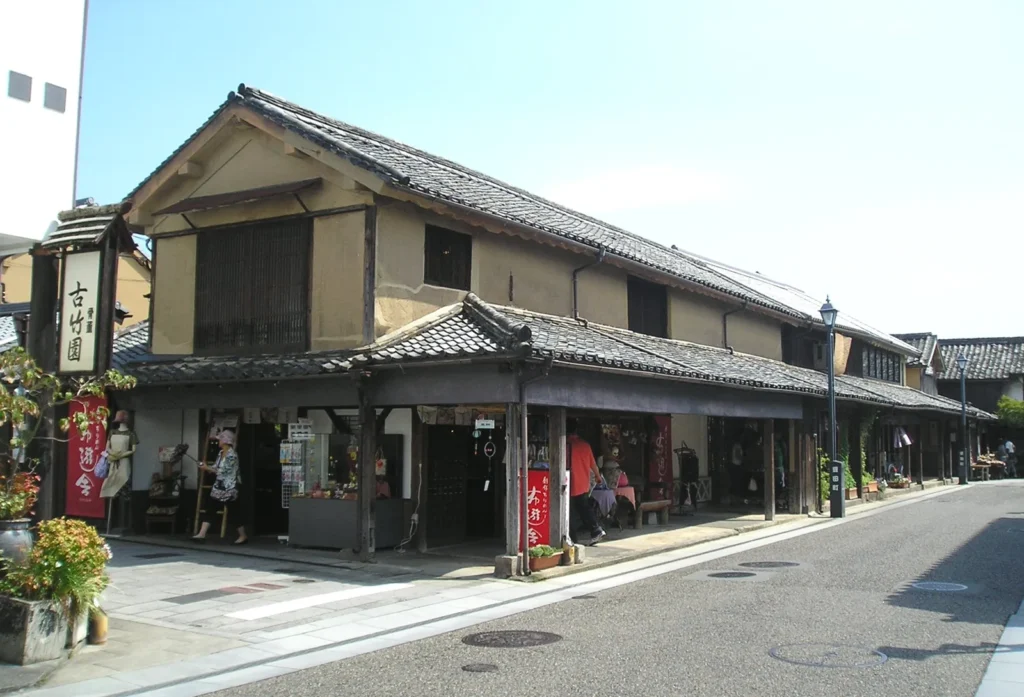
Mameda-machi runs along two parallel streets about 1.3 km north of the station: lattice-fronted shops, sake breweries and soy sauce makers. These are working shops and homes, so stay on the street, keep doorways clear, and buy something if you go in.
Oyama: the hot spring and the plum-wine brewery
Beyond the dam and the museum, the project points visitors to Okuhita Onsen Umehibiki and the Umeshu-gura Oyama plum-wine brewery as a way to understand the valley Isayama grew up in. The two share a single address at Nishi-Oyama 4587 and the project lists them as one spot, which is the useful thing to know: the bath and the brewery are the same stop, not two errands.
They are also the part of this trip most often described vaguely, so here is what actually governs a visit. Day visitors can bathe only between 11:00 and 14:30, and the last admission is 14:00. That single number decides the shape of your day in Oyama, because the bus that would get you there in the early afternoon arrives at 14:08.
Okuhita Onsen Umehibiki
- Day-use bathing: 11:00 to 14:30, last admission 14:00. Adults 1,200 yen, primary-school children 600 yen. Adding the low-temperature ceramic-ball room or the stone sauna makes it 1,700 yen.
- Closed to day visitors every Wednesday, plus further closures published month by month on the inn’s news page, which also warns that they can change at short notice. Check that page, not a listing site, in the week you travel.
- What you get: indoor baths and open-air baths looking into the Hibiki gorge, a sauna, a cold bath and a reclining bath. The two bath houses swap between men and women daily. Simple spring water, recirculated, heated and diluted.
- What is not available to day visitors: the three private family baths and the free shuttle from Hita Station are for overnight guests only. Do not plan a day trip around either.
- Getting there: the Tsuetate-line bus stop is Ujuku Umehibiki-iriguchi. Only the 9:40 departure from Hita Bus Terminal lands inside the bathing window, arriving 10:18.
Umeshu-gura Oyama
Oyama is plum country and this brewery, built with Nikka Whisky and run by a local company, uses only plums grown in the district. The ground-floor shop is open 9:00 to 17:00 and has a tasting counter, so it is the one part of the site you can visit without reference to the bathing timetable.
- Tasting, free of the usual problem: the brewery stocks non-alcoholic ripe-plum drinks and names drivers explicitly, along with under-age and pregnant visitors. Nobody has to drink to get something out of this stop.
- Make your own bottle: plum-wine making is 1,650 yen for a 420 ml bottle or 2,420 yen for 800 ml; the plum-syrup version, offered for people who do not drink and for children, is 1,430 and 2,090 yen. Sessions run at 14:00 and 15:00, last 30 minutes and take six people, and must be booked by 17:00 the previous day on 0973-52-3004. Take the 14:00 session if you came by bus, because the 15:00 one finishes after the 15:23 departure.
- The factory tour: the tank room, bottling room and barrel store can be seen, with a film and a staff explanation, and the brewery asks groups to book. It publishes no price, no duration and no drop-in hours for individuals, so ring ahead rather than assuming you can walk in.
Bath or statues, not both. By bus these two do not combine. The only arrival inside the bathing window is 10:18, and the returns from that stop are 11:23, 15:23 and 18:01, so a bathing visit is a 10:18 to 15:23 commitment that the shop and a 14:00 session fill nicely. The statues and the museum are a different day, or a different trip, unless you have a car, a taxi or a twelve-hour hire bicycle and are prepared to skip lunch. The itineraries further down give you both versions.
Taraibaru Park and the Tree on the Hill
On 18 November 2023, Isayama and Yuki Kaji finished the mounding on a newly planted metasequoia here and unveiled a memorial stone beside it, marking ten years of the television anime. The project likens the result to the cover of volume 34, which is the clearest description of what you are walking up to: a single young tree on an open hillside, a stone, and a long view over the valley. The park itself was laid out on ground used for spoil during the dam’s construction and opened in 2016.
This is the hardest spot in the guide to reach and the one to drop first if the day is tight. There is no bus of any kind. A taxi from Hita Station is about 20 to 30 minutes and roughly 4,000 to 5,000 yen each way; the longer shuttle taxi course includes it; by hire bicycle it is about 7 km from the Okuhita Tourism Information Center or 15 km and 70 to 90 minutes from the station, with serious climbing either way. Go if the statues have already moved you and the weather is good. Otherwise it is the honest thing to skip.
- The gate is shut, and that is deliberate: it is kept closed against wild boar. It is not locked. Open it, go in, and close it behind you.
- No shelter and no shade on the hilltop, and the ground is uneven after dark.
- The same request as at the dam: leave no offerings at the tree or the memorial stone, and keep off the planting around it.
- It occasionally closes for municipal sports events, which also cancels the shuttle taxi tour that day. The tourism association posts these in advance.
How to Get to Hita
Hita is easier to reach than its mountain setting suggests, because one bus does almost all of the work.
Best Gateway: Fukuoka Airport
Fukuoka Airport is the practical gateway. It has by far the widest choice of international flights in Kyushu, it is unusually close to the city it serves, and it has a direct highway bus to Hita. Oita Airport looks closer on a map but has no direct public transport link to Hita: crossing the prefecture means at least one change and the best part of a morning, so unless you are already travelling from Beppu or Oita city, Fukuoka is the easier choice by a wide margin.
From the International Terminal to the Domestic Terminal
Important for international arrivals
- The Hita-go bus does not stop at the International Terminal.
- Take the free inter-terminal shuttle bus to the Domestic Terminal.
- Allow extra time, especially in the morning peak.
The shuttle runs from Stop A at both terminals, every five to seven minutes through the middle of the day and less often late in the evening. The airport warns that it is extremely crowded between 8:30 and 9:30 in the morning. The subway station is on the Domestic Terminal side too. Current details are on the airport shuttle bus page.
Fukuoka Airport to Hita by highway bus
The Hita-go highway bus runs from the Domestic Terminal to Hita Bus Terminal in roughly an hour and twenty minutes, at a one-way fare of 1,980 yen. No reservation is taken and none is needed: you board and pay. The trade-off is that seating is capacity-limited, so on a busy departure you can be turned away and have to wait for the next one. Under the timetable that took effect on 1 October 2026, departures from the airport run at roughly hourly intervals from mid-morning until late in the evening, and round-trip and pair tickets were discontinued at the same revision, so buy singles.
Because that timetable is new, check the current departures before you travel: Nishitetsu route page or Hita Bus highway timetables.
Arriving early in the morning
Not every Hita-go service calls at the airport, and the first airport departure of the day is mid-morning. If you land before then, go into the city instead of waiting. The subway from the Domestic Terminal reaches Hakata Station in a few minutes, and from Hakata you have two options: highway buses to Hita, which start much earlier in the day from Hakata Bus Terminal and the Tenjin Highway Bus Terminal, or JR limited express trains along the Kyudai Main Line, which take a little over an hour. Some of those services are the Yufuin no Mori, a sightseeing train with all seats reserved that stops at Hita and is worth booking as an experience in its own right rather than merely as transport.
By car
Hita sits on the Oita Expressway. The Hita interchange is roughly an hour and ten minutes from Fukuoka, about the same from Oita, and around an hour and a half from Kumamoto or from Oita Airport. If you plan to drive the whole trip, picking the car up at Fukuoka Airport is the simplest arrangement.
Best Way to Get Around
Verdict for Hita: car-free friendly, with one timetable to respect. Everything in this guide except the hillside park can be reached without driving, and the two spots that matter most sit on the same bus route. The catch is that the route is the Tsuetate line, which runs five times a day on weekdays, five on Saturdays and only three on Sundays and public holidays.
| Option | Suits | Cost for the Oyama day | Catch |
|---|---|---|---|
| Walk | The town centre, any weather | Nothing | Useless for Oyama |
| 100 yen circulator | Mameda-machi, Kangien, the onsen street, rain, luggage | 100 yen a ride, IC cards accepted | Town only, set routes |
| Tsuetate-line bus | Solo and budget travellers | 920 to 1,120 yen return | Three to five departures, cash only |
| Bus plus share cycle | One or two people who can ride | About 2,540 yen each | App setup, weather, hills |
| Shuttle taxi tour | Groups, Sundays, tight schedules, non-cyclists | 4,150 yen each for four, 15,400 for one | Book ahead, admission extra |
| Rental car | Three or more spots in a day, families, bad weather | Hire plus fuel | Licence paperwork, no drinking |
How those numbers are built. The bus return to the museum stop is 560 yen each way. Bus plus share cycle is 520 yen each way to the Okuhita Tourism Information Center plus 1,500 yen for a three-hour electric bicycle, which is the combination the project itself recommends. The shuttle taxi figures are the tourism association’s published prices for the shorter course from 1 July 2026: 15,400 yen for one person, 7,700 each for two, 5,400 each for three, 4,150 each for four. A plain taxi is roughly 4,000 to 5,000 yen each way, so for two or more people the organised tour is usually the better buy.
Three rules for the Oyama bus
- Choose your return before you leave Hita, and write the time down.
- The Tsuetate line takes cash only. The 100 yen city circulator does take IC cards, but it does not go to Oyama.
- Sunday and public holiday timetables drop to three departures each way.
Around the town centre: walking, and a 100 yen bus
The centre is small and flat. The Levi statue is in the station plaza, the cafe is three minutes away on foot, Mameda-machi is about 1.3 km north or fifteen minutes at an unhurried pace, and the hot spring inns along the Mikuma River are roughly ten minutes from the station. You do not need transport for any of it.
When you do, Hita runs a city circulator called the Hita-hashiri, at a flat 100 yen for adults and half that for children, and unlike the Tsuetate line it accepts transport IC cards. Three colour-coded courses run from the bus terminal; the orange C course serves Mameda-machi and Kangien and the blue B course serves the Kuma hot spring inn street. It is the obvious answer to rain, to heat, and to the walk back from Mameda-machi with a suitcase.
Out to Oyama: the Tsuetate-line bus
Hita Bus runs the Tsuetate line from Hita Bus Terminal up the valley into Oyama and on towards Tsuetate Onsen. The timetable below is the operator’s, as revised on 1 October 2026. It is worth reading carefully, because the project’s own pages still carry the April 2026 times and they no longer match.
| Leaves Hita Bus Terminal | ANNEX stop | Nakagawara (dam) | Okuhita info centre | Museum stop | Days |
|---|---|---|---|---|---|
| 9:10 | passes | 9:26 | 9:27 | 9:30 | Mon to Fri |
| 9:40 | 9:57 | 10:10 | 10:11 | 10:14 | every day |
| 11:10 | 11:29 | 11:42 | 11:43 | 11:46 | Mon to Sat |
| 13:30 | 13:47 | 14:00 | 14:01 | 14:04 | every day |
| 14:55 | 15:12 | 15:25 | 15:26 | 15:29 | Saturday |
| 16:35 | passes | 16:51 | 16:52 | 16:55 | every day |
| Museum stop | Okuhita info centre | Nakagawara (dam) | ANNEX stop | Arrives terminal | Days |
|---|---|---|---|---|---|
| 7:21 | 7:24 | 7:25 | passes | 7:41 | Mon to Fri |
| 8:15 | 8:18 | 8:19 | passes | 8:35 | every day |
| 9:40 | 9:43 | 9:44 | passes | 10:00 | Mon to Fri |
| 11:27 | 11:30 | 11:31 | 11:46 | 12:01 | every day |
| 13:08 | 13:11 | 13:12 | 13:27 | 13:44 | Mon to Sat |
| 15:27 | 15:30 | 15:31 | 15:46 | 16:01 | every day |
| 16:57 | 17:00 | 17:01 | 17:16 | 17:31 | Saturday |
| 18:05 | 18:08 | 18:09 | passes | 18:25 | every day |
About the last bus. The project warns that the last service is unsuitable for a return trip, and the reason is worth working through rather than repeating. A return bus does exist after the last outbound: the 16:35 reaches Nakagawara at 16:51 and the 18:09 brings you back. The problem is that the sums do not leave anything over. The project puts the walk from Nakagawara to the statues at about 30 minutes each way; add twenty minutes at the statues and you are back at the stop at roughly 18:11, two minutes after the bus has gone. Shorten the visit and you might make it, but that walking figure is the project’s estimate rather than a measured time, so it is not a margin to plan against. Two further reasons sit on top of the arithmetic and are worth keeping separate from it: for much of the year that walk is in the dark, on an unlit mountain road with no shelter and no waiting taxis, and the museum has closed long before you could reach it. Treat 13:30 as the latest outbound worth taking, and 11:10 if you want the museum unhurried.
Share cycles: the quiet answer to Oyama
COGICOGI share cycles are the reason the car-free verdict holds. Every machine is electric-assist, every port is open 24 hours, and registration, unlocking, return and payment all happen in the operator’s app, so set it up before you arrive rather than at a bus stop in the mountains. Rates are 1,500 yen for three hours, 2,000 for six, 2,500 for twelve and 3,000 for twenty-four, with 200 yen an hour beyond that.
There are six ports: in front of the tourist information centre at Hita Station, on the Hita Onsen riverside at Reimeikan, in Mameda-machi, at Amagase Station, at Yoake Station and, most usefully, outside the Okuhita Tourism Information Center out in Oyama. That last one is what turns the Oyama morning from a two-hour walk into a short ride: 2.5 km and 10 to 15 minutes to the dam statues, three minutes to the museum, 7 km to the hillside park. The project recommends exactly this combination, and notes it costs less than a taxi.
Ordinary rental bicycles in town
The Hita City Tourist Information Center beside the station, open 9:00 to 17:00, rents ordinary non-assisted bicycles at 300 yen an hour, 1,500 yen for a day or 2,000 yen for two, including seven wrapped in Attack on Titan designs. The collaboration bicycles cannot be reserved and go on a first-come basis. They are excellent for the town centre and the flat ride out to the ANNEX, and the wrong tool for the dam, which is 10 km away and uphill: the project allows 60 to 70 minutes each way on one. The same counter holds luggage at 700 yen per item, which is what makes a late check-out morning in Mameda-machi work.
If you are collecting stamps, note that the project’s stamp book, 1,500 yen from the same counter, includes an hour of free bicycle hire on rentals of two hours or more.
Taxi
Taxis wait at the station. Hita Station to the ANNEX is about 15 to 20 minutes and in the region of 2,500 yen; out to the dam statues, the main museum or the hillside park is about 20 to 30 minutes and roughly 4,000 to 5,000 yen each way. For two or more people a one-way taxi out to Oyama and the bus back is a sound way around an awkward morning. There is also a taxi company based in Oyama itself, which matters if you need to get from the dam to the hot spring rather than back to town.
Rental car
There is a rental car office in Hita that will collect you from the station free of charge, which makes a hybrid trip easy: arrive by bus or train, then drive only on the day you go out to Oyama. It is the easiest way to add the Onta pottery village to a short stay, and the most comfortable way to put the statues, the museum and the bath into a single day. It is not the only way to do either: the hillside park is on the longer shuttle taxi course, and the three Oyama stops can be strung together by taxi, or on a twelve-hour share cycle if you are willing to skip lunch. The obvious trade-off is the brewery tasting. Driving-document requirements depend on the country that issued your licence, so check the National Police Agency guidance for drivers with foreign licences and arrange any required permit or translation before you leave home.
Official shuttle taxi tour
The Hita City Tourism Association, a registered travel agency, runs its own shuttle taxi tour of the Attack on Titan sites from the tourist information centre next to the station. You choose your own departure time between 9:00 and 14:00, and the tour finishes at the information centre or at the ANNEX. There is no guide on board and the minimum party is one person. Departures run every day to 31 March 2027 apart from the main museum’s closing days.
- Shorter course — dam statues, 20 minutes there, then the main museum for 60 to 180 minutes. From 1 July 2026: 15,400 yen for one, 7,700 each for two, 5,400 each for three, 4,150 each for four.
- Longer course — the same plus Taraibaru park, which no bus reaches. From 1 July 2026: 22,600 yen for one, 11,330 each for two, 7,600 each for three, 5,800 each for four.
- Not included: museum admission, and the fare home if you finish at the ANNEX.
- Cancellation: 50 per cent the day before, 100 per cent on the day.
Because the cost of the vehicle is shared, the price per person falls sharply as the party grows, which is the whole case for it. For four people the shorter course costs about 4,150 yen each against roughly 1,120 yen each by bus, and buys back two hours of walking and the entire timetable problem. For one person it is hard to justify unless you cannot cycle and are travelling on a Sunday.
What to Eat in Hita
Hita eats like the river and mountain town it is, and the one dish you should not leave without has more to do with a hot plate than with anything grand.
Hita yakisoba
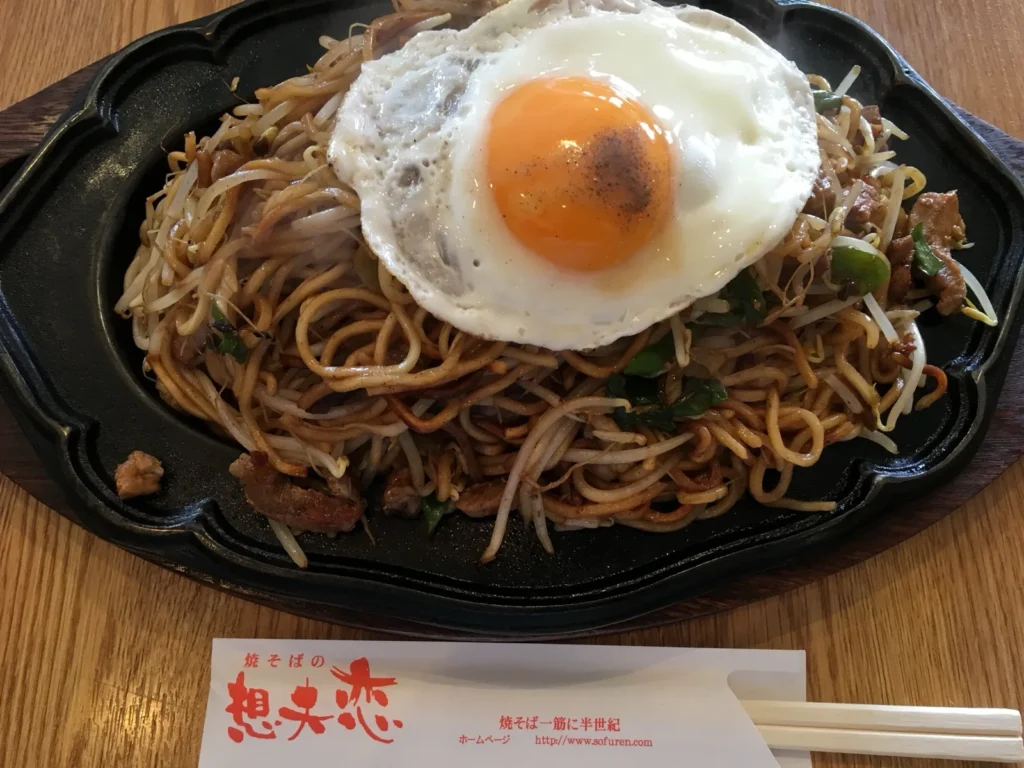
Hita yakisoba is not the soft, sauce-heavy noodle dish sold at summer festivals. Fresh noodles, not steamed ones, go onto a generously oiled hot plate and are left there until parts of them catch and crisp, so a single mouthful gives you a brittle, almost fried edge and a soft chew underneath at the same time. The toppings are plain and fixed: bean sprouts, spring onion and pork, with a sauce seasoning.
It was worked out in Hita in the late 1950s by the founder of a local shop who wanted to grill noodles rather than stir-fry them, and it spread through the town ramen shops until it became the thing Hita is known for. More than a dozen places serve it today, and which one is best is a local argument you are welcome to join.
Where to eat it on the Oyama day
Sofuren’s Oyama branch is the obvious lunch on the day you go out for the statues, and not only because it is close to the roadside station: the project’s own page says this is the branch where Isayama worked part-time while he was at high school, and his autographed board hangs inside. It opens 11:00 to 20:30, has free parking, and closes on Wednesdays.
That Wednesday closure is worth holding on to, because it is not the only one. Umehibiki is shut to day visitors every Wednesday as well, and the main museum closes on the third Wednesday of the month. Wednesday is the wrong day for the Oyama half of this trip, and no single official page says so.
If Sofuren is closed or full, the roadside station next to the museum has a light-meal counter, soft-serve, salt-grilled ayu from the river in season, and a gelato shop using local fruit, open 10:30 to 16:00 on weekdays and to 17:00 at weekends.
Oyama plum products
Oyama is one of the best-known plum-growing districts in Kyushu, and the fruit turns up as umeshu plum liqueur, preserves, syrups and sweets. The convenient part, if you are planning a trip rather than a shopping run, is that the shop selling them is the roadside station you are already standing in when you visit the museum, and the brewery that makes the liqueur is four stops further up the same bus route.
In town
The project’s spot list includes several places that are simply good places to eat in Hita and happen to keep an autographed board: TORISEN, an Oita chicken specialist about nine minutes on foot from the station where a childhood friend of Isayama’s works and which he wrote about himself, open 10:00 to 20:00; and SLOW cafe, known for its omurice, next to the park beside his old high school, open 11:00 to 18:00. Opening days change, so check on the day.
What the themed cafe is for
The project’s own cafe opposite the Chuo-dori bus stop sells the experience: limited drinks with character sleeves, the AR, Levi’s chair and the goods corner. Go for that, remember it takes cards and electronic money but no cash, and keep your yakisoba meal for one of the counters in town.
Things to Do Beyond the Anime
This is the part of the trip that turns a pilgrimage into a holiday. Hita was governed directly by the shogunate in the Edo period, which made it wealthy, and a good deal of that wealth is still standing.
Mameda-machi, the old merchant quarter
About fifteen minutes on foot north of the station is Mameda-machi, a grid of merchant houses and white-walled storehouses preserved from the Edo period. It is a designated Important Preservation District for Groups of Traditional Buildings, and together with the Kangien academy it forms part of a recognised Japan Heritage story. There is no gate and no ticket. You simply walk in, and the pleasure of it is deliberately low-key: sake breweries, a soy sauce maker, craft shops and a few small museums in old houses.
Kangien
Kangien was a private academy founded in the early nineteenth century by the Confucian scholar Hirose Tanso. More than five thousand students passed through it, drawn from across Japan, which made it the largest private school of its kind in late Edo Japan. What survives today is modest, but it goes a long way towards explaining why a mountain town of this size carries itself the way it does.
Hita Onsen and the Mikuma River
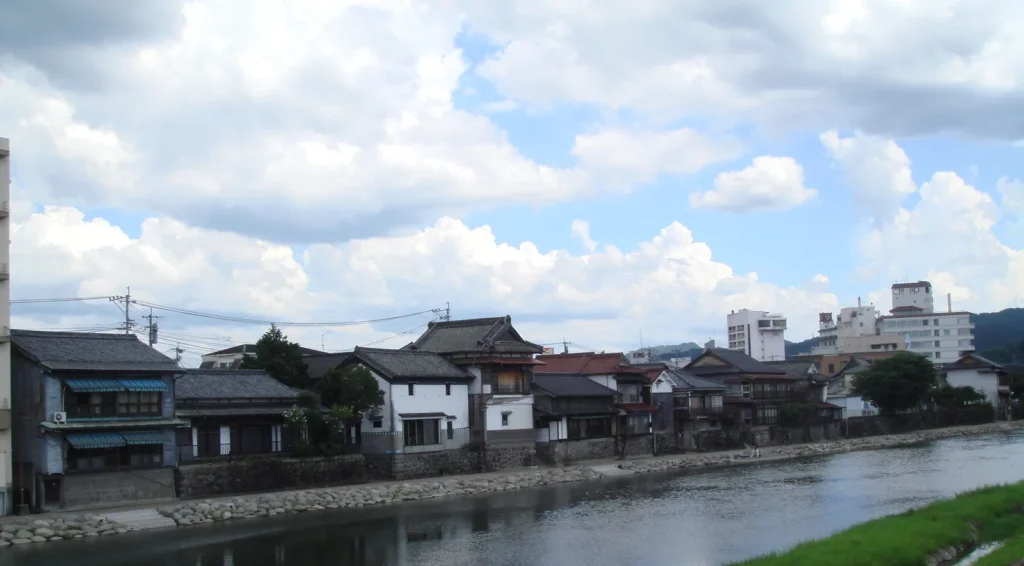
The Mikuma River runs through the middle of town, and the hot spring inns along it are close enough to the station to walk to with a suitcase. It is not a dramatic landscape of open-air baths on a cliff edge but a flat river town where the water happens to be hot, which is exactly what you want after a day of buses and bronze statues.
Houseboats and cormorant fishing
Roofed houseboats put out onto the Mikuma in the evening, and for part of the season cormorant fishing boats work between them by firelight. The two are not the same thing: cormorant fishing finishes at the end of October, while houseboat cruises continue after that. The practice on this river goes back around four hundred years. If you are deciding whether to stay the night or catch an evening bus back to Fukuoka, this is the argument for staying.
The Onta pottery village
In the hills north of the city, the hamlet of Sarayama has been making Onta ware since 1705, with clay still crushed by water-driven hammers whose sound carries down the valley. The valley is designated an Important Cultural Landscape. Getting there without a car is hard, because the bus service is very limited, and the approach road is narrow in places and closed to large vehicles. Snow occasionally closes the pottery hall in winter. Treat it as a second-day excursion, ideally by car or taxi.
Festivals through the year
Hita has three anchors in its calendar. In late winter and early spring, old merchant houses in Mameda-machi and the Kuma district put out heirloom hina doll displays. In late July, tall festival floats are pulled through the streets for the Hita Gion festival, a tradition of roughly three centuries. In early November, thousands of bamboo lanterns are lit through Mameda-machi alongside the town autumn festival. The exact dates move from year to year, so check the Hita Tourism Association site when you plan.
What to Bring Home
Hita is a better souvenir town than its size suggests, largely because the crafts here are still working trades rather than gift-shop reproductions.
Oyama plum products
Umeshu plum liqueur, preserved plums, jams and sweets, all made from fruit grown in the district where the dam statues stand. Sold at the roadside station attached to the main museum, which makes this the easiest souvenir run of the trip.
Onta ware
Heavy, practical stoneware from the Sarayama valley, decorated with the chattered and combed patterns the kilns are known for. Bowls, plates and cups meant to be used rather than displayed. It is sold in Hita as well as at the kilns, so you do not have to make the trip out to the valley, although visiting the village gives you the chance to buy directly from the local kilns.
Hita cedar and Hita geta
Hita is a forestry town, and cedar from the surrounding mountains turns up as everyday objects: coasters, boxes, small furniture. Hita geta, the wooden sandals made from that cedar, are the craft the town is best known for.
Official Attack on Titan merchandise
The project has produced a wide range of licensed goods, from clothing and stationery to food and drink, including collaborations with local makers that use Hita cedar and Hita geta. They are sold at both museums, at the roadside station in Oyama and at the tourist information centre beside the station.
Buy official goods only: supporting the licensed range is the whole point of a project like this. Whether any of it can be bought online is not something we can confirm, so treat the trip itself as the opportunity.
Where to Stay in Hita
Choose the area before you choose the building. Hita is small enough that the area decides what your evening looks like.
Best area: Hita Onsen and the Mikuma riverside
This is the first recommendation for most visitors. The hot spring inns along the Mikuma River are about ten minutes on foot from the station, within easy walking distance of Mameda-machi and of the restaurants in the centre, and they are where the evening houseboats depart from in season. You get a hot spring bath, a river view and a town you can walk back into after dinner.
Around JR Hita Station
Practical rather than romantic, and a good choice if you are on a budget or leaving early. The bus terminal, the tourist information centre, the rental bicycles, a share cycle port, the rental car pick-up and the Levi statue are all within a couple of minutes of each other, which matters on a morning when you are trying to catch a particular bus out to Oyama.
Oyama and Okuhita
The most interesting option for car-free travellers, and the one that solves this trip’s central problem. Okuhita Onsen Umehibiki, the hot spring described in the pilgrimage section, takes overnight guests, and staying there removes the bus timetable from your museum-and-dam morning entirely. It also removes the 14:00 bathing deadline that constrains day visitors: residents bathe from 15:00 to midnight and again from 5:00 to 10:00, free, and the three private family baths, 2,200 yen for an hour and bookable, are open to guests only. The inn runs its own free pick-up from Hita Station at 15:15 and 16:15, which must be booked at least three days ahead, and drops guests back at 10:00 and 11:00. The plum-wine brewery is on the same site, the roadside station and museum are five minutes away by car, the dam seven, and there is a 24-hour share cycle port at the Okuhita Tourism Information Center nearby.
Amagase Onsen
A separate hot spring area a short train ride east of Hita on the Kyudai Main Line. The area was heavily affected by flooding in 2020. Several inns are operating today, but availability and operating status vary by property, so check directly before booking.
Day trip or overnight?
One night is the right answer for almost everyone. A day trip from Fukuoka is possible, and the next section sets out how, but it forces you to choose between the town centre and Oyama. One night lets you do both without watching the clock, and it is what makes an evening on the river possible.
Suggested Itinerary
Hita splits in two, and almost every planning mistake here comes from not noticing that. The statues that most people come for are out in Oyama, ten kilometres south up the valley on a bus that runs three to five times a day depending on the day of the week; everything else is in the town centre and walkable. Here is the choice in full before the detail starts.
| Which trip | Town centre only | Oyama only | One night, both |
|---|---|---|---|
| Suits | A day trip from Fukuoka, or a first look | Readers who came for the statues above all | Almost everyone, including anyone travelling on a Sunday |
| Travel | All on foot, or a 100 yen circulator bus | A local bus with four or five departures a day, then a long walk or a hired bicycle | Both, split over two unhurried mornings |
| The constraint | The ANNEX shuts at 19:00, so this half is forgiving | The bus, not the museum: miss the 13:30 and the day is over | Only that you need a bed in Hita |
| Go for | Levi statue, ANNEX, Mameda-machi, yakisoba | Dam statues, main museum, Oyama lunch | Day 1 in town, Day 2 in Oyama |
Hita divides into two halves: the town centre, which you walk, and Oyama, which needs a bus. Everything below is built on that split and on the operator’s timetable of 1 October 2026. Times are given so that you can see the plan actually closes; check the current departures before you travel.
The Oyama morning, step by step
This is the model trip. Both ends of it, the 9:40 out and the 15:30 back, run seven days a week, so it holds on Sundays and public holidays as well — on any day the museum is open. It closes on the third Wednesday of every month and over the new year, and Sofuren’s Oyama branch closes every Wednesday, so a Wednesday needs the itinerary reversed or a different lunch.
| Time | What happens |
|---|---|
| 9:40 | Leave Hita Bus Terminal on the Tsuetate line. 520 yen to the Okuhita stop. Cash. |
| 10:11 to 10:15 | Off at Okuhita Tourism Information Center, unlock a share cycle at the port outside. The three-hour hire is 1,500 yen and runs to 13:15. |
| 10:20 to 11:20 | Three minutes to the main museum. The original art and his desk fill about an hour. |
| 11:35 to 12:00 | 2.5 km up to the dam, 10 to 15 minutes. Twenty minutes at the statues is about right. |
| 12:20 to 13:00 | Ride back down and eat. Sofuren’s Oyama branch is three minutes away and closed on Wednesdays; the roadside station has a counter. |
| 13:05 to 13:10 | Ride to the Okuhita port and return the bicycle, five minutes inside the hire window. |
| 15:30 | Return bus from the stop outside. Arrives Hita Bus Terminal 16:01. |
Without a bicycle the day still works, but it becomes one thing rather than two. Take the 9:40 to Nakagawara, 460 yen, arriving 10:10; the walk to the statues is about half an hour by the project’s estimate, twenty minutes there and half an hour back puts you at the stop at about 11:30, and the 11:31 is too close to count on. The next return is 15:31. To use that gap at the museum you would ride one stop on, which means the 14:01 outbound — so in practice you choose the statues or the museum, or you pay for the four minutes between the two stops twice. That is why the project recommends the bicycle, and why this guide does too. If you would rather not cycle, the shuttle taxi tour covers both in about three hours.
The Oyama bathing day, which is a different day
If what you want from Oyama is the hot spring and the plum-wine brewery rather than the statues, the shape of the day changes completely, because day-use bathing closes its doors at 14:00.
| Time | What happens |
|---|---|
| 9:40 | Leave Hita Bus Terminal. This is the only departure that lands inside the bathing window. |
| 10:18 | Off at Ujuku Umehibiki-iriguchi. The brewery shop is already open. |
| 10:20 to 11:00 | Umeshu-gura Oyama: the shop, the tasting counter, non-alcoholic plum drinks for drivers. |
| 11:00 to 13:30 | Day-use bathing, 1,200 yen, or 1,700 yen with the stone sauna. Not on a Wednesday. |
| 14:00 to 14:30 | Plum-wine or plum-syrup making, 30 minutes, booked by 17:00 the day before. |
| 15:23 | Return bus. Arrives Hita Bus Terminal 16:01. |
Do not try to join this to the statues by bus. The 13:30 departure reaches the hot spring at 14:08, eight minutes after the last admission, and there is no service between 10:18 and 14:08. With a car, a taxi or a twelve-hour hire bicycle you can do both in a day, in that order, and you will not have time for lunch.
One day from Fukuoka: pick a half
A day trip works, but it forces the choice this guide opened with. Arrive around the middle of the day and spend the afternoon on one cluster.
The town centre version is the relaxed one, and the one to choose on a Sunday or if you arrive late: the Levi statue as you leave the station, the cafe three minutes away, the ANNEX, which is open until 19:00 and so forgives a slow start, then Mameda-machi in the late-afternoon light and a plate of yakisoba before the bus back.
The Oyama version is tighter, because the bus timetable rather than the museum decides your day: you need the 11:10 at the latest, and on a Sunday that departure does not run, leaving only the 9:40. Either way you will be on an evening bus to Fukuoka with half the town unseen, and direct services to the airport stop running earlier in the evening than those to Hakata and Tenjin.
Two days, one night: the recommended trip
Day 1: Hita Town Centre
- Levi statue
- Attack on Titan Hita Cafe
- Museum ANNEX
- Mameda-machi & Kangien
- Hita yakisoba
- Hita Onsen
Day 2: Oyama
- 9:40 bus from the terminal
- Attack on Titan in HITA Museum
- Oyama Dam statues
- Lunch and souvenirs
- 15:30 bus back
Day 1, the town centre. Arrive in the late morning or early afternoon. The Levi statue as you leave the station, then the cafe three minutes away, remembering that it takes cards and not cash. Out to the ANNEX, which deserves an hour or more if you have read the manga, and which stays open to 19:00 so it absorbs a late train. Back into the centre for Mameda-machi while the light is low on the white walls: walk it as the route Isayama rode to school, or buy the treasure-hunt kit at the tourist information centre and let it take you through Kangien, which is the first checkpoint. Hita yakisoba for dinner, then a riverside inn at Hita Onsen. An evening on a houseboat, with the cormorant fishing boats working alongside in season, is arranged when you book the room rather than on the day.
Day 2, Oyama. Follow the step-by-step morning above. Leave the luggage at the tourist information centre for 700 yen a piece if you have checked out, which turns the 16:01 arrival back at the terminal into a clean connection to a highway bus for Fukuoka. If you would rather bathe than see the statues, swap in the bathing day instead and accept that the statues wait for another trip.
If you are travelling on a Wednesday, reverse the two days. Umehibiki, Sofuren’s Oyama branch and, on the third Wednesday, the main museum are all shut.
If you have a third half-day
Use it for the Onta pottery village, for Amagase Onsen, or for Taraibaru park and the tree on the hill. All three are much easier with a car or a taxi, and all three work better as a deliberate half-day than as an add-on to a museum morning. For the park specifically, the longer shuttle taxi course is the only arrangement that does not involve a serious climb or an expensive one-way fare.
Travel Tips & Etiquette
Most of what follows is about three things: cash, bus times, and the fact that Hita is somebody else’s home town.
- The Tsuetate line takes cash, the city bus takes IC. Hita Bus local services on the Oyama route will not accept Suica, ICOCA, SUGOCA or any other travel card, so carry coins and small notes. The 100 yen Hita-hashiri circulator in town does accept them. Keep cash for smaller shops and family-run restaurants as well.
- The official cafe is the exception in the other direction. It takes credit cards and electronic money and does not accept cash at all.
- Check your return bus before you leave for Oyama, and note the time somewhere you can find it. Sunday and public holiday timetables drop to three departures each way.
- Wednesday is the awkward day. Okuhita Onsen Umehibiki closes to day visitors every Wednesday, Sofuren’s Oyama branch closes every Wednesday, and the main museum closes on the third Wednesday of the month.
- Leave nothing at the statues. The project asks visitors not to leave offerings at the bronzes, the planted tree or the memorial stone, naming money, flowers, alcohol, tea, sweets, scarves, letters and drawings, and asks that anything placed for a photograph is taken away again. This is the one etiquette rule the project states in its own words, so it is the one to take seriously.
- Close the gate at Taraibaru park. It is shut against wild boar, not locked. Open it, go through, and close it behind you.
- Fukuoka Airport has two separate terminals. The Hita bus leaves from the Domestic Terminal only, and the free inter-terminal shuttle is extremely crowded between 8:30 and 9:30 in the morning.
- Luggage. The tourist information centre beside Hita Station holds bags at 700 yen per item during its 9:00 to 17:00 opening, which helps if you arrive before check-in or want Mameda-machi on the way out of town.
- Mountain weather. Oyama sits higher and runs cooler than the town centre, and the dam plaza and the hillside park have no shelter at all.
- Summer and winter. Summers are hot and humid, and heavy rain in the rainy and typhoon seasons can disrupt trains on the Kyudai Main Line, so leave a margin on travel days. In winter, snow occasionally closes facilities in the hills.
- Residential areas and private property. Oyama is a working farming district, not a theme park. Keep to public roads, verges and car parks, stay out of fields, orchards and driveways, and keep your voice down early and late.
- Schools are not sightseeing spots. Several places connected to Isayama appear on the project’s own list but are schools, private homes or small businesses. They are not open to visitors and are not included in this guide.
- Photography. Follow the signage and the staff inside the museums, do not photograph staff or other visitors without asking, and do not climb on the statues or on the dam structure.
Plan Your Trip
A short checklist for the practical side of the trip.
- Accommodation: pick the area first. Hita Onsen for the town and the river, the station for early starts and lower budgets, Oyama for a car-free museum morning.
- Transport: the highway bus from Fukuoka needs no reservation but has limited seating; the JR limited express is more comfortable and the Yufuin no Mori needs booking in advance. Both timetables changed on 1 October 2026, so check the operator before you travel.
- Rental car: available in Hita with a free pick-up from the station, or from Fukuoka Airport if you would rather drive the whole way. Driving-document requirements depend on the country that issued your licence, so check Japan official requirements and arrange any permit or translation before departure.
- eSIM and mobile data: download offline maps before you head out to Oyama, save the bus timetable information you need, and set up any share cycle app while you are still in town.
- Tours and activities: the Hita City Tourism Association runs an official Attack on Titan shuttle taxi tour from the tourist information centre next to the station, in a shorter and a longer course, every day to 31 March 2027 apart from the museum’s closing days. The fare covers the taxi only, museum admission is separate, and the price per person falls with the size of the party, so check the official booking page for your group. Houseboat evenings run for much of the year and cormorant fishing for part of it; both are usually arranged through your accommodation.
The guides below are route pairings: journeys that combine well with this one. They are not guides to the same places.
- ONE PIECE in Kumamoto — the other Kyushu guide here. Both are official town projects rather than fan-identified backgrounds, and both are reached from Fukuoka — Hita by highway bus, Kumamoto by Kyushu Shinkansen from Hakata.
- Detective Conan in Hokuei, Tottori — the same idea in another prefecture: a town that built its landmarks around the manga creator who grew up there, not around scenes drawn in the work.
How this guide was put together
This revision was built from published sources rather than from a site visit. Opening hours, fares, prices and timetables were read from the operators’ and the project’s own pages on the date below, and the comparisons, the running order and the decisions about what to leave out are the editorial work on top of that. Nothing here is presented as a first-hand account, and the suggested visit lengths are planning estimates rather than measured times.
Checked on 12 October 2026. Hita Bus for the Tsuetate-line timetable revised on 1 October 2026 and for the fare table; the Attack on Titan in HITA spot pages for opening hours, admission, addresses and the project’s own access advice; Okuhita Onsen Umehibiki and Umeshu-gura Oyama for bathing hours, prices, closing days and the booking terms of the plum-wine and plum-syrup sessions; the Hita City Tourism Association for shuttle taxi prices, rental cycles and luggage storage; COGICOGI for share cycle ports and rates; and the Japan Water Agency for the dam’s specifications.
Where the sources disagreed. The project’s pages still carry bus times from 5 April 2026, so the operator’s 1 October 2026 timetable is used instead and the project’s blanket warning that the last service has no return bus is replaced with the actual constraint. The main museum’s page prints 9:30 to 17:00 while the roadside station it sits inside publishes 9:30 to 16:00 on weekdays, so this guide gives both and advises planning a weekday visit to finish by 16:00. Where no official source publishes a figure, none appears here: there is no last admission time for either museum, no price for the day pass the bus company advertises, and no published terms for individual factory tours at the brewery.
Estimates are labelled as estimates. Suggested visit lengths, the running order of the itineraries and the cost comparisons are planning judgements built from published times, fares and prices. They are not measurements, and the arithmetic is shown so you can redo it for your own party.
Written and edited by Nick, who runs Anime Routes Japan from Japan. More about Nick, and about how these guides are made, is on the About page.
This guide currently contains no affiliate links.