Tamayura Pilgrimage in Takehara: Old Town & Setouchi
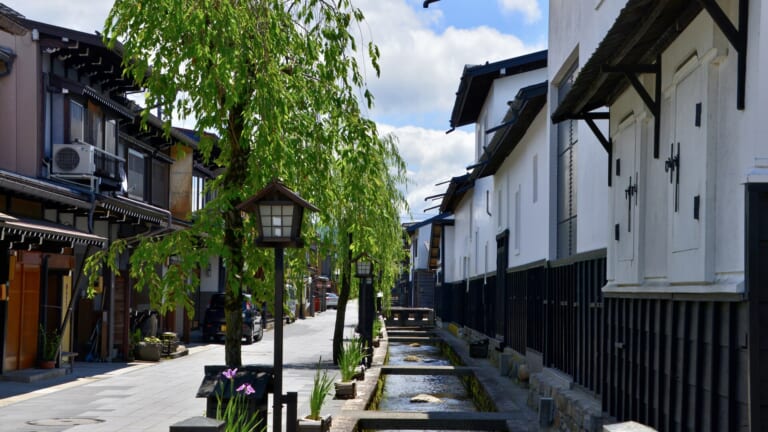
Header photo: a street in Takehara’s old town, photographed in 2013. Photo: At by At, CC BY-SA 3.0 (resized; this version is offered under the same licence). Source.
Takehara is a salt-and-sake town on the Seto Inland Sea, where white-walled merchant houses with amber lattice windows line the streets below a temple hall on stilts, and Tamayura follows a girl with a camera through these lanes. Everything in the old town is a walk from JR Takehara Station, so a day here is about pace: which houses and temples to step into, where to stop for okonomiyaki, and how much of the stone steps you want. This guide sets out a car-free day on foot from the station, and a second day that adds Tadanoumi, the station on the series’ map, and a ferry to Okunoshima — a day that depends on the boat.
Quick Trip Guide
- Series: Tamayura (たまゆら), an original anime created and directed by Junichi Sato: OVA 2010, TV series 2011, cinema release 2015
- Destination: Takehara, Hiroshima Prefecture: the old town by JR Takehara Station, with Tadanoumi and Okunoshima for a second day
- Best Gateway: JR Takehara Station, by the Kaguyahime bus from Hiroshima, the Kure line from Mihara, or the shared taxi from Hiroshima Airport
- What You Can See: The streets, houses, temples and okonomiyaki shop that the tourism office links to the series — most of them free, and some only from outside
- Main Base: Takehara Station or the old town
- Getting Around: On foot in Takehara; for day two, the JR Kure line to Tadanoumi (200 yen each way) and the ferry to Okunoshima
- Car Needed: No
- Time Needed: Route A: about 4 to 6 hours from Takehara Station and back. Route B adds a day of about 6 hours from Takehara Station. Both are planning estimates
- Check First: Horikawa’s closing day (Wednesday), the roadside station’s (third Wednesday), and on day two the ferry and the island’s visitor center (closed Wednesday)
- Day Trip: Yes, from Hiroshima or Mihara
- Best For: readers and viewers who want slow photo walks in an old town, and a sea-and-island day if the boat runs
Why This Place Matters in Tamayura
Tamayura is an original anime, not an adaptation of a manga: Junichi Sato created, directed and wrote the series. It follows Fu Sawatari, a girl who moves to Takehara, the town she remembers from her late father, and takes photographs with the camera he left her. It began as an OVA in 2010, ran on television as Tamayura ~hitotose~ in 2011 and reached cinemas as Tamayura: Graduation Photo in 2015, the Takehara tourism site says. The same page says the old streets and the Inland Sea are faithfully reproduced, and that Takehara was chosen every year from 2018 to 2025 for the Anime Tourism Association’s list of 88 anime places to visit, voted by fans.
The official map, and what it does not tell you
The city’s tourism office publishes a pilgrimage map (Japanese) printed in November 2017. It is good for which streets and buildings appear, but its shop and transport notes are nine years old, and its episode numbers do not always match the tourism site’s current list. This guide therefore names the places and leaves out episode numbers, and every opening time below comes from the place’s own current page.
What has changed since
A fire on 30 April 2025 destroyed buildings in the shopping street in front of the station and the arcade’s giant Momoneko-sama figure used at its festivals, the shopping street’s association says; its fund-raising closed on 31 October 2025. This guide does not make any Momoneko-sama figure a stop. The reunion events of 10 and 11 October 2026 are over.
Anime Pilgrimage Spots
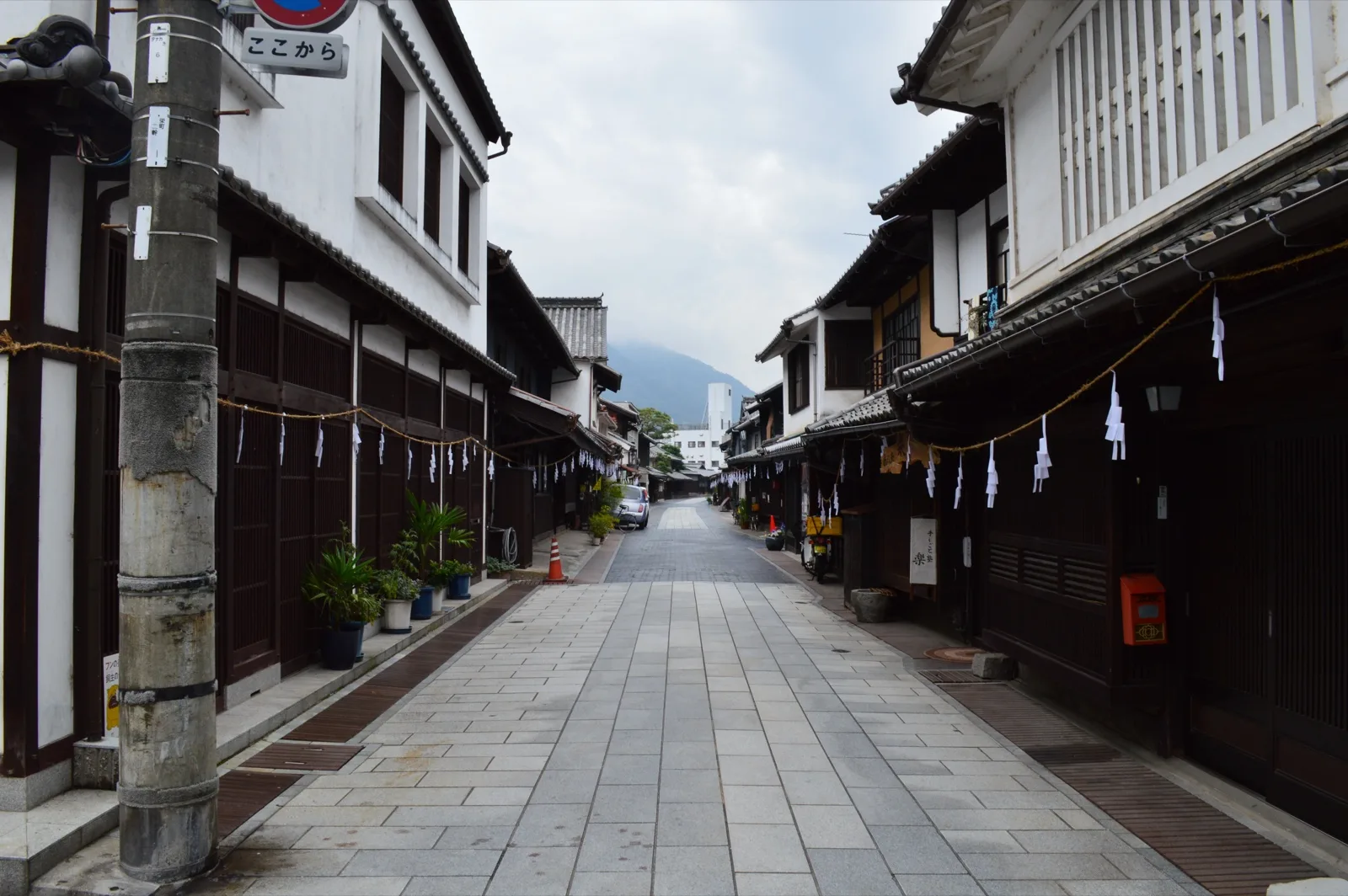
Most of the series’ Takehara lies in the Takehara townscape preservation district, a nationally designated district of Edo-period merchant houses about 10 to 15 minutes on foot from the station. The houses are private homes as well as a backdrop: the tourism site asks visitors not to disturb the people who live there.
Please respect local rules and manners at every location, and follow signs and staff guidance.
Where these places are
The map shows the places below and how far apart they are. It is drawn with OpenStreetMap: opening it loads map images from openstreetmap.org. The list works without it. Eight rows carry an official name or address rather than a published position, so they have a Google Maps link but no pin. Homes, schools and works sites are not listed.
The map could not be loaded. The places are listed below, with their names and a link to each on Google Maps.
- Anime-related places
- Station or transport
- Nearby sight
The 13 places in this guide, 5 of them on the map
- 1JR Takehara Station竹原駅Start and finish of both routesIn this guideOpen in Google Maps
- 2Former Hinomaru photo studio旧日の丸写真館Name search · from the street onlyIn this guideOpen in Google Maps
- 3Kasai House旧笠井邸Address search · 10:00 to 16:00In this guideOpen in Google Maps
- 4Horikawaお好み焼 ほり川Address search · lunch 11:00 to 14:00, closed WednesdaysIn this guideOpen in Google Maps
- 5Saihoji and Fumeikaku西方寺・普明閣Address search · 8:00 to 18:00, stone stepsIn this guideOpen in Google Maps
- 6Ebisu-do胡堂Name search · in the old townIn this guideOpen in Google Maps
- 7Shorenji照蓮寺Address searchIn this guideOpen in Google Maps
- 8Okakae Jizoおかかえ地蔵Address searchIn this guideOpen in Google Maps
- 9Michi-no-eki Takehara道の駅たけはらTamayura corner, 9:00 to 17:00In this guideOpen in Google Maps
- 10JR Tadanoumi Station忠海駅On the 2017 pilgrimage map · trains to TakeharaIn this guideOpen in Google Maps
- 11Tadanoumi Port忠海港Boats to Okunoshima · position for the port as a wholeIn this guideOpen in Google Maps
- 12Okunoshima Pier 2大久野島 第二桟橋Name search · check which pier your boat usesIn this guideOpen in Google Maps
- 13Okunoshima Poison Gas Museum大久野島毒ガス資料館9:00 to 16:00 (last entry 15:40)In this guideOpen in Google Maps
Map data © OpenStreetMap contributors, ODbL. Positions were checked on 17 October 2026 against the source recorded for each place; the Tadanoumi Port pin is the published position for the port as a whole.
JR Takehara Station and the shopping street
The series opens at JR Takehara Station (竹原駅), where an okaerinasai (“welcome home”) sign greets Fu, and the main street towards the old town is the girls’ way to school, the tourism site notes. The tall chimney of the Mitsui Mining and Smelting works seen from around the station also appears; the site is private, so look from the station side.
The former Hinomaru photo studio
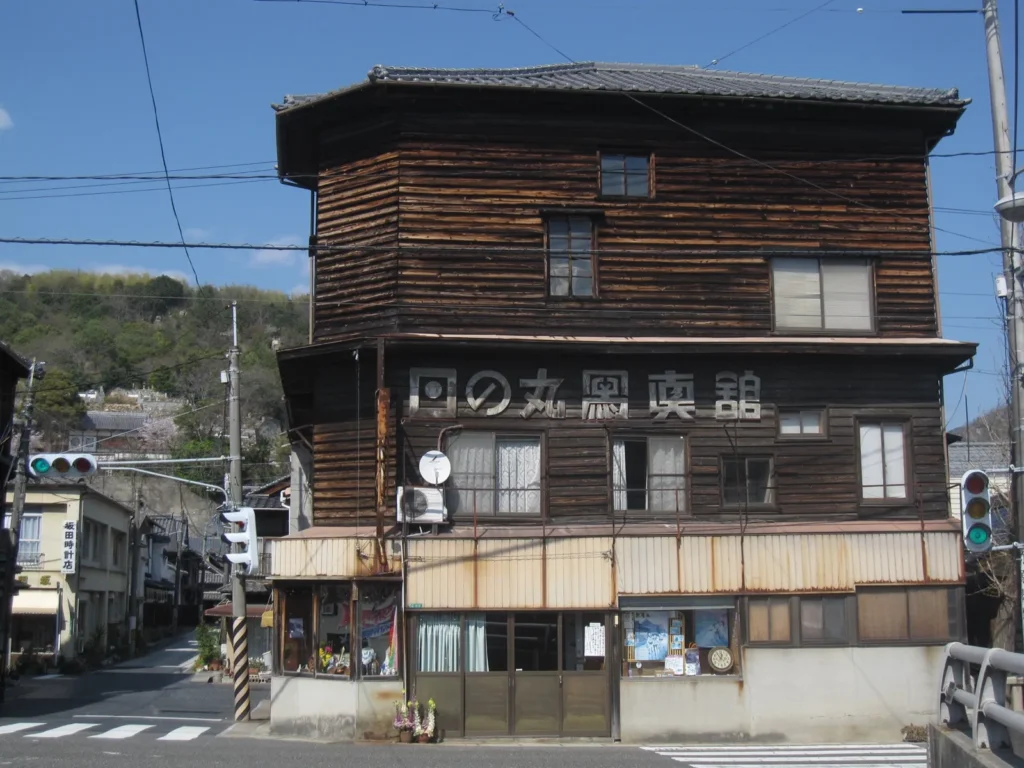
The timber former Hinomaru photo studio (旧日の丸写真館) is Fu’s regular photo studio in the series. It no longer works as a studio, the tourism site says, so treat it as a building to see from the street, and keep the pavement clear.
Kasai House
Kasai House (旧笠井邸), built in 1872 for a salt-field owner, is the hall where Fu and her friends hold their exhibition. It opens from 10:00 to 16:00 and is usually free, though events held there can charge; it closes on irregular days and from 26 December to 4 January, the tourism site says.
Saihoji and Fumeikaku
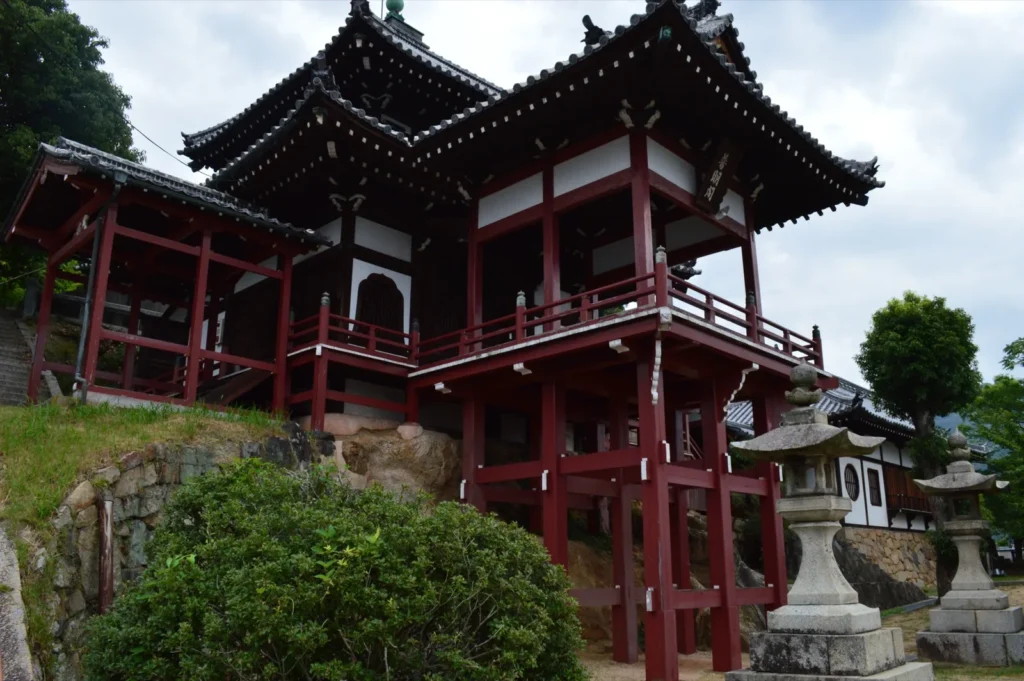
Saihoji (西方寺) sits above the old town at the top of the long stone stairway that the series uses for its title, and in its grounds stands Fumeikaku (普明閣), a hall built out on a wooden stage said to be modelled on Kiyomizu-dera in Kyoto, with a view over the roofs to the sea. The temple asks visitors to come between 8:00 and 18:00 and not to walk dogs in the grounds, the tourism site says. It is a climb: count on steps and slopes, and treat the outside of the hall and the view as the visit.
Ebisu-do, Shorenji and Okakae Jizo
- Ebisu-do (胡堂), the small shrine Fu photographs, also appears in Nobuhiko Obayashi’s 1983 film The Little Girl Who Conquered Time; it is about 8 minutes on foot from the roadside station, the tourism site says.
- Shorenji (照蓮寺), where the girls ring the New Year’s Eve bell, keeps a Goryeo bronze bell that is a national Important Cultural Property, the tourism site notes.
- Okakae Jizo (おかかえ地蔵), a stone Jizo you lift while making a wish: if it feels lighter than you expected, the wish comes true, the story goes.
Michi-no-eki Takehara
The roadside station Michi-no-eki Takehara (道の駅たけはら), about 9 minutes on foot from the station, has a permanent Tamayura corner on its second floor with materials and signatures, the tourism site says. Its operator’s own pages list the second-floor tourist information counter, which sells Tamayura goods, and the ground-floor market, both open 9:00 to 17:00 and closed on the third Wednesday of the month; its rest area is open around the clock. The bamboo-shoot bollards nearby appear in the series too.
How to Get There
Both routes start at JR Takehara Station. There are three ways in without a car.
From Hiroshima: the Kaguyahime bus
Geiyo Bus’s Kaguyahime (かぐや姫号) highway bus runs from Hiroshima Bus Center and Hiroshima Station to Takehara Station for 1,400 yen one way, the operator says. On its timetable (Japanese, the one it links, revised 1 August 2024) the 8:34 from Hiroshima Station reaches Takehara Station at 9:38, every day; coming back, the 15:19 reaches Hiroshima Station at 16:26 and the 16:24 at 17:33, on the return timetable.
- No reservations. All seats are unreserved; if the bus is full you cannot board and take the next.
- Paying: cash, or national IC cards such as ICOCA and Suica (not PiTaPa). Japan Rail Pass and JR-West passes are not accepted on this bus.
From Mihara: the JR Kure line
Coming by Shinkansen, change at Mihara for the JR Kure line. On JR West’s route search (Japanese) the 8:25 from Mihara reaches Takehara at 9:01 for 510 yen, on weekdays and weekends. Trains on this stretch are not frequent — the next morning departures are 10:05 and 11:37 — so pick yours before you leave the Shinkansen.
From Hiroshima Airport
A shared taxi of up to nine passengers, run by Sanyo Taxi, links the airport with Takehara Station in about 25 minutes for 1,500 yen. The airport’s timetable (valid from 1 September to 24 October 2026) has departures from the airport at 8:45, 10:10, 11:50, 13:55, 15:25, 16:40, 18:30 and 20:00. It recommends booking by phone (0846-22-0123), since a full taxi cannot take you; after 24 October, look up the next timetable on the same page. Count the journey from the airport building, after immigration and baggage.
Best Way to Get Around
On foot in Takehara
Walk. The old town is about 10 to 15 minutes from the station, the tourism site says, and its streets are narrow. Kasai House is 9 minutes from the station; Horikawa, Saihoji and Shorenji are about 14, and Ebisu-do about 17, on the same site’s figures.
To Tadanoumi and Okunoshima
Tadanoumi is three stops east of Takehara on the Kure line, 12 minutes and 200 yen on JR’s route search. From Tadanoumi Station, Kyukamura says, Tadanoumi Port is about 7 minutes on foot, and the boats to Okunoshima — Kyukamura’s passenger ship and the Omishima Ferry — take about 15 minutes for 360 yen one way. Times are on two sheets revised on 25 April 2026, one for weekdays and one for weekends and holidays:
- Out: the 9:40 ferry from Tadanoumi reaches Okunoshima at 9:55 on both sheets; the 10:25 ship (10:35) and 10:50 ferry (11:05) follow.
- Back: the 13:48 ferry from Okunoshima reaches Tadanoumi at 14:00 on both; later boats include 14:56 (15:10) and 16:06 (16:20).
- Piers: on the island the ferry and the passenger ship can use different piers, and the ship’s pier can change with crowds, the sheets warn. Check which pier your boat back leaves from.
- Winter: from 1 November to 31 January the 17:16 ferry from Okunoshima does not run, so do not count on a late boat.
On the island, a free shuttle bus runs from the pier to the Kyukamura hotel, stopping at the visitor center and the Poison Gas Museum, and day visitors may use it, Kyukamura says.
Car
Not needed for either route, and the old town’s lanes are narrow.
What to Eat and Drink
Horikawa, the model for Hoboro
Horikawa (お好み焼 ほり川), in a converted storehouse of a soy-sauce brewery founded in 1919, is the model for Hoboro, the girls’ okonomiyaki shop. Lunch is 11:00 to 14:00 (last order 13:30), and it is closed on Wednesdays, its own site says; the tourism site adds that it opens when Wednesday is a public holiday. Its site showed no temporary closure when checked. Arrive near opening if you can, and expect to wait at busy times.
If Horikawa is closed or full
The restaurant at Michi-no-eki Takehara serves lunch until 14:30 (last order) but closes on Tuesdays and Wednesdays; on those two days the station’s Le Lapin opens instead, with lunch from 10:30 to 14:00, except on the station’s own closing day, the operator says.
On Okunoshima
Kyukamura’s restaurant serves day visitors lunch from 11:30 to 13:30, last order 13:00, and warns that it can close or change its hours, its page says. If you would rather not depend on it, bring lunch from Takehara.
Beyond the Anime
Salt, sake and the old town
The old town’s houses were built by the hama-danna, salt-field owners who grew rich in the Edo period, and by the trade of the Kitamaebune ships that carried Takehara’s salt north, the tourism site says; the district is part of a Japan Heritage story. Step back from the series and the streets read as a salt town.
Okunoshima
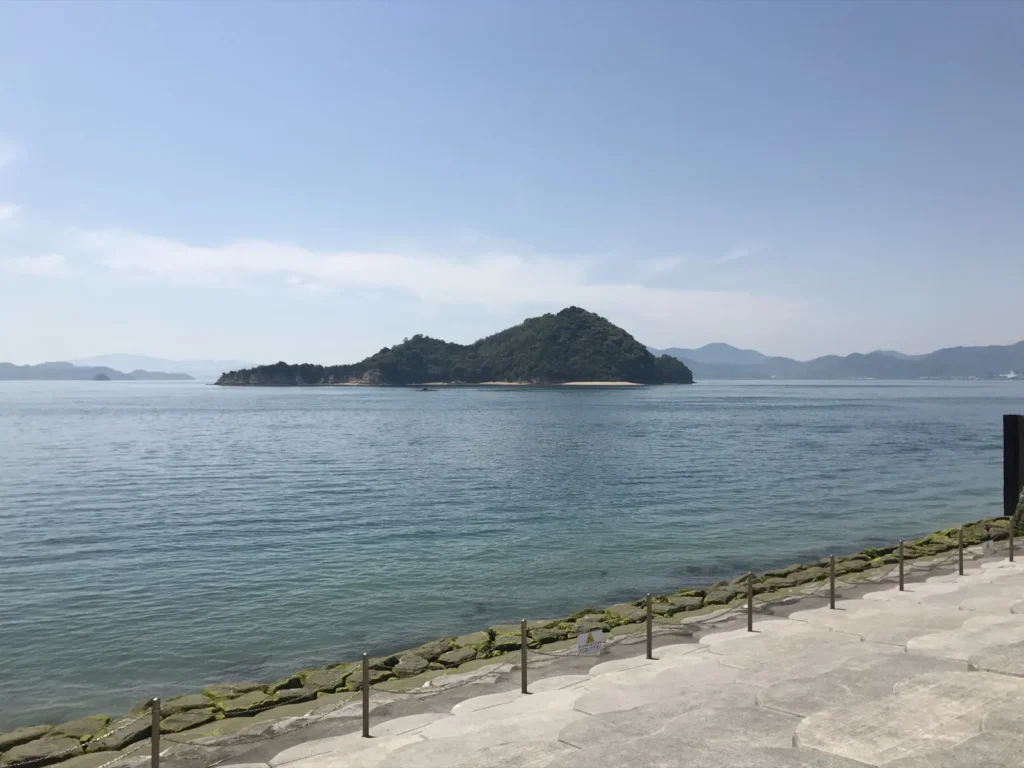
Okunoshima (大久野島) is a small island in the national park, known for its wild rabbits and for a darker history: poison gas was once made here in secret, and the island was left off maps, the tourism site says. This guide does not treat the island as a Tamayura location; it is a neighbouring sight for the second day.
- Okunoshima Visitor Center: free, 9:00 to 16:00, closed on Wednesdays (Wednesdays and Thursdays in January and February) and over the New Year, the Ministry of the Environment says.
- Okunoshima Poison Gas Museum: 9:00 to 16:00 (last entry 15:40), 150 yen for adults aged 19 and over, closed from 29 December to 3 January and on occasional days, the tourism site says.
- The rabbits: Kyukamura’s rules ask you not to chase or pick them up, not to feed them from your hand near their mouths or give them bread or sweets, not to play with them on or beside the roads, and to take your rubbish away. No rabbit food is sold on the island.
Tadanoumi Station
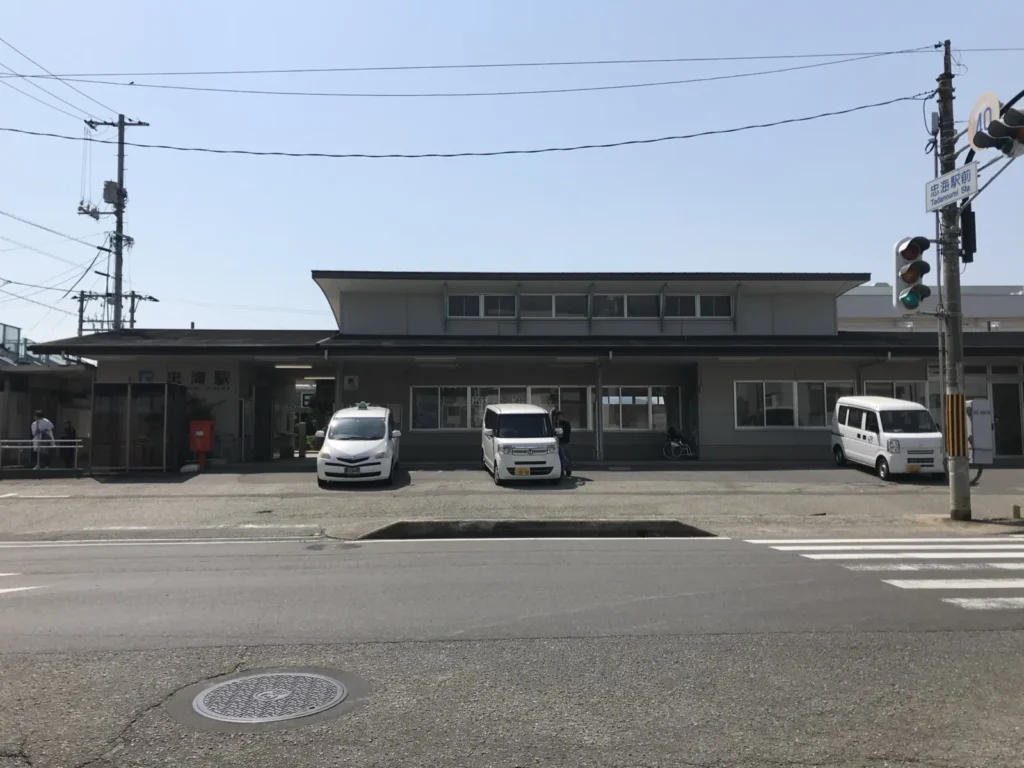
JR Tadanoumi Station (忠海駅) is on the 2017 pilgrimage map as the station where Fu’s friend Chihiro gets off by mistake. It is a working station, the start of the walk to the port, and worth a look on the way back to the train.
Souvenirs
At Michi-no-eki Takehara
The second-floor tourist information counter sells Tamayura goods alongside sake from Takehara’s three breweries and local bamboo work, and hands out the city’s manhole card, the operator says. What is in stock on the day is not listed online.
Limited-time events
- Digital stamp rally, 10 October to 30 November 2026: 30 spots around town, joined through LINE, with limited prizes, some already gone, the tourism site says. It ends on 30 November.
- Shokei no Michi (たけはら憧憬の路), 31 October and 1 November 2026, 17:00 to 21:00: about 5,000 bamboo lanterns in the old town, the tourism site says. The bamboo tunnel in the series is put up only for this event, so it is not part of the daytime routes.
Where to Stay
This guide names no hotels and gives no prices. For Route B, the question is how you reach the morning boat.
Takehara
The simplest base: the old town has places to stay, and from the station the 8:49 train reaches Tadanoumi in time for the 9:40 ferry.
Hiroshima
Works too, with a later start: on the bus timetable, the 8:20 from Hiroshima Bus Center runs on to Tadanoumi-ekimae at 10:02, in time for the 10:25 ship (1,600 yen from the Bus Center).
Suggested Itinerary
Route A is Takehara in a day, on foot from the station. Route B keeps that day, adds a night in Takehara, and spends the second day on Tadanoumi and the ferry to Okunoshima. Both days start and end at JR Takehara Station.
| Which route | A — Takehara in a day | B — two days, with Tadanoumi |
|---|---|---|
| Days and start | One day, from and back to Takehara Station | Two days, both from Takehara Station, with a night in Takehara |
| Time | About 4 to 6 hours from Takehara Station and back, a planning estimate with lunch | Day 1 as A; day 2 about 6 hours from Takehara Station (the 8:49 train to the 14:45 back) |
| What you see | The station and shopping street, the former Hinomaru photo studio, Kasai House, Horikawa, Saihoji and Fumeikaku, Ebisu-do and the roadside station’s Tamayura corner | All of A, plus Tadanoumi Station and Okunoshima: the visitor center, the Poison Gas Museum and the shore |
| Transport | Walking | Walking, the JR Kure line to Tadanoumi and the boat to Okunoshima |
| Fares, per adult | Nothing for the walk itself. Getting there: 1,400 yen each way by bus from Hiroshima, or 510 yen by train from Mihara | Day 2: train 400 yen return and boats 720 yen return, 1,120 yen, plus 150 yen for the Poison Gas Museum |
| Check first | Horikawa closes on Wednesdays; the roadside station on the third Wednesday | The same, plus the boats on the day, and the visitor center’s Wednesday closing |
| Car | Not needed | Not needed |
A — Takehara in a day
- About 9:40 at Takehara Station — the bus from Hiroshima arrives at 9:38, the train from Mihara at 9:01. Walk the main street towards the old town, and look at the former Hinomaru photo studio from the street.
- 10:00, Kasai House, as it opens, then the old town’s lanes at an easy pace.
- 11:00, lunch at Horikawa, near opening to keep the wait short (not on Wednesdays; see What to Eat and Drink for the alternatives).
- After lunch, Saihoji and Fumeikaku up the stone steps, for the view, then down to Ebisu-do, and Shorenji or Okakae Jizo if you have time.
- Mid-afternoon, Michi-no-eki Takehara for the Tamayura corner and souvenirs, then about 9 minutes back to the station — for the 15:19 or 16:24 bus to Hiroshima, or the 15:06 or 16:11 train to Mihara.
Without the steps: leave out Saihoji and Fumeikaku and stay on the old town’s level streets — Kasai House, the merchant houses, Horikawa and the roadside station. You lose the view from the hall, not the town.
B — two days, with Tadanoumi
- Day 1: Route A, and a night in Takehara.
- Day 2, out: the 8:49 from Takehara reaches Tadanoumi at 9:01 (both weekdays and weekends); walk about 7 minutes to the port for the 9:40 ferry, on Okunoshima at 9:55.
- On the island: the visitor center (not on Wednesdays), the Poison Gas Museum and the shore, with lunch at Kyukamura (11:30 to 13:30) or from your bag.
- Day 2, back: the 13:48 ferry reaches Tadanoumi at 14:00; look at the station on the series’ map, and take the 14:33 train to Takehara (14:45). For more time on the island, the 14:56 ferry (Tadanoumi 15:10) connects with the 15:31 train (Takehara 15:44).
If the boats do not run
- Spend day 2 in Takehara — the houses and temples you skipped — or take the train to Mihara instead.
- That is not a visit to Okunoshima; Tadanoumi Station is still a short train ride away.
Travel Tips and Etiquette
In the old town
- People live here. The district is made up of privately owned houses, the tourism site reminds visitors; photograph from the street, keep doorways clear and do not go into buildings that are not open.
- Temple grounds: come within Saihoji’s hours and leave dogs out of the grounds, as the temple asks.
- Steps: the way up to Saihoji and Fumeikaku is a long stone stairway; take it slowly, or skip it.
On Okunoshima
- Treat the rabbits as wild animals, under Kyukamura’s rules: no chasing, holding or hand-feeding at the mouth, no bread or sweets, and no contact on the roads.
- Check your boat back on the weekday or weekend sheet, and which pier it uses, before you set off round the island.
Plan Your Trip
Do this first
- Avoid a Wednesday for Route A if you want lunch at Horikawa, and the third Wednesday if you want the roadside station.
- Choose your way in: the Kaguyahime bus from Hiroshima, the Kure line from Mihara on JR’s route search, or the airport shared taxi, booked by phone.
- For Route B, keep the boat times for your day — weekday or weekend — with you.
Combine it with another guide
The other Chugoku guide on this site, Detective Conan in Hokuei, is in Tottori on the far side of the region, so none is suggested as a pairing. Every published guide is listed on All published guides, and by region on Destinations.
How this guide was put together
This guide was researched and planned from published sources rather than written up from a visit. Checked on 17 October 2026: the Takehara tourism site’s pages on the series, the old town, its houses and temples, Okunoshima and getting around, and the 2017 pilgrimage map; Horikawa’s and Michi-no-eki Takehara’s own pages; Geiyo Bus for the Kaguyahime bus; JR West for Kure line times and fares; Hiroshima Airport for the shared taxi; Kyukamura Okunoshima for the boats, the shuttle, lunch and the rabbit rules; the Ministry of the Environment for the visitor center; and the shopping street’s association for the 2025 fire.
What is an estimate, and what could not be confirmed. The 4-to-6-hour and 6-hour figures and the time spent at each place are editorial planning estimates built from the published times, not official durations. The boat fare is Kyukamura’s figure; the ferry operator’s own page could not be opened securely, so it was not checked there. The old town’s houses, temples and shops, and the island’s piers, have no published position that could be confirmed, so the map lists them by name or address. Whether any Momoneko-sama figure stands in the shopping street today was not confirmed.
Written and edited by Nick, who runs Anime Routes Japan from Japan. More about Nick, and about how these guides are made, is on the About page.
Opening hours, timetables and fares change, and boats can be cancelled in bad weather. Confirm the ones your day depends on before you travel.
This guide currently contains no affiliate links.